Affiliate marketing has quietly become one of the most accessible ways to earn money online. You recommend a product you like, someone buys it through your link, and you earn a cut of the sale. No inventory, no shipping, no customer service, just your content and an audience that trusts you. It is why creators, bloggers, and small businesses everywhere are leaning into it, and why the industry keeps growing year after year.
This guide explains what affiliate marketing is, how affiliate marketing works, and how to start affiliate marketing step by step, even if you are a complete beginner. You will learn the payment models, realistic earnings, and the benefits of affiliate marketing, plus how to choose the best affiliate programs and how the brandID affiliate program helps creators turn a single bio link into real income.
Key Takeaways
- Affiliate marketing is performance-based: You earn a commission only when your link drives a sale, signup, or action
- It is beginner-friendly and low-cost: No product, inventory, or website required to start
- Commissions vary widely: Digital and software offers can pay 30 to 50%, physical goods far less
- Success comes from trust: Promote products you genuinely use, in a focused niche, with honest content
- brandID makes it easy for creators: Turn your bio link into a free affiliate store with millions of products and weekly payouts
What Is Affiliate Marketing?
Affiliate marketing is a performance-based model where you earn a commission by promoting another company’s products or services. When you join an affiliate program, you get a unique, trackable link. Share it on your blog, social media, videos, or email, and if someone buys or completes an action through it, you earn a percentage of the sale. Some programs also pay when people sign up for a free trial, download an app, or fill out a form.
The beauty of the marketing affiliate model is that you never touch the product. The merchant handles creation, inventory, shipping, and support. Your job is simply to promote affiliate products that fit your audience and explain why they help. That low barrier is what makes affiliate online marketing such a popular first step into earning online, and you can even start affiliate marketing with no money at all.

How Does Affiliate Marketing Work?
Affiliate marketing works through a partnership between up to four players: the merchant (the business selling the product), the affiliate (you, the promoter), the customer (the buyer), and sometimes an affiliate network or platform that manages tracking and payments.
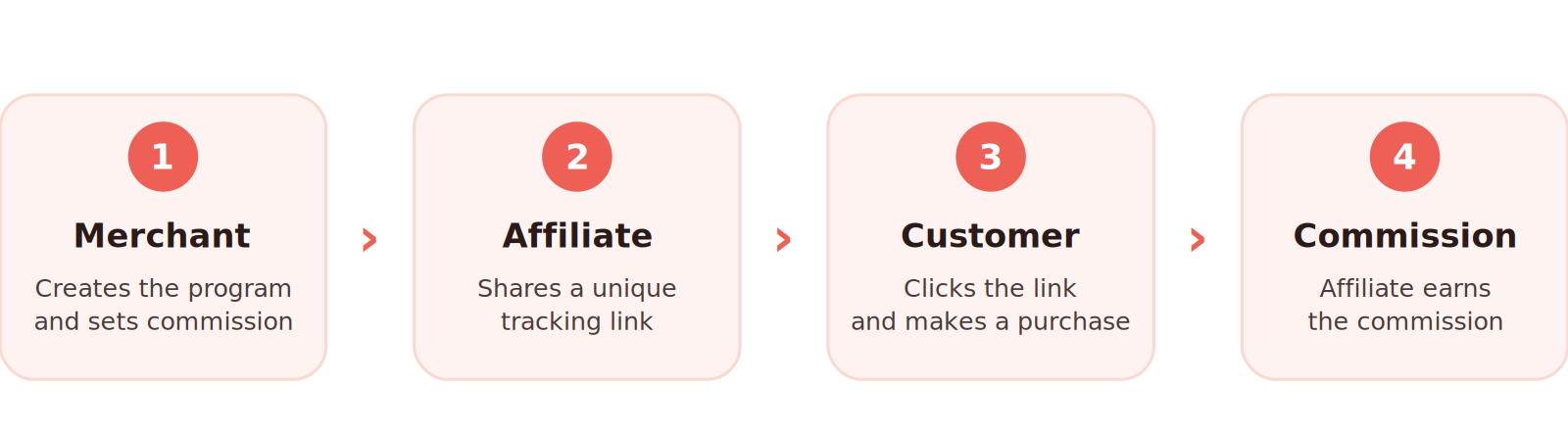
How Affiliate Marketing Works Step by Step
Here is how affiliate marketing works step by step, from program to payout:
- The merchant creates a program and sets a commission rate and cookie window.
- You join and get a unique tracking link tied to your account.
- You share that link in content your audience already reads or watches.
- A customer clicks and buys. A cookie credits the sale to you, even if they check out days later.
- You earn a commission, paid out by the merchant or network on their schedule.
How Does an Affiliate Program Work Behind the Scenes?
Tracking is what makes it all fair. When someone clicks your link, a small cookie is stored on their device for a set period, often 24 hours to 90 days. If they purchase within that window, the system attributes the sale to you. Longer cookie windows give you more chances to earn, which is one reason cookie length matters when choosing a program. It is also worth understanding affiliate decloaking, since links that get stripped or rewritten along the way can cost you the commission entirely. For example, if you sell fitness programs and partner with fitness influencers, every follower who buys through an influencer’s link earns that creator a percentage. It is a genuine win-win.
The 3 Types of Affiliate Marketing
Pat Flynn of Smart Passive Income popularized three categories of affiliate marketing, based on how connected you are to what you promote:
- Unattached: you promote products you do not use or know, usually through paid ads. It is easy to start but builds little trust.
- Related: you promote products in your niche that you have not personally used but that fit your audience.
- Involved: you promote products you actually use and believe in. This builds the most trust and drives the most sales.
Involved affiliate marketing is where creators shine, and it pairs perfectly with faceless affiliate marketing if you prefer to stay off camera while still recommending tools you rely on.
Affiliate Marketing Commissions and Payment Models
Affiliate marketing commissions come in several forms. Understanding each one helps you pick offers that match your content and income goals:
- Pay-per-sale (PPS): the most common model. You earn a percentage when someone buys through your link, for example $10 on a $100 course at 10%.
- Pay-per-click (PPC): you earn each time someone clicks your link, even without a purchase.
- Pay-per-lead (PPL): you earn when someone completes an action like a free trial or newsletter signup.
- Recurring commissions: best for subscriptions and software, you earn every month a customer keeps paying.
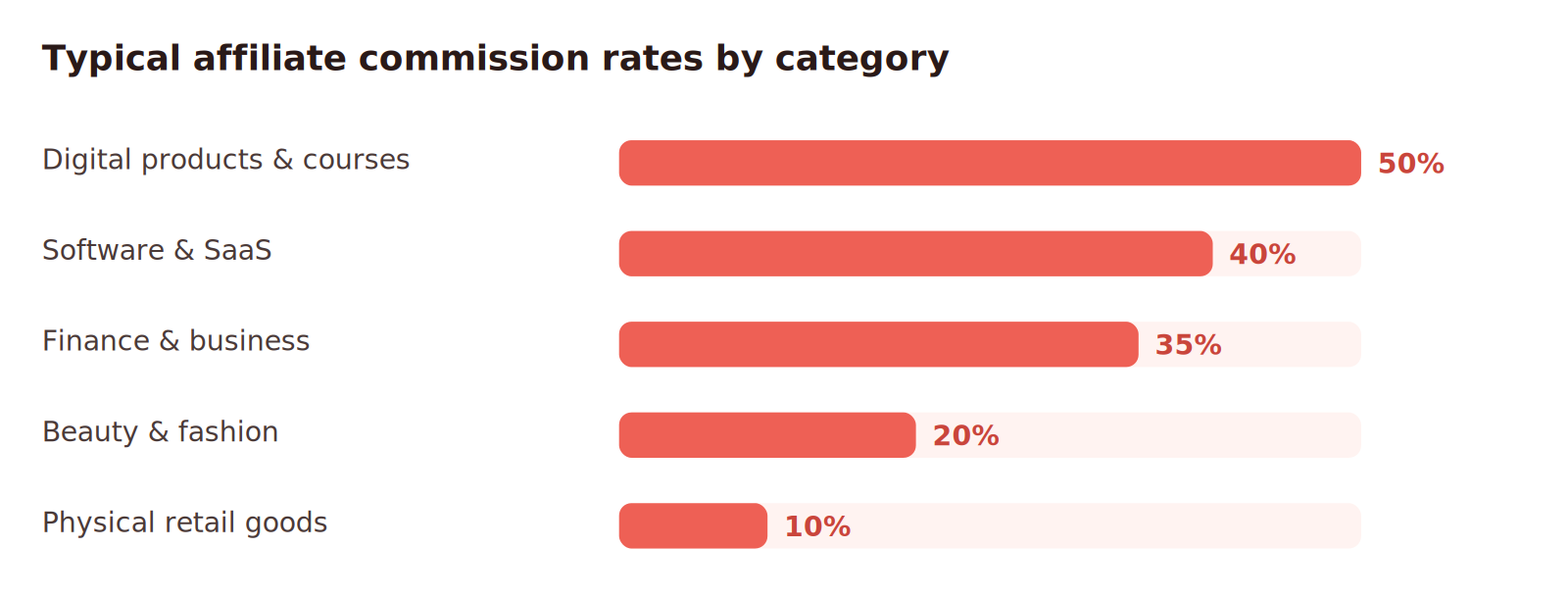
Commission rates vary a lot by category. Digital products, courses, and software pay the most, which is why the best SaaS affiliate programs are so popular, while physical retail goods pay less because margins are thinner. If you want the biggest payouts per sale, look into high ticket affiliate programs that reward each conversion generously.
What Are the Benefits of Affiliate Marketing?
So what are the benefits of affiliate marketing, and why do so many creators and businesses choose it? The advantages line up differently depending on whether you are the affiliate or the brand.
For Creators and Affiliates
- Low startup cost: no product to build or inventory to buy; you can begin with just an audience and a link.
- Passive income potential: content you publish once can earn for months or years.
- Flexibility and freedom: work from anywhere, choose your niche, and set your own pace.
- Multiple income streams: combine affiliate income with selling digital products and sponsorships.
Affiliate Marketing for Small Business and Brands
Affiliate marketing for small business owners and affiliate marketing for brands is just as compelling. Instead of paying upfront for ads that may not convert, you pay only when an affiliate delivers a sale. That performance-based structure keeps costs predictable and returns measurable, which is why affiliate programs are a favorite among lean marketing teams looking for reliable affiliate marketing solutions. Brands that don’t have the bandwidth to manage recruitment, outreach, and payouts in-house often turn to affiliate marketing agencies to run the program for them. Companies selling to other businesses can go further with B2B affiliate marketing, where longer sales cycles and higher contract values change the math.
- Performance-based spend: you pay for results, not impressions, so the return on investment is easy to track.
- Expanded reach: affiliates introduce your brand to audiences you could not reach alone.
- Built-in trust: recommendations from creators feel more authentic than traditional ads.
- Scalable growth: add more affiliates without adding fixed costs.
How to Start Affiliate Marketing: A Beginner Step-by-Step Guide
Wondering how do you start affiliate marketing, or how do you do affiliate marketing the right way? Follow these steps to launch on solid ground.
Step 1: Pick Your Primary Online Channel
Start with one platform where your audience already spends time, then master it before expanding. Each channel has strengths: a blog is ideal for long-form reviews and SEO affiliate marketing; YouTube builds trust through tutorials (many ask how many subscribers you need to make money on YouTube); Instagram and TikTok drive quick, visual discovery (creators often wonder how many followers you need to get paid); Pinterest keeps sending clicks months after you post, which is what makes Pinterest affiliate marketing so durable; and an email newsletter nurtures long-term trust.
Step 2: Choose a Profitable Niche
A clear niche helps you build authority and attract the right audience. Ask what you enjoy, what you know, whether programs pay well there, and whether people search for it. If you need direction, explore the best affiliate marketing niches to find a focused, profitable lane you can create content about for years. Evergreen verticals with dedicated roundups include pet affiliate programs, gaming affiliate programs, baking affiliate programs, and home improvement affiliate programs.
Step 3: Join the Right Affiliate Programs
Compare programs on commission rate, cookie length, payment terms, brand trust, and support; if cash flow matters, note that some affiliate programs pay daily rather than monthly. You can join brands directly or through networks. Beauty creators, for instance, can start with the best beauty affiliate programs, style creators with the best fashion affiliate programs, destination bloggers with the best travel affiliate programs, and finance channels with the best crypto affiliate programs, while others browse a curated list of top affiliate programs for beginners to find the best fit.
Step 4: Find and Promote the Right Products
Promote products you actually use and believe in; genuine recommendations convert far better than ads. Create helpful content, tutorials, honest reviews, and comparisons, then place your links naturally. Strong product descriptions and clear calls to action make a real difference, and a clickable link in your TikTok bio turns every video into a traffic source. For a deeper playbook, see how to promote affiliate links the smart way.
Step 5: Track, Optimize, and Scale
Watch which links and content convert, double down on winners, and keep testing. Build an email list so you own your audience, and reinvest time into your best-performing channels. A lean stack of affiliate marketing tools handles the tracking side, while the right content creation tools help you publish consistently, which is the real secret to compounding affiliate income.
How Much Can Affiliate Marketers Make?
Earnings vary enormously by niche, audience, and effort. Here is a realistic picture of the tiers most affiliates move through:
| Level | Typical monthly income | What it usually takes |
|---|---|---|
| Beginner | $0 to $500 | Testing niches and building first traffic |
| Intermediate | $1,000 to $10,000 | An engaged audience or email list and steady content |
| Advanced / full-time | $10,000 to $100,000 | Strong SEO, conversion skills, and multiple channels |
| Super affiliate | $100,000+ | Dominating high-paying niches like finance or SaaS |
Most people start small and grow with consistency. A focused niche, honest content, and the right affiliate marketing strategy can turn a side hustle into a dependable income stream, and you can accelerate it by learning to make money on TikTok alongside your other channels. For a single-program benchmark, our breakdown of how much Amazon affiliates make shows what those tiers look like in practice.
The brandID Affiliate Program: Affiliate Marketing Solutions for Creators
The brandID affiliate program is built for influencers and content creators who want to start earning fast, with no website and no coding. brandID turns your single social bio link into a customizable affiliate store in minutes, where you can add products, organize them into collections, and share them everywhere your audience already follows you.
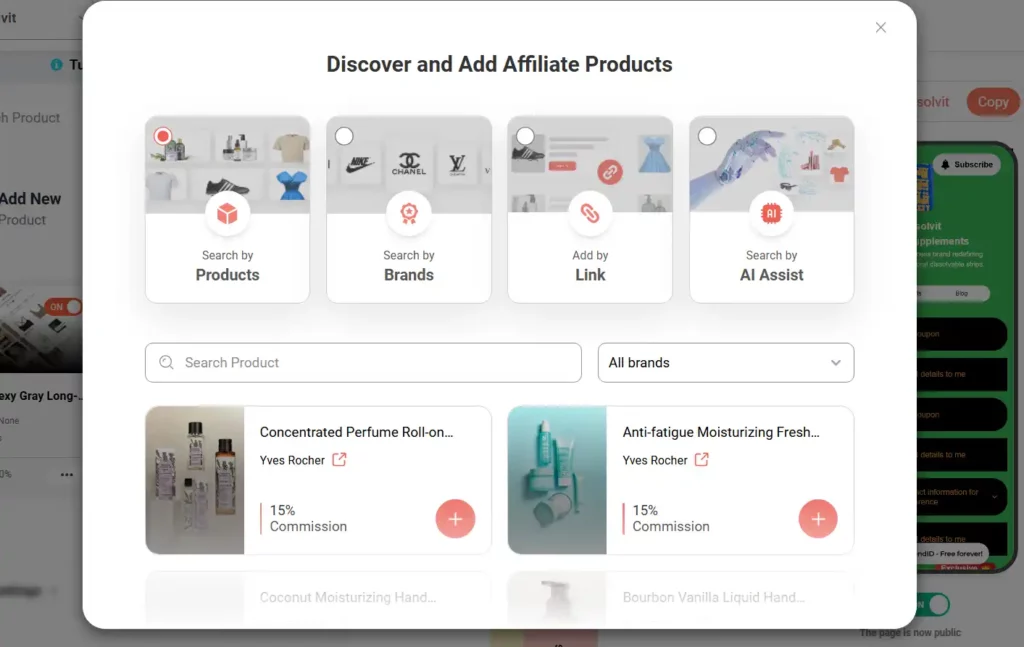
Inside your dashboard you can browse millions of products from thousands of brands, add them in one click at preset commission rates, or paste your own affiliate links from networks like Amazon Associates, Shopify Collabs, eBay Partner Network, Walmart, Etsy, Target, or AliExpress. Built-in analytics track your clicks, conversions, and earnings in real time, and payouts are weekly with no minimum threshold.
What You Get With brandID
- Free to join: full access to the store builder, product marketplace, and analytics at no cost.
- Millions of products: a built-in marketplace with high-commission offers, plus an AI search assist that finds products matching your niche.
- Real-time analytics: track clicks, conversions, locations, and devices, with GA4 and Meta Pixel integration for retargeting.
- Instant monetization: secure checkout, preset commission rates, and weekly payouts with no minimum withdrawal.
- Personal branding: customizable, mobile-optimized pages that match your colors, fonts, and style.
- Email tools: capture leads and build your email list right from your page to nurture buyers over time.
A note for brands: brandID’s affiliate feature is designed mainly for creators. If you are a brand that wants to list your products in the marketplace for creators to promote, just reach out on our live chat and our team will get in touch to set you up.
How to Join the brandID Affiliate Program
- Visit brandID and click “Sign Up” to create your free dashboard.
- Select +Add products/links → Affiliate Products to start adding items.
- Paste affiliate links from networks like Amazon Associates or Shopify Collabs, or browse the millions of products already listed with preset commissions.
- Fill in the product name, image, CTA, and price to complete your listing.
- Click Save, and your trackable affiliate link is ready to share instantly.
Join the brandID affiliate program free, add products in one click, and start earning weekly payouts.
Join brandID for FreeTips to Succeed With Affiliate Marketing
- Solve the one-link limit: use a link in bio tool so your top offers are always visible, even when platforms change their rules.
- Prioritize high-converting offers: put your best products first; most people click only the top few links.
- Make data-driven decisions: track click-through and conversion rates, then optimize toward what works.
- Disclose honestly: always tell your audience when a link is an affiliate link. It is required and it builds trust.
- Build your email list: owning your audience protects you from algorithm changes and lifts long-term earnings.
Conclusion
Affiliate marketing is one of the most beginner-friendly, low-cost ways to earn online. You now know what it is, how affiliate marketing works, the payment models and commissions, the benefits for both creators and brands, and how to start affiliate marketing step by step. The formula is simple: pick a niche, choose trustworthy programs, create honest content, and keep optimizing.
When you are ready to turn recommendations into real income, the brandID affiliate program is a great place to begin. It gives creators a free affiliate store, millions of products, real-time analytics, and weekly payouts from one simple link. Sign up, add your first products, and start earning today.
Affiliate Marketing FAQs
What Does Affiliate Marketing Mean?
Affiliate marketing is a performance-based model where a creator or publisher promotes a company’s product and earns a commission for every sale, signup, or action made through their unique tracking link. Brands gain sales and exposure, while affiliates earn income for driving results, so it benefits both sides.
How Do You Start Affiliate Marketing as a Beginner?
Pick one channel where your audience spends time, choose a focused niche, join a few reputable affiliate programs, and promote products you genuinely use through helpful content. Add your links to a bio-link page, disclose them honestly, and track what converts. You can even start affiliate marketing with no money using free tools.
How Does an Affiliate Program Work?
A merchant gives affiliates a unique tracking link and sets a commission and cookie window. When someone clicks and buys within that window, a cookie credits the sale to the affiliate, who is then paid on the program’s schedule. Networks often handle tracking and payments across many merchants.
What Are the Benefits of Affiliate Marketing?
For creators, the benefits include low startup costs, passive income potential, flexibility, and multiple revenue streams. For brands, affiliate marketing offers performance-based spending, wider reach, authentic recommendations, and scalable growth without fixed ad costs.
How Much Do Affiliate Marketing Commissions Pay?
Commissions vary by category. Digital products, courses, and software often pay 20 to 50%, while physical retail goods usually pay 3 to 10% because margins are lower. Recurring commissions on subscriptions can add steady monthly income on top of one-time sales.
Is Affiliate Marketing Worth It for Small Businesses?
Yes. Affiliate marketing for small business is attractive because you only pay when an affiliate delivers a sale, keeping costs predictable and returns measurable. It expands reach through trusted creators without the upfront risk of traditional advertising.
Can I Do Affiliate Marketing Without a Website?
Absolutely. Many creators run affiliate marketing entirely through social media and a bio-link store. With brandID, you can build a free affiliate page in minutes, add products from millions of options, and share your links across TikTok, Instagram, and YouTube without any website.
Is Affiliate Marketing Legal?
Yes, affiliate marketing is a legitimate business model used by major brands worldwide. Just disclose your affiliate links to your audience, follow each program’s rules, and avoid programs that charge upfront fees or promise unrealistic returns.
 Summarize this article with: