In contrast to the widespread belief, you do not necessarily need 100K followers to start making money on Instagram. This misconception often keeps creators posting for free without a proper strategy, assuming they have to hit some huge milestone before monetization is possible.
The truth is, if you have ever wondered how many followers on Instagram to get paid, the answer might surprise you. You can start earning with as few as 1,000 followers, as long as you focus on the right strategy, engage your audience effectively, and use digital content monetization tools like brandID to turn even a small audience into a consistent income stream. In fact, with the right setup you can go beyond sponsored posts and earn thousands even with fewer than 1,000 followers.
There is data behind this. Nano creators with 1,000 to 10,000 followers post the highest engagement of any tier, around 6% on Instagram in 2026, and roughly 70% of brands now prefer small, engaged creators over celebrities, according to 2026 industry benchmarks. That shift is exactly why a small account with a real community can get paid.
By the end of this guide, you will understand exactly how many followers you need to start earning real money on Instagram, the key follower thresholds that matter, and smart monetization methods you can use regardless of your follower count.
Key Takeaways
- You can start at 1,000 followers: With strong engagement and a clear offer, monetization does not require 100K followers
- Engagement beats follower count: Nano creators average about 6% engagement in 2026, far above the roughly 1% of mega accounts
- Earnings scale by tier: Roughly $10 to $500 per post for nano creators, up to $100,000+ per campaign for mega influencers
- Many income streams exist: Sponsored posts, affiliate marketing, digital products, services, and Instagram’s own bonus and subscription tools
- Tools do the heavy lifting: A link in bio hub like brandID lets you sell, collect tips, and share affiliate links from one Instagram link
How Do People Make Money on Instagram?
There are actually dozens of different ways to make money on Instagram. Influencers often turn their audience’s attention into real income by promoting other brands’ products or services. However, you do not need to be a big-name influencer to start earning, there are several practical methods anyone can use. Below are some of the most common and effective ways to monetize your Instagram presence:
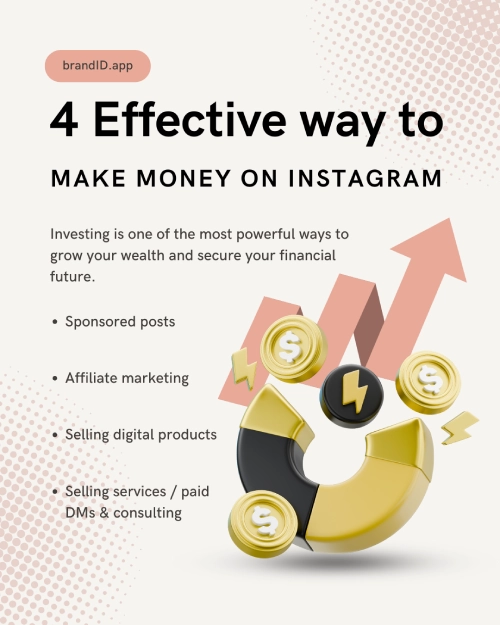
- Sponsored posts: Depending on your niche and engagement rate, brands may pay you to create content featuring their product or service. While smaller creators might earn modest fees, those with larger followings can charge hundreds or even thousands per post.
- Affiliate marketing: Affiliate marketing is one of the most accessible and effective ways to earn money online. By sharing a unique link or discount code for someone else’s product, you earn a commission every time your audience makes a purchase through it. To maximize results, many creators rely on link in bio tools to display multiple affiliate links neatly for their audience.
- Selling digital products: Digital items like ebooks, templates, presets, printables, or mini-courses are highly profitable because they are easy to deliver instantly and can be sold an unlimited number of times without extra work.
- Selling services, paid DMs, and consulting: Offering services such as coaching calls, freelance work, personalized shoutouts, or even event appearances can turn your skills and expertise into a steady income.
Beyond those four, several more monetization paths are worth knowing as your account grows:
- Instagram’s native tools: Reels play bonuses, gifts and badges during Live videos, and paid subscriptions let followers support you directly inside the app.
- Brand ambassadorships: Instead of one-off posts, brands pay a recurring fee for an ongoing partnership, which creates predictable monthly income.
- UGC creation: You can get paid to make user-generated content for brands to use on their own channels, even with a tiny following, since they are buying the content, not your reach.
- Selling physical products: Print-on-demand merch, handmade goods, or a small shop tagged through Instagram Shopping turns engaged fans into buyers.
Switch to a Professional Account
To start monetizing on Instagram, the first step is to switch to a professional account through your settings. Once that is done, check your eligibility in the dashboard and work on building engagement, ideally aiming for a healthy 1 to 5% rate. Consistency is key, so post regularly, use relevant hashtags, and track your performance with Instagram Insights.
It is important to avoid fake followers, since brands always look at authenticity before offering deals. You can use a free fake Instagram follower checker tool to identify these ghost or inactive accounts. Removing them will help increase your engagement rate, making your account more valuable to brands. It also helps to know your exact numbers, so an Instagram follower count checker keeps your growth in view. If you have fewer than 10K followers, you can start small with affiliate marketing to test the waters. Looking ahead in 2026, focus especially on Reels, as they typically generate around 20% more engagement compared to other content types. Pairing that with a few polished Instagram bio ideas makes your profile far more clickable to brands.
How Many Followers on Instagram to Get Paid
For those curious about how many followers on Instagram to get paid, you can start earning money with as few as 1,000 followers, especially if you have high engagement and a well-defined niche. However, there is no strict minimum follower count, as brands often prioritize engagement rate, content quality, and audience relevance over sheer numbers.
The truth is, follower count is just one piece of the puzzle when it comes to getting paid on Instagram. What matters more is your engagement rate, aim for 1 to 5% or higher, and the quality of your audience. Micro-influencers’ followers often boast higher engagement rates (up to 5.6%) compared to mega-influencers, making them attractive to brands for targeted campaigns. Instagram engagement fell about 24% year over year in 2026, so an above-average rate now stands out to brands more than ever.
Key Factors Influencing Earnings
- Niche: Certain niches tend to pay far more than others. For example, beauty, fitness, fashion, health and wellness, business and marketing, and travel are all considered high-paying fields.
- Engagement: Brands usually care more about interaction than sheer follower numbers. In fact, even an account with just 2,000 followers but a strong 6% engagement rate could land deals worth thousands in commissions. You can analyze your account’s strengths and weaknesses using an Instagram Engagement Tool to optimize your content strategy.
- Content Quality: Beyond numbers, what really counts is the value you provide. Whether it is through fresh insights, entertaining posts, or solving problems, high-quality content builds trust and attracts opportunities such as paid collaborations.
- Audience Demographics: Brands and businesses usually prefer influencers whose followers closely match their target market. This choice is often based on key factors like age, location, interests, and online behavior.
Understanding Follower Tiers and Earning Potential
On Instagram, influencers are grouped into different tiers based on their follower count, and this directly affects how much they can potentially earn. These tiers serve as helpful benchmarks for brands, guiding them on where to spend their budget and which creators to collaborate with.
Smaller tiers, such as nano and micro influencers, often deliver higher engagement and more targeted audiences. On the other hand, larger tiers usually charge higher fees and offer broader reach, but their interaction rates tend to be lower.
For anyone wondering how many followers on Instagram they need to get paid, it is important to remember that engagement and audience quality can matter just as much as follower count. Here is how the tiers compare at a glance:
| Tier | Followers | Avg. Engagement (2026) | Typical Earnings |
|---|---|---|---|
| Nano | 1K – 10K | ~6.2% | $10 – $500 / post |
| Micro | 10K – 100K | ~3.9% | $100 – $5,000 / post |
| Macro | 100K – 500K | ~1.5% | $5,000 – $20,000+ / campaign |
| Mega | 500K – 1M+ | ~1.2% | $10,000 – $100,000+ / campaign |
The pattern behind those pay ranges is engagement. Smaller accounts consistently out-engage larger ones, which is why brands increasingly spend on nano and micro creators rather than chasing follower counts alone, a shift documented by Influencer Marketing Hub.
Each tier comes with its own strengths, challenges, and earning potential. Nano and micro influencers may not have massive audiences, but their strong connections often lead to higher trust and better conversion rates. Meanwhile, macro and mega influencers can command bigger fees thanks to their reach, though they may struggle to maintain the same level of engagement.
Nano Influencers (1k–10k Followers)
Nano influencers are like the “local stars” of Instagram. Their audiences may be small, but the connection is strong and personal. When they share a product or service, followers tend to listen and trust their word. These creators often earn through sponsored posts, affiliate links, and selling digital products that fit their close-knit communities. They also post the highest engagement of any tier, around 6% in 2026, which makes them a favorite for brands chasing real conversions.
Earning potential: $10 to $500 per post.
Micro Influencers (10k–100K Followers)
Micro influencers hit the sweet spot, big enough to reach thousands, yet small enough to keep engagement high. Brands love working with them because their recommendations feel authentic while still reaching a wider audience. At this stage, creators can land consistent sponsorships, affiliate deals, and even launch their own products or subscriptions. Actively monetizing micro creators often earn between $1,500 and $5,000 a month from two or three brand deals.
Earning potential: $100 to $5,000 per post.
Macro Influencers (100k–500K Followers)
Macro influencers usually get invited to brand events, featured in high-budget campaigns, and often land ambassadorship deals. By this point, running the account becomes more like running a business. Opportunities include launching exclusive courses, co-branded products, or large-scale collaborations. Engagement typically settles near 1.5%, so these creators sell reach and polish rather than intimacy.
Earning potential: $5,000 to $20,000+ per campaign.
Mega Influencers (500K–1M+ Followers)
At this level, influence turns into mainstream power. Mega influencers often collaborate with global brands on massive launches, licensing deals, and even move into areas like TV, books, or public speaking. Their accounts are no longer just social pages, they are full-blown media platforms. Engagement usually sits near 1.2%, though the most loyal fan bases can pull it higher.
Earning potential: $10,000 to $100,000+ per campaign.
Keep in mind, these numbers are not fixed, and your actual income can fluctuate quite a bit depending on several key factors. For example, someone in a high-value niche like finance, tech, or luxury lifestyle might earn significantly more per post than someone with the same follower count in a more general niche.
Does Instagram Pay You Directly?
There is a difference between getting paid through Instagram (brand deals, affiliate links, your own products) and getting paid by Instagram directly. Instagram’s own monetization tools include gifts and badges that fans buy during Live videos and Reels, and subscriptions that charge followers a monthly fee for exclusive content.
These native features are useful, but they come with eligibility rules and are not available everywhere. You typically need a professional account, must meet Instagram’s partner monetization policies, and many programs ask for at least 10,000 followers. You can review the current requirements on Instagram’s official monetization pages. For most creators, brand deals, affiliate marketing, and selling your own products still pay far more than Instagram’s built-in tools.
How Much Do 1,000 Followers Make on Instagram?
At 1,000 followers, sponsored posts are usually modest, but they are far from the only income. Nano creators often make more from affiliate commissions, direct tips, and selling small digital products than from brand fees alone, because those streams do not depend on your follower count at all. A single ebook or template can out-earn a month of sponsored posts.
The lever that matters most is engagement. A 1,000-follower account with 6% engagement and a clear niche is worth more to a brand than a 10,000-follower account full of inactive fans. That is why building a genuine, active community beats chasing vanity numbers every time. Once you are ready to share offers, make it easy for followers to reach them by learning how to add a link to an Instagram post.
Go Beyond Sponsored Posts: Earn Thousands With brandID
Sponsored posts are only the beginning, and they are the hardest income to land when your following is small. The faster path for creators with fewer than 1,000 followers is to sell directly to the fans they already have, and that is exactly what brandID is built for.
brandID is an all-in-one creator monetization platform and link in bio hub. Instead of sending followers to a bare list of links, you give them one branded page where they can buy, tip, subscribe, and shop your recommendations. That means even a few hundred engaged followers can add up to thousands in monthly income, long before a single brand deal.
What You Can Do With brandID
- Sell digital products: ebooks, presets, templates, and courses delivered to buyers automatically.
- Tap into the affiliate marketplace: choose from millions of products and earn a commission on every sale.
- Collect tips and subscriptions: let fans support you directly or pay monthly for exclusive content.
- Run monetized giveaways: grow your audience and earn at the same time.
- Get one customizable link in bio: a clean, branded page that holds all your links and offers.
- Track everything with built-in analytics: see what your audience clicks and buys, then do more of it.
- Start free: set it up in minutes and keep more of what you earn.
Set up your free brandID page in minutes and start selling, tipping, and earning, no big follower count required.
Start Earning With brandIDYou do not need to wait for 10,000 followers or your first sponsorship. With a small, loyal audience and the right tools, you can start earning today.
Conclusion
At the end of the day, it is not just about wondering how many followers on Instagram to get paid, it is about connecting with your audience and using the right tools to turn attention into income. Whether you are a nano influencer just starting out or a mega influencer with a huge reach, the key is strategy, not size.
That is where brandID comes in. Unlike regular link-in-bio tools, brandID gives you everything in one place: sell digital products, accept tips, launch subscriptions, track performance, and even rent ad space, all from a single branded hub that is completely yours.
Ready to turn your Instagram presence into a real business? Sign up for free at brandID today and start monetizing your content like a pro.
FAQs
How Many Instagram Followers Do I Need to Get Paid?
You can start getting paid with as few as 1,000 followers if you have high engagement and a clear offer. Many creators earn via digital products, tips, or affiliate links long before hitting big follower milestones.
How Much Do 1,000 Followers on Instagram Pay?
An engaged 1,000-follower account usually earns about $10 to $100 per sponsored post, since Instagram creators average roughly $0.01 to $0.03 per follower per post. Affiliate sales, tips, and digital products can add much more on top.
How Many Followers Do I Need to Be Paid by Instagram Directly?
Instagram’s own tools like gifts, badges, and subscriptions typically require a professional account and often around 10,000 followers, along with meeting its monetization policies. Brand deals and affiliate links have no such minimum.
Do You Get Paid for Followers or for Engagement on Instagram?
You get paid for engagement and results, not raw follower count. Brands consistently pay more for a smaller, highly engaged audience than a large, passive one, which is why nano and micro creators win so many deals.
Can You Make Money on Instagram With Under 1,000 Followers?
Yes. With under 1,000 followers you can still earn through affiliate marketing, selling digital products, collecting tips, and creating UGC for brands, since those methods depend on trust and content quality rather than reach.
Which Instagram Niches Pay the Most?
High-paying niches include finance, technology, beauty, fitness, fashion, health and wellness, business and marketing, and luxury travel. Creators in these fields often earn more per post than general-lifestyle accounts of the same size.
Do I Need a Business Account on Instagram to Sell Products?
No, you can sell from a personal account via posts, DMs, or a bio link, but a Business or Professional account is required to use Instagram’s built-in commerce features like Instagram Shopping, product tagging, in-app checkout, and advanced ads and analytics.
How Many Followers on Instagram Should I Have to Get Paid for Reels?
You do not need a massive following to make money on Reels. Creators can start qualifying with around 1,000 to 10,000 followers as long as engagement is consistent, though Instagram’s official bonus programs often require at least 10,000 followers. The more active your audience, the greater your earning potential.
 Summarize this article with: