
If you are hunting for ZoomInfo alternatives, the reason is almost always the bill and the contract.
ZoomInfo is the enterprise leader in B2B sales intelligence, with one of the largest contact databases anywhere plus intent signals, strongest across North America. It is powerful, but it does not publish pricing.
Expect a custom quote near 15,000 dollars a year for three seats, real-world spend of 30,000 to 60,000, a three-seat minimum, annual-only billing, and an auto-renewal with a 60-day cancellation window. When the contract ends, so does your access to the data.
Even then the core problem remains: the best database in the world still leaves you fighting deliverability, and bolting top cold email software onto it only grows the bill. A perfect address is worthless if the message bounces or dies in spam.
Below are 14 of the best ZoomInfo competitors for 2026, cheaper data platforms and one tool that skips the inbox entirely, each with what it is, how it compares, rough pricing, and one honest limitation.
Key Takeaways
- Why teams want ZoomInfo alternatives: ZoomInfo means a five-figure annual commitment, a three-seat minimum, and a 60-day cancellation window, so the top reason teams switch is money and lock-in, not data quality.
- Cheapest strong swap: Apollo.io pairs a big database with built-in sequencing from about 49 to 119 dollars per user each month, with a free tier and no annual contract.
- Free options exist: Apollo, Lusha, Seamless.AI, LeadIQ, Hunter, and Clay all have free tiers to test before you commit.
- A bigger database never fixes a bounce: every data tool still hands you an inbox problem, warm-up, spam filters, and gatekeepers included.
- contactID skips the inbox: it submits the website contact form for you at near 100 percent deliverability, contract-free and pay-per-success.
How the ZoomInfo Alternatives Stack Up
Want the shortlist first? The table below breaks the top 14 ZoomInfo alternatives down by billing model, whether the tool actually delivers your outreach, starting price, and who each one suits, so you can shortlist a few before reading the full breakdown below.
| Tool | Model (contract/credits) | Delivers outreach? | Starting price | Best for |
|---|---|---|---|---|
| contactID | No contract, pay-per-success | Yes, via form (~100%) | Pay per form submitted | Outreach that actually lands |
| Apollo.io | Monthly or annual, credit-based | Yes, email sequencing | Free, then ~$49 to $119/user/mo | The go-to budget swap |
| Cognism | Annual contract, unrestricted view | No, data only | Custom quote | Compliant EU and UK mobiles |
| Lusha | Monthly or annual, credit-based | No, data only | Free, then ~$36 to $59/user/mo | Individual and SMB self-serve |
| UpLead | Monthly or annual, credit-based | No, data only | ~$74 to $199/mo | Accuracy on a budget |
| Seamless.AI | Annual contract, credit-based | No, data only | Free, then ~$147/mo | High-volume US list building |
| Lead411 | Monthly or annual, credit-based | Partial, basic cadence | From ~$75 to $99/user/mo | Intent on a budget |
| LeadIQ | Monthly or annual, credit-based | Partial, capture and sync | Free, then ~$36 to $79/user/mo | SDR prospecting on Sales Nav |
| 6sense | Annual contract, platform tiers | No, data and orchestration | Custom (~$60k+/yr) | Enterprise ABM at scale |
| Clearbit | Plan-dependent, HubSpot-tied | No, enrichment only | Plan-dependent | HubSpot and inbound teams |
| Sales Navigator | Monthly or annual seat | Partial, InMail | ~$99/mo | Relationship-led selling |
| RocketReach | Monthly or annual, credit-based | No, data plus API | ~$48 to $249/mo | Wide coverage and API |
| Hunter.io | Monthly or annual, credit-based | Partial, cold email tool | Free, then ~$34/mo | Cheap email-only search |
| Clay | Monthly or annual, credit-based | Partial, via integrations | Free, then paid tiers | Technical RevOps workflows |
The 14 Best ZoomInfo Alternatives, One by One
The picks run from contract-free execution tools to cheaper data platforms, compliant EU providers, enterprise ABM suites, and lightweight email finders. Whatever pushed you to compare ZoomInfo competitors, cost, contracts, coverage, or the simple wish that outreach would actually land, there is a fit here.
contactID
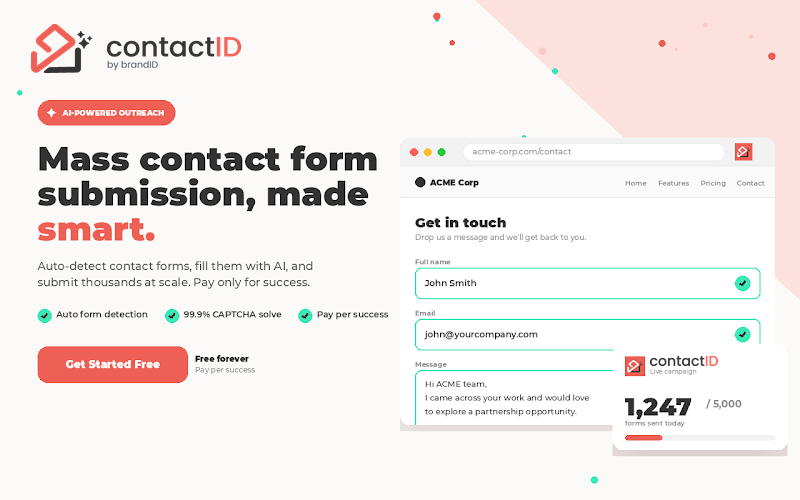
contactID is brandID’s contact-form outreach automation, a Chrome extension paired with a dashboard that finds, fills, and submits the “Contact Us” form on any website at scale. It is a different category from everything else on this list.
The other tools sell you data, then hand you an inbox problem. contactID delivers the message itself, through each site’s own contact form, so it lands where a prospect actually reads it.
It Replaces the Database, Contract and All
You are not forced to bring your own data either.
Choose a niche, a country, and a city, and contactID assembles a target list of businesses on demand, each with the website, emails, and phone numbers alongside details a static database rarely gives you: the site’s language, the technology it runs, the exact contact-page URL, and whether the listing is claimed or not, and more.
Export the list for any purpose, or feed it straight into form outreach, with no annual contract gating the data behind it.
Then It Lands the Message
vs ZoomInfo: ZoomInfo locks you into a five-figure annual contract for a database you still have to email, and those emails still bounce, warm up slowly, and hit spam filters.
contactID has no annual contract and runs on pay-per-success pricing, so you pay only for forms actually submitted, never for skips, failures, or dead sites.
Because it delivers through the site’s own form, deliverability sits at close to 100 percent, with no bounces, no domain warm-up, no spam filters, and no daily sending caps.
It is the execution layer ZoomInfo assumes you already have. If cold email is your current channel, it pairs naturally with a workflow built around contactID outreach automation rather than a rented list.
The feature set is built for teams that want outreach to run itself: Auto Form Detection locates the right form on each page, Auto CAPTCHA Solving clears gates through 2Captcha or Anti-Captcha with a manual override, and the AI Personalization Engine rewrites copy per site using merge tags and a 12-message template library.
Add Sender Agents for reusable identity profiles, A/B split testing, and Bulk Targeting where you paste URLs or upload a CSV, TXT, or Excel file and extra columns auto-map to merge tags.
Live Send Runs, an Analytics Dashboard, and AI Credits and Billing with spend caps keep every campaign visible and under budget, while Advanced Export to CSV, JSON, HTML, or Markdown plus referral credits round it out.
If you have no target list yet, built-in Website and Lead Finding hands you curated lists to start from. To understand the channel itself, this walkthrough works as a plain-English guide to contact form marketing before you launch a run.
| contactID | |
|---|---|
| Pros | Cons |
|
|
- vs ZoomInfo: Delivers the outreach, contract-free, where ZoomInfo only rents data
- Pricing: No annual contract, pay-per-success (only for forms submitted)
- Best for: Teams who refuse a $30k contract and want outreach that actually lands
Apollo.io
Apollo.io is an all-in-one sales platform that combines a large B2B contact database with native email sequencing, dialing, and workflow tools.
It is the tool most teams reach for first when they price out cheaper than ZoomInfo, because it folds prospecting and outreach into one affordable subscription instead of a data-only contract.
vs ZoomInfo: In the apollo vs zoominfo matchup, Apollo gives you a comparable core database plus built-in engagement for a fraction of the price, with a real free tier and month-to-month billing.
ZoomInfo still wins on deep intent data and phone-verified North American coverage, but most cost-driven buyers find Apollo covers the job. If you want to weigh its own rivals, this rundown of Apollo alternatives goes deeper.
| Apollo.io | |
|---|---|
| Pros | Cons |
|
|
- vs ZoomInfo: Similar core data plus sequencing, far cheaper, no lock-in
- Pricing: Free, then ~$49 to $119 per user each month
- Best for: The go-to budget swap for small and mid-sized teams
Cognism
Cognism is a sales intelligence platform known for compliant, phone-verified contact data and unusually strong mobile coverage across Europe and the UK. Its Diamond Data verification and GDPR-first approach make it the standard choice for teams selling into regulated markets.
vs ZoomInfo: The zoominfo vs cognism decision usually comes down to geography and compliance. Cognism offers better EU and UK data with cleaner consent handling and often unrestricted views rather than tight credit caps, while ZoomInfo keeps the edge in North America.
Pricing is still a custom annual quote, so it is not the cheapest option, but the data holds up.
| Cognism | |
|---|---|
| Pros | Cons |
|
|
- vs ZoomInfo: Stronger EU and UK mobiles, better GDPR compliance
- Pricing: Custom quote (annual)
- Best for: Teams selling into Europe that need compliant data
Lusha
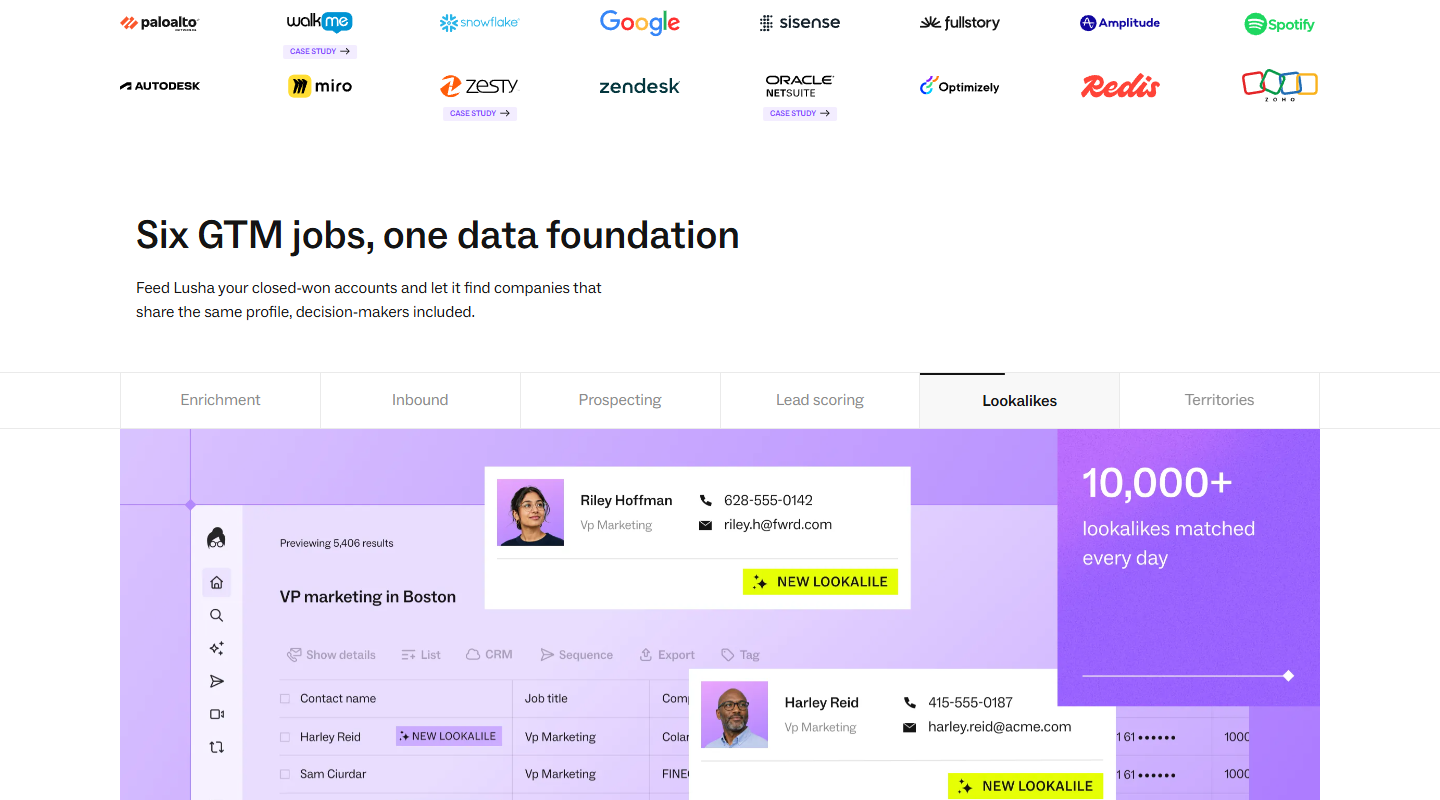
Lusha is a lightweight prospecting tool built around a browser extension that surfaces contact details as you browse LinkedIn and company sites.
It is designed for self-serve buyers who want accurate direct dials and emails without a heavy platform or a sales call to get started.
vs ZoomInfo: Lusha is far simpler and cheaper, with a free tier and transparent per-seat pricing, where ZoomInfo is an enterprise commitment.
It gives you less depth, no intent data, and a smaller database, but for one rep or a small team it removes the contract entirely. For a closer look at the field, see this roundup of Lusha alternatives.
| Lusha | |
|---|---|
| Pros | Cons |
|
|
- vs ZoomInfo: Simpler, self-serve, no contract, but shallower data
- Pricing: Free, then ~$36 to $59 per user each month
- Best for: Individuals and SMBs that want quick self-serve access
UpLead
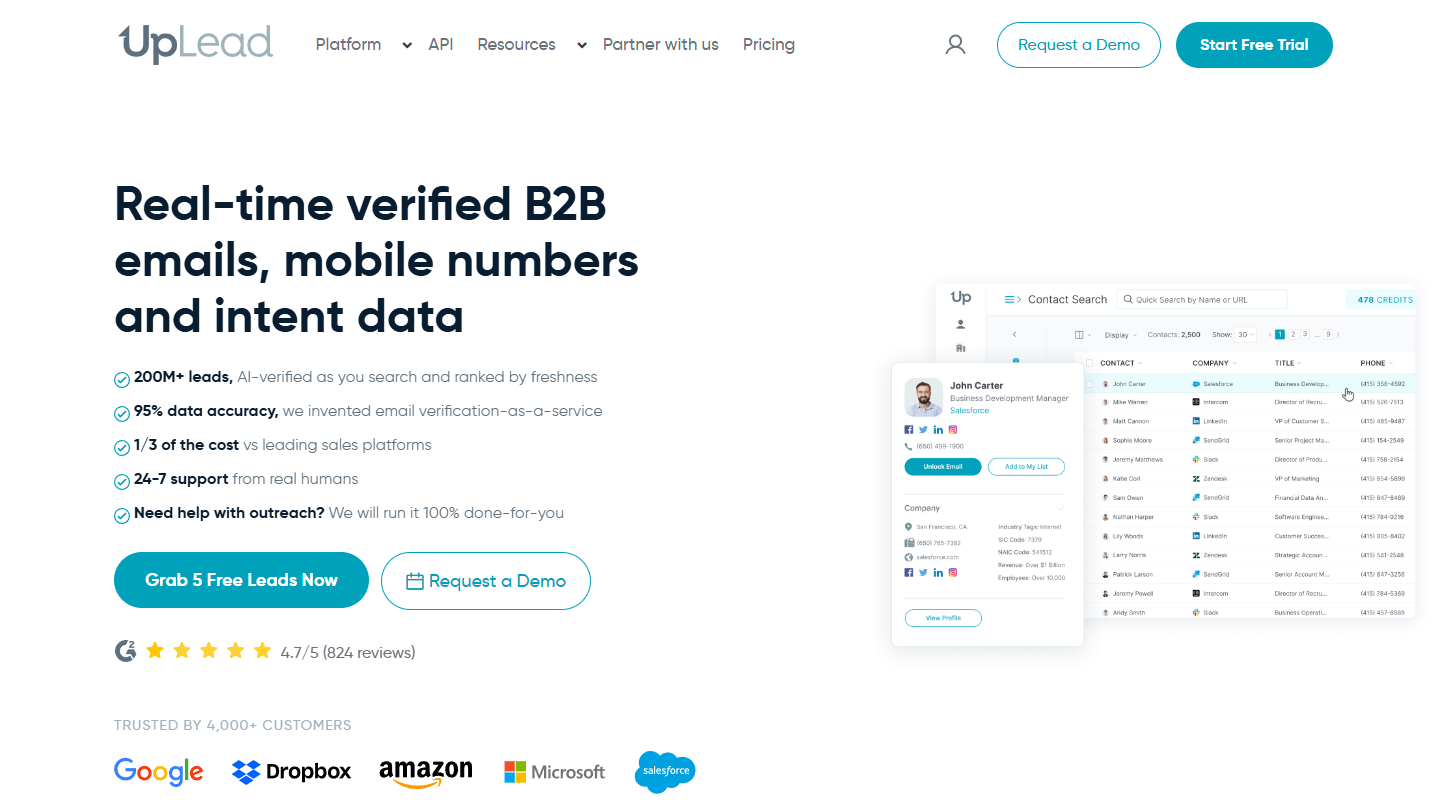
UpLead is a B2B contact database that leads with data quality, offering real-time email verification and a 95 percent accuracy guarantee backed by credit refunds when a record is wrong.
It is a focused, no-frills platform aimed at teams that would rather pay for clean data than for a sprawling suite.
vs ZoomInfo: UpLead delivers verified contacts at a small fraction of the cost, often around 85 percent cheaper than a comparable ZoomInfo seat, with month-to-month plans and refunds on bad records.
It lacks ZoomInfo’s intent depth and scale, but for accuracy on a budget it is hard to beat.
| UpLead | |
|---|---|
| Pros | Cons |
|
|
- vs ZoomInfo: Much cheaper, accuracy guarantee with refunds
- Pricing: ~$74 to $199 per month
- Best for: Teams that want verified accuracy on a budget
Seamless.AI
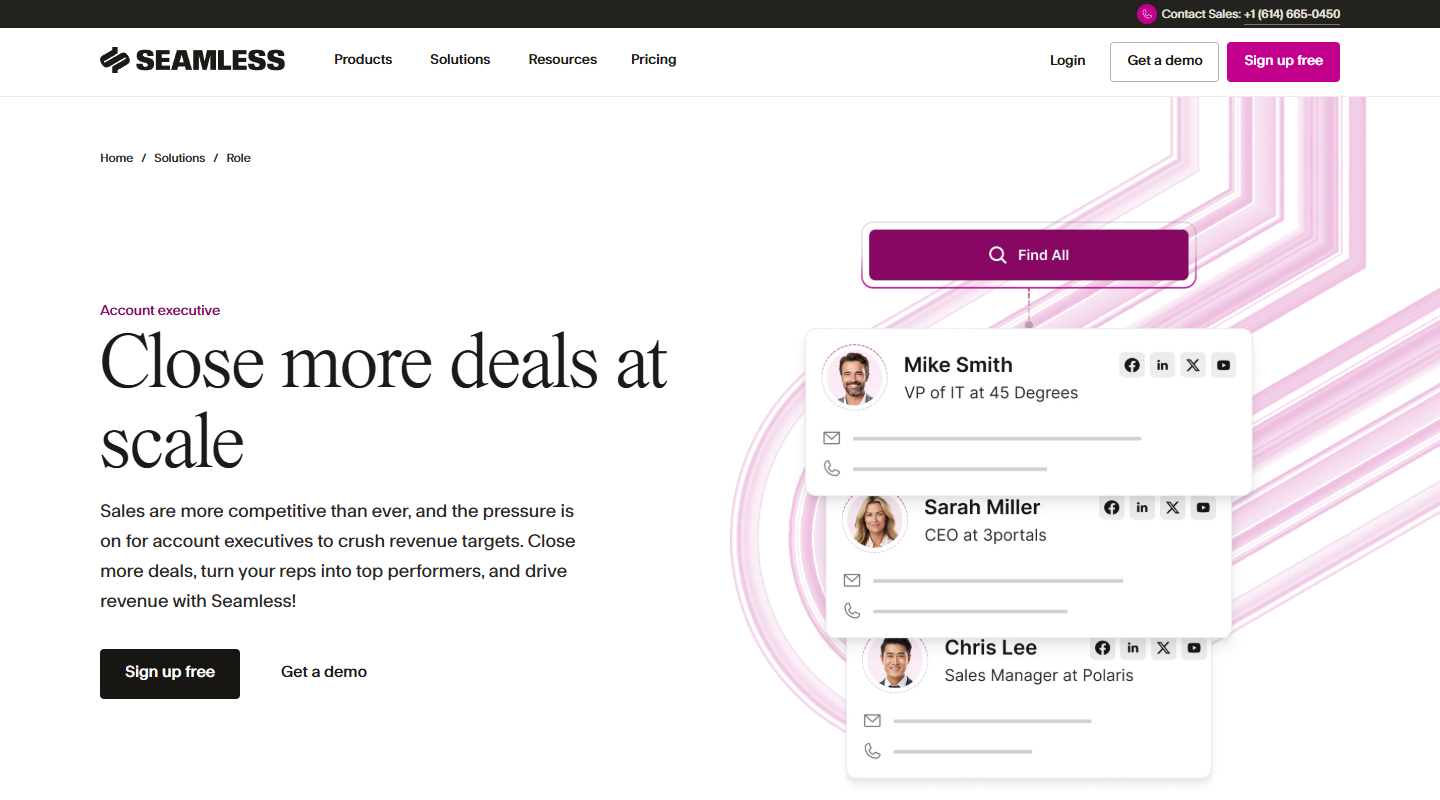
Seamless.AI is a real-time search engine for B2B contacts that builds emails and phone numbers on demand rather than serving them from a static list.
It leans on AI to verify records as you search, which appeals to reps who prospect in high volume and want fresh data.
vs ZoomInfo: Seamless is cheaper and offers a free tier, making it an accessible entry point for US list building. The trade-off is that real-time results vary in accuracy, and reviews often flag aggressive renewals, so read the terms.
It suits volume prospecting more than precision enterprise targeting.
| Seamless.AI | |
|---|---|
| Pros | Cons |
|
|
- vs ZoomInfo: Cheaper with a free tier, real-time rather than curated
- Pricing: Free, then ~$147 per month
- Best for: High-volume US list building
Lead411
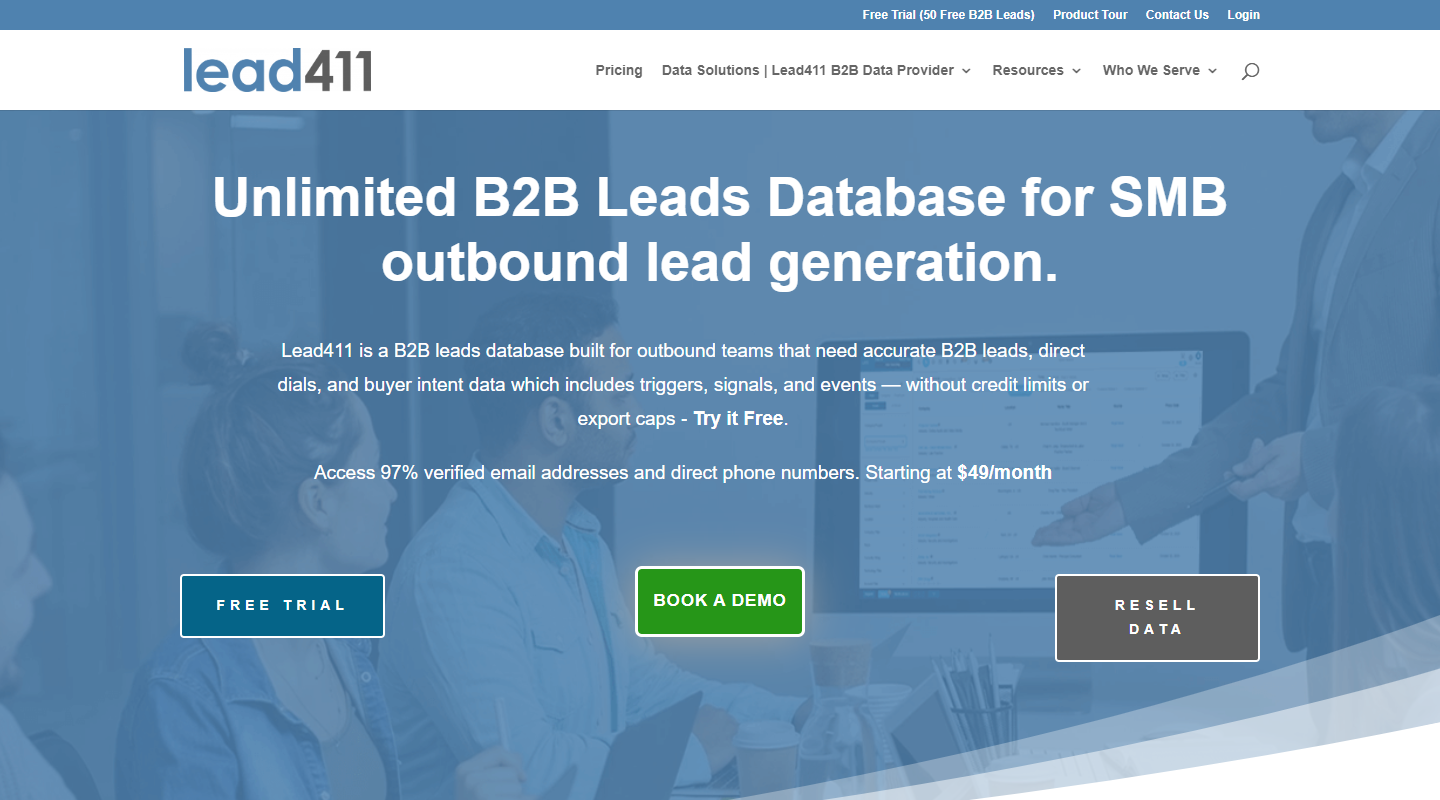
Lead411 is a US-focused sales intelligence provider that pairs verified contact data with Bombora-powered buyer intent and growth triggers like hiring, funding, and leadership changes. It packages signals many rivals reserve for their priciest tiers into a more approachable plan.
vs ZoomInfo: Lead411 delivers intent and trigger data, the features buyers most miss when they downgrade, at a far lower published price than ZoomInfo.
Its database is smaller and more US-centric, but for teams that want to time outreach around real signals without a five-figure spend, it is a strong middle ground.
| Lead411 | |
|---|---|
| Pros | Cons |
|
|
- vs ZoomInfo: Comparable intent and triggers at a fraction of the cost
- Pricing: From ~$75 to $99 per user each month
- Best for: Intent and trigger data on a budget
LeadIQ
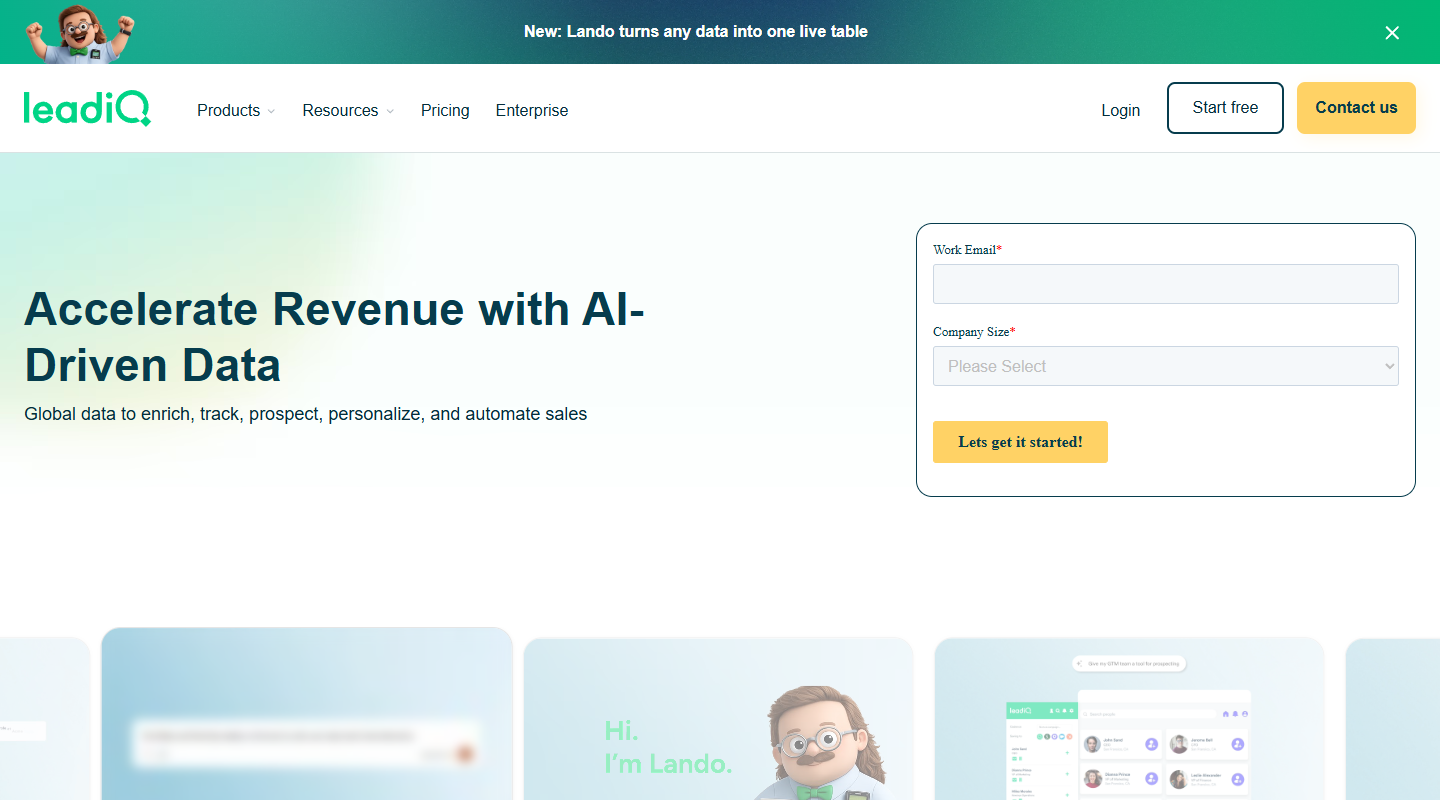
LeadIQ is a prospecting tool built for SDRs who work inside LinkedIn Sales Navigator, letting them capture contacts and push them straight into the CRM and sequencing tools with one click.
It focuses on the daily workflow of building lists rather than owning the entire data layer.
vs ZoomInfo: LeadIQ is lighter and cheaper, with a free tier and smooth Sales Navigator and CRM sync, where ZoomInfo is a full platform.
It carries less data depth and no serious intent layer, but for rep-level capture and clean handoff it removes a lot of manual entry.
| LeadIQ | |
|---|---|
| Pros | Cons |
|
|
- vs ZoomInfo: Workflow-first capture and sync, cheaper, less depth
- Pricing: Free, then ~$36 to $79 per user each month
- Best for: SDR prospecting inside Sales Navigator
6sense
6sense is a predictive account-based marketing platform that combines intent data, AI scoring, and orchestration to tell revenue teams which accounts are in-market before they raise a hand.
It sits at the strategic end of the market, aimed at coordinated sales and marketing motions rather than solo prospecting.
vs ZoomInfo: 6sense goes deeper on predictive intent and ABM orchestration than ZoomInfo, but it is an enterprise investment in the same five-figure territory, so it is not a cost-saving move. Choose it when the goal is smarter targeting at scale, not a cheaper database.
| 6sense | |
|---|---|
| Pros | Cons |
|
|
- vs ZoomInfo: Deeper predictive intent and ABM, similar enterprise cost
- Pricing: Custom (~$60k+ per year)
- Best for: Enterprise ABM at scale
Clearbit (HubSpot Data Enrichment)
Clearbit, now part of HubSpot and offered as Breeze Intelligence, is an enrichment layer that fills in and updates company and contact records inside your CRM and reveals anonymous website visitors.
It is less a standalone prospecting database and more a way to keep the data you already hold complete and current.
vs ZoomInfo: Clearbit shines at real-time CRM enrichment and visitor reveal for inbound teams, especially those already on HubSpot, where ZoomInfo is built for outbound list building.
Pricing depends on your plan and volume, and it works best as a complement to inbound rather than a raw outbound database.
| Clearbit (HubSpot Data Enrichment) | |
|---|---|
| Pros | Cons |
|
|
- vs ZoomInfo: Enrichment and visitor reveal rather than outbound lists
- Pricing: Plan-dependent (tied to HubSpot)
- Best for: HubSpot and inbound-led teams
LinkedIn Sales Navigator
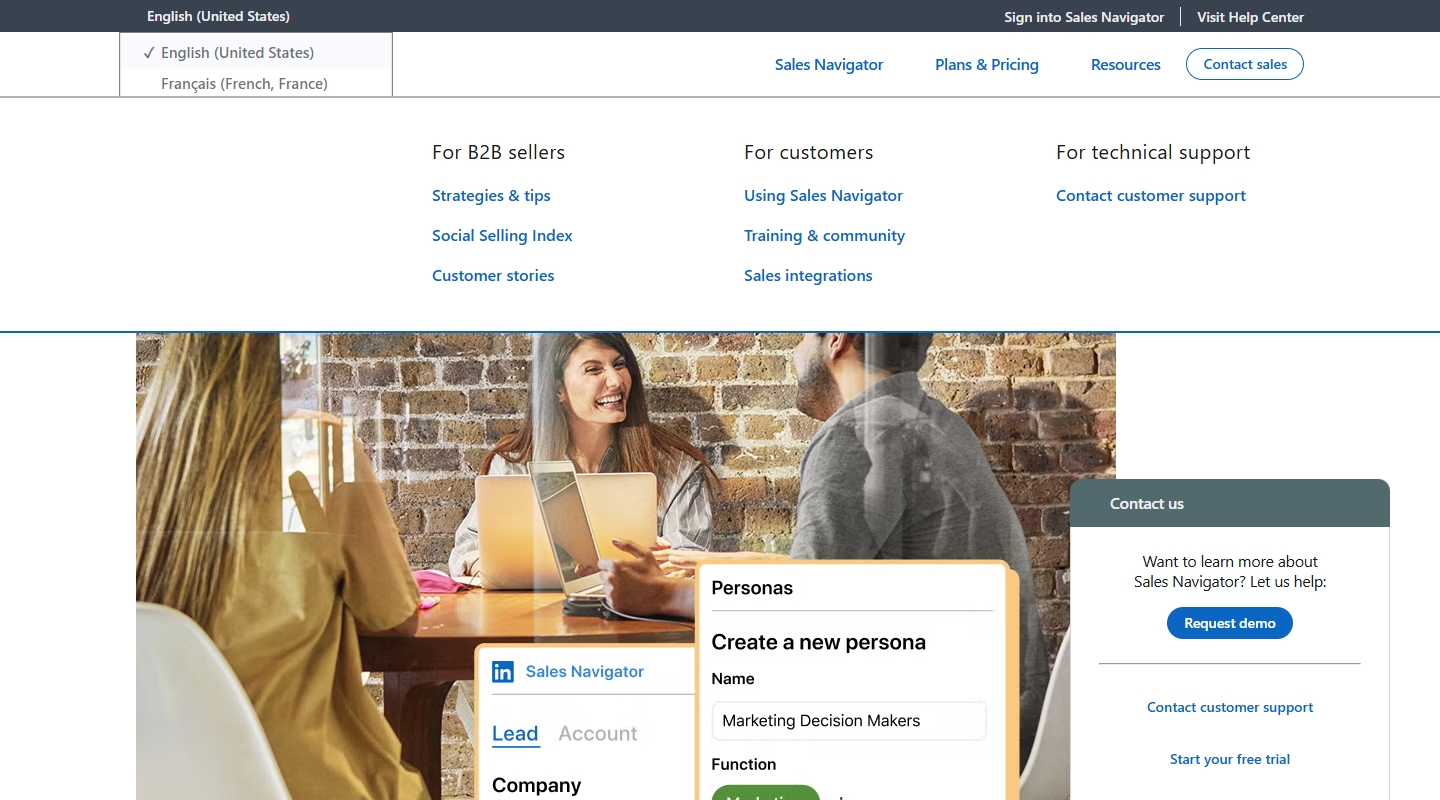
LinkedIn Sales Navigator is the professional network’s own prospecting product, giving sellers advanced search, lead recommendations, and InMail across the largest live professional graph in the world. Because members update their own profiles, the underlying data is unusually fresh.
vs ZoomInfo: Sales Navigator excels at finding and reaching people through social selling and warm paths, while ZoomInfo exports bulk contact records with emails and direct dials.
It does not hand you downloadable email lists, so many teams run it alongside a data tool rather than as a full replacement. Pair it with dedicated LinkedIn outreach tools to work that channel harder.
| LinkedIn Sales Navigator | |
|---|---|
| Pros | Cons |
|
|
- vs ZoomInfo: Live professional graph and social reach, no bulk export
- Pricing: ~$99 per month
- Best for: Relationship-led and social selling
RocketReach
RocketReach is a broad contact lookup tool that finds professional emails, phone numbers, and social profiles across a huge index of people and companies, with a well-regarded API for teams that want to build lookups into their own systems.
It favors reach and flexibility over a heavy platform.
vs ZoomInfo: RocketReach is cheaper and easier to start, with straightforward monthly plans and strong API access, though it offers no real intent data and less firmographic depth. For wide coverage and programmatic lookups without a contract, it is a practical pick.
| RocketReach | |
|---|---|
| Pros | Cons |
|
|
- vs ZoomInfo: Wide contact coverage and a solid API, no intent layer
- Pricing: ~$48 to $249 per month
- Best for: Wide coverage and API-driven lookups
Hunter.io
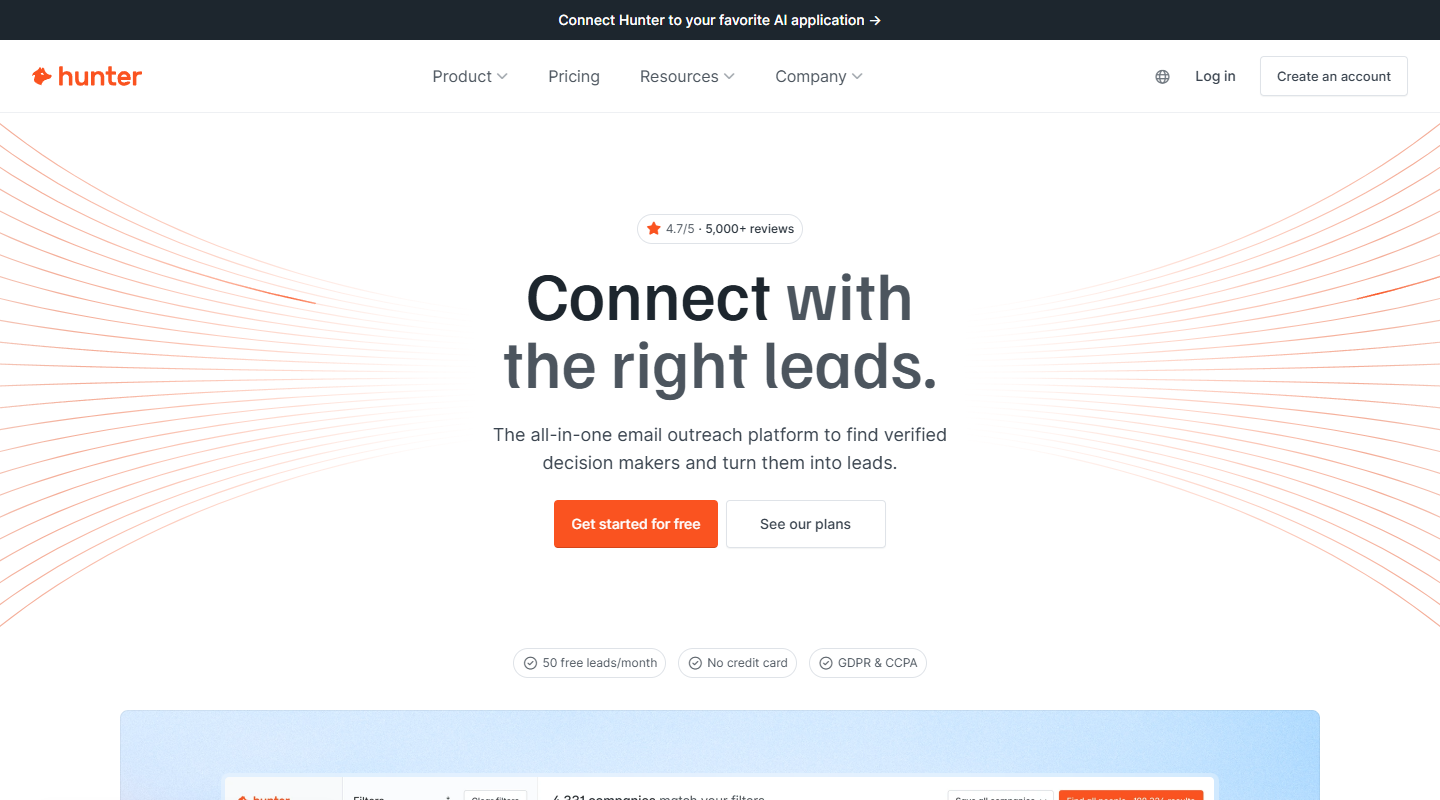
Hunter.io is a focused email finder and verifier that locates professional addresses by domain, confirms they are valid, and includes a light cold email tool for small campaigns. It does one job cleanly and prices it accordingly, which is exactly why lean teams like it.
vs ZoomInfo: Hunter is a narrow, inexpensive email-only tool, with a free tier and a low monthly price, where ZoomInfo is a full intelligence suite.
It offers no phone numbers, intent, or firmographic depth, but for cheap, reliable email discovery it is one of the best sites like zoominfo for a single task.
| Hunter.io | |
|---|---|
| Pros | Cons |
|
|
- vs ZoomInfo: Email discovery and verification only, very cheap
- Pricing: Free, then ~$34 per month
- Best for: Cheap email-only search and verification
Clay
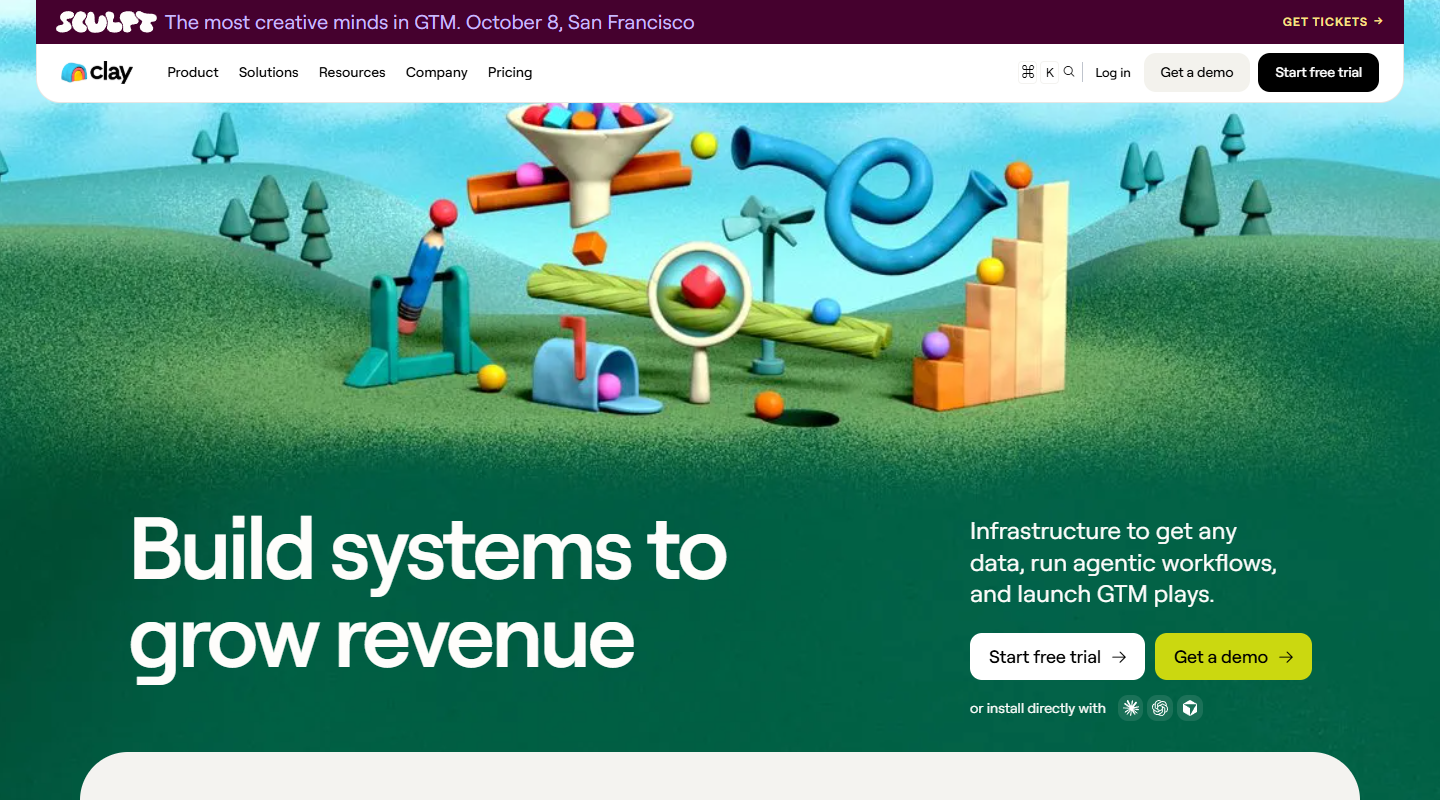
Clay is a data automation platform that runs waterfall enrichment across more than 100 sources and layers AI research on top, so you can build custom prospecting workflows in a spreadsheet-style interface.
It is the tool RevOps teams reach for when off-the-shelf data is not enough.
vs ZoomInfo: Clay does not replace a single database, it orchestrates many, pulling from multiple providers to fill gaps ZoomInfo alone would leave.
That makes it more flexible and often cheaper per enriched record, but it demands more setup and technical comfort than a turnkey platform.
| Clay | |
|---|---|
| Pros | Cons |
|
|
- vs ZoomInfo: Combines 100+ sources with AI, more flexible than one database
- Pricing: Free, then paid tiers
- Best for: Technical RevOps and custom workflows
The Five-Figure Contract Nobody Needs
What the Full Stack Really Costs
Here is the math that gets lost in a ZoomInfo demo. A database on its own does not book meetings.
To turn those records into replies you also buy a sequencer to send the emails, then deliverability and warm-up tools to keep those emails out of spam, then extra sending domains and inboxes to spread the volume.
The ZoomInfo contract is only the first line item. By the time the full data-only stack is assembled, you are paying for the list, the software that mails it, and the software that tries to rescue the mail that would otherwise bounce.
You can see the shape of that stack in the tools teams bolt on around a database.
Cold email platforms like the ones covered in this Saleshandy review, this GMass review, this Mailshake review, this QuickMail review, and this Instantly review all exist to solve the same downstream problem: getting a message from a rented address into an inbox that increasingly filters it out.
Round-ups of Lemlist alternatives map out just how crowded that sending layer has become. Each is a subscription, each needs warm-up, and each still lives or dies on deliverability you do not control.
The Case for a Single Execution Layer
The uncomfortable truth is that a bigger database never fixes a bounce, and no amount of intent data talks past a gatekeeper.
Buying more contacts scales the top of the problem while leaving the bottom untouched. That is the case for a single execution layer instead.
contactID collapses the database-plus-sequencer-plus-deliverability stack into one motion: it builds the target list from your chosen niche and location, personalizes the message, and delivers it through each site’s own contact form, so the message arrives without a warm-up schedule or a spam folder in the way.
Whether you sell software or run something as inbox-crowded as insurance lead generation, the constraint was never the size of the list, it was whether the message landed.
A data-only stack carries more line items than the contract itself. Here is the fuller picture next to a single execution layer.
| ZoomInfo stack | contactID | |
|---|---|---|
| Annual commitment | roughly $15k to $60k, contract required | no contract, pay per success |
| Extra tools needed to actually send | email sequencer plus warm-up or deliverability tools | none, sending is built in |
| Who owns delivery | you do, through email that can bounce | the form, at about 100 percent |
| Your data at contract end | removed, you cannot keep it | not applicable |
Contract figures reflect widely reported ZoomInfo ranges, not a public price list; your quote will vary.
Matching a ZoomInfo Alternative to Your Budget
The top ZoomInfo alternatives split into cheaper data tools and a different approach entirely, so anchor the whole decision to why you are leaving ZoomInfo.
If the pain is purely cost, Apollo.io or UpLead give you most of the database for a small fraction of the spend, with no annual commitment to sign.
If the gap is regional, Cognism is the clearest upgrade on EU and UK data and compliance, and it usually wins the zoominfo vs cognism call for teams selling into Europe.
Then match the tool to your motion. Solo reps and small teams do well with self-serve tools like Lusha, LeadIQ, or Hunter, while enterprises chasing coordinated targeting look at 6sense or Clay.
Watch the contract shape as closely as the sticker price: a low monthly plan with no lock-in beats a cheaper annual quote that auto-renews, and a free tier lets you test data quality before a cent changes hands.
Finally, be honest about the step everyone skips. A cheaper database still leaves you owning deliverability, warm-up, and gatekeepers, which is the real question behind whether cold email still works at all.
If the outcome you actually want is replies rather than rows in a spreadsheet, weigh an execution tool alongside the data ones, because the message landing is the whole point.
When ZoomInfo Is Worth the Contract
For large enterprises, ZoomInfo can justify its price.
If you need the deepest North American database, mature intent data, and integrations wired across a big revenue team, and you have the budget to match, it remains the category benchmark and the annual commitment can be a fair trade.
The math turns for small and mid-sized teams, where a five-figure contract buys data you still have to email through a leaky channel. If you are not leaning on intent signals or a large seat count, you are paying enterprise rates for features you will barely touch.
That is the moment a leaner ZoomInfo alternative, or a different approach entirely, starts to make more sense.
Skip the Contract and Land Every Message with contactID
Every data tool above ends at the same cliff: you have the contacts, now go fight the inbox. contactID outreach automation starts where they stop.
It finds the contact form on any target site, solves the CAPTCHA, personalizes the message with AI, and submits it for you, so your outreach lands inside the recipient’s own system at close to 100 percent deliverability.
No five-figure contract, no three-seat minimum, no auto-renewal to escape, and no domain warm-up or spam filter standing between you and a reply.
Because pricing is pay-per-success, you are charged only for forms actually submitted, never for skips, failures, or dead sites.
Paste a list of URLs or upload a CSV, or let the built-in lead finder hand you a curated one, then watch the results in a live dashboard. It is the antidote to renting a database you still have to email.
Is a ZoomInfo Alternative Right for You?
Leaving ZoomInfo is less about finding a cheaper database and more about whether your outreach still lands without a five-figure contract.
They are the ones whose cost, contract, and coverage match how your team actually sells, which for most buyers leaving ZoomInfo means trading a rigid five-figure annual commitment for a cheaper, flexible tool they can leave whenever they choose.
But there is a deeper question underneath the shortlist. The real one is not which database you rent, it is whether your message lands without a contract holding you hostage.
If the answer you want is replies, let the site’s own contact form do the delivering and pay only when it works.
FAQs
1- How much does ZoomInfo cost?
ZoomInfo does not publish pricing, and every deal is a custom quote.
The entry Professional edition runs around 15,000 dollars a year for three seats, and real-world spend for a growing sales team commonly lands between 30,000 and 60,000 dollars a year once credits and add-ons are included.
Plans carry a three-seat minimum and a mandatory annual contract with no monthly billing, plus a 60-day cancellation window before auto-renewal, and your access to the data ends when the contract does.
2- Is there a free ZoomInfo alternative?
Yes. Several strong ZoomInfo competitors offer a free tier: Apollo.io, Lusha, Seamless.AI, LeadIQ, Hunter.io, and Clay all let you start without paying.
Free plans cap monthly credits and gate advanced features, so they suit testing data quality and light prospecting rather than running a full team, but searching for zoominfo alternatives free is a genuine way to replace the platform at zero cost while you evaluate.
3- What is the best cheaper ZoomInfo alternative?
For most teams Apollo.io is the best cheaper swap, pairing a large contact database with built-in sequencing from roughly 49 to 119 dollars per user each month and no five-figure contract.
UpLead is the pick when data accuracy matters most, with a 95 percent accuracy guarantee and credit refunds, and Cognism is the choice for compliant, phone-verified EU coverage. The right answer depends on whether you optimize for price, accuracy, or region.
4- Is Apollo.io a good ZoomInfo replacement?
For small and mid-sized teams, yes. In the apollo vs zoominfo comparison, Apollo delivers a comparable core database plus native email sequencing at a fraction of the price, with a usable free tier and month-to-month billing.
ZoomInfo still leads on deep intent data, enterprise integrations, and phone-verified coverage in North America, so the largest sales orgs may prefer it, but most buyers leaving on cost find Apollo covers the job.
5- Why do businesses leave ZoomInfo?
Cost and contracts top the list. Buyers cite the five-figure annual commitment, the three-seat minimum, renewal price increases, and the 60-day cancellation window with auto-renewal that makes leaving hard.
Others point to direct dials that route to reception, weaker EU and GDPR-compliant data, and opaque credit consumption. The recurring theme across zoominfo alternatives reddit threads is that the platform is powerful but rigid and expensive for what many teams actually use.
6- Are there ZoomInfo alternatives that send the outreach for you?
Yes. contactID is built for exactly that.
Instead of selling you a database you still have to email, it finds, fills, and submits the contact form on any website at scale, so your message lands inside the recipient’s own inbox or CRM at close to 100 percent deliverability with no bounces, domain warm-up, or spam filters.
It runs on pay-per-success pricing with no annual contract, so you pay only for forms actually submitted, which makes it the rare ZoomInfo alternative that delivers the outreach rather than just the list.
 Summarize this article with: