Apollo.io is one of the most popular B2B sales platforms in the world: a database of roughly 240 to 275 million contacts, more than 65 filters, and built-in sequencing and dialing, all with a free tier. Even so, many users start hunting for Apollo alternatives within a year.
The reasons repeat across review sites and apollo alternatives reddit threads: data accuracy that sits around 65 to 85 percent, email bounce rates of 15 to 35 percent, credits that expire monthly, per-seat costs that creep, and thin mobile data outside the United States.
None of that is fixed by a bigger list. Teams pair Apollo with the best cold email software to send at volume, yet results still hinge on whether the addresses are real and whether the message actually lands.
Below are the 12 best apollo.io alternatives for 2026, free and paid, including one tool that solves the problem Apollo never touches: delivering your message. Each entry says what the tool is, then how it compares to Apollo.
Key Takeaways
- Two different problems: 11 of these tools sell you contact data, and one, contactID, actually delivers the outreach through the prospect’s own contact form.
- Data leaders: ZoomInfo for US enterprise depth, Cognism for compliant EMEA mobiles, and UpLead for accuracy on a budget with a 95 percent guarantee.
- Free to start: Seamless.AI, Hunter.io, LeadIQ, and Lusha all offer a free tier, so apollo alternatives free is a real option.
- The bounce problem: a bigger database never fixes a bounced email, because the failure happens in the sending channel, not the record.
- Match tool to bottleneck: if reaching people is the real blocker, an outreach tool beats another data subscription.
Every Apollo Alternative at a Glance
Skip ahead if you like: the table below ranks the top 12 Apollo.io alternatives by what they do, whether they actually deliver your message, starting price, and who each one suits.
Notice the delivery column: every data tool answers no, and only contactID sends the outreach for you.
| Tool | What it does | Delivers the message? | Starting price | Best for |
|---|---|---|---|---|
| contactID | Contact-form outreach automation | Yes, via form (~100%) | Pay per successful submission | Reaching people, not buying data |
| ZoomInfo | Enterprise contact and intent data | No, data only | ~$15k+/yr custom | Enterprise US depth |
| Cognism | GDPR-compliant phone-verified data | No, data only | Custom quote | Europe and compliance |
| Seamless.AI | Real-time AI contact search | No, data only | Free, then ~$147/mo | High-volume list building |
| RocketReach | Self-serve email and phone lookup | No, data only | ~$33 to $53/mo | Small-team lookups |
| UpLead | Accuracy-first B2B data | No, data only | ~$74 to $199/mo | Data quality on a budget |
| Hunter.io | Email finder and verification | No, data only | Free, then ~$34/mo | Simple email discovery |
| LinkedIn Sales Navigator | LinkedIn-native prospecting | No, no email export | ~$99/mo | Relationship-led selling |
| LeadIQ | One-click LinkedIn capture to CRM | No, data only | Free, then ~$36 to $79/user | SDR capture workflow |
| Lead411 | US data plus buyer intent triggers | No, data only | ~$99/user/mo | Budget teams wanting intent |
| Lusha | Lightweight Chrome-extension lookup | No, data only | Free, then ~$29 to $49/user | Quick SMB lookups |
| Clay | Waterfall enrichment plus AI | No, data only | ~$149+/mo | Technical RevOps workflows |
Data Tools vs Outreach Tools: Which Problem Are You Actually Solving?
The Two Problems You Might Be Solving
Before you shortlist anything, get clear on which of two very different problems you are trying to fix.
Eleven of the tools below are data platforms: they hand you a contact record, an email address, a phone number, maybe an intent signal, and then your job begins.
One tool, contactID, works both ends: it can build the target list itself and then deliver your message, with no separate sending stack required. Confusing the two is the most expensive mistake in B2B prospecting.
Here is the trap. When cold email underperforms, the instinct is to blame the list and buy more or better data. But a bigger database never fixes a bounce.
A bounce, a spam-folder landing, or a throttled send happens in the delivery channel, after the record is already correct.
You can buy the most accurate email on earth and still have it rejected because your domain is cold, your volume tripped a filter, or the mailbox provider simply does not trust you yet. That is a channel problem, and no amount of enrichment touches it.
How to Read This List
So the honest way to read this list: if your bottleneck is not knowing who to contact, pick a data tool that fits your region and budget.
If your bottleneck is that your messages are not landing, the fix is a different channel, not a fuller spreadsheet.
contactID is the rare pick that answers both, since it can build the list and then do the sending, which is exactly why it sits at number one and reads nothing like the other 11.
To see why the channel matters more than the database, run the same 1,000 prospects through both. The email figures use bounce ranges Apollo users commonly report, so read this as illustrative math, not a lab test.
| Per 1,000 prospects | Cold email (fed by any data tool) | Contact forms (contactID) |
|---|---|---|
| Messages sent | 1,000 | 1,000 |
| Bounced on bad or stale data | around 150 to 350 | 0 |
| Needs domain warm-up first | Yes | No |
| Exposed to spam filtering | Yes | No, it lands in the site’s own inbox |
| Daily sending caps | Yes | No |
Bounce ranges reflect figures Apollo.io users report across review sites; your own results depend on list quality and warm-up.
The 12 Best Apollo Alternatives, Ranked
The lineup runs from enterprise data giants to lightweight lookup extensions, with one outreach-first tool leading the way.
Whatever pushed you off Apollo.io, whether it was accuracy, bounce rates, credit limits, or cost, there is a fit here among the best apollo alternatives on the market today.
contactID
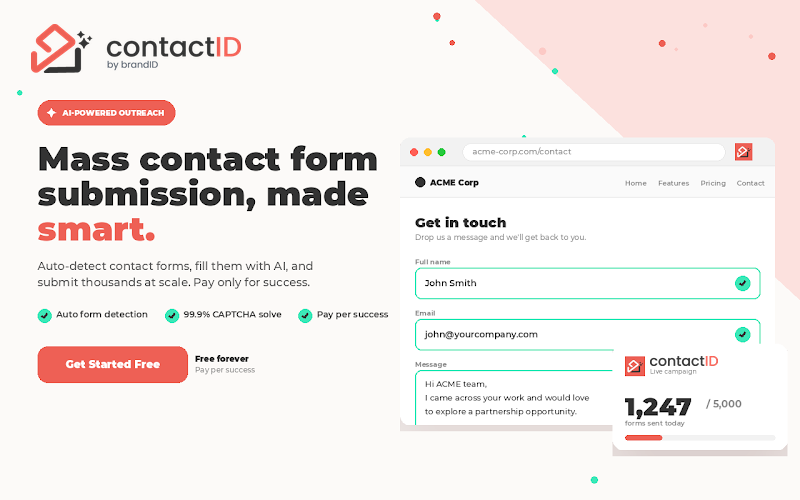
contactID is brandID’s contact-form outreach automation platform: a Chrome extension plus dashboard that finds, fills, and submits the “Contact Us” form on any website at scale.
Rather than selling you records to email later, it delivers your message directly, powered by contactID’s contact-form automation engine that detects the form, maps the fields, and submits on your behalf.
It Builds Your List, Not Just Sends It
Start with nothing and contactID still has you covered.
Pick a niche, a country, and a city, much like dedicated local marketing software, and it returns a target list of matching business websites, each one carrying emails, phone numbers, and context most databases skip: the site’s language, the technology it runs on, the exact contact-page URL, and whether the listing is claimed or not, among other fields.
Export that list for any workflow you like, or send it straight into a form-outreach run without ever opening a separate data tool. That is what makes it a real Apollo replacement rather than a bolt-on.
Then It Reaches Them for You
Here is how it compares to Apollo, and to every other tool on this list.
Apollo gives you an email or phone number that you still have to send to, and the sending channel is exactly where deliverability dies: bounces, spam filters, domain warm-up, and daily send caps.
contactID skips the data problem entirely and delivers through the prospect’s own contact form, so deliverability sits at roughly 100 percent.
There are no bounces, no domain reputation to protect, no warm-up period, and no send limits, because you are using a channel the prospect built specifically to receive messages. It is a genuinely different take on contact form marketing than the data-first crowd.
The feature set is built around that delivery model. Auto Form Detection and a Contact-Form Submission Engine locate and complete each form, and Auto CAPTCHA Solving clears gates through 2Captcha or Anti-Captcha with a manual override.
An AI Personalization Engine rewrites copy per site using merge tags and a 12-message template library. Sender Agents store reusable identity profiles, A/B split testing compares messages, and Bulk Targeting accepts pasted URLs or a CSV, TXT, or Excel upload where extra columns auto-map to merge tags.
Live Send Runs, an Analytics Dashboard, and AI Credits and Billing with spend caps keep every campaign visible and on budget. Advanced Export to CSV, JSON, HTML, or Markdown, plus referral credits, rounds it out.
Pricing is pay-per-success: you only pay for forms that are actually submitted, never for skips, fails, or dead sites.
| contactID | |
|---|---|
| Pros | Cons |
|
|
- Approx pricing: pay per successful submission, no per-seat fee
- vs Apollo: delivers the message at ~100% instead of handing you data that bounces
- Best for: teams whose real bottleneck is reaching people, not buying more data
ZoomInfo
ZoomInfo is the enterprise data leader, a sales intelligence platform known for deep US company and contact records, verified direct dials, and rich buyer-intent signals sourced from a large data-partner network.
If you want the fullest possible picture of a US account, this is the reference point everyone else is measured against, and it is worth reading alongside broader ZoomInfo alternatives if the price gives you pause.
Compared to Apollo, the apollo vs zoominfo question usually comes down to depth versus value.
ZoomInfo generally beats Apollo on US enterprise accuracy, phone verification, and intent, but it costs far more, commonly around 15,000 dollars per year and up on annual custom contracts with no meaningful free tier.
Its main limitation is exactly that: price and contract rigidity put it out of reach for most small teams.
| ZoomInfo | |
|---|---|
| Pros | Cons |
|
|
- Approx pricing: from around $15,000/yr, custom
- vs Apollo: deeper US data and intent, at many times the cost
- Best for: enterprise teams needing US depth and intent
Cognism
Cognism is a sales intelligence platform built around compliance and European coverage, best known for phone-verified mobile numbers and a GDPR-first approach that checks contacts against do-not-call lists.
Its Diamond Data label flags numbers its team has manually verified, which is a strong signal for teams that live on the phone.
Set against Apollo, Cognism is the answer to weak non-US data and compliance worries.
Where Apollo’s EMEA mobile coverage can be thin and its accuracy uneven, Cognism focuses on verified European and UK mobiles with cleaner consent handling, though it sells on custom quotes rather than a self-serve free tier.
The limitation is cost and the need to talk to sales, so it suits committed outbound teams more than casual users.
| Cognism | |
|---|---|
| Pros | Cons |
|
|
- Approx pricing: custom quote, annual
- vs Apollo: stronger EMEA mobiles and GDPR compliance
- Best for: European teams and compliance-sensitive outbound
Seamless.AI
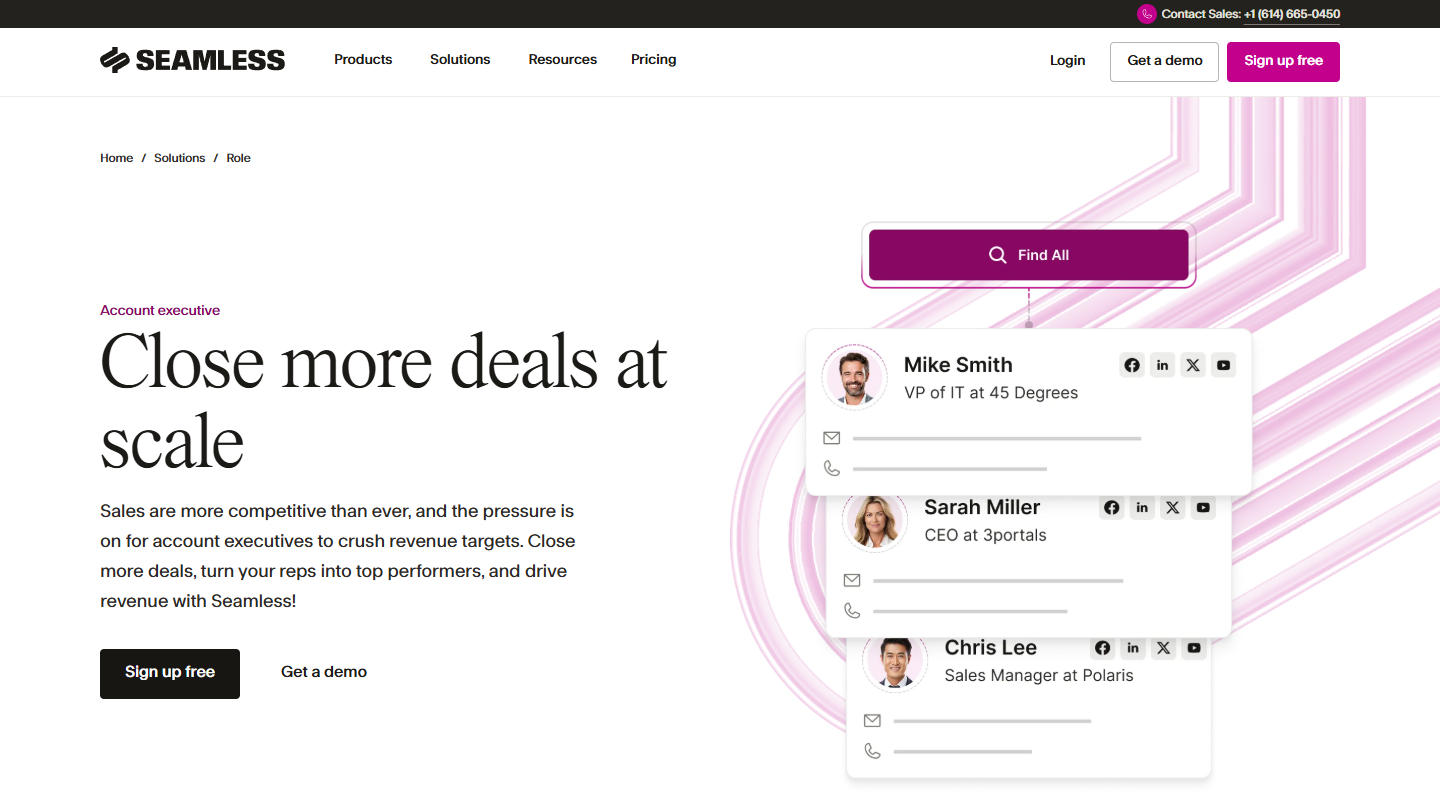
Seamless.AI is a real-time contact search engine that uses AI to find and verify emails and phone numbers at the moment you search, rather than serving them from a static database.
That live-lookup model appeals to reps who want fresh records and a fast, high-volume list-building workflow.
Versus Apollo, Seamless.AI leans harder into volume and a Chrome-extension-driven workflow, and it offers a free tier before paid plans that start around 147 dollars per month.
It is a close apollo competitor on raw list building, but users report variable accuracy and aggressive upsell pressure, so budget verification time before a big send.
| Seamless.AI | |
|---|---|
| Pros | Cons |
|
|
- Approx pricing: free tier, then from around $147/mo
- vs Apollo: real-time lookups over a static database
- Best for: high-volume list building
RocketReach
RocketReach is a self-serve contact lookup tool with a database of more than 700 million professional profiles, letting you find verified emails and phone numbers by name, company, or role.
It is straightforward, quick to learn, and priced for individuals and small teams rather than enterprises.
Against Apollo, RocketReach trades the sequencing and dialer for simplicity and transparent, low pricing, roughly 33 to 53 dollars per month on entry plans. If you would miss the sales-engagement and sequencing Apollo bundles in, a Reply.io review shows what a dedicated sender adds.
It works well for one-off lookups and small-team prospecting, but it is a lookup tool at heart, so the limitation is that you get data without the workflow and engagement layer Apollo bundles in.
| RocketReach | |
|---|---|
| Pros | Cons |
|
|
- Approx pricing: from around $33 to $53/mo
- vs Apollo: simpler and cheaper, but lookup only
- Best for: small teams wanting transparent pricing
UpLead
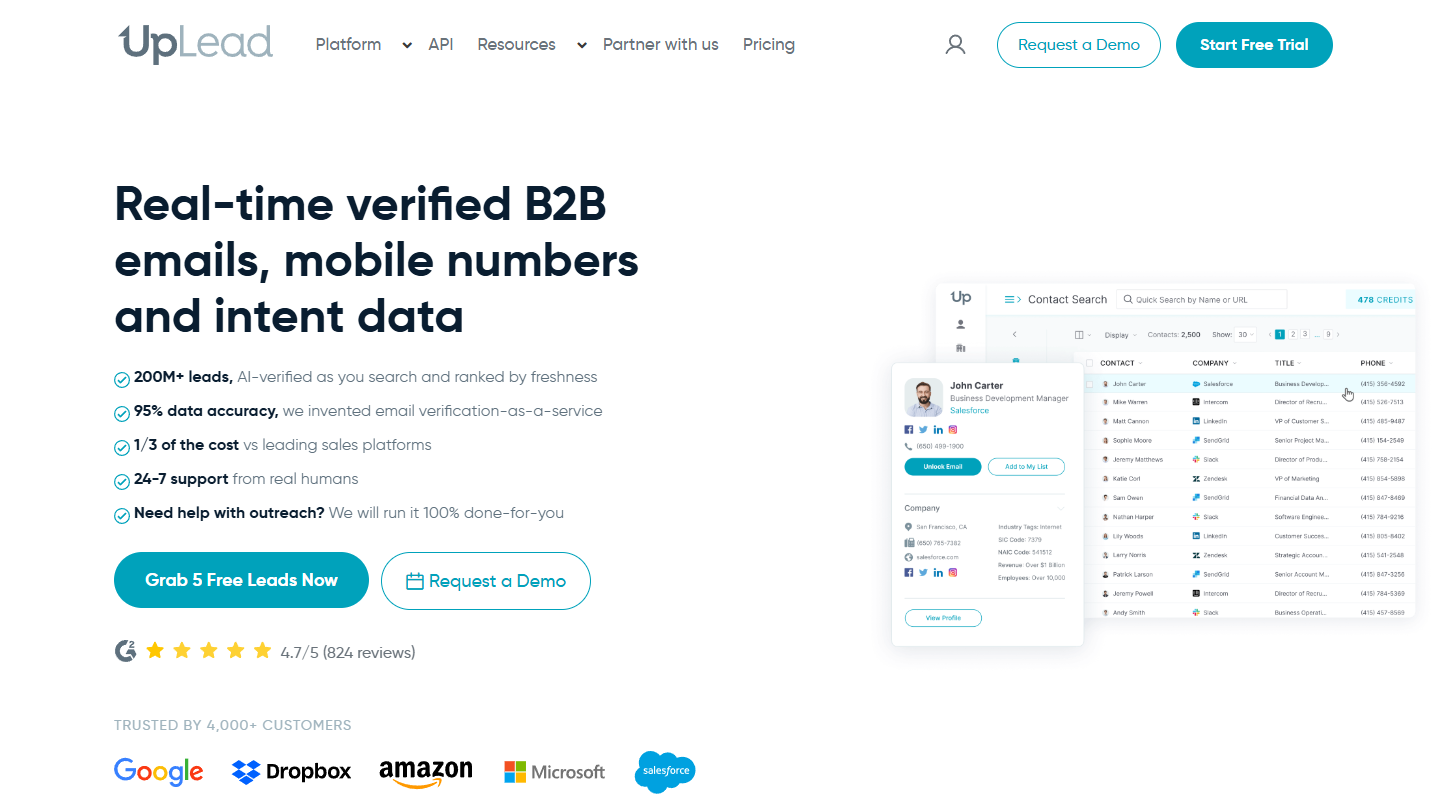
UpLead is an accuracy-first B2B data provider that verifies emails in real time as you export and backs its records with a 95 percent accuracy guarantee, refunding credits for any contact that turns out to be bad.
That refund-if-wrong promise is its whole identity, and it directly targets the data-quality complaints people have about larger databases.
Compared to Apollo, UpLead is smaller in raw count but higher in trustworthiness per record, at roughly 74 to 199 dollars per month depending on tier.
If Apollo’s 15 to 35 percent bounce rates are your pain point, UpLead is the obvious swap for cleaner sends, with the caveat that its total database is more modest, so very broad searches return fewer results.
| UpLead | |
|---|---|
| Pros | Cons |
|
|
- Approx pricing: from around $74 to $199/mo
- vs Apollo: higher accuracy with a 95% guarantee and refunds
- Best for: data quality on a mid-range budget
Hunter.io
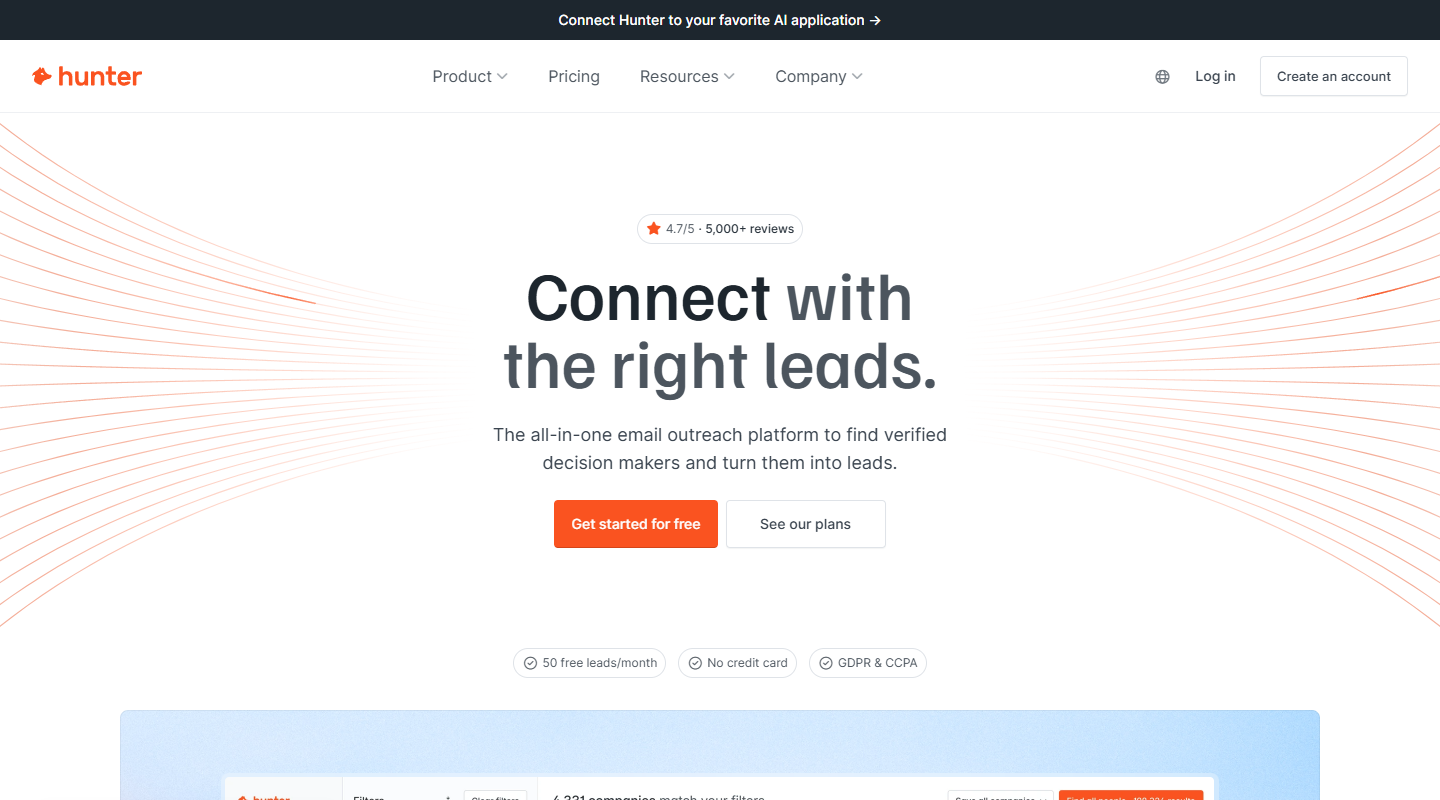
Hunter.io is a focused email finder and verification tool that locates addresses tied to a domain and scores how confident it is in each one.
It does one job cleanly: turning a company website into likely email addresses, plus a verifier that checks deliverability before you send.
Next to Apollo, Hunter.io is deliberately narrow and cheap, with a free tier and paid plans from around 34 dollars per month, and no phone data or sequencing.
It is the right pick when all you need is email discovery for a specific domain, but the limitation is scope, since it will not build broad filtered prospect lists the way Apollo does.
| Hunter.io | |
|---|---|
| Pros | Cons |
|
|
- Approx pricing: free tier, then from around $34/mo
- vs Apollo: cheaper and simpler, email discovery only
- Best for: cheap, simple email finding and verifying
LinkedIn Sales Navigator
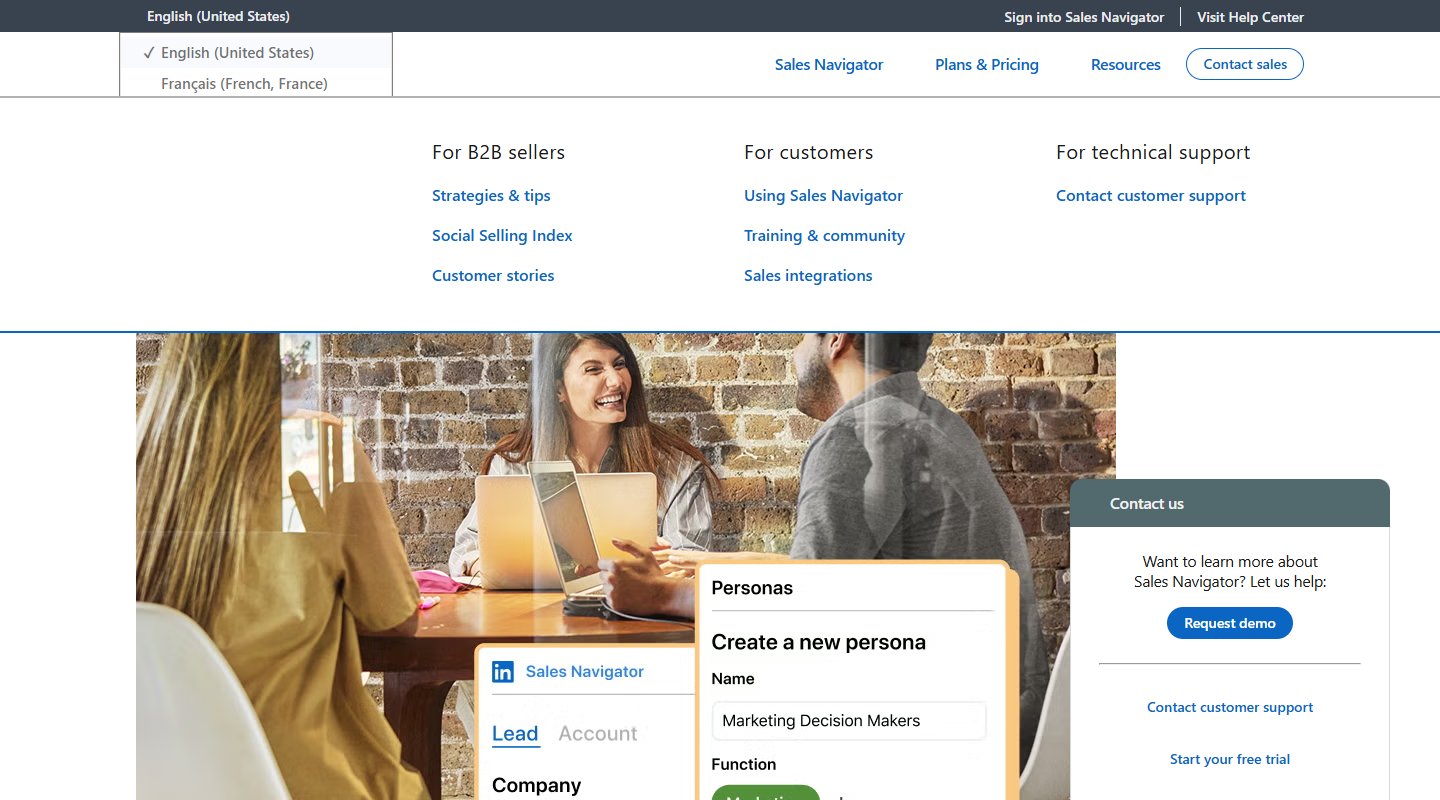
LinkedIn Sales Navigator is LinkedIn’s own prospecting product, giving you advanced search, lead and account lists, and InMail inside the network where your buyers already are. Because the data is self-reported and current, job-change and role accuracy tend to be excellent.
Compared to Apollo, Sales Navigator is relationship-first rather than volume-first, at around 99 dollars per month, and it is unmatched for warm, social-led selling.
The catch is that it does not export emails or phone numbers, so you cannot run cold email straight from it, which is exactly why many teams pair it with a data or outreach tool.
| LinkedIn Sales Navigator | |
|---|---|
| Pros | Cons |
|
|
- Approx pricing: from around $99/mo
- vs Apollo: current, self-reported data but no email export
- Best for: relationship-led and social selling
LeadIQ
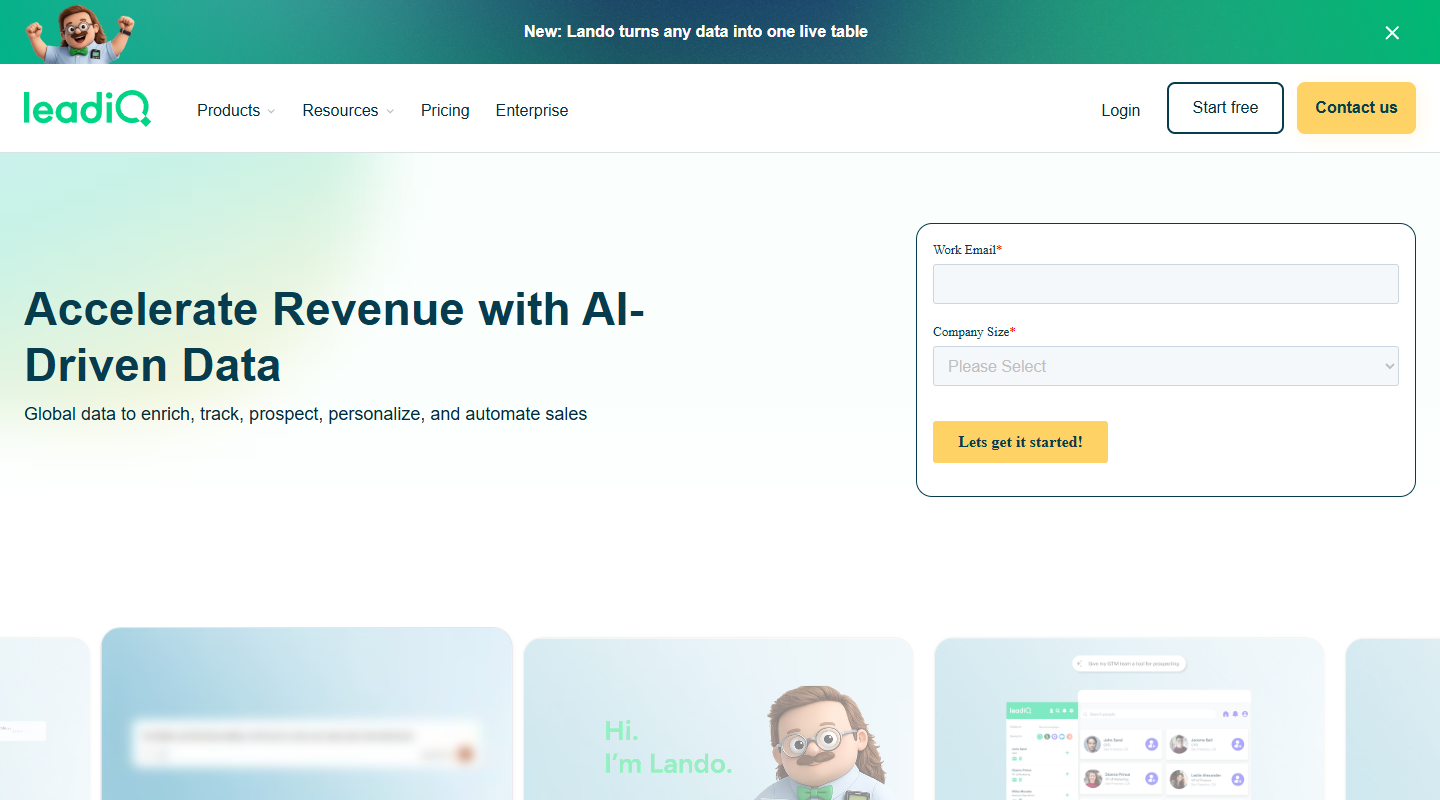
LeadIQ is a prospecting tool built for SDRs, centered on a browser extension that captures contact details straight from a LinkedIn profile and pushes them into your CRM or sequencer in one click.
It is designed to remove the copy-paste friction between finding a prospect and logging them.
Set against Apollo, LeadIQ is lighter and more workflow-focused, with a free tier and paid plans around 36 to 79 dollars per user per month, and it plays nicely alongside Sales Navigator.
Its limitation is that it is a capture-and-route layer rather than a full database, so it depends on you working from LinkedIn as the source of truth.
| LeadIQ | |
|---|---|
| Pros | Cons |
|
|
- Approx pricing: free tier, then from around $36 to $79/user/mo
- vs Apollo: faster LinkedIn-to-CRM capture, lighter database
- Best for: the SDR capture-to-CRM workflow
Lead411
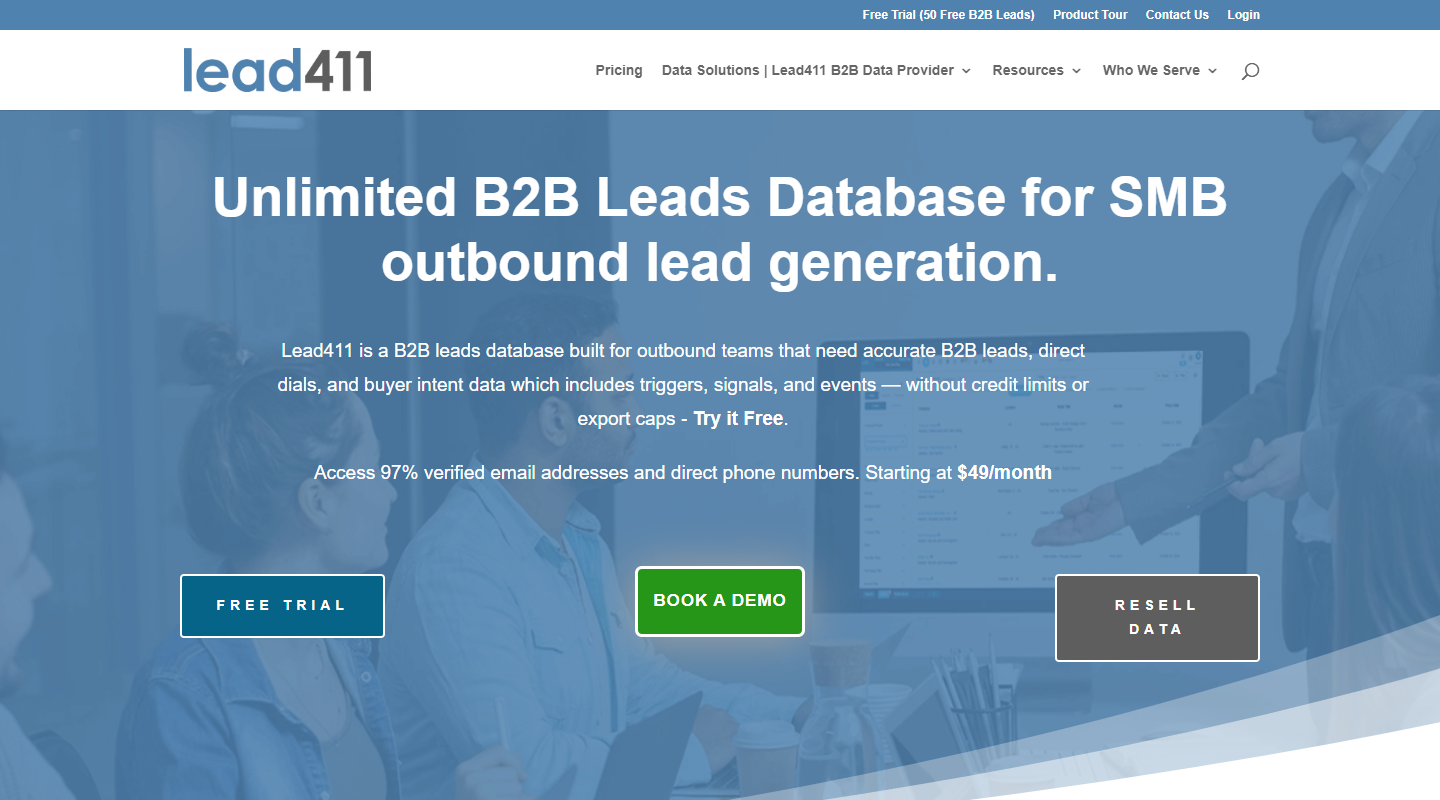
Lead411 is a US-focused B2B data provider that pairs verified contact records with Bombora-powered buyer intent and growth triggers, such as funding rounds, hiring surges, and leadership changes. Those triggers let you time outreach to moments when a company is more likely to buy.
Compared to Apollo, Lead411 offers similar intent-style signals at a more accessible roughly 99 dollars per user per month, making buyer intent affordable for smaller teams.
Its coverage is strongest in the US, which is also the limitation: international data is thinner, so it fits domestic outbound better than global campaigns.
| Lead411 | |
|---|---|
| Pros | Cons |
|
|
- Approx pricing: from around $99/user/mo
- vs Apollo: affordable buyer intent and triggers
- Best for: budget teams that want intent data
Lusha
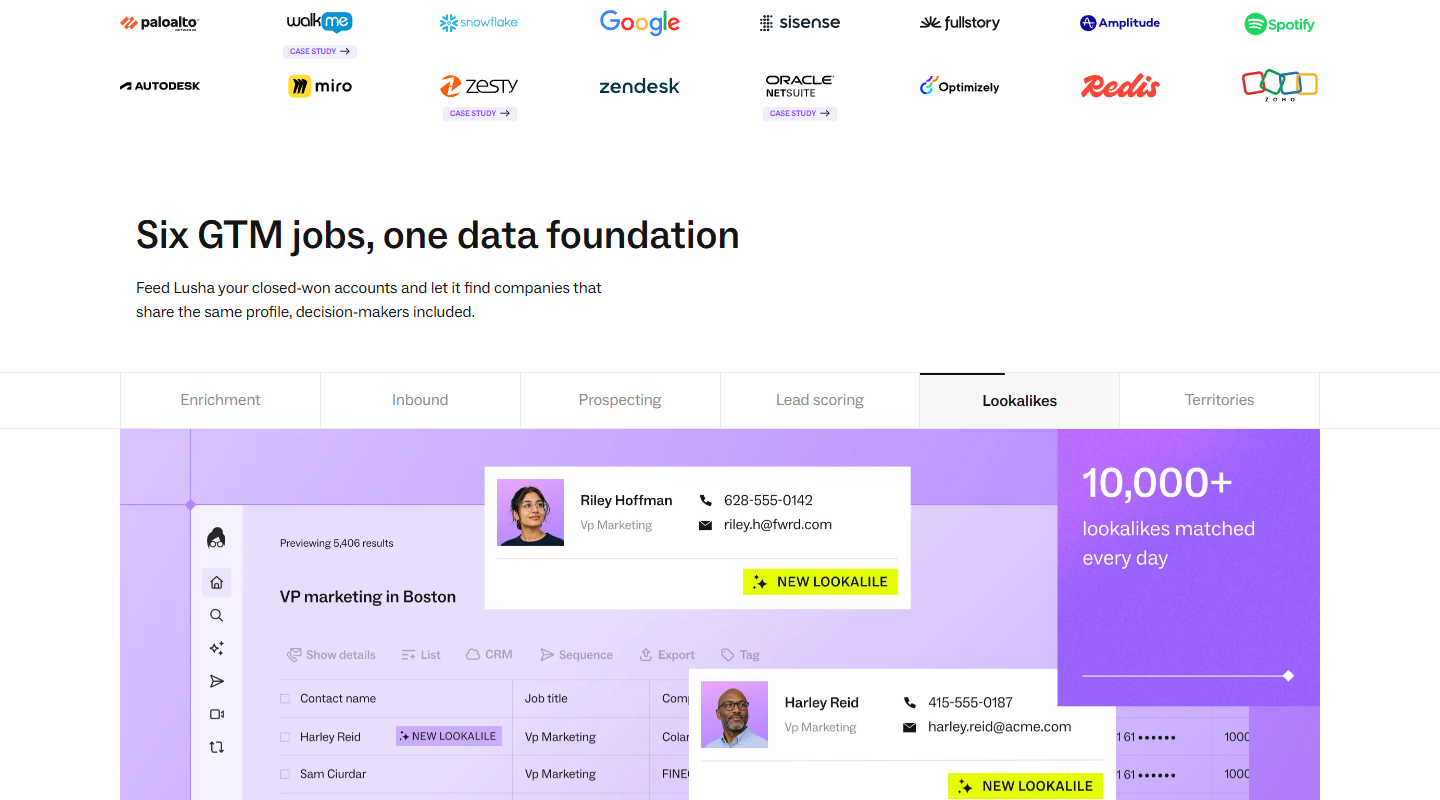
Lusha is a lightweight contact lookup tool centered on a Chrome extension that surfaces a prospect’s email and phone number while you browse LinkedIn or a company site.
It is fast, clean, and built for quick, on-the-spot lookups rather than heavy campaign work, and it is worth weighing against other Lusha alternatives if volume matters.
Versus Apollo, Lusha is simpler and friendlier for non-technical users, with a free tier and paid plans around 29 to 49 dollars per user per month.
It suits SMB reps and founders who want a few good contacts quickly, but the limitation is depth: monthly credit caps and a smaller database make it less suited to large, systematic prospecting.
| Lusha | |
|---|---|
| Pros | Cons |
|
|
- Approx pricing: free tier, then from around $29 to $49/user/mo
- vs Apollo: simpler and quicker, but shallower
- Best for: quick SMB and founder lookups
Clay
Clay is a data-enrichment and automation platform that runs waterfall enrichment across more than 150 sources, checking one provider after another until it finds the best record, then layering AI to research and write at scale.
It is closer to a programmable spreadsheet for RevOps than a simple database.
Compared to Apollo, Clay is not really a competing database at all: it orchestrates many of them, including Apollo itself, to build richer, more accurate lists, from around 149 dollars per month and up.
The power is huge, but so is the learning curve, so the limitation is that it rewards technical, hands-on teams and can overwhelm anyone wanting a plug-and-play tool.
| Clay | |
|---|---|
| Pros | Cons |
|
|
- Approx pricing: from around $149/mo and up
- vs Apollo: orchestrates many data sources rather than being one
- Best for: technical RevOps enrichment workflows
What to Weigh Before You Leave Apollo
Not every one of these top Apollo alternatives fixes the same thing, so work backward from your bottleneck.
If you genuinely lack people to contact, better data is the answer, so weigh region and depth: ZoomInfo or Cognism for enterprise and EMEA, UpLead for accuracy on a budget, and Hunter.io or Lusha for cheap, quick lookups.
Comparing these against the wider field of best B2B sales tools helps you see where each one really fits.
Then check pricing model against how you actually work. Per-seat tools like Sales Navigator and LeadIQ reward stable teams, credit-based data tools punish spiky usage, and pay-per-success pricing like contactID’s suits anyone who would rather pay for outcomes than seats.
If Apollo.io pricing crept up as you added reps, that model difference alone can change the math.
Finally, decide whether your problem is finding people or reaching them. If your lists are fine but replies are flat, the answer is a delivery channel, not another subscription, and the wider category of contact form automation tools is where that fix lives.
This is also the moment to read a full Apollo.io review before you renew, so you know exactly what you are keeping or leaving.
When Apollo.io Is Still the Right Choice
Apollo.io is not a weak product, and for plenty of teams it is the right one.
If you want a contact database, an email sequencer, and a dialer bundled at a low entry price, and your reps prefer to work inside a single platform, its all-in-one value is genuinely hard to beat, especially on the free plan while you are still testing outbound.
The strain only shows at scale, once bounce rates and credit limits start capping results. If your sending volume is modest and your inbox placement is already healthy, you may not need to move at all.
Reach for an Apollo alternative when data accuracy, deliverability, or per-seat cost begin to throttle your pipeline rather than feed it.
When the Real Problem Is Deliverability, Not Data
Most teams leave Apollo for another database and quietly hit the same wall a month later: the emails are technically correct, but too many bounce, land in spam, or never get a reply, which raises the honest question of whether cold email still works.
That is because apollo lead generation, like every data-first workflow, stops at the record. It cannot control what happens once your message enters the inbox, where domain reputation, warm-up, and filters decide your fate.
contactID attacks the part everyone else ignores. Instead of routing your message through a cold inbox and hoping, it submits it through the prospect’s own “Contact Us” form, a channel they built to receive messages and actually monitor.
There is no domain to warm up, no spam folder to fight, and no daily cap to ration, so deliverability sits at roughly 100 percent.
Pair it with a clean sending tool for email and you cover both channels: read an Instantly review or a Smartlead review, or compare Lemlist alternatives, to see how inbox-based sending compares to going through the form.
The workflow is simple: paste or upload your target URLs, let the AI personalize a message per site, run a live send, and watch submissions land in the analytics dashboard.
You pay only for forms that go through, never for skips or dead sites, so your spend maps directly to messages actually delivered.
The Bottom Line on Apollo Alternatives
Choosing among Apollo.io alternatives comes down to one question: what is actually stopping your outreach from landing?
They are the ones that fix your specific bottleneck, whether that is US enterprise depth from ZoomInfo, compliant European mobiles from Cognism, guaranteed accuracy from UpLead, or a free starting point from Seamless.AI, Hunter.io, LeadIQ, and Lusha.
But if you are honest and the real problem is that your outreach keeps bouncing, no data tool will save you, because the failure is in the channel, not the record.
That is the gap contactID closes: it delivers your message through the prospect’s own contact form at roughly 100 percent, with no bounces, no warm-up, and no spam filters.
If reaching people is what is actually holding you back, fix the channel first, and let a tool that sends the outreach do the sending for you.
FAQs
1- What is Apollo.io used for?
Apollo.io is an all-in-one B2B sales intelligence and engagement platform. Sales teams use it to find prospects in a database of roughly 240 to 275 million contacts, filter them with 65 plus criteria, enrich records, then run email sequences and calls from a built-in dialer, all in one tool.
In short, it combines a contact database with an outreach engine so reps can build a list and start emailing without leaving the app.
2- Is there a free Apollo.io alternative?
Yes. Several Apollo.io competitors offer a free tier: Seamless.AI, Hunter.io, LeadIQ, and Lusha all let you start without paying, usually with a monthly credit cap. RocketReach and UpLead run low-cost self-serve plans rather than free ones.
contactID uses pay-per-success pricing, so you only pay for contact forms that are actually submitted, which keeps starting costs low without a fixed seat fee.
3- Is Apollo.io data accurate?
Apollo.io data accuracy is generally reported in the 65 to 85 percent range depending on region and role, which is normal for a database of that size but not perfect.
Users commonly see email bounce rates of roughly 15 to 35 percent on cold sends, and non-US mobile numbers tend to be weaker. Always verify before a large send, because stale records are the main reason people look for accuracy-first alternatives like UpLead or Cognism.
4- What is the best Apollo alternative for cold outreach?
If the goal is landing the message rather than collecting more records, contactID is the strongest pick for cold outreach.
Instead of handing you an email address that may bounce, it submits your message through each prospect’s own contact form, so deliverability sits at roughly 100 percent with no domain warm-up, spam filters, or daily send caps.
Data tools like Apollo still require a separate sending tool and a clean domain to reach the inbox.
5- Apollo vs ZoomInfo, which has better data?
ZoomInfo generally has deeper and more accurate US enterprise data, verified phone numbers, and richer intent signals, but it costs far more, often 15,000 dollars per year and up on custom contracts.
Apollo.io offers a much larger raw contact count at a fraction of the price with a free tier, so it wins on value and accessibility while ZoomInfo wins on depth. The right choice depends on budget and how much you rely on enterprise phone data.
6- Which Apollo alternative actually sends the outreach for you?
contactID is the one tool on this list that sends the outreach rather than just supplying data to send. Apollo and the other ten options give you an email or phone number that you still have to route through a separate sequencer or dialer.
contactID finds the target site, detects the contact form, personalizes the message, and submits it for you, so the record and the delivery happen in the same step.
 Summarize this article with: