
Most people looking for Lusha alternatives are not unhappy with Lusha itself. They are unhappy with the bill.
Lusha is a lightweight B2B contact tool, best known as a LinkedIn extension that reveals a prospect’s email and mobile in a couple of clicks. It is credit-based and starts free before rising to roughly 49 to 70 dollars per user a month.
At scale the credit math bites. Phone reveals cost five credits each, you pay whether the record is right or not, and coverage thins outside North America.
Even a perfect reveal leaves you with a data point and no way to reach the person. That gap pushes teams toward best cold email tools, yet a sequencer just forwards the same flawed addresses, bounce and all.
Below are 11 of the best Lusha alternatives for 2026. Some are more accurate databases, some bundle outreach, and one, our top pick, drops the reveal-and-hope model by delivering through the company’s own contact form. Each entry covers what the tool is, how it compares, rough pricing, and one honest limitation.
Key Takeaways
- Why most Lusha alternatives exist: Lusha charges you per reveal even when the email is wrong and then bounces, with no refund.
- Our top pick skips reveals entirely: contactID delivers your message through a site’s own contact form, so there are no credits, no bounces, and pricing is pay-per-success.
- For accuracy: UpLead guarantees 95 percent and refunds bad records, while Cognism verifies mobiles and covers Europe better than Lusha.
- For data plus outreach in one: Apollo.io and Seamless.AI bundle sequencing, so you skip buying a separate sender tool.
- Match the tool to the gap: a database fixes accuracy, but only a form-based channel removes the bounce and credit math altogether.
Lusha Alternatives, Side by Side
Prefer the quick version? The table below sorts the top 11 Lusha alternatives by what type of tool each is, whether it exposes you to credit spend or email bounce risk, roughly where pricing starts, and who each one suits.
Notice that only one row escapes the credit-or-bounce column entirely.
| Tool | Type | Credits or bounce risk? | Starting price | Best for |
|---|---|---|---|---|
| contactID | Outreach (contact forms) | No credits, ~100% delivery | Pay-per-success | Teams who want conversations |
| Apollo.io | Data + outreach | Credits; email bounce risk | Free, then ~$49/user/mo | SMBs wanting an all-in-one |
| Cognism | Data | Lower bounce (verified) | Custom quote | International, GDPR-first teams |
| ZoomInfo | Data | Credits; email bounce risk | ~$15k+/yr | Large teams needing US depth |
| Kaspr | Data | Credits; email bounce risk | Free, then ~€45/user/mo | EU SDRs on LinkedIn |
| RocketReach | Data | Lookups; email bounce risk | ~$33/mo | Wide contact coverage |
| UpLead | Data | Credits, but 95% + refunds | ~$74/mo | Accuracy-focused buyers |
| Seamless.AI | Data + outreach | Credits; email bounce risk | Free, then ~$147/mo | High-volume list building |
| Hunter.io | Data (email) | Searches; some bounce risk | Free, then ~$34/mo | Cheap email-only lookups |
| LeadIQ | Data (capture) | Credits; email bounce risk | Free, then ~$36/user/mo | SDR capture into CRM |
| Clearbit (Breeze) | Enrichment | Credits; email bounce risk | Via HubSpot | Inbound enrichment for HubSpot |
Stop Paying Credits for Data That Bounces
The Double Cost Hiding in Every Credit
Here is the economics almost every Lusha alternative quietly inherits, because they run the same model. You pay a credit to reveal a contact, and that credit is spent the moment the record appears, not the moment it works.
If the email is stale, wrong, or a catch-all that never reaches a human, you still paid. Then you send to it, it bounces, and the cost lands twice: once for the wasted credit and once for the damage a bounce does to your sending domain.
Nobody sells you the second cost, but it is real, and it compounds every time your bounce rate creeps up and more of your good mail starts landing in spam.
Phone reveals make it sharper. At five credits each on Lusha, a handful of mobile lookups can drain a plan before lunch, and a disconnected or gatekept number costs the same as a live direct dial.
This is why “is Lusha worth it” is such a common search: the tool works, but the credit math punishes exactly the volume that prospecting requires.
Buying a more accurate database, like UpLead or Cognism, softens the blow by cutting the wrong-record rate, and that genuinely helps. It does not change the underlying deal, though. You are still renting contact records and paying whether or not they convert into a conversation.
How a Form Channel Sidesteps the Credit Model
A form-based channel sidesteps the whole equation. Instead of revealing an address and hoping it delivers, you send your message through the contact form that already sits on the company website, the one their team checks precisely because it is where real inquiries arrive.
There is no list to buy, so there are no credits, and if you have none at all, contactID can build one from your niche, country, and city without charging per record.
There is no email address in play, so there is nothing to bounce and no domain reputation to protect. If you want the full method behind this approach, the contact form marketing playbook walks through why forms convert when cold email stalls.
It is the logic that puts our top pick at number one.
Lusha’s Pro plan gives roughly 600 credits a month. Here is where they tend to go, set against a pay-per-success model that never bills you for a wrong number.
| Lusha (credit model) | contactID (pay-per-success) | |
|---|---|---|
| Monthly model | around 600 credits, no rollover | pay only for forms submitted |
| One phone-number reveal | 5 credits | not applicable |
| Charged for wrong or unverified data | Yes, and no refund | No, only successful submissions are billed |
| What you actually receive | a record you still have to reach | the message delivered through the form |
Credit costs reflect Lusha’s published model as reported by users; confirm current terms before relying on them.
Top 11 Lusha Alternatives, Broken Down
The list opens with the tool that changes the model, then runs through the strongest data and data-plus-outreach platforms, from all-in-one suites to accuracy specialists and email-only budget picks.
Whatever pushed you to look past Lusha, credits, coverage, or the missing outreach layer, there is a fit here among the best Lusha alternatives available today.
contactID
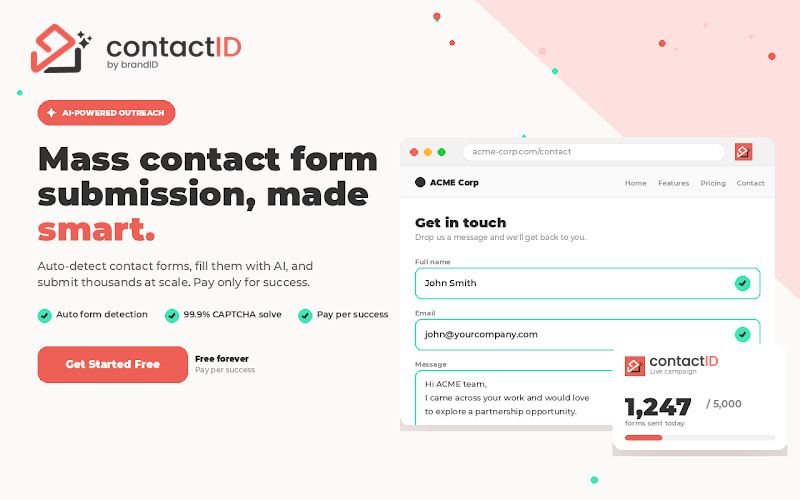
contactID is brandID’s contact-form outreach automation, a Chrome extension paired with a web dashboard that finds, fills, and submits the “Contact Us” form on any website at scale.
Rather than revealing a prospect’s email so you can send to it, it delivers your message straight through the form the company already monitors, turning a page most tools ignore into a repeatable outreach channel.
Get the List Without Buying Credits
You do not even need a list to begin. Choose your niche, country, and city, and contactID builds a target list of businesses for you, which makes it double as local marketing software when you want nearby businesses.
Each entry carries the website, emails, and phone numbers plus fields a reveal tool never surfaces: the site’s language, its technology stack, the direct contact-page URL, and whether the record is claimed or unclaimed, among others.
Keep the list by exporting it, or roll straight into outreach, all without spending a single credit on a reveal that might be wrong.
Then Reach Them Through the Form
How it compares to Lusha: Lusha sells you reveals, and you pay a credit for each one even when the email is wrong, then that email bounces and the cost lands twice. contactID removes both problems at once.
It does not sell contact records, so there are no credits for bad data, and because your message goes through the site’s own form, deliverability sits near 100 percent with no bounces, no domain warm-up, no spam filters, and no daily send caps.
The pricing model is the mirror image of Lusha’s too: you pay per success, meaning only for forms that are actually submitted, never for skips, failures, or dead sites. This contactID contact-form outreach approach is why teams that adopt it stop thinking in credits altogether.
The feature set is built for real campaigns, not just one-off sends.
Auto Form Detection locates the form on each page, Auto CAPTCHA Solving clears the gate using 2Captcha or Anti-Captcha with a manual override when you want it, and the AI Personalization Engine rewrites copy per site using merge tags, a 12-message template library, and dynamic phrasing.
Sender Agents let you save reusable identity profiles, A/B split testing compares messages, and Bulk Targeting accepts pasted URLs or an uploaded CSV, TXT, or Excel file, with extra columns mapping automatically to merge tags.
Live Send Runs show progress in real time, the Analytics Dashboard reports what landed, AI Credits and Billing let you set spend caps, and Advanced Export covers CSV, JSON, HTML, and Markdown alongside referral credits.
If you have no list at all, built-in Website and Lead Finding hands you curated targets to start from.
| contactID | |
|---|---|
| Pros | Cons |
|
|
- Type: Outreach automation via contact forms
- Credits or bounces: None, delivery is close to 100%
- Pricing: Pay-per-success, you pay only for submitted forms
- Best for: Teams who want conversations, not another credit balance
Apollo.io
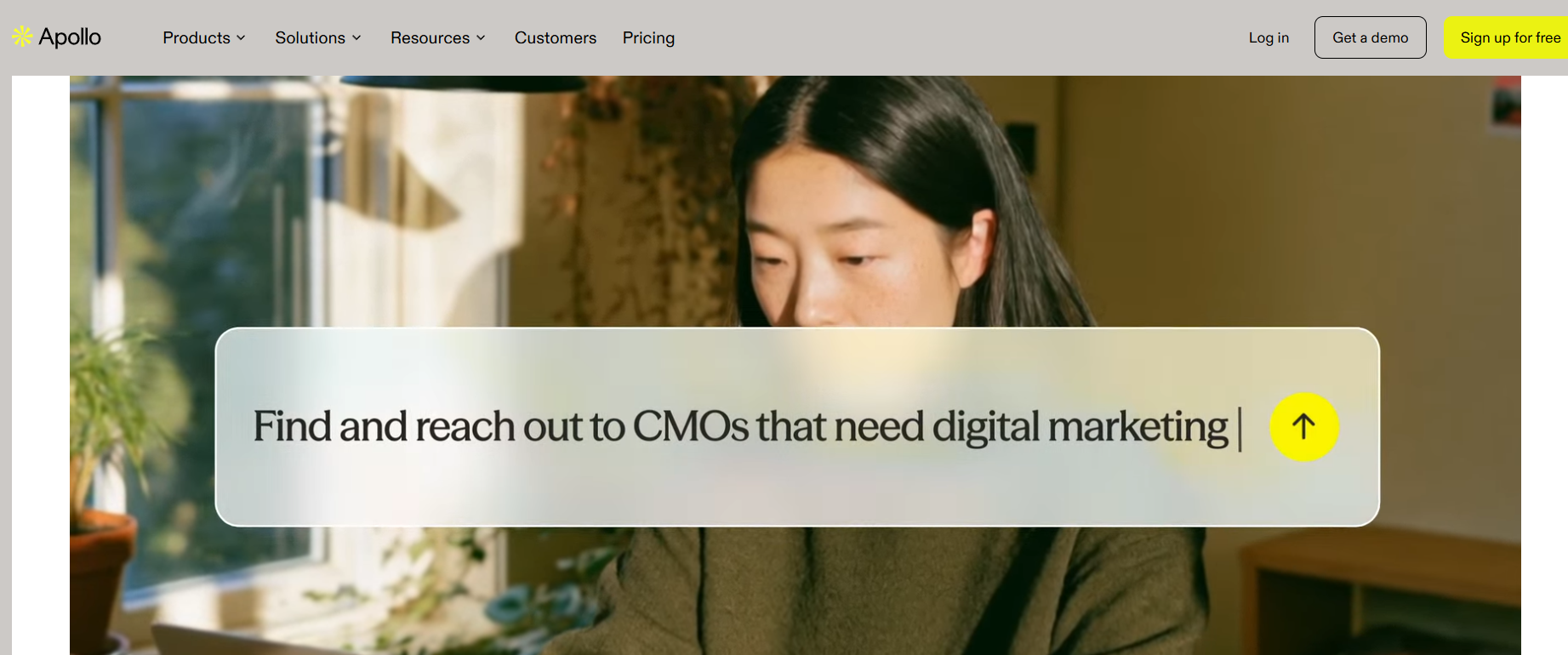
Apollo.io is an all-in-one sales platform that pairs a large B2B contact database with email sequencing, a built-in dialer, and basic CRM features.
Where Lusha is a single-purpose extension, Apollo tries to run the whole top of your funnel from one login, which is why it is the most common upgrade path for reps who outgrow a reveal tool.
How it compares to Lusha: Apollo carries a far deeper database and adds the outreach layer Lusha lacks, so you can find a contact and start a sequence without a second subscription.
The trade-off is that it still runs on credits, and its data can be stale, so the bounce problem does not disappear, it just moves into your sequences.
If Apollo itself feels heavy, our roundup of Apollo alternatives covers lighter and cheaper options. It also sits among the broader B2B sales tools that close, so weigh it as a platform, not just a reveal swap.
| Apollo.io | |
|---|---|
| Pros | Cons |
|
|
- Type: Data plus outreach
- Pricing: Free tier, then around $49 to $119 per user per month
- Best for: SMBs wanting data and outreach in one place
Cognism
Cognism is a premium B2B data provider known for phone-verified mobile numbers and strong, compliant coverage across Europe.
It positions itself around data you can trust rather than data you can simply pull, running numbers through a verification step and checking them against do-not-call lists so your team dials fewer dead ends.
How it compares to Lusha: Cognism generally offers better international coverage and cleaner, GDPR-compliant records than Lusha, which is exactly where Lusha thins out once you leave North America.
The catch is cost and commitment: Cognism sells annual contracts at a custom quote, so it is a step up in spend, not a casual swap.
| Cognism | |
|---|---|
| Pros | Cons |
|
|
- Type: B2B data
- Pricing: Custom annual quote
- Best for: Teams selling internationally who need compliant EU mobiles
ZoomInfo
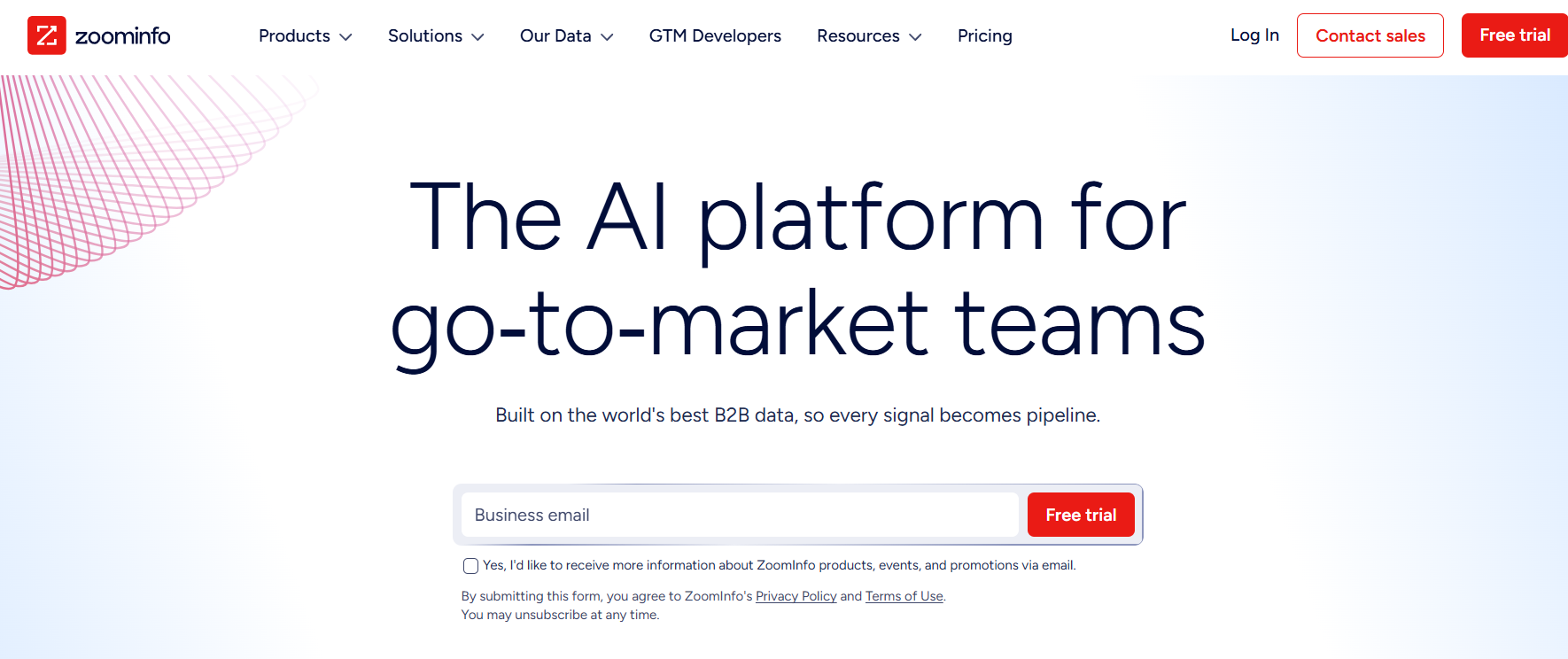
ZoomInfo is the enterprise heavyweight of B2B data, offering deep company and contact records, intent signals, org charts, and workflow tooling.
It is a full go-to-market platform rather than a lightweight extension, built for large teams that treat data as core infrastructure rather than an occasional lookup.
How it compares to Lusha: On raw United States database depth and enrichment, ZoomInfo far outclasses Lusha’s light, reveal-focused tool.
That power comes at enterprise pricing, often 15,000 dollars a year or more, which puts it out of reach for the SMBs and solo reps Lusha serves. For teams weighing that spend, the ZoomInfo alternatives guide lines up lighter options.
| ZoomInfo | |
|---|---|
| Pros | Cons |
|
|
- Type: B2B data
- Pricing: Around $15,000 per year and up
- Best for: Large teams needing deep US coverage and intent data
Kaspr
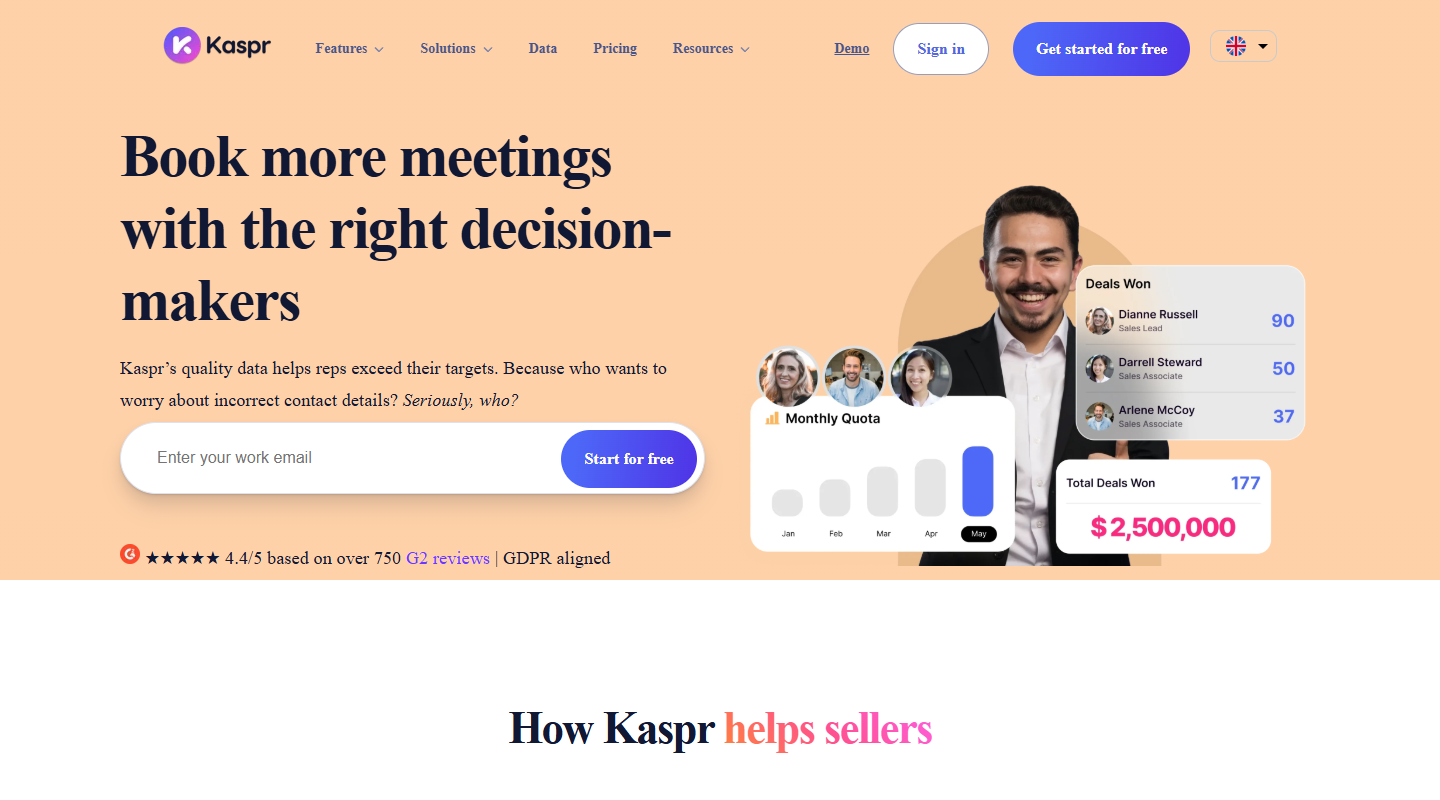
Kaspr is a European LinkedIn Chrome extension that reveals emails and phone numbers directly from a profile, which makes it the closest like-for-like rival to Lusha on this list.
It works the same way in practice: browse LinkedIn, click to reveal, and push the contact into your CRM or a basic outreach flow.
How it compares to Lusha: Kaspr leans into European data and is often stronger there than Lusha, while the workflow feels almost identical, so switching is painless for LinkedIn-first reps.
Because so much of this prospecting happens there, it pairs with dedicated LinkedIn outreach tools that automate the connect-and-message steps. Like Lusha, though, it runs on credits, so the same reveal-and-hope economics and the same bounce exposure carry over.
| Kaspr | |
|---|---|
| Pros | Cons |
|
|
- Type: B2B data
- Pricing: Free tier, then around €45 to €99 per user per month
- Best for: EU-based SDRs prospecting on LinkedIn
RocketReach
RocketReach is a broad contact-lookup tool that searches emails and phone numbers across more than 700 million profiles and 35 million companies.
It is less about a slick LinkedIn workflow and more about sheer reach, letting you find a contact for almost anyone through a web app, extension, or API.
How it compares to Lusha: RocketReach usually wins on breadth, surfacing contacts across regions and roles where Lusha comes up empty.
Because it draws from aggregated sources rather than heavy verification, accuracy can be uneven, so you still need to expect some bounces on the emails it returns.
| RocketReach | |
|---|---|
| Pros | Cons |
|
|
- Type: B2B data
- Pricing: Around $33 to $53 per month
- Best for: Wider coverage than Lusha at a modest price
UpLead
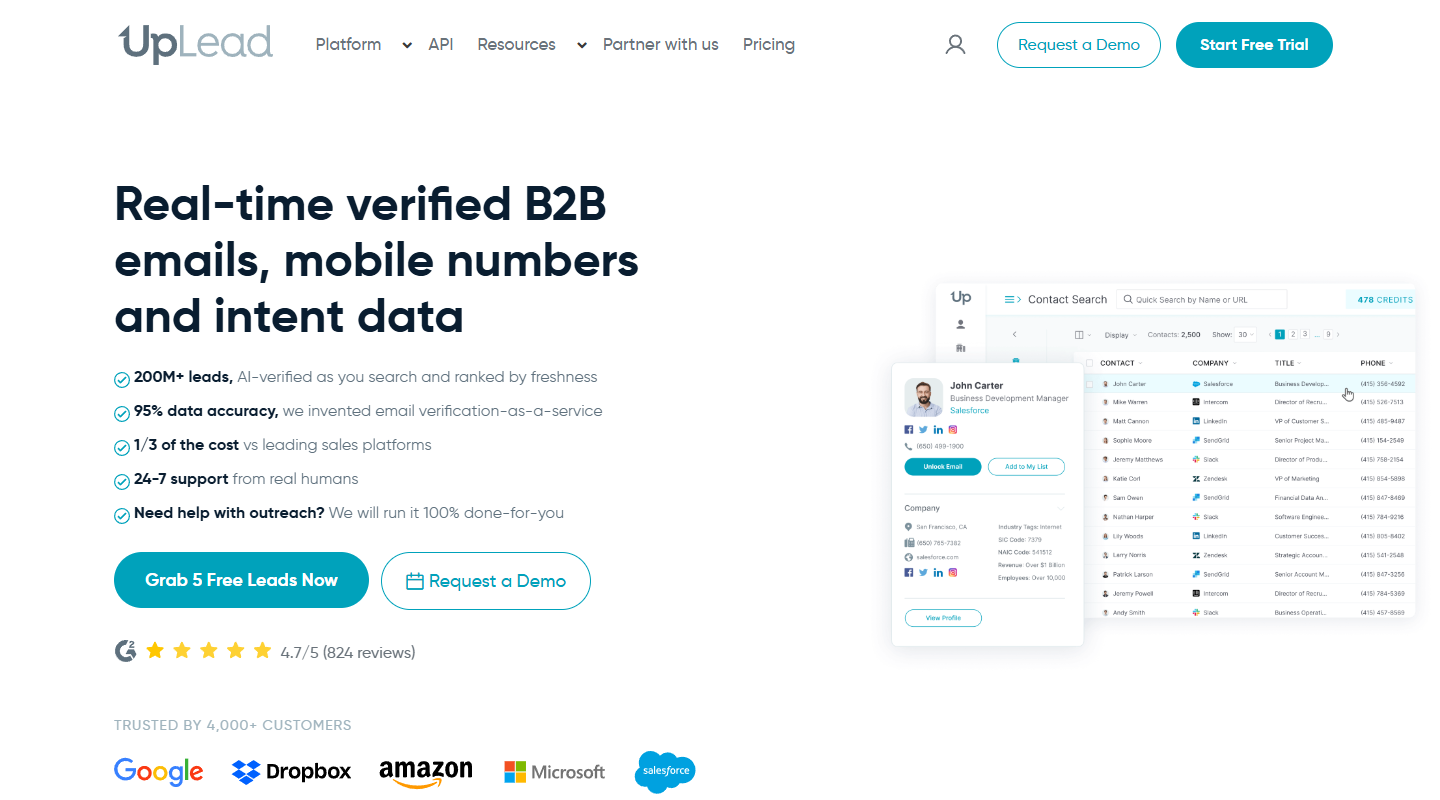
UpLead is a B2B data provider built around a single promise: accuracy. It verifies emails in real time as you export them and backs the whole database with a published 95 percent accuracy guarantee, crediting you back for any record that turns out to be wrong.
That refund-on-bad-data stance is the direct answer to the most common Lusha complaint.
How it compares to Lusha: Where Lusha charges you for a reveal even when it is inaccurate, UpLead cleans the record before you spend and refunds you if it slips through wrong.
You still work in credits, so the model is the same shape, but the accuracy guarantee meaningfully lowers wasted spend and bounce risk.
| UpLead | |
|---|---|
| Pros | Cons |
|
|
- Type: B2B data
- Pricing: Around $74 to $199 per month
- Best for: Buyers who want to fix Lusha’s accuracy problem
Seamless.AI
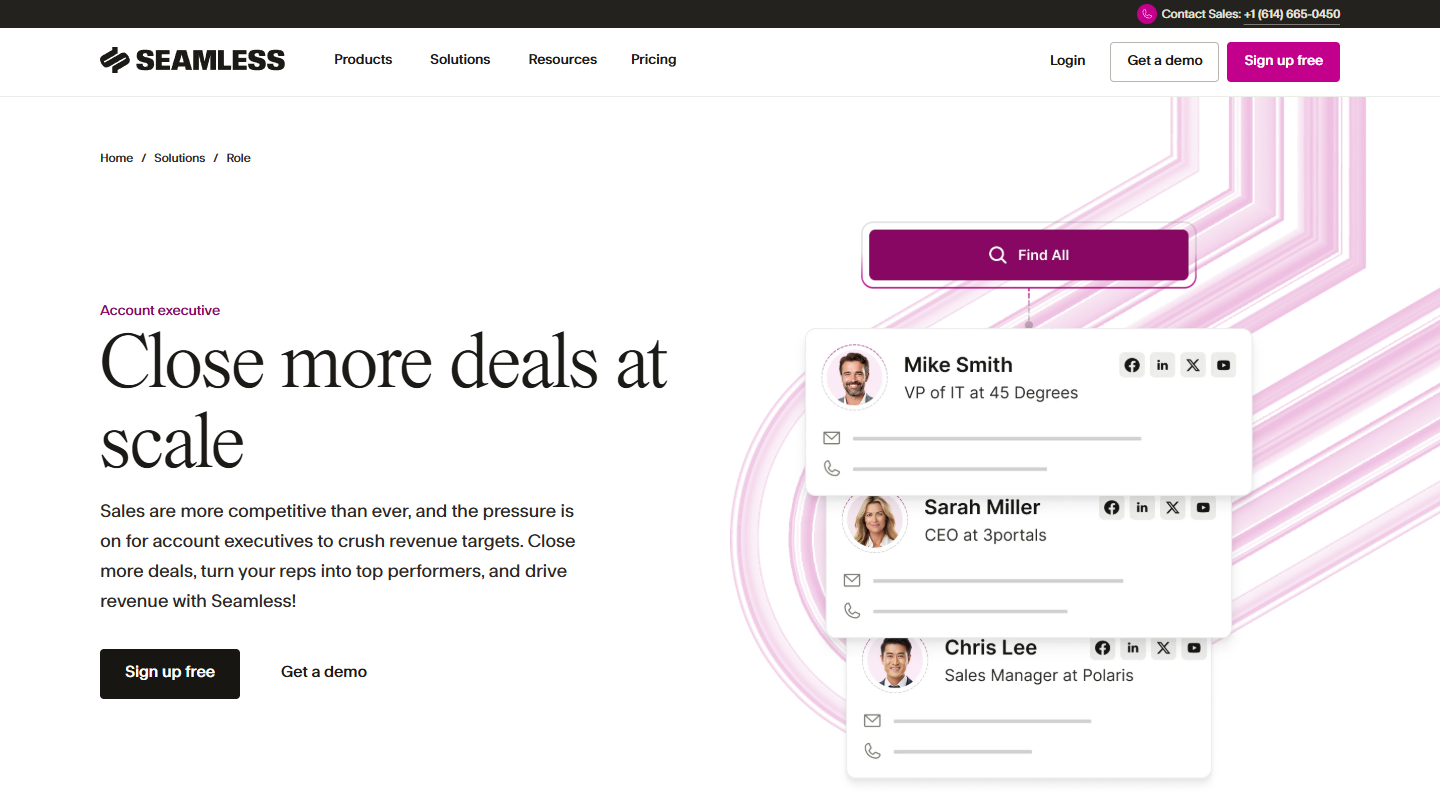
Seamless.AI is a real-time search engine for B2B contacts that builds emails and phone numbers on the fly rather than serving them from a static database.
It pairs that search with list building and light outreach features, positioning itself for reps who want to construct large prospect lists quickly.
How it compares to Lusha: The real-time engine can surface fresher contacts than Lusha’s stored records, and the volume ceiling is higher for heavy list building. Users often report inconsistent accuracy and aggressive upsell, though, so the credit-for-uncertain-data pattern is very much present here too.
| Seamless.AI | |
|---|---|
| Pros | Cons |
|
|
- Type: Data plus light outreach
- Pricing: Free tier, then around $147 per month
- Best for: High-volume list building
Hunter.io
Hunter.io is a focused email finder and verifier that locates addresses by domain and confirms whether they are deliverable.
It does one job cleanly: give it a company, and it returns the likely email patterns and named contacts, with a verification score attached to each so you know what you are sending to.
How it compares to Lusha: Hunter is far cheaper and simpler than Lusha, and its built-in verification helps trim bounces before you send.
It is email-only, though, so there are no phone numbers and none of the LinkedIn-native reveal flow, which makes it a narrower tool rather than a full replacement.
| Hunter.io | |
|---|---|
| Pros | Cons |
|
|
- Type: Email data and verification
- Pricing: Free tier, then around $34 per month and up
- Best for: A cheap, email-only alternative to Lusha
LeadIQ
LeadIQ is a prospecting tool built for one-click capture, letting an SDR grab a contact straight from LinkedIn and push it into a CRM or sequencer without retyping anything.
Its whole design centers on speed of capture and clean handoff, so reps spend less time copying fields and more time selling.
How it compares to Lusha: LeadIQ fits more smoothly into a modern sales stack than Lusha, syncing captured contacts into tools like Salesforce and Outreach with less friction.
It still charges credits for the data it captures, however, so you carry the same per-reveal cost and the same need to verify before you send.
| LeadIQ | |
|---|---|
| Pros | Cons |
|
|
- Type: Contact capture
- Pricing: Free tier, then around $36 to $79 per user per month
- Best for: SDRs who want fast LinkedIn capture into their CRM
Clearbit (HubSpot Breeze Intelligence)
Clearbit, now folded into HubSpot as Breeze Intelligence, is an enrichment layer that fills in company and contact details on records you already have and can reveal which companies are visiting your website.
It is less a prospecting extension and more a background engine that keeps your CRM data complete and your inbound leads scored.
How it compares to Lusha: Clearbit is aimed at inbound and enrichment rather than manual LinkedIn reveals, so it complements a data workflow more than it mirrors Lusha’s.
For HubSpot users it is a natural fit, but it is tied to that ecosystem and priced through it, which makes it a poor match for anyone not already invested in HubSpot.
| Clearbit (HubSpot Breeze Intelligence) | |
|---|---|
| Pros | Cons |
|
|
- Type: Data enrichment and visitor reveal
- Pricing: Sold through HubSpot Breeze Intelligence
- Best for: Inbound enrichment for existing HubSpot users
Choosing a Lusha Alternative Without the Credit Trap
The top Lusha alternatives each solve a different piece of the puzzle, so the right Lusha alternative depends entirely on which gap pushed you out in the first place.
If the problem is accuracy and wasted spend, a verified database like UpLead or Cognism directly lowers your wrong-record rate.
If the problem is that you keep buying a second tool to actually send anything, an all-in-one like Apollo.io consolidates data and sequencing, and reviewing dedicated senders such as a Lemlist review or a Reply.io review helps you judge what a bolt-on outreach layer really costs.
Then weigh coverage against where you sell. Lusha and most United States-centric tools thin out abroad, so international teams should shortlist Cognism or Kaspr for European mobiles rather than forcing a domestic database to stretch.
Budget matters too: Hunter.io and RocketReach keep monthly costs low for email-first work, while ZoomInfo sits at the enterprise end.
If cold email is your main channel, comparing a sequencing sender through a Woodpecker review or a QuickMail review against your data tool shows how much of your budget goes to deliverability upkeep alone.
Finally, ask whether you want more data or more conversations, because they are not the same purchase. Every database on this list still leaves you to reach people yourself, with the credit and bounce math intact.
A form-based channel changes the question from “how do I find an address” to “how do I get a reply,” which is why it suits high-intent niches from agencies to lead generation for financial advisors where a real inbound-style message beats another cold email.
When Sticking With Lusha Makes Sense
Lusha earns its popularity for a reason. If you make a handful of targeted lookups a week, mostly in North America, and you like a one-click LinkedIn extension that simply works, its lightness is a real strength and the free tier may be all you need.
It stops adding up once volume climbs and credits disappear on phone reveals, or once you need European coverage and verified records you are not billed for when they turn out wrong.
If accuracy and wasted spend are not yet daily frustrations, there is no rush to leave. Move to a Lusha alternative when the credit math, or the missing way to actually reach people, starts costing you conversations.
Turn Prospects Into Conversations With contactID
Every data tool above ends at the same place: a record on a screen, a credit already spent, and the job of actually reaching the person still ahead of you. contactID starts where they stop.
Instead of selling you a contact to email, it finds each company’s contact form, personalizes your message per site, and submits it for you, so your outreach arrives in the channel businesses genuinely watch.
No credits for bad data, no bounces, no domain warm-up, and no send caps.
Because you pay only for forms that are successfully submitted, your budget tracks results rather than reveals, and the analytics dashboard shows exactly what landed.
It pairs naturally with a wider outreach and even B2B affiliate marketing strategy, giving you a deliverability-proof channel that keeps working while your cold email domains rest. If Lusha’s credit balance has stopped feeling like progress, this is the switch worth testing.
Where These Lusha Alternatives Leave You
Every Lusha alternative here fixes a different half of the problem, and only one of them actually sends the message for you.
They are the ones that match the reason you started looking, whether that is accuracy, international coverage, an outreach layer you no longer want to buy twice, or the credit-for-bad-data trap that makes prospecting feel like it is billing you to guess.
Verified providers like UpLead and Cognism fix the data quality, and all-in-one suites like Apollo save you a second subscription.
The deeper fix, though, is not another reveal tool. It is reaching people.
If you are tired of paying per contact and hoping the email delivers, a form-based channel removes both the credit and the bounce from the equation, and contactID is the way to put it to work.
Pick the data tool that suits your market if you need one, then let contactID turn those targets into actual conversations.
FAQs
1- Is there a free Lusha alternative?
Yes. Apollo.io, Kaspr, Seamless.AI, Hunter.io, and LeadIQ all run free tiers, usually a small monthly allowance of credits or lookups, much like Lusha’s own 40-credit starter.
Free plans are fine for testing coverage on your own market, but they run dry fast, so treat them as a trial rather than a long-term plan.
If your goal is conversations instead of raw contact records, contactID bills only for forms it actually submits, so a small test spend goes toward real outreach rather than reveals that may bounce.
2- What is more accurate than Lusha?
Cognism and UpLead are the two most often named for accuracy. Cognism phone-verifies its mobile numbers and holds strong GDPR-compliant European coverage, while UpLead publishes a 95 percent accuracy guarantee and credits you back for any bad record.
ZoomInfo carries the deepest United States database. All three reduce the wrong-number and bounce problem that drives complaints about Lusha, though they cost more.
3- Why do teams switch from Lusha?
The most common reasons are credits that burn fast, especially phone reveals at five credits each, being charged for contacts that turn out to be wrong with no refund, thin coverage outside North America, and useful features locked to higher tiers.
The deeper issue is that Lusha reveals a contact but gives you no way to reach that person, so you still need a separate outreach tool on top.
4- Are there sites like Lusha with built-in outreach?
Apollo.io and Seamless.AI pair data with email sequencing, so they cover both jobs under one login.
contactID takes a different route: rather than revealing an email and asking you to send to it, it finds, fills, and submits the contact form on a company website, so your message lands in the inbox the business actually monitors.
There is no list to buy, no email to bounce, and delivery is close to 100 percent.
5- Lusha vs Apollo, which is better?
Lusha is the lighter tool, quick to install as a LinkedIn extension and simple for grabbing a few numbers, while Apollo is the broader platform, pairing a large database with sequencing and a dialer. For a solo rep who wants speed, Lusha is easy.
For a team that wants data and outreach in one place, Apollo usually wins on value, though both still charge credits for data that can be stale by the time you use it.
6- Which Lusha alternative avoids the credit trap?
contactID. Its pricing is pay-per-success, so you are charged only for forms that are actually submitted, never for skips, failures, or dead sites, which is the opposite of paying a credit for every reveal whether the data is right or not.
Because messages go through each site’s own contact form, there is nothing to bounce and no credit spent on a bad address.
 Summarize this article with: