
Woodpecker Review 2026: Everything You Need For Decision Making
Woodpecker has been quietly running cold email since 2015 while louder rivals fought over feature checklists. Its pitch is simple: deliverability first, everything else second. In 2026 that pitch comes with a twist most buyers miss. You do not pay per seat or per mailbox. You pay per contacted prospect, and that single design choice decides whether Woodpecker is the cheapest tool on your shortlist or one of the priciest.
This Woodpecker software review breaks down what the platform actually delivers in 2026: the Woodpecker features that earn its deliverability reputation, the contacted-prospects pricing model and the add-ons that inflate it, real user reviews from G2, Trustpilot, and Capterra, and the honest pros and cons. You will also see how Woodpecker stacks up against the other best cold email software options, plus one Woodpecker alternative that skips the inbox entirely.
Key Takeaways
- You pay per contacted prospect, not per seat. Entry pricing starts around $29/month on annual billing ($35 monthly) for 500 contacted prospects, with unlimited team members and unlimited email accounts included on every tier.
- Deliverability is the genuine strength. Inbox rotation across up to 100 mailboxes, adaptive sending, ESP matching, and a bounce shield explain why Woodpecker's top customers report up to 99% delivery in 2026.
- Add-ons stack fast. LinkedIn automation costs $29/month per account, API access $20/month, and the agency panel $27/month per active client. A modest stack can double the sticker price.
- The prospect ceiling is the hidden constraint. Hit your monthly contacted-prospects limit and campaigns stop reaching new people until you upgrade or the cycle resets.
- Match the alternative to the job. contactID for contact form outreach with pay-per-success pricing, Lemlist for creative personalization, Smartlead for unlimited-volume email, Reply.io for full multichannel sequencing.
What Is Woodpecker?
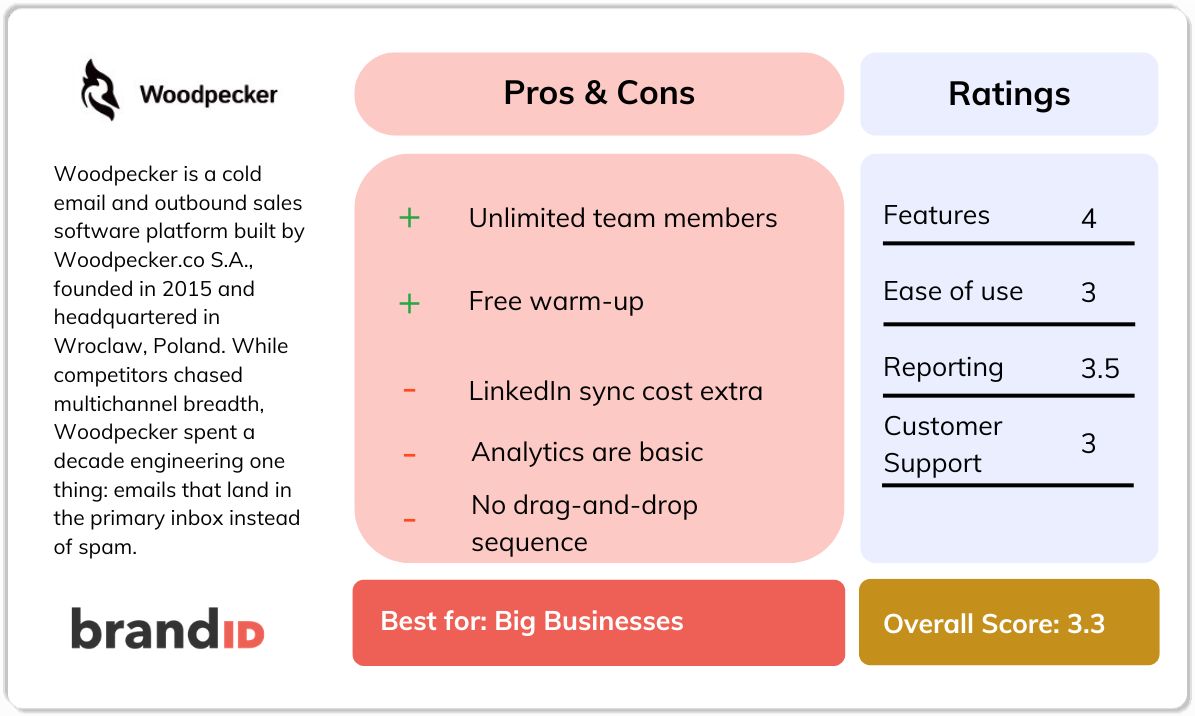
Woodpecker is a cold email and outbound sales software platform built by Woodpecker.co S.A., founded in 2015 and headquartered in Wroclaw, Poland. While competitors chased multichannel breadth, Woodpecker spent a decade engineering one thing: emails that land in the primary inbox instead of spam.
The platform connects directly to your own Gmail, Google Workspace, Outlook, Microsoft 365, or SMTP accounts, so every message sends from your real domain. Around that core sit follow-up sequences, condition-based campaigns, a built-in Lead Finder database, a LinkedIn automation add-on, and an agency panel that made Woodpecker a favorite among lead generation agencies. It fits naturally into a B2B SaaS lead generation stack where one reliable channel matters more than five mediocre ones.
What Woodpecker is not: a per-seat sales engagement suite like Salesloft, a personalization showcase like Lemlist, or a data-first platform like Apollo. It is a focused sending engine. Knowing that upfront makes the unusual pricing model much easier to judge.
Woodpecker at a Glance
Quick Facts
- Founded in 2015, headquartered in Wroclaw, Poland. Trusted by 13,000+ professionals as of 2026.
- Pricing scales by contacted prospects per month, from 500 up to unlimited. No per-seat fees.
- Unlimited team members and unlimited email accounts included free on every tier.
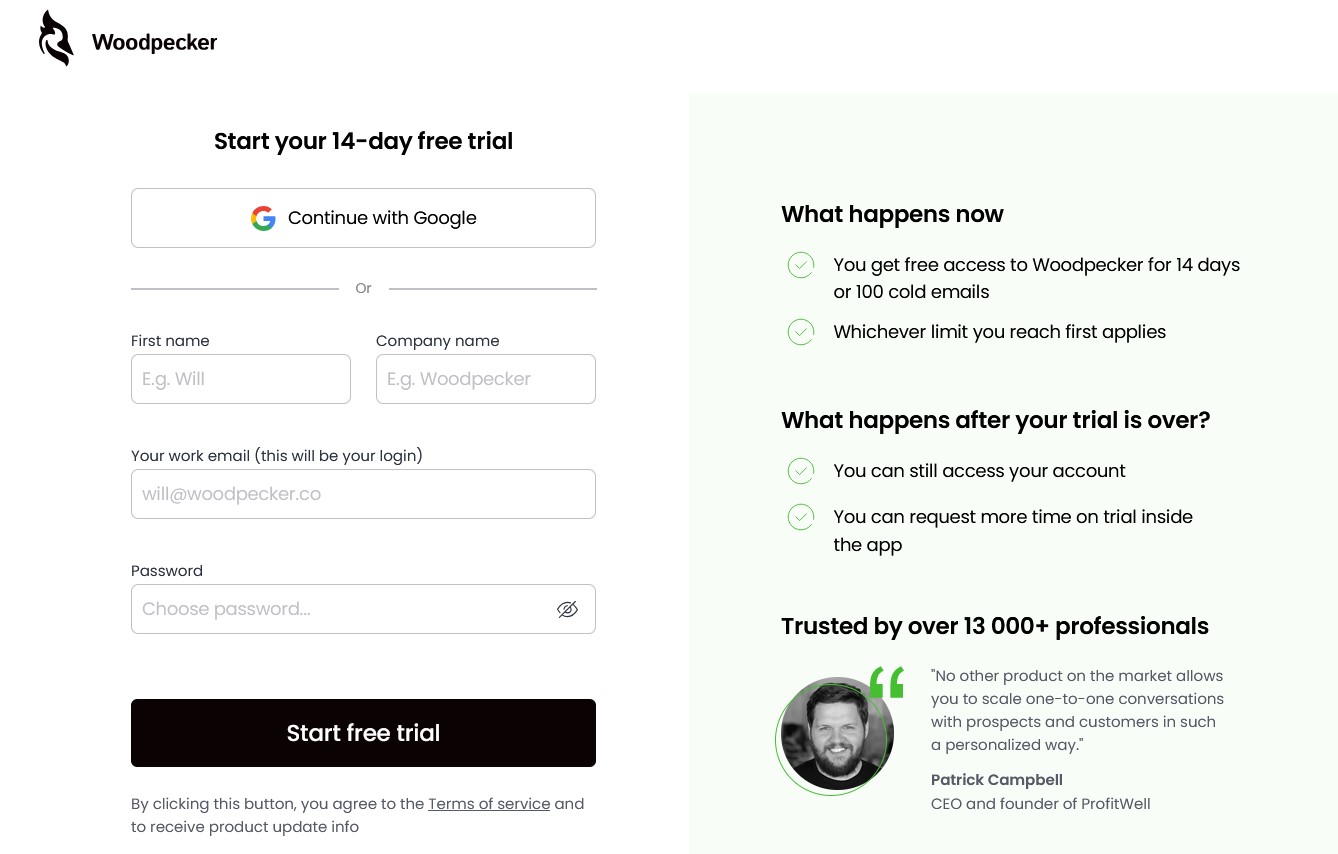
- 14-day free trial (or 100 cold emails, whichever comes first), no credit card required.
- G2 rating: 4.5/5 across 105+ reviews. Capterra: 4.5/5. Trustpilot: mixed across a small review base.
Woodpecker Features
Every serious Woodpecker software review has to start with deliverability, because that is the reason the tool exists. But the 2026 feature set is broader than most buyers expect. Here are the Woodpecker features that actually shape results, and where each one has limits.
Deliverability Engine: Inbox Rotation, Adaptive Sending, ESP Matching
This is the flagship. Inbox rotation attaches up to 100 mailboxes to a single campaign and distributes sends across them automatically, so no single domain carries risky volume. Adaptive sending throttles speed to each provider's limits, and the bounce shield pauses sends when bounce rates spike, protecting your sender reputation before damage compounds.
ESP matching, added in 2026, routes emails through sending accounts that match the recipient's provider, since Gmail-to-Gmail and Outlook-to-Outlook traffic historically places better. Woodpecker reports its top customers reach up to 99% delivery, a number that matters because industry-wide inbox placement has been sliding as Google and Microsoft tightened bulk sender rules through 2024 to 2026. Human-like sending randomization, a spam word checker, and a domain audit for SPF and DKIM round out the toolkit, and staying compliant with regulations like the CAN-SPAM Act remains your responsibility on top of it.
Condition-Based Campaigns and A/B Testing
Sequences branch on behavior: opened but no reply gets one path, clicked a link gets another, replied stops the sequence automatically. You can test up to five variants per step, with volume split evenly so reply rates stay comparable. The builder is clean, though reviewers still complain that reordering steps means copy-pasting content between fields rather than dragging and dropping. For an outbound sales software platform refined over a decade, that gap is surprising.
Free Warm-Up and Unlimited Email Verification
Warm-up (powered by Mailivery) and unlimited catch-all email verification (powered by Bouncer) come free on every plan. That combination is genuinely rare in 2026, when most rivals sell verification as credits. One caveat from user reviews: the warm-up sends automated filler messages between network mailboxes, and some users found those off-brand messages alarming because the mechanics were not clearly explained upfront.
AI Interest Detection and AI Email Writer
The AI layer reads replies and sorts them by interest level, so reps triage a centralized inbox instead of reading every “not now” manually. An AI email writer drafts copy inside the editor, and spintax plus snippet-based conditions handle personalization at scale. It is practical AI rather than flashy AI: no dynamic images or per-prospect landing pages, which is exactly where Lemlist still wins on Woodpecker features comparisons.
Lead Finder B2B Database
The built-in Lead Finder searches a 1B+ contact database and pushes prospects straight into campaigns, no CSV export needed. Every plan includes free monthly credits (400 as of 2026), with extra credits starting at $10 per 500. The friction: bulk selection caps at roughly 25 to 50 contacts per action, which slows large list builds. Treat it as a supplement, not an Apollo replacement.
LinkedIn Outreach Automation Add-On
Since 2025, Woodpecker can weave LinkedIn invites, messages, and profile visits into email sequences. It costs $29/month per connected LinkedIn account and is not included in any plan, even the top tier. If LinkedIn is your primary channel rather than a supporting touch, dedicated LinkedIn automation tools give you deeper limits and safety controls for similar money.
Agency Panel for Client Management
The agency panel gives each client an isolated workspace while operators manage everything from one dashboard: bulk campaign actions, centralized billing, automated client domain audits, and clients connecting their own mailboxes without sharing passwords. Reviewers routinely call it the most mature agency setup in the cold email category. It costs $27/month per active client, plus $5/month per client for white-label branding, so a 10-client agency adds $320/month before base pricing.
Woodpecker Pricing
Woodpecker pricing confuses more buyers than any other part of the product, and the user reviews prove it. Here is the short answer for 2026: entry pricing starts around $29/month on annual billing ($35 billed monthly) for 500 contacted prospects, and the total scales with how many new people you reach each month, not how many emails you send or how many people are on your team.
The Contacted Prospects Model
A contacted prospect is any new person a campaign emails during a billing cycle. Follow-ups to people already contacted cost nothing, which rewards tight, well-researched lists with long nurture sequences. The 2026 pricing page is a slider: pick a volume from 500 prospects up to unlimited, at roughly $7 per 100 contacted prospects at the low end, with the effective rate dropping as volume rises. Annual billing cuts up to 33% off.
Two rules catch people off guard. First, if you hit your contacted-prospects ceiling mid-month, campaigns simply stop emailing new people until the cycle resets or you upgrade. Second, the same prospect added to five campaigns counts five times against your limit. Teams asking whether cold email is still effective at their volume should model this before committing, because reply rates in 2026 reward more touches per prospect, and this model charges you for breadth, not depth.
What Every Plan Includes for Free
To its credit, Woodpecker bundles items competitors monetize: unlimited team members, unlimited connected email accounts, a warm-up allocation, unlimited catch-all email verification, and free monthly Lead Finder credits. For a 5-person team with 10 sending mailboxes, those inclusions alone can offset $100+ per month versus per-seat outbound sales software.
Realistic Monthly Cost by Scenario
| Scenario | Base (Contacted Prospects) | Add-Ons | Realistic Monthly Total |
|---|---|---|---|
| Solo founder | 500 prospects (~$29) | None | ~$29 to $35 |
| Small sales team | 4,000 prospects (~$70 to $90) | 2 LinkedIn accounts ($58) + API ($20) | ~$150 to $170 |
| Lead gen agency | 10,000 prospects (~$126) | Agency panel, 5 clients ($135) + white label ($25) | ~$286 plus mailbox costs |
Woodpecker User Reviews: What Real Customers Say
Scratch past the star rating, and the 2026 reviews read like a catalog of quiet frustrations: money charged for pausing, campaigns frozen by the prospect meter, spam-looking messages appearing in inboxes with no explanation. Trustpilot, where billing grievances surface, is notably harsher.
These are the complaints that repeat across G2, Trustpilot, and Capterra in 2026:
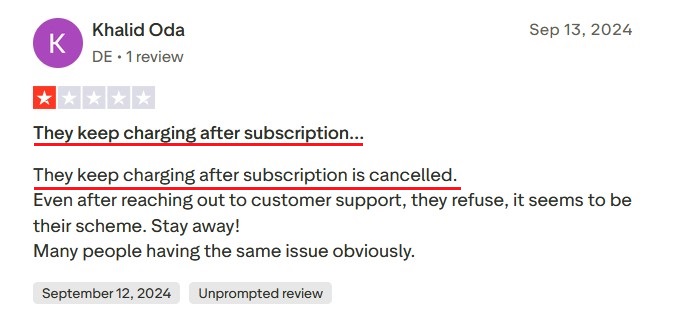
1. Pausing Still Costs Money
There is no clean way to stop the subscription without losing campaign history, and the pause option carries a fee. Reviewers call the cancellation flow opaque and punitive.
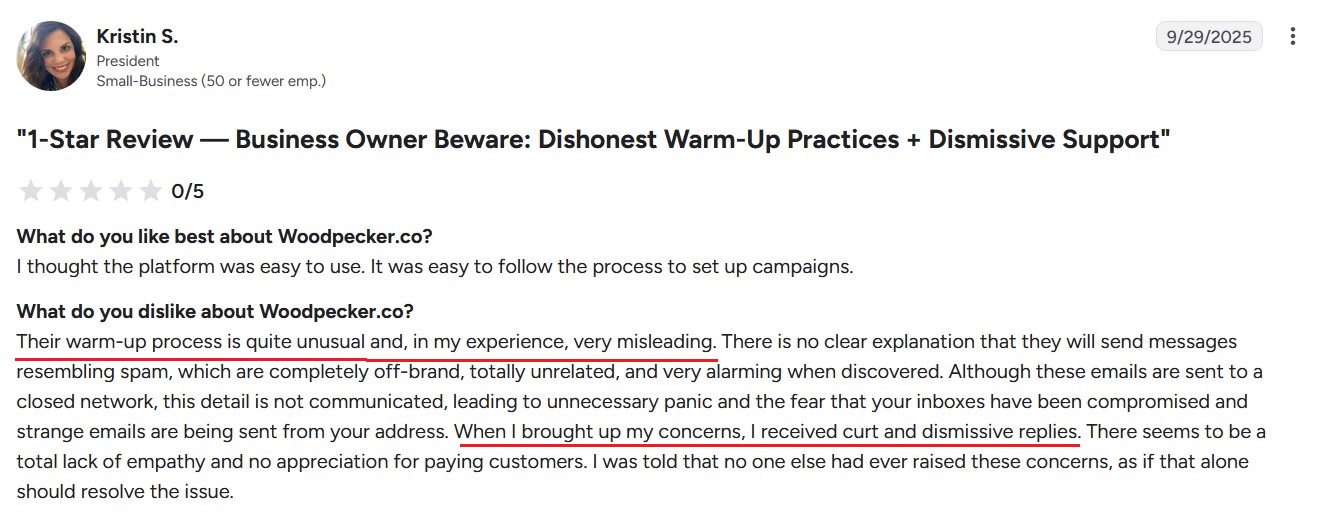
2. Warm-Up Behavior Alarms Users
Spam-looking filler messages show up in connected inboxes with no upfront explanation, and one G2 review says raising the concern drew curt, dismissive replies from support.
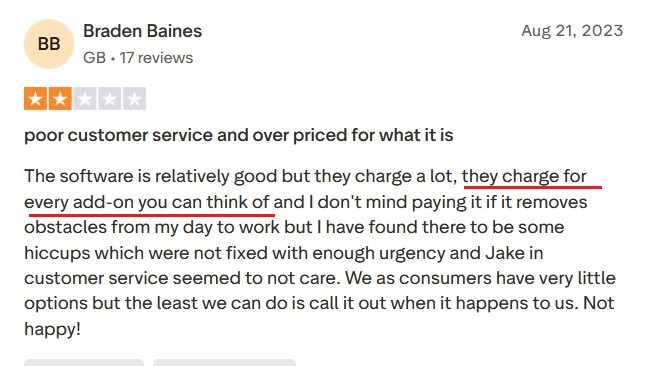
3. Everything Useful Costs Extra
LinkedIn, API access, CRM sync, and the agency panel are all paid add-ons, and users call the resulting pricing confusing and uncompetitive against newer tools.
Woodpecker Pros and Cons
Rolling up the 2026 pricing math, feature testing, and verified reviews across G2, Trustpilot, and Capterra, these are the Woodpecker pros and cons that actually decide a purchase.
Woodpecker Pros
- Category-leading deliverability engineering
- Unlimited team members and email accounts free
- Free warm-up and unlimited email verification
- Best-in-class agency panel with white label
- Minimal learning curve, fast campaign setup
- 14-day trial with all features, no card needed
Woodpecker Cons
- Contacted-prospects ceiling halts campaigns mid-month
- LinkedIn, API, and CRM sync all cost extra
- Same prospect in 5 campaigns counts 5 times
- No drag-and-drop sequence editing
- Analytics are basic versus newer rivals
- Warm-up mechanics are poorly explained to users
If the pattern in those cons feels familiar, per-contact billing that scales with ambition, add-ons that double the bill, campaigns bottlenecked by an arbitrary ceiling, then the smartest move is not another inbox tool with a different meter. It is a different channel altogether.
contactID: The Best Woodpecker Alternative for B2B Outreach
contactID leads the Woodpecker alternatives list because it removes the two constraints this entire review keeps circling back to: spam filters and prospect meters. Instead of rotating mailboxes to sneak past inbox gatekeepers, it delivers your message through the one channel every business monitors and none filters: their own website contact form.
contactID (formerly known as ContactUs AI) is brandID's entry in the fast-growing category of AI contact form automation tools. Give it a list of target domains, a sender profile, and a personalization prompt. The AI locates each contact form, maps the fields, solves any CAPTCHA, writes site-specific copy, and submits, with roughly 98% deliverability and no warm-up, domain setup, or contacted-prospects ceiling anywhere in the process.
contactID Features
AI form detection on any website
The engine crawls each target domain and finds the contact form even when it hides behind a JavaScript modal, sits on a subpage, or uses a custom layout. Multilingual and custom-coded forms are handled by the same model.
Automatic field mapping with zero setup
The AI reads field labels and slots your sender profile into the right places: name, email, company, phone, message. Non-standard fields like “budget range” or “how did you hear about us” get filled contextually.
99.9% CAPTCHA solve rate
reCAPTCHA v2 and v3, hCaptcha, and image-based challenges are all resolved automatically. You never see one, which is what lets bulk form outreach run at real scale (the brandID guide on contact form marketing covers the full playbook).
AI message personalization per site
For each domain, the AI reads the site's public pages and writes a message referencing what that business does and how your offer fits. Where Woodpecker personalizes with snippets and spintax, contactID writes fresh copy per target.
Bulk submission up to 400 domains per run
Paste a list or upload a CSV. contactID runs the batch and reports per-domain status: submitted, failed, or pending review. Run multiple batches a day when the list is bigger.
Zero infrastructure to maintain
No domains to buy, no mailboxes to warm, no SPF, DKIM, or DMARC to configure, no warm-up filler messages appearing in anyone's inbox. Pause it and nothing breaks.
Woodpecker vs contactID
| Feature | Woodpecker | contactID |
|---|---|---|
| Pricing model | Per contacted prospect, from ~$29/month | Pay-per-success, no meter |
| Delivery channel | Cold email + LinkedIn add-on | Website contact form (unfiltered) |
| Deliverability | Up to 99% for top senders, spam-filter dependent | ~98%, no spam filter in the path |
| Warm-up required | Yes, per mailbox | No mailboxes needed |
| Monthly volume ceiling | Contacted-prospects limit halts new sends | No prospect ceiling |
| CAPTCHA handling | N/A (email-based) | 99.9% automatic solve rate |
| Bulk capacity | Capped by plan and mailbox limits | Up to 400 domains per run |
| Infrastructure to maintain | Domains, mailboxes, warm-ups, DNS records | None |
Other Woodpecker Alternatives Worth Considering
Contact form outreach will not fit every motion. If your buyers live in the inbox or on LinkedIn, three tools stand out as the strongest Woodpecker alternatives in 2026, each solving a different weakness in the contacted-prospects model. All three also appear in the wider brandID roundup of B2B sales tools.
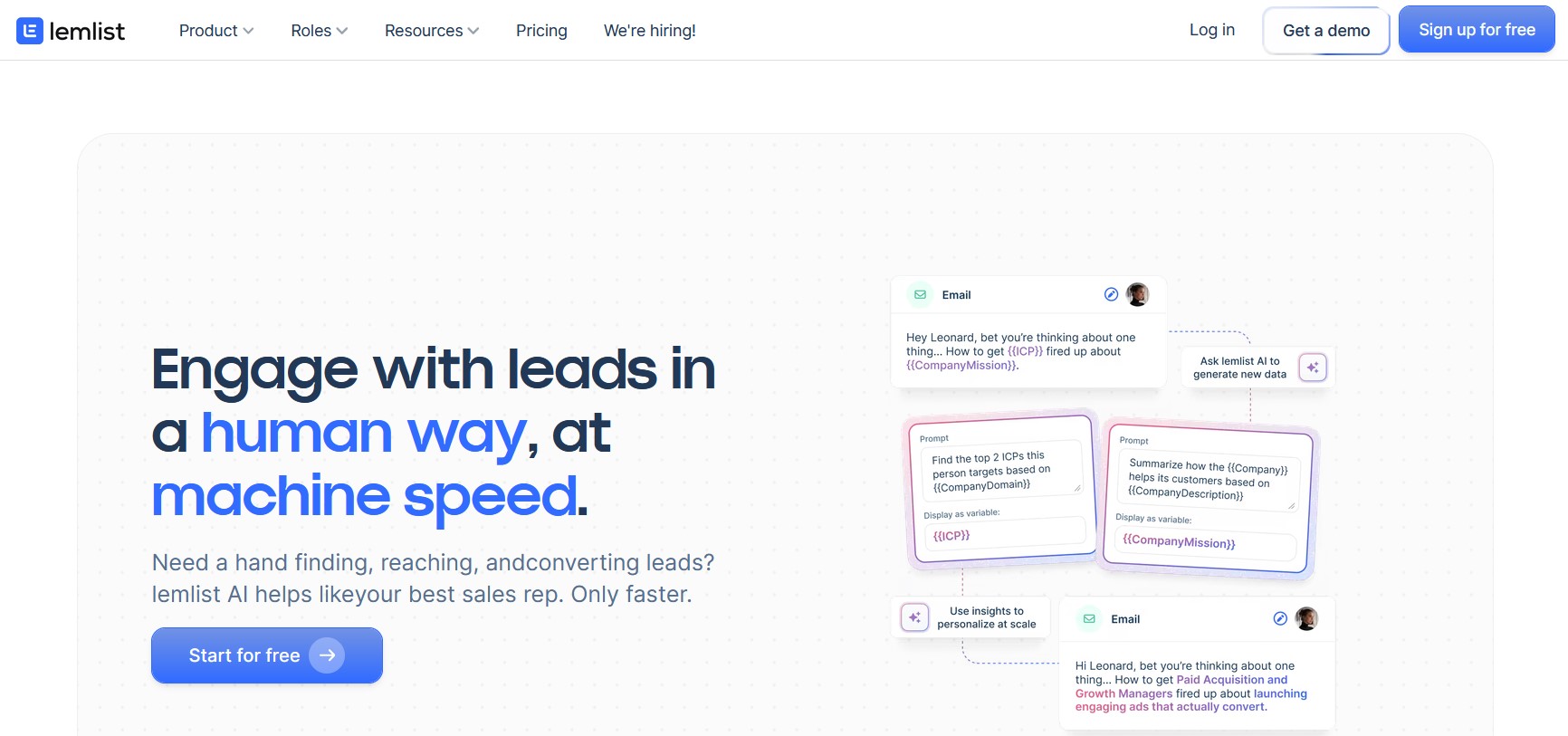
1. Lemlist
Lemlist is a multichannel outreach platform that answers Woodpecker's biggest creative gap: personalization. Dynamic images, personalized videos, and per-prospect landing pages remain unmatched in the category, and native email, LinkedIn, calling, and WhatsApp steps live in one sequence rather than behind separate add-ons. For buyers who respond to creative touches, its Woodpecker features overlap ends where the visuals begin.
- Best For: Small teams whose reply rates depend on creative, image-led personalization.
- Pricing: Email Pro at $79/user/month ($63 annual), Multichannel Expert at $109/user/month ($87 annual), plus a monthly credit system for enrichment.
- Trade-off: Per-seat pricing scales painfully past 5 reps, and credits expire monthly with no rollover. Deliverability trails Woodpecker's engineering on independent seed tests.
2. Smartlead
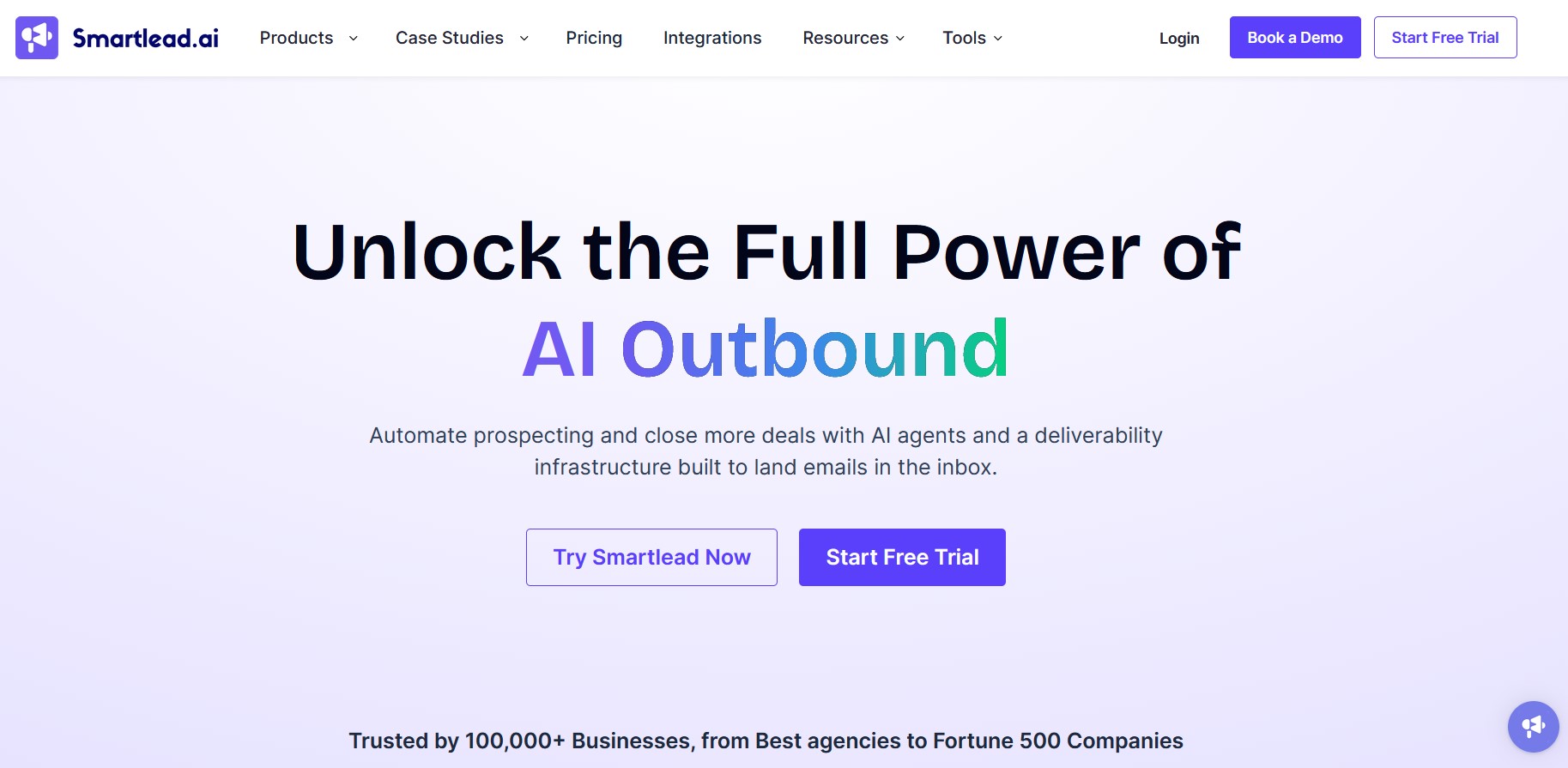
Smartlead attacks the volume ceiling directly. Unlimited email accounts and unlimited warm-up come standard, sending is capped by active leads rather than a strict contacted-prospects meter, and the unified master inbox pulls replies from every mailbox into one view. For agencies and high-volume senders comparing Woodpecker pricing at 20,000+ prospects a month, the flat-fee math usually favors Smartlead.
- Best For: High-volume email teams and agencies scaling across dozens of domains.
- Pricing: Basic at $39/month, Pro at $94/month, Custom at $174/month, with annual discounts. White label available on higher tiers.
- Trade-off: The interface is denser and buggier than Woodpecker's, support quality is a recurring complaint, and there is no native LinkedIn channel.
3. Reply.io
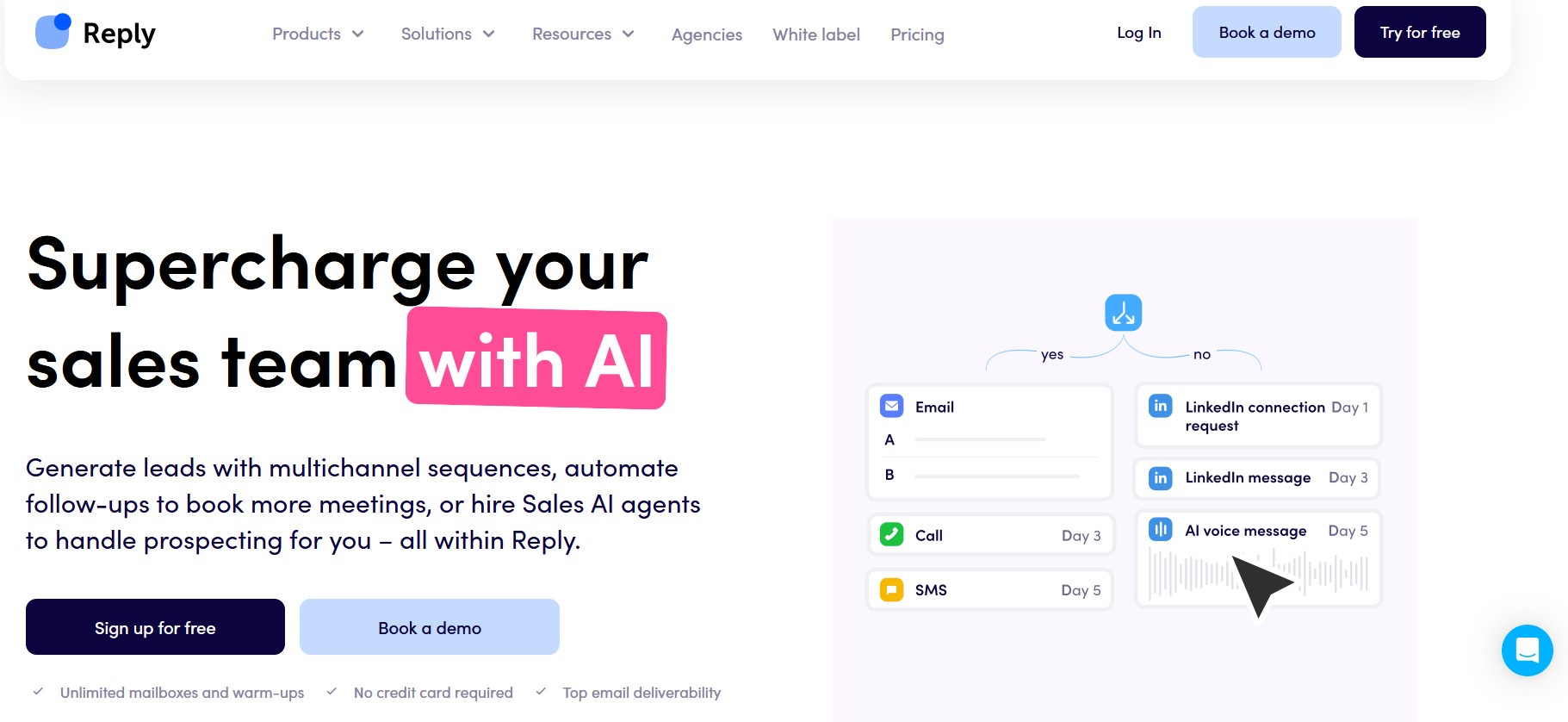
Reply.io is the pick for teams that have outgrown email-only outbound sales software. Email, LinkedIn, calls, SMS, and WhatsApp run in one native sequence, a 1B+ contact database is built in, and Jason, its AI SDR agent, can research prospects, write replies, and book meetings with minimal supervision. It replaces the multi-tool stack Woodpecker users end up assembling piece by piece.
- Best For: Sales teams that want true multichannel sequencing and AI-assisted follow-up in one subscription.
- Pricing: Email-focused plans start around $59/month, multichannel plans run about $99/user/month, and AI SDR packages are quoted separately.
- Trade-off: Per-user pricing gets expensive for larger teams, and the feature breadth brings a steeper learning curve than Woodpecker's minimal setup.
Conclusion: Is Woodpecker Worth It in 2026?
Woodpecker is one of the most honest tools in cold email. The deliverability engineering is real, the free inclusions (unlimited seats, unlimited mailboxes, unlimited verification) are genuinely generous, and the agency panel remains the best in the category. For a focused team contacting a predictable number of well-researched prospects each month, the contacted-prospects model can cost less than any per-seat rival.
The same model punishes variability. One big campaign, one extra client, one prospect reused across five sequences, and the meter fills while the add-ons quietly stack. If your outreach volume swings month to month, or you are tired of paying for the privilege of fighting spam filters at all, run the arithmetic on contact form outreach first: no warm-up, no ceiling, and payment only when a message actually lands.