Creators pick storefronts the way they pick studios: for what works on day one, and for the room to grow on day 100. Sellfy nails day one. Storefront online in an afternoon, digital delivery handled, print-on-demand thrown in as a bonus. Day 100 is where the friction begins: the storefront looks like every other Sellfy store, the marketing toolkit stays basic, and the pricing gates itself right at the moments you would want to reinvest in growth.
The seven Sellfy alternatives below each fix at least one of those growing pains, and the best of them fix all three. What follows is a ranked shortlist across three brackets: free-tier options for creators just starting out, low-cost paid platforms for those past their first $500/month, and full ecommerce systems for stores ready to graduate from a widget to a real online business. If you’re still figuring out what to actually sell alongside picking where to sell it, the guide on how to sell digital products covers the pricing and packaging fundamentals that make any storefront pay off.
Key Takeaways
- The best Sellfy alternatives are brandID (free with 0% Creator plan and affiliate marketplace built in), Payhip (free plan for digital products), and Gumroad (zero monthly, Merchant of Record handles global tax).
- Sellfy’s revenue caps hit hardest between $10K and $50K annual sales, when you are forced from $22/month to $59/month with no in-between option. That gap is why most creators switch.
- For scaling ecommerce brands, Shopify remains the industry standard among alternatives to Sellfy with unlimited sales, richer app ecosystem, and a real customizable storefront.
- For course sellers and coaches, Podia or The Leap ship with drip content, community, and AI-guided setup that Sellfy’s basic subscription feature does not match.
- Migrating is easier than you think. Sellfy exports customers and orders as CSV, and most Sellfy competitors accept the import. Budget one weekend to re-upload digital files and set up redirects.
Reasons Creators Move Away from Sellfy
Sellfy is a legitimately good product for its target user: a beginner selling their first digital pack who wants a storefront up in an hour. The problem is the ceiling arrives fast. Four specific pain points push most creators to shop for a Sellfy alternative:
1- Revenue Caps Trigger Forced Upgrades
Every Sellfy paid plan comes with an annual sales cap: $10K on Starter, $50K on Business, $200K on Premium. Cross the cap mid-year and Sellfy auto-upgrades your plan. The jump from Starter to Business more than doubles your monthly cost ($22 to $59) with no gradual tier in between. Creators who cross $10K in month nine of the year end up paying the higher rate for months they did not need the extra capacity.
2- Storefront Customization Hits a Wall Fast
Sellfy stores use a fixed template with limited color, font, and layout options. Custom domains work but the “hosted by Sellfy” feel remains visible in checkout flows. For creators building a real brand, the design ceiling is why full site builders (Shopify, Wix) or link-in-bio storefronts (brandID, Fourthwall) start looking attractive.
3- Marketing Tools Are Basic or Locked
Email marketing, upsells, cart abandonment recovery, and affiliate programs exist on Sellfy but with limited functionality on Starter and only open up properly on Business or Premium. Most Sellfy alternatives either bundle these tools free (brandID, Podia, Fourthwall) or match Sellfy’s Business tier at lower cost (Payhip Plus at $29/month).
4- No Affiliate or Discovery Layer
Sellfy has no built-in marketplace where buyers can discover your products, and no affiliate marketplace where you can recommend other creators’ products for commission. Every sale has to come from traffic you drive yourself. Platforms like brandID (affiliate marketplace with 5M+ products) and Gumroad Discover give creators additional revenue streams Sellfy does not.
7 Best Sellfy Alternatives to Try in 2026
Seven picks across three brackets: free platforms for solo sellers testing digital products, low-cost paid platforms for creators past $500/month, and full ecommerce systems for scaling stores. brandID leads because it is the only pick that combines a free plan, 0% platform fees on the entry paid tier, and an affiliate marketplace no other Sellfy alternative offers.
1- brandID
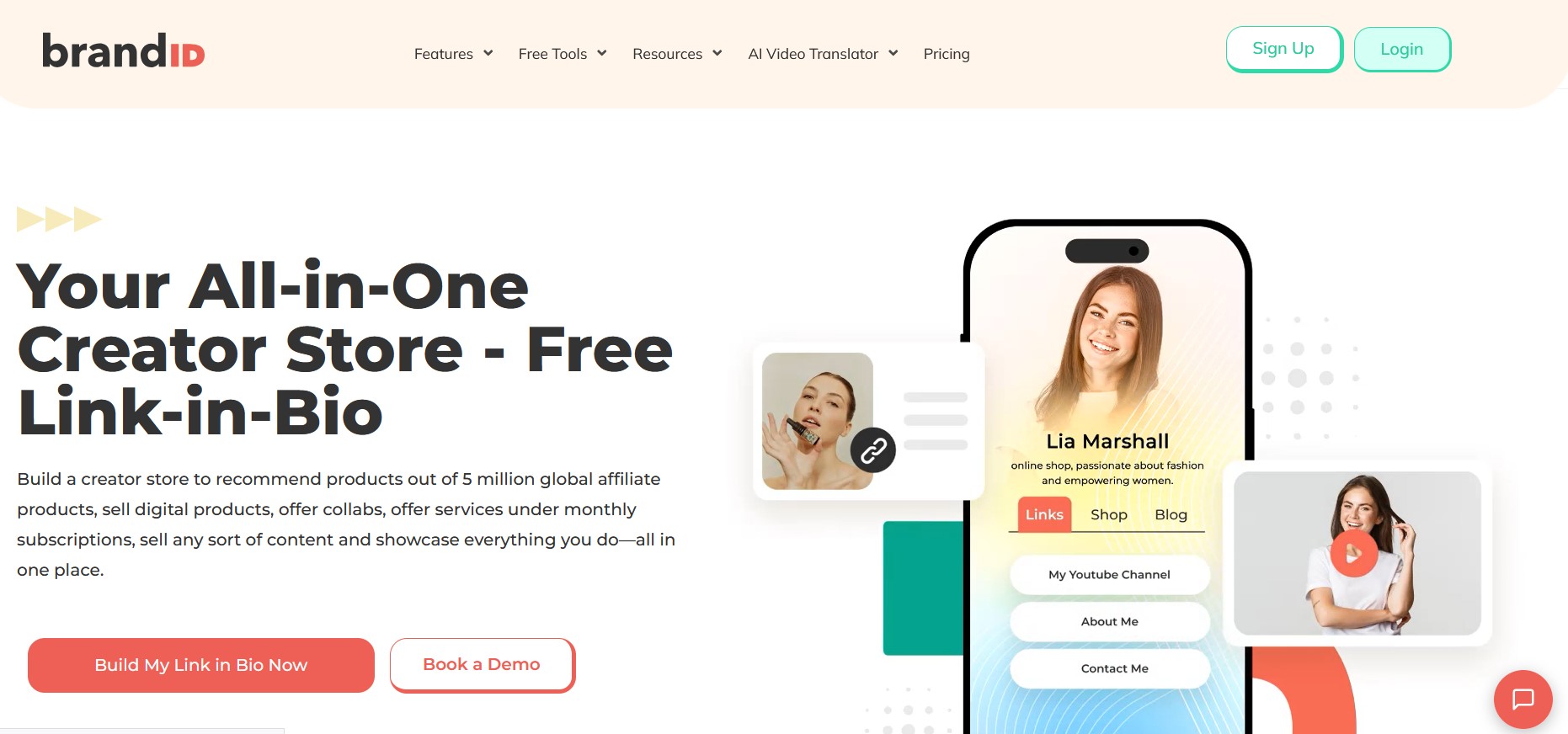
brandID is the only Sellfy alternative in this list that combines a free link-in-bio storefront with a built-in affiliate marketplace. Sell your own digital downloads, subscriptions, and services from one branded page, or add affiliate products from 5 million+ items across 2,000+ brands to earn up to 65% commission on top. Where Sellfy caps your annual revenue and taxes upgrades, brandID’s tiers scale on features you actually want, not sales you already made.
Cost: Free plan, Creator $9/month, Turbo Creator for scaling.
Transaction Fees: 5% on free with your own Stripe/PayPal (10% via brandID’s gateway). Creator drops to 0% with your own gateway.
Why Creators Pick It Over Sellfy: No revenue caps, no forced upgrades, and the affiliate marketplace turns your storefront into a second income stream automatically. Plus digital downloads ship with no file size cap.
Watch Out For: Fewer built-in print-on-demand options than Sellfy or Fourthwall if merch is your main product.
Verdict: The strongest all-round Sellfy replacement for creators who sell digital products and want a real link-in-bio home for them.
2- Payhip
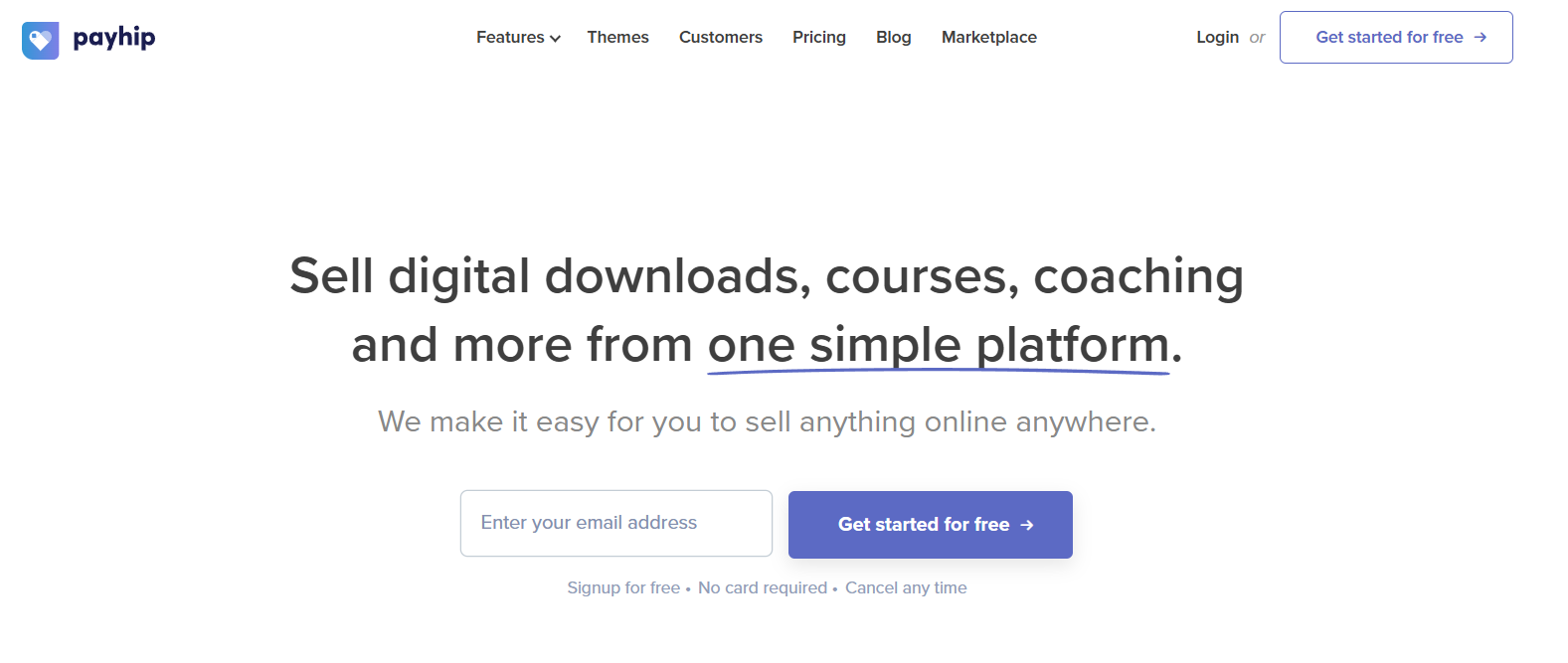
Payhip is Sellfy’s closest fee-focused twin: same target user (solo digital-product sellers), similar setup speed, but with a genuinely useful free plan that Sellfy does not offer. A creator selling under $200/month keeps 95% of revenue on Payhip’s free tier vs. paying $22/month on Sellfy just to open the door. The upgrade path is also cleaner: Payhip Plus drops fees to 2% at $29/month, Pro hits 0% at $99/month, with no revenue caps at any tier.
Cost: Free, Plus $29/month, Pro $99/month.
Transaction Fees: 5% free, 2% Plus, 0% Pro.
Why Creators Pick It Over Sellfy: Real free plan, no revenue caps, automatic EU VAT handling, and the Payhip review shows most creators break even against Sellfy at around $180/month in sales.
Watch Out For: Storefront design is more basic than Sellfy’s. Payhip is a checkout-first tool.
Verdict: The best free-tier Sellfy alternative for creators who care about margin more than storefront aesthetics.
3- Gumroad
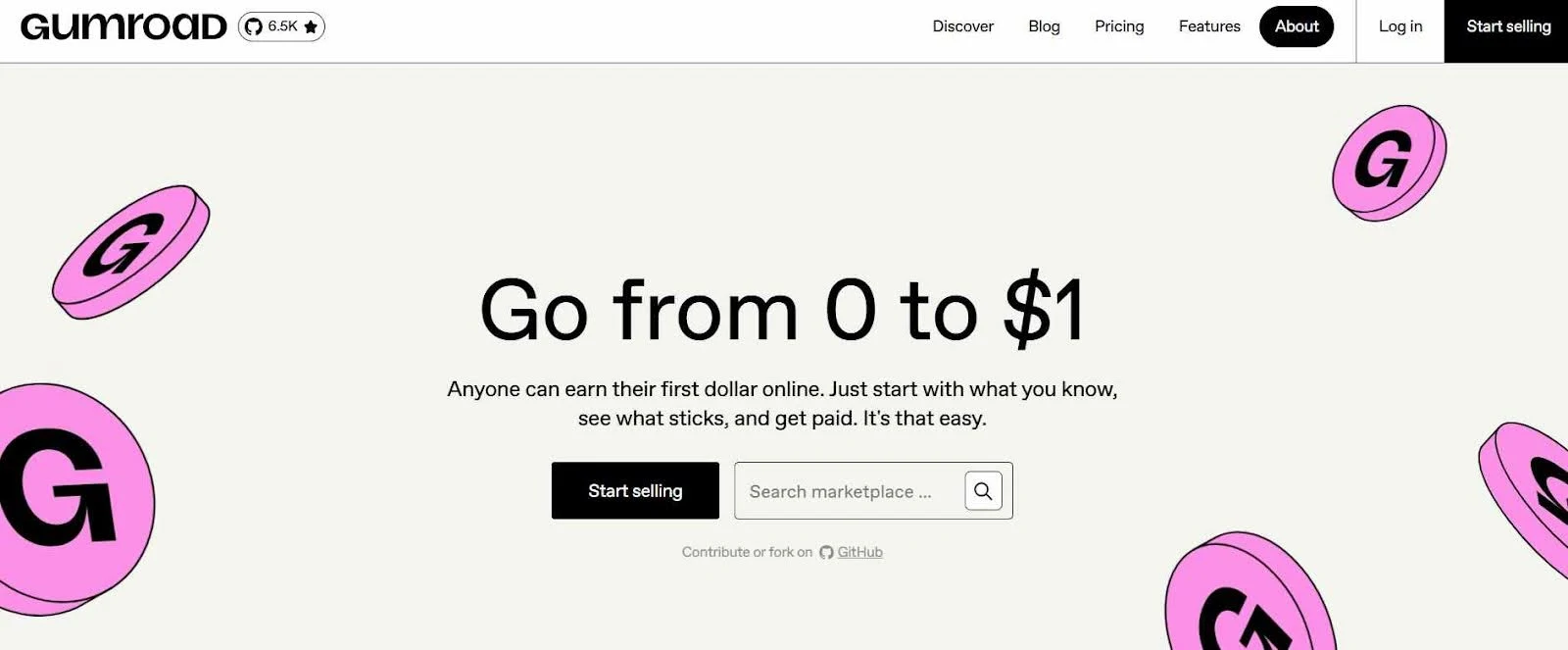
Gumroad is the zero-monthly-cost Sellfy alternative for creators who value simplicity above everything. No subscription fee, no revenue caps, no plan tiers to worry about. Upload a file, set a price, share the checkout link, done. The tradeoff is a flat 10% + $0.50 per transaction fee, which sounds steep but pays for itself the moment you factor in Gumroad’s Merchant of Record status. Gumroad automatically collects and remits sales tax, VAT, and GST across every country, which is a genuine ecommerce burden Sellfy passes back to you.
Cost: Zero monthly fee.
Transaction Fees: 10% + $0.50 per sale (30% on Gumroad Discover sales).
Why Creators Pick It Over Sellfy: No subscription commitment, no revenue caps, and global tax compliance handled for you. See the Gumroad review for the full fee breakdown.
Watch Out For: Fees stack fast once monthly sales cross $500. Above $1,000/month, a $29 Payhip plan often nets you more.
Verdict: The right Sellfy alternative for casual sellers, low-volume creators, and anyone who wants global tax off their plate entirely.
4- Fourthwall
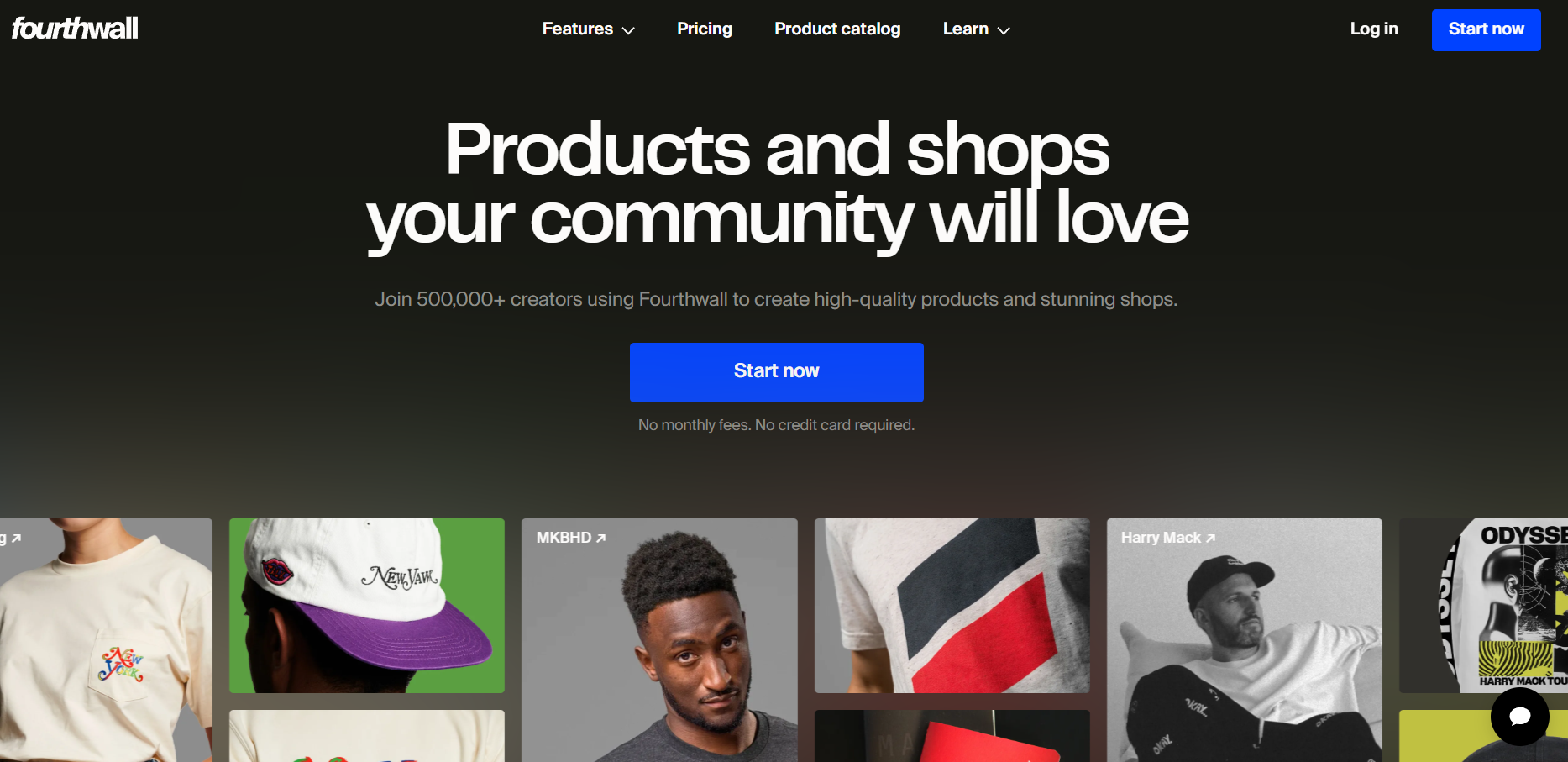
If print-on-demand merch is why you were on Sellfy in the first place, Fourthwall is the direct upgrade. Where Sellfy bolted POD onto a digital-download platform, Fourthwall was built merch-first: automated production and fulfillment, a fully branded custom site (not a hosted profile), and 0% platform fees on physical products. Creators can also add digital products, memberships, and tipping to the same storefront. The Fourthwall review compares POD margins vs. Sellfy directly.
Cost: Free plan, Pro $19/month.
Transaction Fees: 0% on physical products, 5% on digital (free plan), 0% across everything on Pro.
Why Creators Pick It Over Sellfy: True merch-first design, no revenue caps, TikTok Shop and YouTube Shopping integrations, and $19/month Pro is cheaper than Sellfy Starter.
Watch Out For: Less optimized for pure ebook/PDF/template sellers than Payhip or brandID.
Verdict: The best Sellfy alternative for creators whose main product is branded merch, apparel, or accessories.
5- Shopify
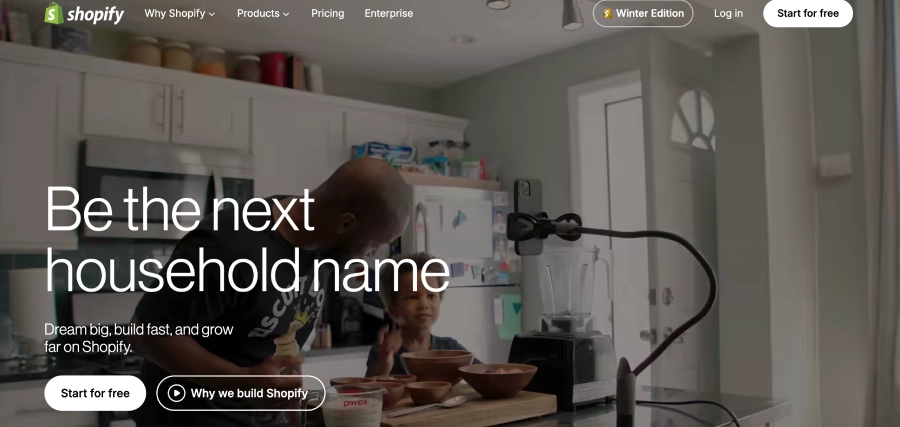
Shopify is what Sellfy sellers graduate to when a storefront widget stops being enough. Unlimited products, unlimited sales, no revenue caps, a themable custom site with a real customization ceiling that most creators never hit, plus the largest app ecosystem in ecommerce (5,000+ integrations from print-on-demand to abandoned cart to affiliate marketing). The trade is complexity and cost: $29/month Basic minimum, and 2% transaction fee unless you use Shopify Payments (which drops it to 0%).
Cost: Basic $29/month, Shopify $79/month, Advanced $299/month.
Transaction Fees: 0% with Shopify Payments; 2% (Basic), 1% (Shopify), 0.5% (Advanced) with third-party gateways.
Why Creators Pick It Over Sellfy: True ecommerce control, no sales caps, professional theme library, and the ability to hire developers to customize anything.
Watch Out For: Overkill for creators selling three or four digital products. Also, most useful features (upsell apps, email automation) cost extra.
Verdict: The right Sellfy alternative if you are running a real ecommerce brand doing $2K+/month, not a solo digital-download side hustle.
6- Podia
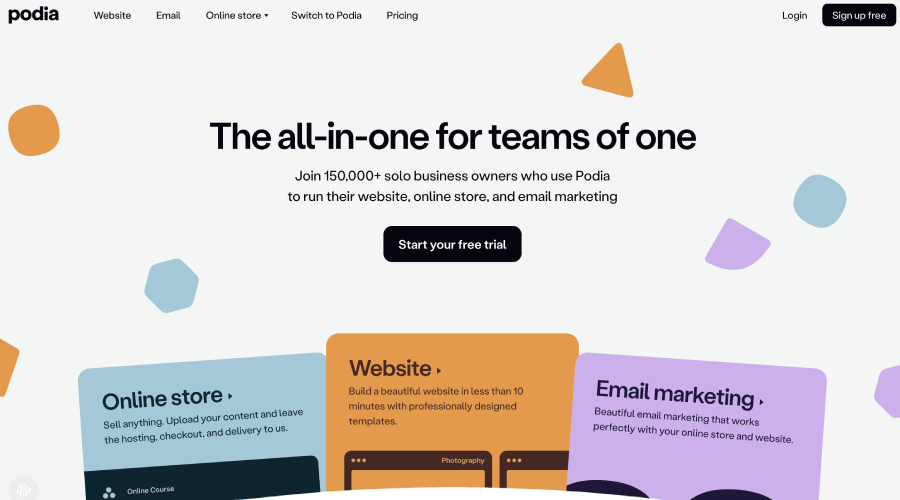
Podia is the Sellfy alternative for creators whose main product is a course, coaching package, or membership community. Where Sellfy treats subscriptions as an add-on, Podia is built around them: drip content, community threads, unlimited students, and email marketing that scales with your list. Best fit for knowledge-product sellers who are tired of Sellfy’s subscription feature feeling like an afterthought.
Cost: Mover $39/month, Shaker $89/month, Earthquaker $199/month.
Transaction Fees: 5% (Mover), 0% (Shaker, Earthquaker).
Why Creators Pick It Over Sellfy: Purpose-built for courses and memberships, no student caps, drip content out of the box.
Watch Out For: Expensive if you also sell one-off digital products, since features you do not need are baked into the subscription.
Verdict: A better Sellfy replacement than Sellfy ever was for course sellers, coaches, and community builders.
7- The Leap
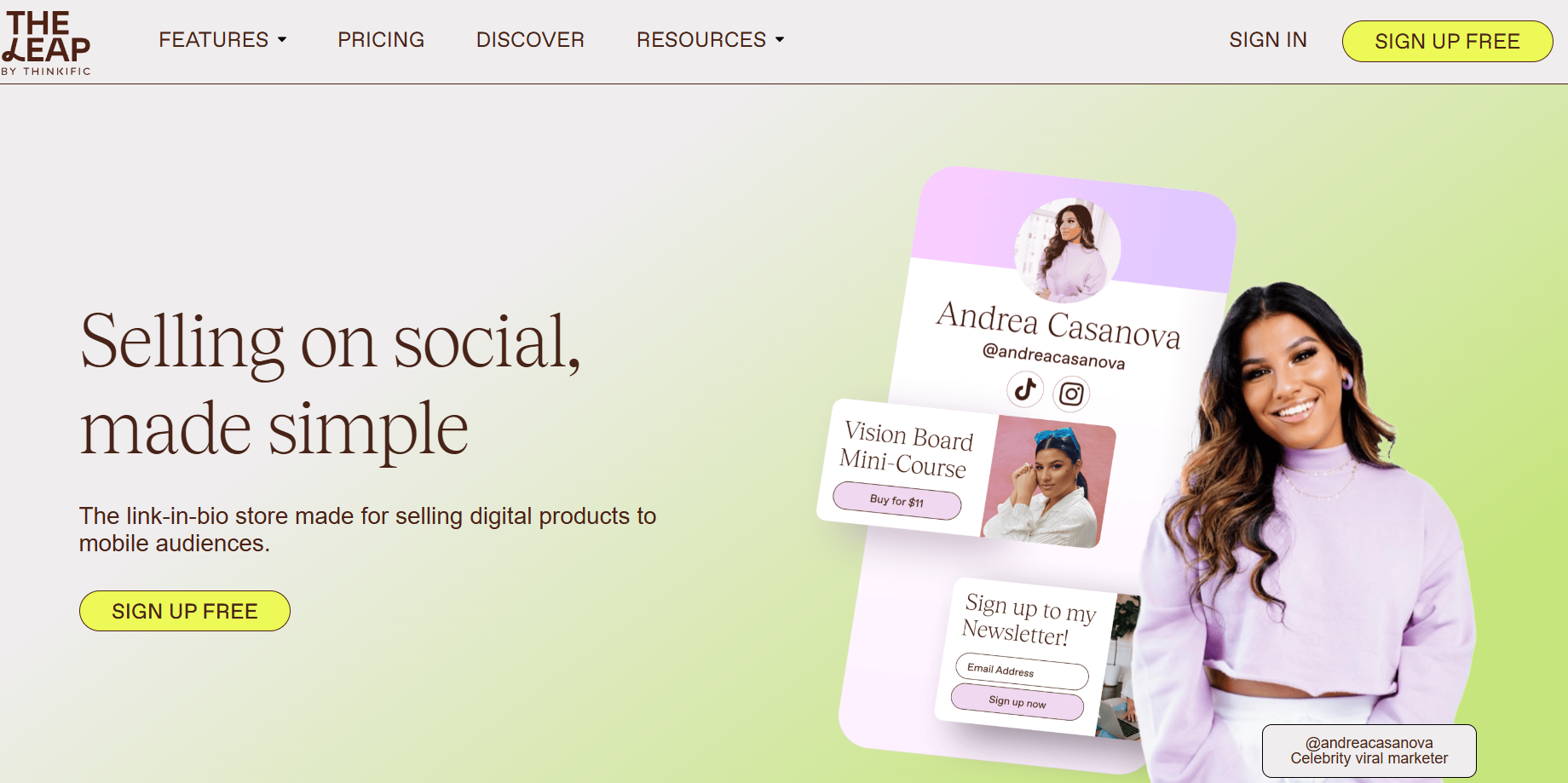
Thinkific’s AI-powered creator store is the newest Sellfy alternative worth considering, especially if you are launching your first paid digital product and want AI to draft the mini-course or guide for you. The free plan caps at three products, but Pro at $19/month bumps that to 25 products and adds Zapier integration. What Sellfy charges $22/month for (with a $10K sales cap), The Leap gives you at $19/month with no sales cap and 0% platform fees. See the Leap review for the AI builder’s real limits.
Cost: Free (3 products), Pro $19/month (25 products), Elite $59/month (100 products).
Transaction Fees: 0% platform. Stripe processing only (2.9% + $0.30).
Why Creators Pick It Over Sellfy: AI product builder, 0% fees on every tier, cheaper entry paid tier ($19 vs $22).
Watch Out For: Product caps on every plan. Serious volume sellers should look at brandID, Payhip, or Shopify.
Verdict: A smart Sellfy alternative for creators launching their first two or three paid products who want an AI head start.
Sellfy Alternatives Compared
Total-cost snapshot across all seven Sellfy competitors. Fees shown assume the entry paid tier where relevant, since that is where most creators compare directly against Sellfy Starter.
| Platform | Free Plan | Entry Paid Tier | Sales Cap |
|---|---|---|---|
| brandID | Yes (5% fee) | $9/mo (0% own gateway) | None |
| Payhip | Yes (5% fee) | $29/mo (2% fee) | None |
| Gumroad | Yes (no monthly) | No paid tiers | None |
| Fourthwall | Yes (0% merch) | $19/mo (0% all) | None |
| Shopify | No (3-day trial) | $29/mo Basic | None |
| Podia | No | $39/mo Mover | None |
| The Leap | Yes (3 products) | $19/mo (25 products) | Product cap |
| Sellfy (for reference) | No | $22/mo Starter | $10K annual |
Final Verdict: Which Sellfy Alternative Fits Your Store?
One-line recommendations based on what you actually sell:
- Digital downloads + affiliate income: brandID. The only pick that combines a free storefront with an affiliate marketplace.
- Free plan, pure digital products: Payhip. Best margins at low-to-mid volume.
- Zero commitment, occasional sales: Gumroad. No monthly, global tax handled.
- Merch and physical products: Fourthwall. Purpose-built for creator brands.
- Real ecommerce at scale: Shopify. When storefront widgets stop being enough.
- Courses, memberships, coaching: Podia. Built around knowledge products.
- First paid product, AI head start: The Leap. AI drafts the mini-course for you.
If your primary need is tipping and fan support (not digital product sales), Sellfy was probably never the right platform to begin with. The best Ko-fi alternatives and Buy Me a Coffee alternatives guides cover platforms built for that specific use case instead.
FAQs
1- What is the best Sellfy alternative?
brandID is the best all-round Sellfy alternative for digital creators because it starts free, adds an affiliate marketplace Sellfy does not offer, and drops platform fees to 0% on the $9/month Creator plan. For pure digital downloads with zero subscription cost, Payhip and Gumroad are strong picks. For serious ecommerce scale, Shopify remains the industry standard.
2- Why do creators leave Sellfy?
Three reasons dominate: (1) the $22/month Starter plan caps you at $10,000 annual sales before forcing an upgrade to $59/month, (2) storefront customization is limited compared to Shopify or a full site builder, and (3) marketing tools like email automation and abandoned cart recovery are locked to higher tiers. Creators typically outgrow Sellfy once monthly revenue crosses $500 to $1,000.
3- Are there free Sellfy alternatives?
Yes. brandID, Payhip, Gumroad, Fourthwall, and The Leap all offer genuine free plans. brandID gives you a full link-in-bio storefront with digital products, tips, and subscriptions. Payhip lets you sell unlimited digital products with a 5% transaction fee. Gumroad has zero monthly cost with a 10% + $0.50 fee per sale. Fourthwall is free for physical products and 5% on digital.
4- Which Sellfy alternative has the lowest transaction fees?
Shopify (Basic $29/month plus 0% Shopify Payments) and Podia (Shaker $89/month at 0%) both hit 0% platform fees on their paid tiers. brandID’s Creator plan ($9/month) drops fees to 0% with your own Stripe or PayPal gateway. Payhip Pro at $99/month is also 0%. For pure cost, brandID Creator gives the lowest overall combined cost at low-to-mid volume.
5- Can I migrate my Sellfy store without losing customers?
Yes. Sellfy lets you export customer and order data as CSV files. Most alternatives (brandID, Shopify, Podia, Payhip) accept CSV imports for products and customers, though digital files typically need to be re-uploaded manually. Redirect your old Sellfy checkout links to the new platform’s product pages using URL forwarding, and email your existing subscribers with the new storefront address to preserve repeat-buyer revenue.
 Summarize this article with: