The best B2B data providers do one job well: they hand your sales team accurate contacts, firmographics and buying signals so reps spend time selling instead of hunting for phone numbers. The hard part is that databases decay fast, prices swing from free to five figures, and no two vendors define accuracy the same way.
To rank the field, we weighed data accuracy, freshness, coverage, compliance, integrations and real cost of ownership. Most teams still pair a provider with cold email software to reach those contacts, yet one tool below closes the loop and delivers the outreach itself. Here are the 14 picks for 2026, ranked and compared.
Key Takeaways
- Accuracy beats size: the strongest B2B data providers win on verified, fresh records and compliance, not on the raw headline count of contacts in the database.
- ZoomInfo leads, but it costs: the deepest US contact graph starts near 15,000 dollars a year, so most teams pay for depth they may never use.
- contactID is different: it is data plus activation, building a target list by niche and location, then delivering messages through each site’s contact form at close to 100 percent.
- Budget and region matter: Apollo and UpLead cover cost-sensitive teams, while Cognism owns compliant EU and UK mobile coverage.
- Data decays monthly: B2B records go stale at roughly 2 to 3 percent a month, so freshness and refund policies deserve as much weight as price.
What Is a B2B Data Provider?
A B2B data provider collects, verifies and sells business data, such as contacts, firmographics, technographics and buying signals, then pipes it into your CRM and sales tools so go-to-market teams can find and reach the right accounts.
In practice, that means an SDR can filter for a job title, company size and technology stack, then export a clean list ready to work.
The better providers compete on accuracy, freshness, compliance and integrations rather than sheer database size. A giant list full of dead addresses costs you more than a smaller one that actually connects.
5 Types of B2B Data
Not all business data does the same thing. Most providers specialize in one or two of these five categories, which is why teams often run more than one.
- Contact data: names, job titles, verified emails and direct-dial or mobile phone numbers for the people you want to reach.
- Firmographic data: company attributes like industry, headcount, revenue, location and structure that define your ideal account.
- Technographic data: the software and tools a company runs, so you can target accounts that already use a complementary or rival product.
- Intent and buying-signal data: anonymized research behavior that flags which accounts are actively looking for what you sell.
- Job-posting and trigger data: hiring, funding rounds and leadership changes that signal a fresh reason to reach out right now.
How We Ranked These B2B Data Providers
Ranking data vendors is messy because every marketing page claims 95 percent accuracy. We ignored the claims and scored each provider on seven factors that predict real pipeline.
Accuracy and email bounce. How often records connect versus bounce or route to reception. This is the single biggest driver of wasted send time.
Data freshness. Contact databases decay at roughly 2 to 3 percent a month as people change jobs, so we favored real-time verification over static dumps.
Coverage and database size. Depth by region and role, weighed against accuracy rather than treated as a trophy number on its own.
Compliance. GDPR and CCPA handling, consent checks and do-not-call screening, which matter more every year as regulators tighten enforcement.
CRM integrations. Native sync with Salesforce, HubSpot and common sequencers, since data trapped in a spreadsheet slows every rep down.
Pricing and total cost. Not just the sticker, but seat minimums, credit limits, contract length and the extra tools you need to actually send.
Free trial or sample. Whether you can test data quality before committing, because a vendor confident in its records lets you check them first.
B2B Data Providers Compared at a Glance
Prefer the shortlist first? The table below lines up all 14 providers by who they suit, their standout strength and a realistic starting price, so you can narrow the field before the full breakdown.
| Provider | Best for | Notable strength | Starting price |
|---|---|---|---|
| ZoomInfo | Enterprise US depth | Largest US contact and intent graph | ~$15k+/yr, custom |
| contactID | Finding leads and reaching them | Builds list, then delivers via form (~100%) | $5 / 100 leads, then pay per success |
| Apollo.io | All-in-one on a budget | 275M+ contacts plus sequencing | Free, then ~$49 to $119/user/mo |
| Cognism | EMEA and compliance | Phone-verified Diamond Data mobiles | Custom quote |
| Lusha | Quick LinkedIn lookups | Fast Chrome-extension lookups | Free, then ~$36 to $59/user/mo |
| Seamless.AI | High-volume US list building | Real-time AI contact search | Free, then ~$147/mo |
| UpLead | Accuracy on a budget | 95% accuracy guarantee with refunds | ~$99 to $199/mo |
| Lead411 | Intent on a budget | Buyer intent and funding triggers | ~$75 to $99/user/mo |
| RocketReach | Affordable per-lookup search | 700M+ profiles, browser extension | ~$39 to $99/mo |
| Clearbit (Breeze Intelligence) | HubSpot-native enrichment | Real-time enrichment and visitor ID | Plan-dependent |
| LinkedIn Sales Navigator | Relationship-led selling | Freshest self-reported people graph | ~$99/mo |
| 6sense | Enterprise ABM at scale | Predictive intent and account scoring | Custom (~$60k+/yr) |
| Clay | Technical RevOps workflows | Waterfall enrichment across 100+ sources | Free, then ~$149+/mo |
| Dun & Bradstreet | Global firmographic authority | Largest company and D-U-N-S data | Custom quote |
14 Best B2B Data Providers, Ranked
The list runs from the enterprise heavyweight down through budget databases, compliance specialists, enrichment engines and one tool that both finds the leads and reaches them. Each entry says what it is, who it suits, and one honest limitation.
ZoomInfo
The enterprise standard for B2B sales intelligence, ZoomInfo runs the largest US contact and company graph, with verified direct dials, deep firmographics and intent signals fed by a wide data-partner network.
Its Chorus conversation intelligence and layered intent data give big revenue teams a fuller account picture than anyone else supplies. This is the reference point every other provider gets measured against.
The catch is cost and rigidity. Pricing is custom, commonly starting near 15,000 dollars a year with a three-seat minimum and an annual contract, so cost-driven teams often look at cheaper ZoomInfo alternatives before signing.
| ZoomInfo | |
|---|---|
| Pros | Cons |
|
|
- Approx pricing: from around $15,000/yr, custom
- Best for: large enterprises needing the deepest US data and intent
contactID
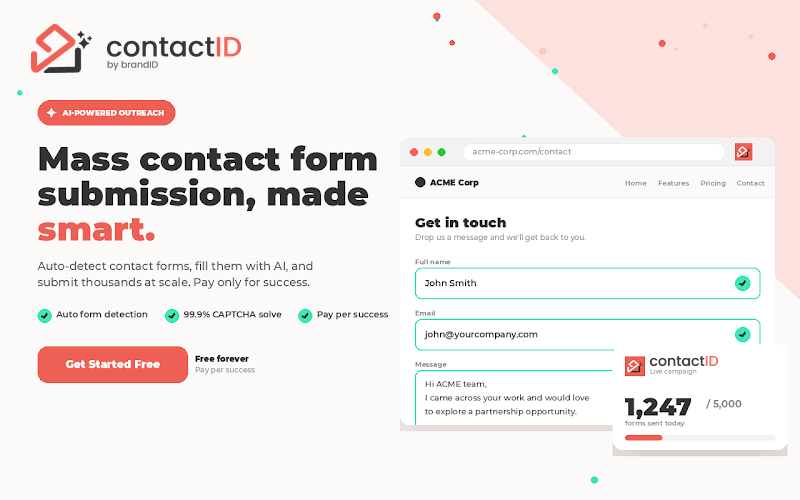
Here is the entry that breaks the pattern. contactID is not a traditional database at all. It pairs B2B lead data with delivery, so it both builds your target list and sends the outreach, in one place.
Every other tool on this list sells you records and leaves the reaching to you. contactID is built for teams tired of paying credits on stale data and watching cold emails get ignored.
It Builds Your Target List
Pick a niche, a country and a city, and it returns a list of matching businesses with their website, emails and phone numbers.
Each record also carries the details static databases skip: the site’s language, its technology stack, the exact contact-page URL, and whether the listing is claimed or unclaimed. Export it, or run outreach on it directly.
Then It Delivers Your Message
The Contact-Form Submission Engine sends personalized messages through each site’s own contact form, with Auto Form Detection and Auto CAPTCHA Solving through 2Captcha or Anti-Captcha plus a manual override.
Because forms do not bounce or land in spam the way cold email does, deliverability sits at close to 100 percent. An AI Personalization Engine rewrites copy per site using merge tags and a 12-message template library.
Sender Agents, A/B split testing, bulk targeting from pasted URLs, CSV, TXT or Excel with column-to-merge-tag mapping, live send runs and an analytics dashboard round out the workflow. AI credits and billing carry spend caps, and advanced export plus referrals sit alongside.
Two things get priced, and both stay cheap. Finding leads runs on credits that never expire, starting at $5 for 100 leads and dropping to $0.025 a lead at volume. Sending outreach is pay-per-success, so you pay for messages that go through, not for records you never use.
| contactID lead credits | ||
|---|---|---|
| Pack | Price | Per lead |
| 100 leads | $5 | $0.050 |
| 500 leads | $20 | $0.040 |
| 2,000 leads | $60 | $0.030 |
| 10,000 leads | $250 | $0.025, best value |
Checkout runs through Stripe, unused credits never expire, and unused packs are refundable within 14 days through support.
| contactID | |
|---|---|
| Pros | Cons |
|
|
- Approx pricing: lead finding from $5 per 100 leads, down to $0.025 a lead; outreach pay-per-success, no per-seat fee
- Best for: teams that want the leads found and the outreach delivered, not another credit balance
Apollo.io
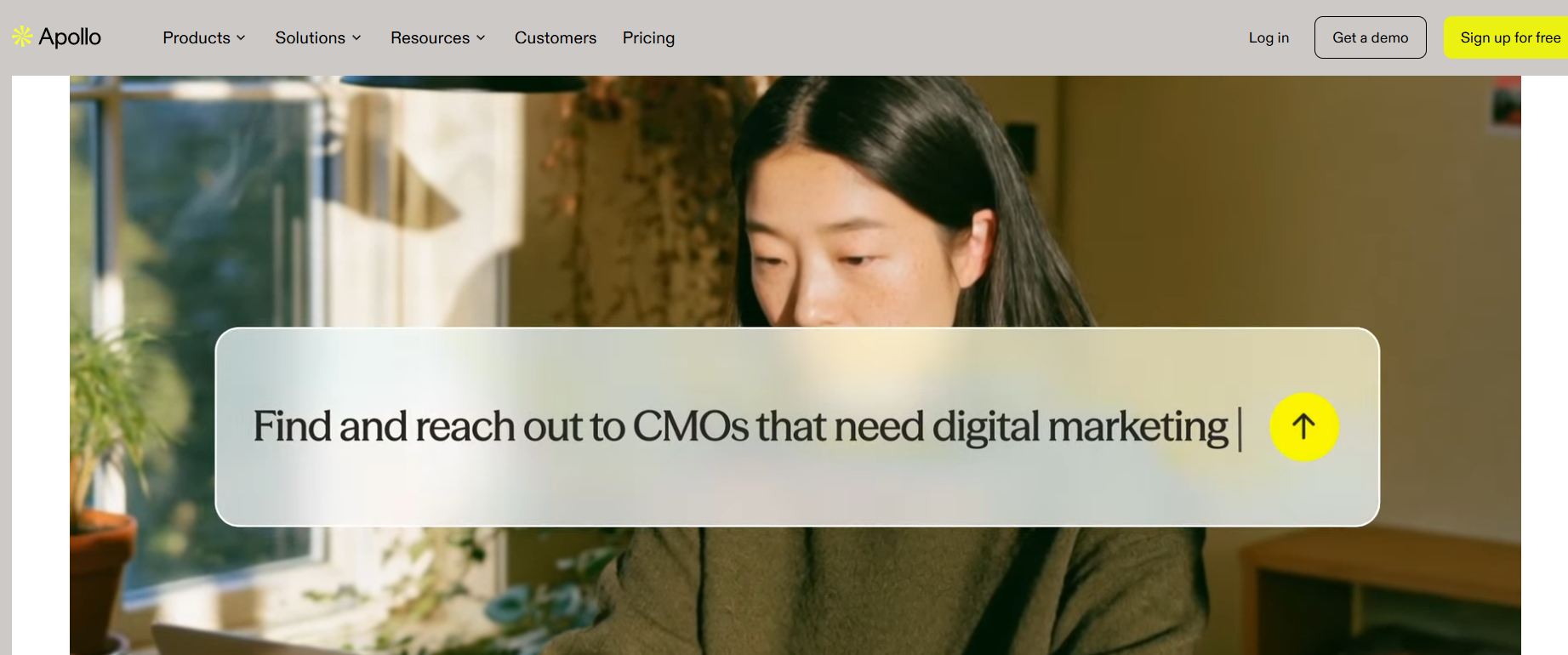
Starting from a free tier and topping out well under enterprise pricing, Apollo.io is the budget favorite that bundles more than 275 million contacts with prospecting, sequencing and a built-in dialer.
For most small and mid-sized teams it covers B2B prospecting data and outreach in a single subscription instead of a data-only contract. That all-in-one value is why it appears on nearly every shortlist.
Accuracy trails the enterprise giants on niche records, and lower tiers cap credits, so heavy users bump into limits. If it is not quite right, plenty of Apollo alternatives sit close on price.
| Apollo.io | |
|---|---|
| Pros | Cons |
|
|
- Approx pricing: free, then ~$49 to $119/user/mo
- Best for: small and mid-sized teams wanting data plus outreach cheaply
Cognism
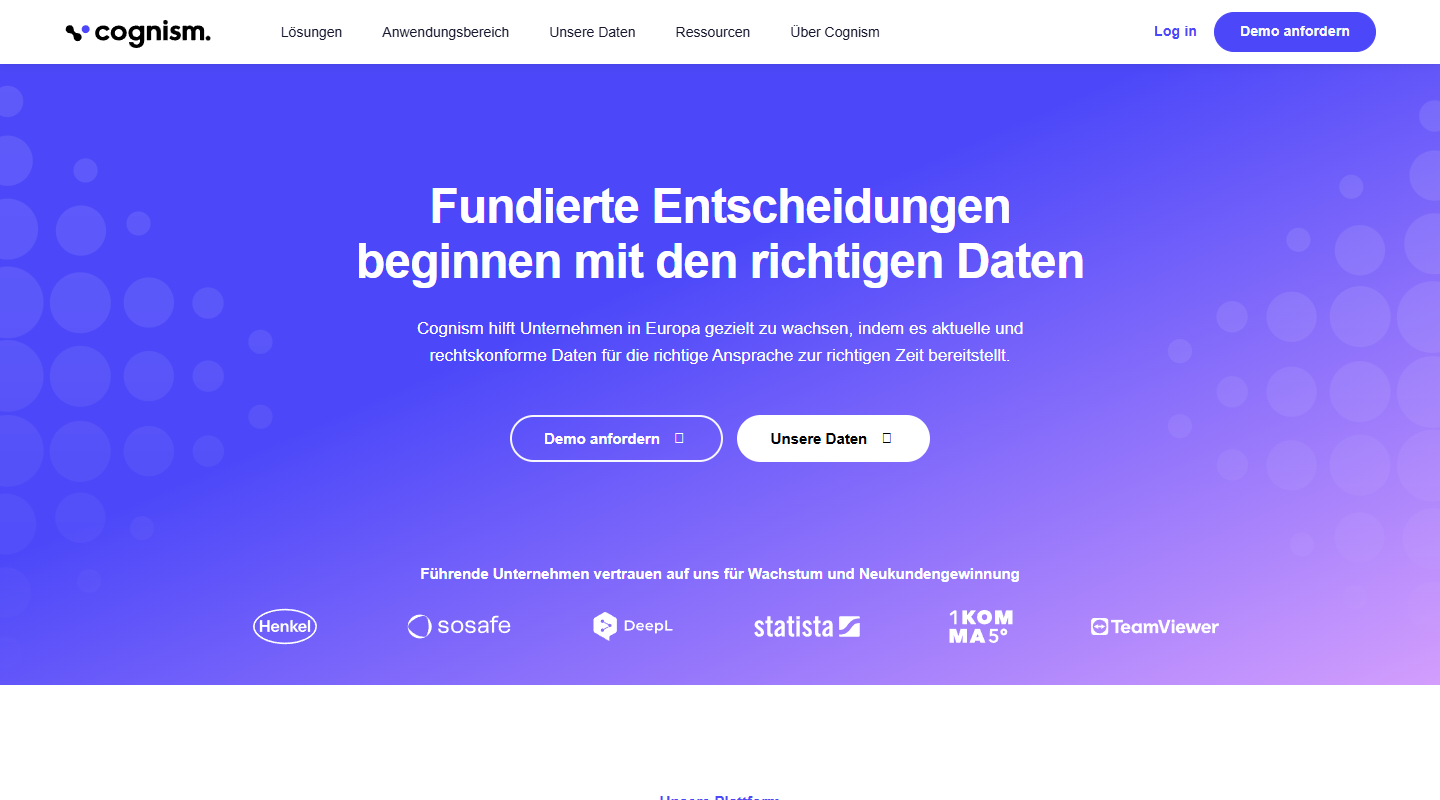
Selling into Europe? Cognism is the compliance-first choice, built around GDPR-clean B2B contact data and unusually strong phone-verified mobile coverage across the EU and UK.
Its Diamond Data label flags numbers a human has verified, and contacts are screened against do-not-call lists, which makes it the safe pick for regulated markets and phone-heavy teams.
Pricing is a custom annual quote with no self-serve free tier, so you talk to sales first. US depth is thinner than the North American leaders, and there is no built-in sending.
| Cognism | |
|---|---|
| Pros | Cons |
|
|
- Approx pricing: custom quote, annual
- Best for: teams selling into Europe that need compliant, phone-first data
Lusha
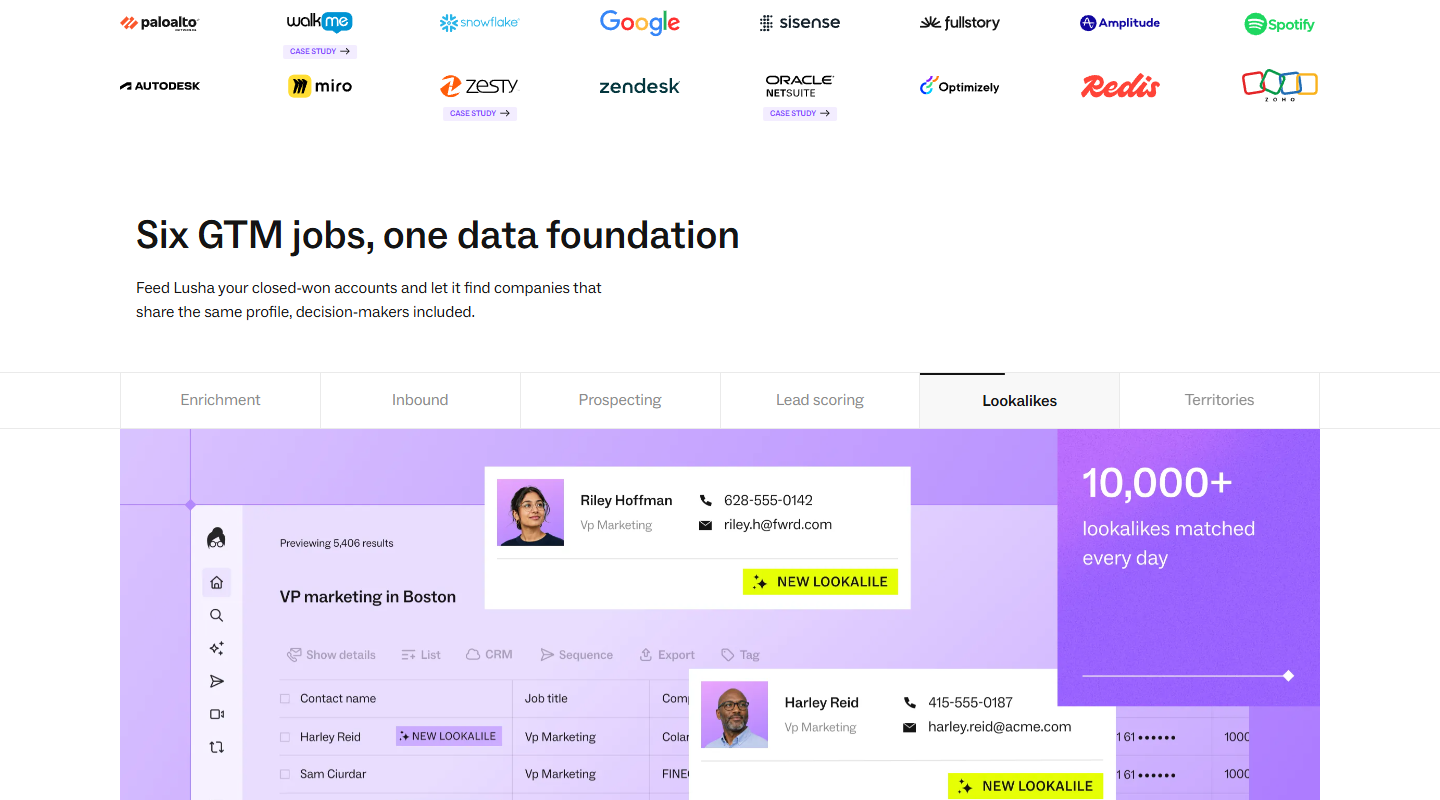
For quick lookups while you browse LinkedIn, Lusha is the lightweight Chrome-extension pick that surfaces a direct dial or email in a click, with credit and pay-as-you-go plans that keep the entry price low.
It suits self-serve reps who want a fast B2B contact database without a heavy platform or a sales call to get started. One rep can be productive in minutes.
Depth is shallower than the enterprise tools, there is no real intent layer, and plans carry credit caps. For a wider view of the category, compare a few Lusha alternatives side by side.
| Lusha | |
|---|---|
| Pros | Cons |
|
|
- Approx pricing: free, then ~$36 to $59/user/mo
- Best for: individuals and SMBs wanting quick LinkedIn lookups
Seamless.AI
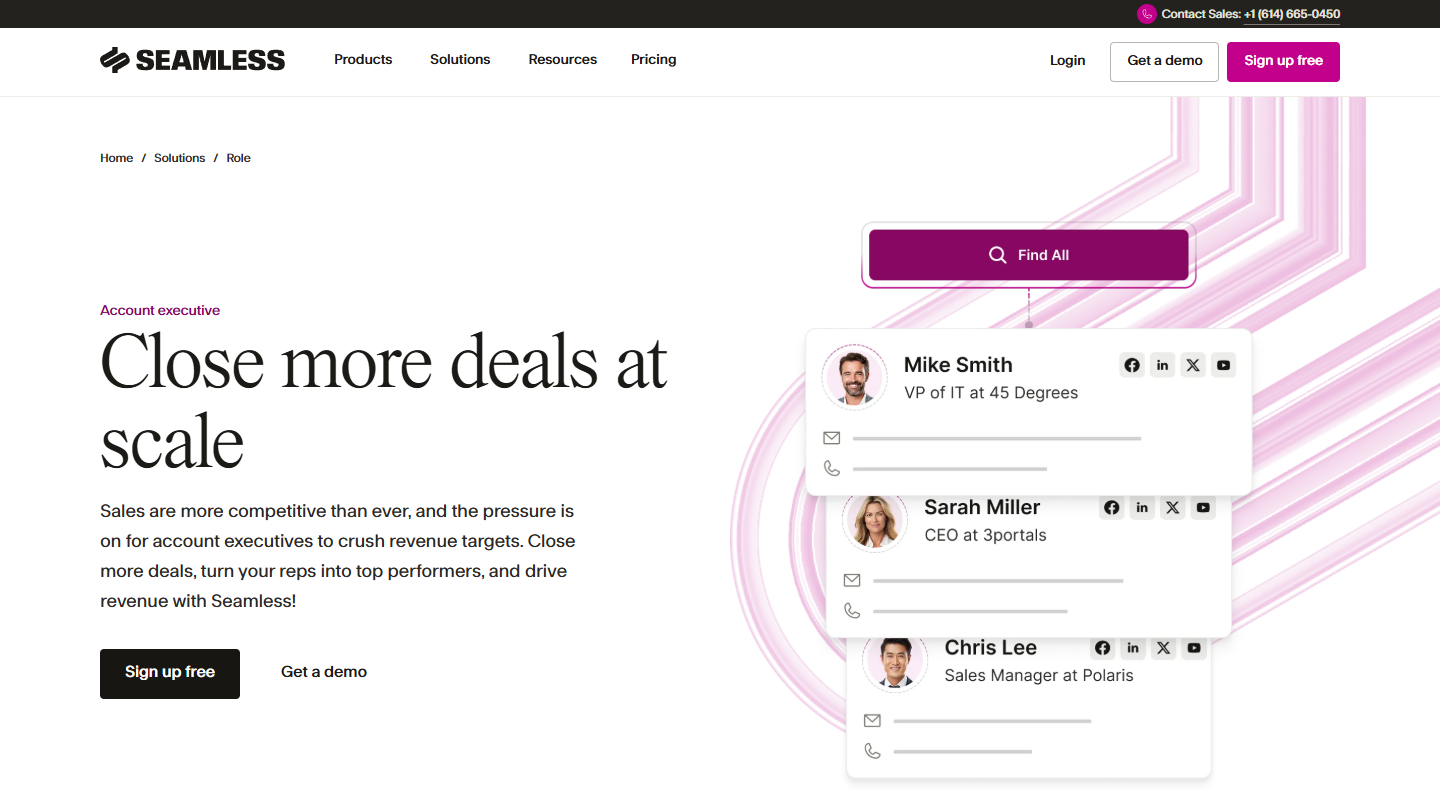
Real-time search sets Seamless.AI apart from the static crowd. It uses AI to find and verify emails and phone numbers at the moment you query, rather than pulling them from a fixed list.
That live-lookup model, delivered through browser-based sales prospecting tools, suits US reps who build lists in high volume and want fresh records over a curated archive.
Results vary in accuracy, and reviews frequently flag aggressive renewals and upsell pressure, so read the contract terms and budget verification time before a big send.
| Seamless.AI | |
|---|---|
| Pros | Cons |
|
|
- Approx pricing: free, then ~$147/mo
- Best for: high-volume US list building with fresh records
UpLead
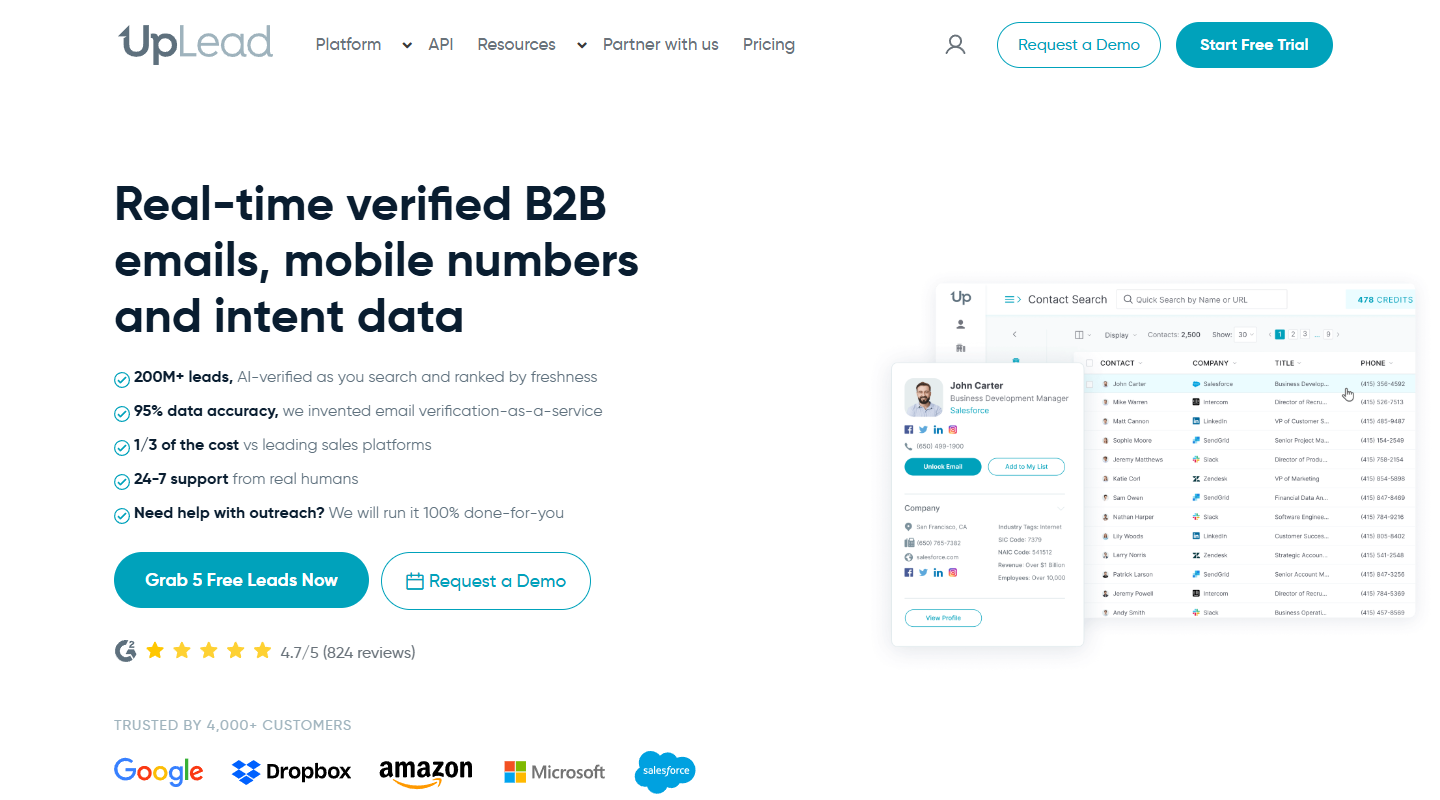
SMB and mid-market teams that care more about clean records than a giant list tend to land on UpLead, which verifies emails in real time and backs data with a 95 percent accuracy guarantee.
If a contact turns out to be bad, it refunds the credit, and its B2B data enrichment tops up thin records as you export. That refund-if-wrong promise is the whole identity.
The database is more modest than the enterprise names, so very broad searches return fewer results, and intent data is lighter. For accuracy on a budget, though, it is hard to beat.
| UpLead | |
|---|---|
| Pros | Cons |
|
|
- Approx pricing: ~$99 to $199/mo
- Best for: SMB and mid-market teams that want verified accuracy
Lead411
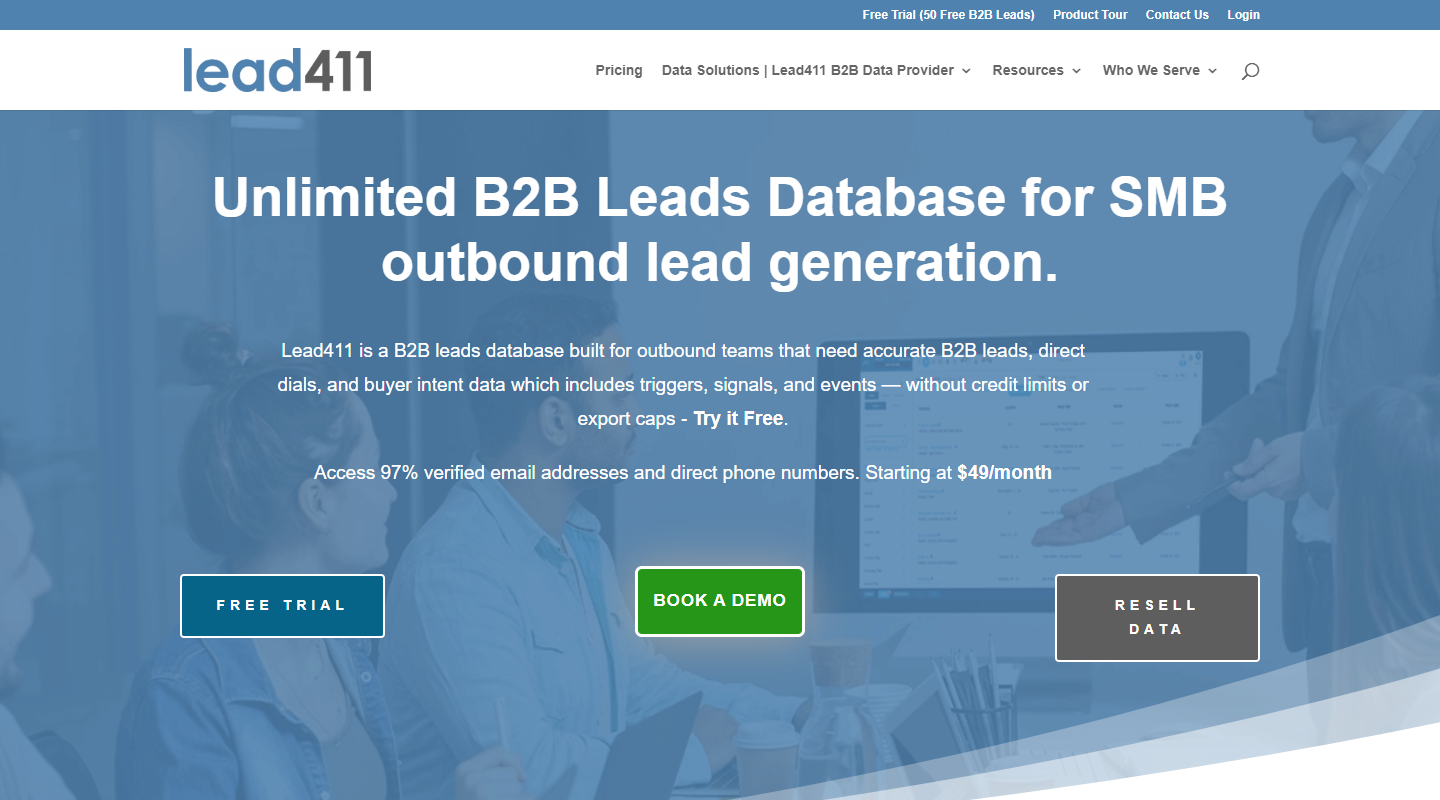
Want buyer intent without the enterprise invoice? Lead411 packages verified US contacts with Bombora-powered intent and growth triggers like hiring, funding and leadership changes into an approachable plan.
It puts the sales-intelligence data most teams miss after a downgrade, the timing signals, inside a budget-friendly tier with a basic sending cadence built in.
The database is smaller and heavily US-centric, with lighter global coverage than the leaders. For teams that want to time outreach around real signals cheaply, it is a strong middle ground.
| Lead411 | |
|---|---|
| Pros | Cons |
|
|
- Approx pricing: ~$75 to $99/user/mo
- Best for: budget teams that want buyer intent and trigger alerts
RocketReach
At a low monthly rate and cents-per-lookup on higher tiers, RocketReach is the affordable way to pull verified emails and phone numbers from a database of more than 700 million professional profiles.
A browser extension makes it quick to find B2B contact records by name, company or role, and it is priced for individuals and small teams rather than enterprises.
It is a lookup tool at heart, so you get data without the sequencing and engagement layer bigger platforms bundle in. For one-off searches and small campaigns, that trade is often worth it.
| RocketReach | |
|---|---|
| Pros | Cons |
|
|
- Approx pricing: ~$39 to $99/mo
- Best for: individuals and small teams wanting cheap, wide lookups
Clearbit (Breeze Intelligence)
Now folded into HubSpot as Breeze Intelligence, Clearbit is the real-time enrichment engine that fills in company and contact fields the instant a lead enters your CRM.
Its B2B data enrichment shines for inbound teams: it can identify anonymous website visitors and score them, then auto-complete records so reps act on full context, not a bare email address.
The trade-off is the tie to HubSpot. It is at its best inside that ecosystem and less compelling as a standalone prospecting database, with pricing that depends on your plan and volume.
| Clearbit (Breeze Intelligence) | |
|---|---|
| Pros | Cons |
|
|
- Approx pricing: plan-dependent within HubSpot
- Best for: HubSpot and inbound teams that want automatic enrichment
LinkedIn Sales Navigator
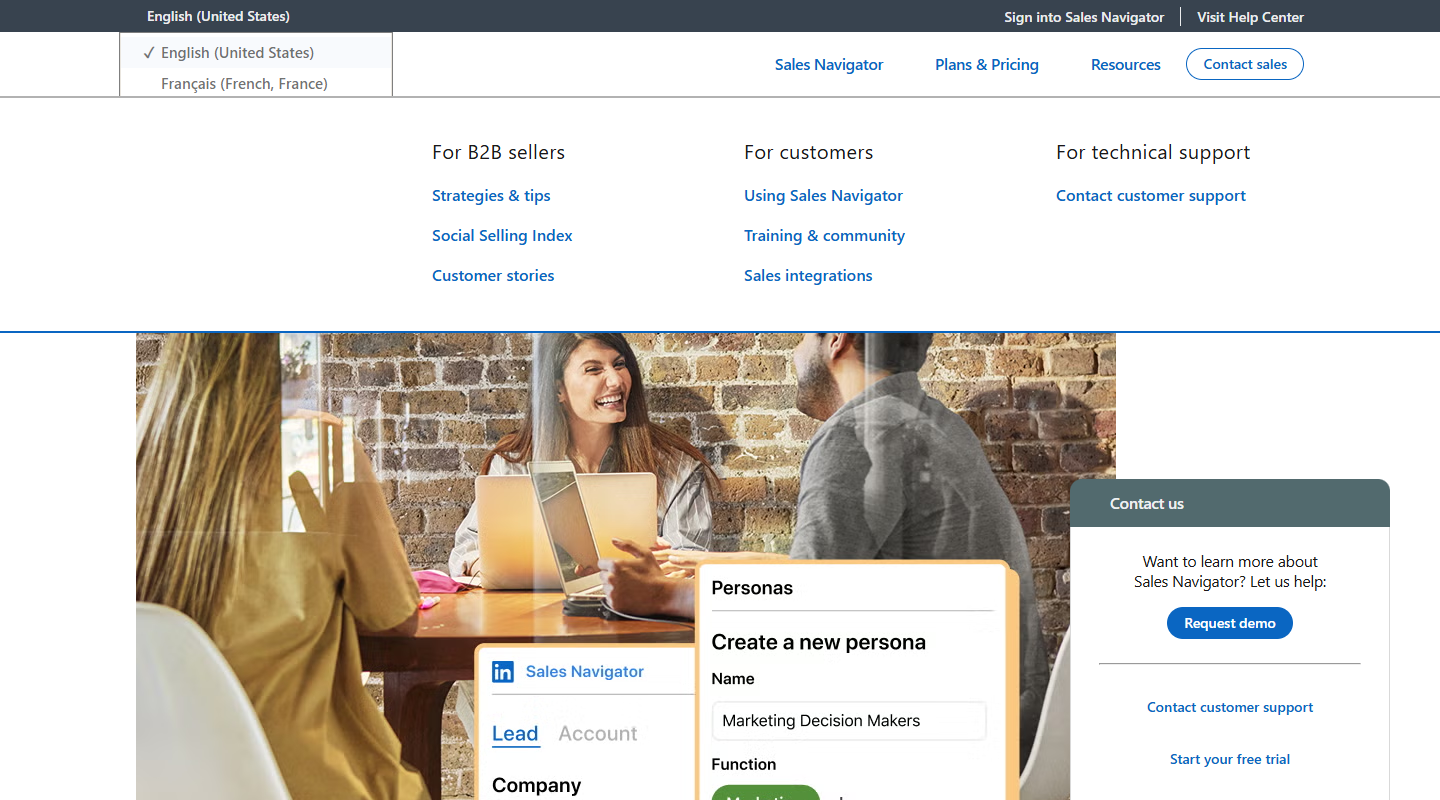
Warm-intro selling runs on the freshest people graph there is, and LinkedIn Sales Navigator taps it directly with advanced search, lead and account lists, and InMail inside the network your buyers already use.
Because profiles are self-reported and current, job-change and role accuracy for B2B prospecting data beat almost any static vendor. It is unmatched for relationship-led motions.
The catch is export. It does not hand you emails or phone numbers, so you cannot run cold outreach straight from it, which is why many teams pair it with a data or delivery tool.
| LinkedIn Sales Navigator | |
|---|---|
| Pros | Cons |
|
|
- Approx pricing: ~$99/mo
- Best for: relationship-led selling and warm-intro outreach
6sense
Which accounts are in-market right now? 6sense answers that with a predictive ABM platform that blends intent data, AI account scoring and orchestration to flag buyers before they raise a hand.
It layers B2B sales intelligence into coordinated sales and marketing motions, telling revenue teams where to focus rather than just handing over a list of names.
This sits at the enterprise end, in the same five-figure territory as the giants, and it takes real setup. Choose it for smarter targeting at scale, not to save money.
| 6sense | |
|---|---|
| Pros | Cons |
|
|
- Approx pricing: custom (~$60k+/yr)
- Best for: enterprise ABM and predictive targeting at scale
Clay
RevOps teams reach for Clay when one database is not enough. It runs waterfall B2B data enrichment across more than 100 providers, checking one after another until it finds the best record, then adds AI to research and write.
Think of it as a programmable spreadsheet that orchestrates other tools rather than a database of its own. That flexibility is why technical teams love it.
The power comes with a steep learning curve, so it rewards hands-on operators and can overwhelm anyone who just wants a plug-and-play list. Costs also climb as you chain more sources.
| Clay | |
|---|---|
| Pros | Cons |
|
|
- Approx pricing: free, then ~$149+/mo
- Best for: technical RevOps teams orchestrating enrichment
Dun & Bradstreet (Data Axle)
The legacy authority on company data, Dun & Bradstreet holds one of the largest global firmographic files anywhere, anchored by the D-U-N-S numbering system that underpins credit and compliance checks worldwide.
Paired with Data Axle coverage, it delivers firmographic B2B data at a scale and lineage newer vendors cannot match, which is why it shows up in enterprise data governance and risk workflows.
It is built for firmographics and account intelligence more than fast individual contact prospecting, sold on custom enterprise terms, so it is heavier and pricier than a self-serve tool.
| Dun & Bradstreet (Data Axle) | |
|---|---|
| Pros | Cons |
|
|
- Approx pricing: custom quote
- Best for: enterprises needing authoritative global company data
What B2B Data Really Costs Per Lead
Sticker prices hide the number that decides your return: cost per usable lead. A per-seat suite and a per-lead credit can look worlds apart on the pricing page and end up close once you divide by leads you can actually reach.
| Pricing model | Typical rate | What you pay for |
|---|---|---|
| Per-lead credits (contactID) | $0.025 to $0.05 per lead | Full record with website, phone, tech stack and contact page; credits never expire |
| Per-contact credits (most databases) | ~$0.03 to $5 per contact | A record only; you still verify it and run the outreach yourself |
| Per-seat annual (enterprise suites) | $1,000+/mo or $15k+/yr, split across use | Deep data and intent, paid whether or not you burn the credits |
The figure that decides ROI is cost per reachable lead, not cost per raw record. A contact that bounces or has changed jobs still cost you money. At a 20 percent bounce rate, a $0.10 record really costs $0.125 for every address that lands.
Because contactID prices the lead and then delivers through a form that does not bounce, the gap between sticker cost and reachable cost stays small. That reachable cost is the honest way to compare B2B data providers, not the headline seat price.
Common Mistakes When Buying B2B Data
The vendor rarely fails you. The buying decision does. These five mistakes waste more budget than any single bad provider.
Buying on database size, not accuracy. A headline count of 300 million contacts means nothing if a third bounce. Ask for a bounce rate and a sample before you weigh the size.
Ignoring decay and freshness. Records rot at roughly 2 to 3 percent a month. A cheap annual dump can be badly out of date by month six, so favor real-time verification.
Skipping compliance. Buying non-consented EU data or ignoring CCPA opt-outs is a legal and reputational risk. Confirm how the provider sources and screens records.
No free sample or trial. If a vendor will not let you test 25 records first, that tells you how confident it is. Always verify quality on your own ICP before signing.
Leaning on one provider for everything is the fifth trap. Coverage varies by region and role, so serious teams blend a primary source with an enrichment layer to fill the gaps. A wider look at complementary B2B sales tools shows where each piece fits.
How to Choose a B2B Data Provider for Your Team
Skip the feature checklist and start from your actual constraint. Map your situation to a pick and the shortlist gets short fast.
Heavy EU coverage: Cognism, for compliant, phone-verified mobiles across Europe and the UK.
Tight budget: Apollo or UpLead, which give most of the database and, in Apollo’s case, sequencing too, without a five-figure spend.
Enterprise depth and intent: ZoomInfo or 6sense, when you have the budget and need the fullest account picture or predictive scoring.
Enrichment orchestration: Clay, if you have technical RevOps operators who want to chain many sources into one clean record.
If your real goal is replies, not rows in a spreadsheet, the calculus changes. When you want the data and the outreach handled together, contactID is the pick, and it pairs naturally with a broader outbound lead generation motion.
Data and Activation in One: Why contactID Stands Apart
Every provider above stops at the same line. You get a record, and the reaching is your problem. That gap is where budgets quietly leak, because a perfect email still bounces, warms up slowly, or dies in a spam folder.
contactID closes both ends. Choose a niche, a country and a city, and it assembles a target list of matching businesses, each carrying the website, emails, phone numbers, language, technology stack, contact-page URL and claimed status. That is the data half, ready to export or work directly.
Then it does what no database does. The Contact-Form Submission Engine delivers a personalized message through each site’s own contact form, so it lands at close to 100 percent. Forms do not bounce, do not need domain warm-up, and do not route to spam the way cold email does.
Auto Form Detection, Auto CAPTCHA Solving, an AI Personalization Engine, A/B testing and a live analytics dashboard run the whole campaign, and pay-per-success pricing means you fund outreach that actually goes through. If your bottleneck is reaching people, this is the fix, and it sits alongside other contact form automation tools worth knowing.
Build the list by niche and location, then let contactID deliver every message through the site’s own form, with no bounces and no contract.
Start With contactIDFAQs
1- What is a B2B data provider?
A B2B data provider collects, verifies and sells business data, then feeds it into your CRM and sales tools so teams can find and reach the right accounts.
That data spans contacts, firmographics, technographics and intent signals. The strongest providers compete on accuracy, freshness and compliance rather than the raw size of their database.
2- How much do B2B data providers cost?
Prices range from free to well over 15,000 dollars a year. Self-serve tools like Lusha, RocketReach and UpLead run from roughly 36 to 199 dollars a month.
Enterprise platforms like ZoomInfo and 6sense sell custom annual contracts that commonly start near 15,000 dollars and climb past 60,000. contactID uses pay-per-success pricing with no contract, so you pay only for outreach that goes through.
3- Are B2B data providers legal under GDPR and CCPA?
Yes, when they source and process data lawfully. Both GDPR and CCPA allow business contact data to be sold and used, provided there is a valid legal basis and people can opt out.
Compliance rests on the provider’s sourcing, consent handling and do-not-call screening, and on how you use the records. Vendors like Cognism build their pitch around that discipline, so ask any provider how it stays compliant.
4- What is the difference between a B2B data provider and a data enrichment tool?
A data provider supplies net-new records you do not have yet, while an enrichment tool fills in missing fields on records you already own.
Providers like ZoomInfo and Apollo help you build lists from scratch. Enrichment tools like Clearbit and Clay complete or verify existing contacts. Many teams use both, one to find accounts and one to keep them current.
5- What types of data do B2B data providers offer?
Most providers sell five types: contact data, firmographic data, technographic data, intent or buying-signal data, and job-posting or trigger data.
Contact data covers emails and phone numbers, firmographics describe the company, technographics reveal its software stack, intent flags active buyers, and triggers surface events like funding or hiring. Few vendors excel at all five, which is why teams mix sources.
6- How often do B2B data providers update their data?
It varies widely. B2B records decay at roughly 2 to 3 percent a month as people change jobs, so update frequency matters as much as accuracy.
Real-time tools like Seamless.AI verify at the moment you search, while static databases refresh on a set cycle. Ask a provider how often it re-verifies records and whether it checks them at export time.
7- Can I use multiple B2B data providers at once?
Yes, and many teams do. Coverage differs by region, role and data type, so no single provider is best at everything.
A common setup pairs a primary contact database with an enrichment layer, or uses a waterfall tool like Clay to query several sources at once. The trade-off is added cost and the work of de-duplicating overlapping records.
Bottom Line on B2B Data Providers
The right choice among B2B data providers comes down to your constraint, not a leaderboard. ZoomInfo wins on US depth, Cognism on compliant EU mobiles, Apollo and UpLead on value, and Clay on enrichment for technical teams.
Whichever you pick, judge it on accuracy, freshness and compliance, and always test a sample before you commit to a contract.
If the honest problem is that your outreach never lands, more data will not fix it. That is where contactID earns its second-place spot, finding the leads and delivering the message through each site’s own form, so the record and the reply happen in one motion.
 Summarize this article with: