
ZoomInfo Review 2026: Features, Pricing, and the Best Alternative for Outreach
ZoomInfo is the name most people think of first for B2B lead intelligence. It holds one of the largest contact databases in the market and sells to sales and marketing teams that need deep company and contact data. But it is also one of the most expensive tools in the category, and the price is not the only thing worth checking before you sign an annual contract.
In this ZoomInfo review, we look at what it offers in 2026: its data, features, real pricing, and the complaints that come up again and again in user reviews. Then we cover the alternative we recommend for teams whose real goal is replies rather than a bigger list, and where ZoomInfo fits among the wider set of cold outreach tools.

What Is ZoomInfo?
ZoomInfo (NASDAQ: ZI) launched in 2000 and has grown into the largest B2B data platform on the market. It sells sales and marketing teams access to company and contact records, buying-intent signals, and tools to build lists and push them into a CRM. It markets itself as a go-to-market platform used by tens of thousands of teams for prospecting, outbound, account-based marketing, and data enrichment.
The core promise is scale and accuracy: one place to find, enrich, and organize business contacts, backed by a large research and verification operation. It is built for mid-market and enterprise sales orgs, and its data is strongest in North America.
What ZoomInfo does not do is send your outreach for you. It gives you the contacts; reaching them over email, with all the deliverability that involves, is still on you. That distinction matters later in this review.

ZoomInfo Overview
At a Glance
- Founded in 2000 and publicly traded (NASDAQ: ZI).
- Publicly claims 100M+ companies and 500M+ contacts, processed against 1.5B+ data points a day.
- Core use cases: prospecting, list building, data enrichment, intent data, and CRM sync.
- Strongest data coverage in North America; weaker and pricier abroad.
- Sold on custom annual contracts, with no public pricing and no month-to-month option.
Below we walk through the features, the real pricing, and the feedback that shapes whether ZoomInfo is worth it for your team.
ZoomInfo Features
ZoomInfo is a broad platform. These are the features that matter most, with an honest caveat on each.
Company and Contact Database
This is the main product. ZoomInfo publicly claims 100M+ companies and 500M+ contacts, with verified emails and direct-dial phone numbers, refreshed against more than a billion data points a day and a large team of human researchers.
Intent Data and Buying Signals
ZoomInfo tracks 50+ buying signals and offers WebSights IP tracking, which helps you spot companies researching your category so you can prioritize accounts that are already in-market.
Technographics and Firmographics
You can filter accounts by technology stack, company size, industry, revenue, and funding, which makes it easier to build a tightly targeted list rather than a broad one.
List Building and Search
The search interface is powerful, with boolean queries, saved lists, and bulk export, so building a large, filtered prospect list is fast once you know the tool.
CRM and Tool Integrations
ZoomInfo has native connectors for Salesforce, HubSpot, Microsoft Dynamics, Outreach, and other common sales tools, so enriched contacts and lists flow into the systems your team already uses. This is one of its genuine strengths.
Enterprise Add-Ons
Beyond data, ZoomInfo sells modules like Copilot (an AI assistant), Chorus (conversation intelligence), and connectors for tools like Snowflake, which larger teams use to extend the platform across the go-to-market stack.
ZoomInfo Pricing
ZoomInfo does not publish prices. Every deal is a custom annual quote based on seats, credits, data access, and add-ons. Based on 2026 reports, the tiers land roughly like this:
Estimated Annual Tiers
- Professional: around $15,000 per year for a small team with core data and a set credit allowance.
- Advanced: roughly $25,000 to $30,000 per year, adding more seats, more credits, and intent data.
- Elite / Enterprise: about $36,000 to $40,000+ per year for the full suite, advanced AI, and broader global data.
Independent analyses put the median ZoomInfo contract near $31,875 per year, and mid-market teams commonly end up in the $30,000 to $60,000 range once seats, credit overages, and add-ons like the Global Data Passport are included.
ZoomInfo Reviews: Customer Feedback
ZoomInfo scores well with enterprise buyers on sites like G2 and Gartner Peer Insights, where reviewers praise the data depth, the intent signals, and the integrations. For North American contact data, many sales teams consider it best in class.
The picture changes once you read the critical ZoomInfo reviews, and the same themes come up again and again: cost, data accuracy, and contract friction.
One detailed ZoomInfo review frames it as a breach of contract, saying the company “knowingly sold us software that was buggy and didn't go to the contacts specified.” The reviewer reports that the ZoomInfo LinkedIn Chrome extension crashed a 32GB MacBook for days, and that “a majority of the phone numbers do not go to the people specified but the general reception desks,” which makes the roughly $15,000 to $20,000 annual cost hard to justify. The same review points to a class action lawsuit against ZoomInfo.

A detailed ZoomInfo review citing contract, software, and data-accuracy problems.
The ZoomInfo reviews on Reddit echo the same frustrations. One user who pushed their startup to adopt ZoomInfo said the sales experience itself was a warning sign: their rep was “late, rude, and lacked knowledge,” which they found surprising from a company that size.

A ZoomInfo review on Reddit about the sales experience.
Another Reddit reviewer, an account executive who works these leads full time, was blunt about the data: “they are AWFUL... I spend a LOT of time calling for people that haven't worked there for years, companies that no longer exist.” Their comparison stuck with us: it “feels like I'm reading random names out of a 1991 yellow pages.”

A ZoomInfo review on Reddit about outdated, inaccurate leads.
ZoomInfo Pros and Cons
Here are the main strengths and drawbacks, summarized.
Pros
- One of the largest and most accurate B2B databases, especially in North America.
- Strong intent data and technographic filters for prioritizing accounts.
- Deep native integrations with major CRMs and sales tools.
- Well-rated support, onboarding, and enterprise features.
- One platform to find, enrich, and segment contacts.
Cons
- Very high cost, with mid-market deals commonly $30,000-$60,000 a year.
- No public pricing and no monthly option; annual contracts only.
- Hidden costs: credit overages, paid add-ons, and steep renewals.
- Data accuracy fades over time; users report outdated records.
- Weaker coverage and higher cost outside North America.
- It finds contacts but does not solve deliverability; email spam filters and bounces are still yours to fight.
That last point is the one most teams underestimate. A bigger, cleaner list does not help if the emails you send from it bounce or land in spam. That gap is exactly what the next tool is built to close.
contactID: The Best ZoomInfo Alternative
If your real goal is replies rather than a bigger database, contactID is the alternative worth testing. ZoomInfo sells you data and then leaves the hardest part, actually reaching people, to your email tool, where spam filters, bounces, and domain warm-up eat into results. contactID takes a different route: it finds business targets and delivers your message through each company's own “Contact Us” form, which lands at close to 100% deliverability. It is also priced on results, so you pay per successful submission instead of a five-figure annual contract.

You pay for results, not seats
ZoomInfo is a custom annual contract, often $30,000 to $60,000 a year once credits and add-ons are included. contactID is free to install and charges pay-per-success: from $0.15 per site as you go, down to $0.004 per site on the highest plan. No seat fees, no long-term lock-in. You only pay when a form is actually found, filled, and submitted.
It solves the part ZoomInfo does not: deliverability
A database is only useful if your message arrives. contactID sends through each company’s own contact form, so there are no bounces, no spam folder, no domain warm-up, and no daily send caps. Your message lands in the same inbox the business already watches for inbound inquiries.
It builds the target list too
You are not stuck exporting a list and hoping it is current. In contactID you pick a niche, country, and city, and it returns a list of business websites with emails, phone numbers, language, tech stack, and contact-page details. You can export that list or run outreach on it directly, so it covers both the finding and the sending.
AI personalization at scale
contactID writes a tailored message for each site using your prompt and merge tags, with a 12-message template library and A/B testing built in, so high-volume campaigns still read like they were written for each recipient.
Automation that removes the manual work
It auto-detects forms, solves 99.9% of CAPTCHAs, and submits in bulk across hundreds of sites, with a live dashboard tracking every submission and its result.
No warm-up, no blacklist risk
Because contactID never sends from your own domain, your sender reputation stays clean and there is no IP warm-up to manage. You get the reach of high-volume outbound without the deliverability maintenance email requires.
Pricing: contactID is free to install and runs on a pay-per-success model, so you only pay when a form is actually submitted. You can pay as you go at $0.15 per website with no commitment, or choose a monthly or annual subscription (annual saves 30%) that lowers the per-website cost as your volume grows, from $0.10 on Starter down to $0.004 per website on Scale, with plans at $6.99, $34.99, $69.99, and $139.99 a month. The lead finder is billed separately through credit packs, starting at $0.05 per lead and dropping to $0.025, and credits never expire, so you can simply buy leads if you do not want to run the outreach through contactID. It holds a 4.8 out of 5 rating on the Chrome Web Store.

ZoomInfo vs contactID
| Feature | ZoomInfo | contactID |
|---|---|---|
| Category | B2B data platform | Contact-form outreach + lead finding |
| Pricing model | Custom annual contract | Free to install, pay-per-success (+ credit packs for leads) |
| Typical cost | ~$15K-$60K+/year | From $0.15/site (down to $0.004); lead credits from $0.05 |
| Contract | Annual, no monthly | Pay-as-you-go, monthly, or annual |
| Builds target lists | Yes | Yes (by niche, country, city) |
| Sends the outreach | No (export to your email tool) | Yes (via each site's contact form) |
| Deliverability | Depends on your email setup | ~100% via contact forms |
| Domain warm-up needed | Yes (email) | No |
| CAPTCHA solving | n/a | 99.9% automated |
| Free to try | No | Yes |
| Best for | Enterprise data teams | Teams that want replies, not just data |
Prefer a walkthrough first? Book a demo.
Other ZoomInfo Alternatives
contactID is our top pick for teams focused on outreach and replies, but if what you specifically need is a contact database, these three are the strongest ZoomInfo alternatives to weigh.
1. Apollo.io
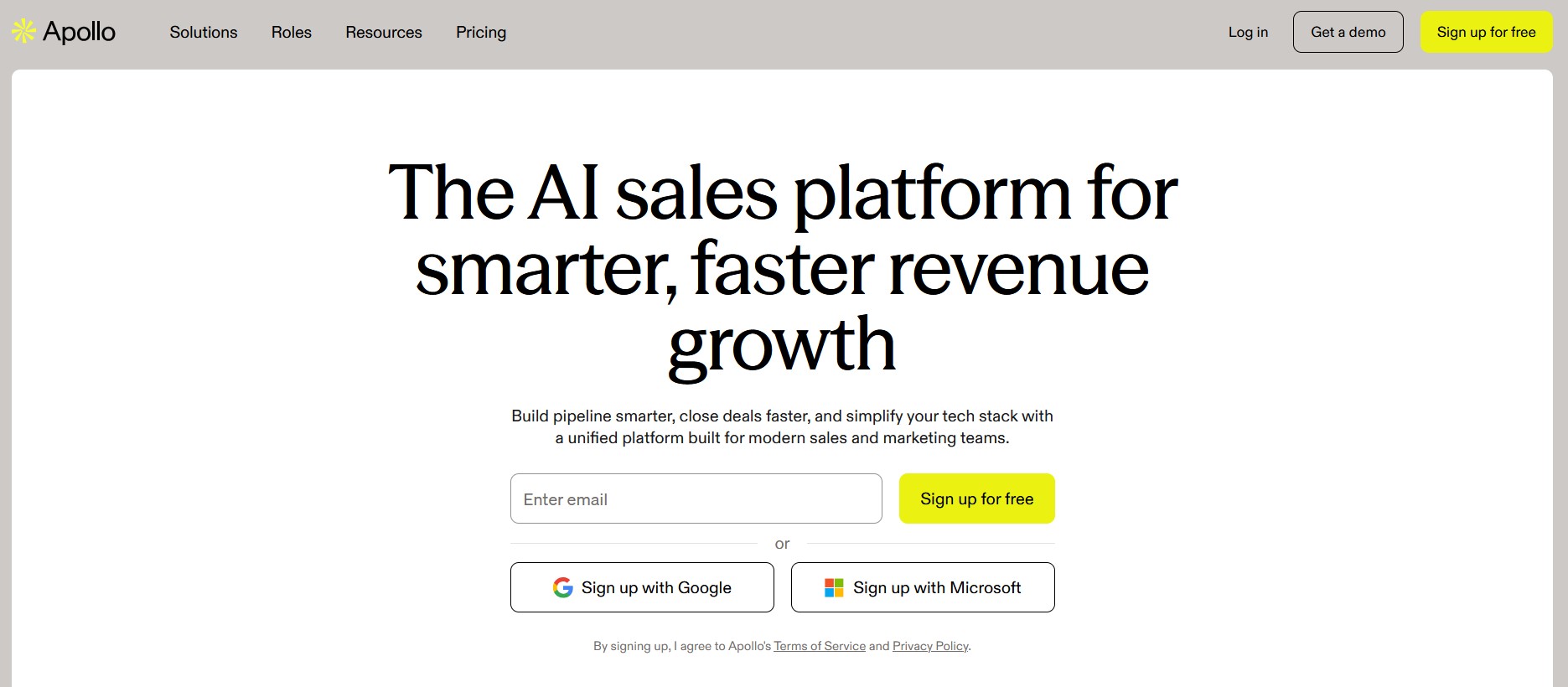
Apollo is the most common first switch from ZoomInfo. It pairs a large contact database with built-in email sequencing and lead scoring, and it does it at a fraction of ZoomInfo's price, with a usable free tier. The trade-offs: data accuracy outside core markets can be uneven, and because it still sends over email, heavy senders run into the same deliverability limits ZoomInfo users face after export. Read our full Apollo review for the details.
2. Cognism
Cognism is the pick for European and international coverage, known for high-quality, GDPR-compliant mobile numbers and strong data in the UK, DACH, and Nordics. It is chosen mainly by mid-market and enterprise teams. The trade-off is that it sits in the same enterprise bracket as ZoomInfo, with premium pricing and annual contracts.

3. Lusha
Lusha is the lightweight option, a Chrome extension that reveals verified emails and direct dials as you browse LinkedIn, plus bulk enrichment and a free tier to start. It is cheaper and simpler than ZoomInfo. The trade-off is a smaller database and fewer enterprise features, so it fits individual reps and small teams more than large sales orgs.

Whichever you pick, remember the gap all three share with ZoomInfo: they sell you data, but the deliverability problem is still yours to solve after export. That is the part contactID is built for.
Conclusion
ZoomInfo is a genuinely strong product. For a large enterprise sales team that needs the deepest North American data and can absorb the cost, it earns its place, which is why our verdict is 3.8 out of 5: excellent data and features, held back by very high, opaque pricing and accuracy that fades between refreshes.
But most teams do not have a data problem so much as a reply problem. Buying a bigger list does not fix bounced emails or messages that never leave the spam folder. If your goal is to actually reach businesses and get responses, contactID is the alternative to test. It finds the targets, delivers through each company's own contact form at close to 100% deliverability, and charges only when a message gets through, so you can start for the price of a few submissions instead of a five-figure contract.
Frequently Asked Questions
Ready to turn outreach into replies instead of bounces?
Install contactID FreePrefer a walkthrough first? Book a demo.