Kajabi built its reputation on doing everything in one place, and it does. The problem is what that costs. After its January 2026 restructure removed the entry-level plan and pushed prices up, the cheapest way in sits at roughly $143 a month, and plenty of creators found themselves paying four figures more per year for a platform they were only half using.
That is why so many people are shopping around. Not because Kajabi is bad, but because paying premium all-in-one prices makes no sense when you mainly need to host a course, sell digital products, or run a membership.
This guide covers why creators are leaving, what to look for in a replacement, and the nine best Kajabi alternatives in 2026, each with an honest pros and cons table and current pricing so you can compare them properly.
Key Takeaways
- Kajabi got more expensive in 2026: The entry Kickstarter plan was removed in January 2026 and plans now run from about $143 to $399 a month billed annually
- Fees stack on top of your plan: Payment processing, a subscription surcharge, international card fees, and a penalty for using your own Stripe all cut into revenue
- Most creators pay for features they never touch: If you do not use funnels, email automation, and communities, you are subsidising them
- Cheaper does not mean weaker: Several alternatives cost a fraction of Kajabi while doing the specific job you need better
- Match the tool to your model: Course-first, community-first, funnel-first, and creator-store platforms are different products with different price tags
Why Are People Looking for Kajabi Alternatives?
Kajabi is a genuinely capable platform, and for a business that uses every module it can be good value. These are the reasons creators still go looking for something else.
1. The 2026 Price Increase
Kajabi restructured its pricing in January 2026 and discontinued the entry-level Kickstarter plan, so there is no longer a cheap way to start. Long-term customers on legacy plans were moved onto the new pricing, and some reported effective increases of more than $1,000 a year. The change drew a petition and a wave of complaints on Reddit and Trustpilot.
2. No Free Plan and a High Entry Point
There is no free tier and no low-cost trial. The cheapest plan lands around $143 a month billed annually, which is a serious commitment before you have validated whether your course or membership will sell at all.
3. Aggressive Feature Gating
Several features creators consider essential, including affiliate management, advanced automations, cohort courses, video transcription, and removing Kajabi branding, require the Growth plan at roughly $249 a month or higher. The entry plan also limits you to a single custom domain.
4. Transaction Fees Stack Up
Kajabi Payments charges standard processing of about 2.9% plus 30 cents, then adds a surcharge on recurring subscription payments, an extra fee on international cards, and a further surcharge if you prefer to use your own Stripe account. None of that is unusual on its own, but layered together it quietly reduces your margin as revenue grows.
5. Subscriber Lock-In
If you use Kajabi Payments, your recurring subscription relationships sit with the platform. Long-term users have reported losing recurring customers when they left, which makes switching harder the longer you stay. Keeping your own payment processor avoids this but costs extra.
6. Paying for Features You Never Use
This is the quiet one. Kajabi bundles a website builder, email marketing, funnels, communities, and an LMS. If your email lives in another tool and you have no interest in funnels, you are paying all-in-one prices for a single module, and a focused platform will serve you better for far less.
7. Support and Trust Concerns
Kajabi does not offer tech support to your students, so their login and access problems become your job. The company also carries a poor Better Business Bureau rating tied to unanswered complaints, which is worth weighing if reliable support matters to you.
Kajabi Pricing in 2026
For context, here is what Kajabi costs after the 2026 restructure, so you can compare it against the alternatives.
| Plan | Approximate price | Notes |
|---|---|---|
| Kickstarter | Discontinued | Removed in January 2026 |
| Basic | From about $143 a month billed annually | One custom domain, core features only |
| Growth | From about $249 a month | Unlocks affiliates, advanced automations, branding removal |
| Pro | From about $399 a month | Multiple sites, highest limits |
On top of the plan, expect payment processing of roughly 2.9% plus 30 cents, a surcharge on recurring subscription payments, and additional fees for international cards or bringing your own Stripe account.
What to Look for in a Kajabi Alternative
Before comparing tools, get clear on which of these actually matters for your business. It is the fastest way to avoid buying another platform you only half use.
- Your core job. Courses, community, funnels, memberships, or simply selling files. Pick the platform built for the one you do most.
- Total cost, not headline price. Add transaction fees, email limits, and paid add-ons before comparing.
- A free or cheap entry point. Being able to validate an offer before committing is worth a lot.
- Who owns the customer. Check whether you keep your subscriber and payment relationships if you leave.
- Ease of setup. A platform you can launch this week beats a more powerful one you never finish configuring.
- Room to grow. Make sure pricing at your next milestone still makes sense, not just today's.
Best Kajabi Alternatives at a Glance
Here are all nine options side by side before the detailed reviews.
| Platform | Best for | Starting price |
|---|---|---|
| brandID | Creators selling products, subscriptions, and tips | Free to start |
| Systeme.io | Budget all-in-one funnels and courses | Free plan, paid from about $27 a month |
| Podia | Simple, fast course and download selling | Free plan, paid from about $39 a month |
| Teachable | Beginner course creators | From about $29 a month |
| Thinkific | Course-first businesses that want to scale | Free plan, paid from about $36 a month |
| LearnWorlds | Interactive, assessment-heavy courses | From about $29 a month |
| FreshLearn | All-in-one course creation with AI tools | Free plan, paid from about $37 a month |
| Kartra | Funnel and conversion-focused businesses | From about $59 a month |
| Circle | Community-led memberships | From about $89 a month |
9 Best Kajabi Alternatives in 2026
Each option below suits a different kind of creator. Read the pros and cons together with the pricing line, since the cheapest tool is rarely the cheapest once you add the features you need.
1. brandID
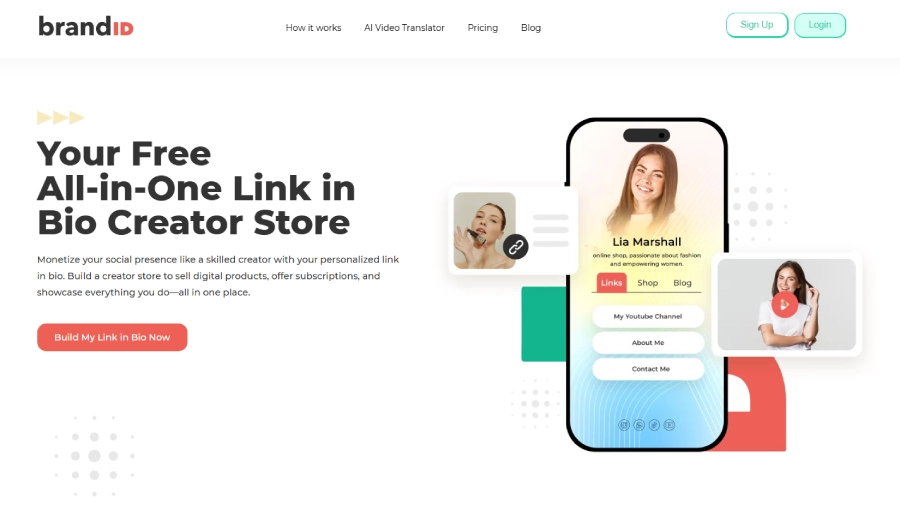
Among Kajabi alternatives, brandID takes the most different approach: it is a creator-first store and link in bio for people who sell directly to an audience rather than run a full online school. Instead of paying for an LMS, funnels, and email you may not use, you get one page that holds your products, subscriptions, and tips.
It suits podcasters, musicians, coaches, and brands who want to monetize their content in one place without stitching several tools together.
Key Features of brandID
- Product galleries and direct-to-cart buying
- Digital product sales, so you can sell downloads like ebooks and templates
- Subscriptions and memberships for recurring revenue
- Tipping for direct fan support
- Video monetization and audio and music storefronts
- Rentable billboard placements for sponsors
- Link in bio with analytics and custom domains
| ✓ brandID Pros | ✗ brandID Cons |
|---|---|
|
|
2. Systeme.io
Systeme.io is the Kajabi alternative that copies its playbook most closely, at a fraction of the price. It bundles funnels, email marketing, courses, affiliates, and a website builder into one platform, and unusually for this category, it has a genuinely usable free plan.
It is the obvious first stop for anyone who liked Kajabi's all-in-one approach but not its bill.
Key Features of Systeme.io
- Funnel and landing page builder
- Built-in email marketing and automation
- Course hosting and membership sites
- Affiliate program management
- Blog and website builder
| ✓ Systeme.io Pros | ✗ Systeme.io Cons |
|---|---|
|
|
3. Podia
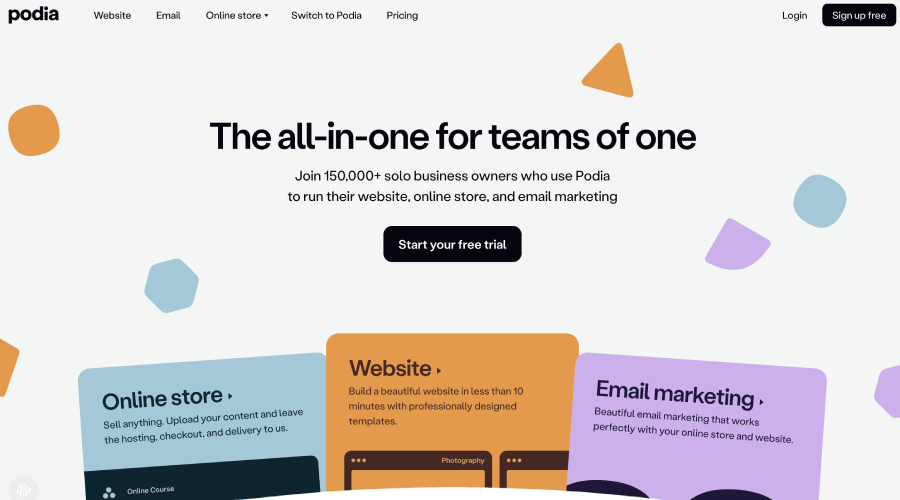
Podia is the simplest of these alternatives to Kajabi, built for creators who want to launch quickly without wrestling with settings. It handles courses, digital downloads, webinars, and memberships in a clean interface, and it is a favourite for people who want to sell ebooks and simple products without complexity.
Key Features of Podia
- Course and digital download hosting
- Webinars and product bundles
- Built-in email marketing and checkout
- Affiliate tools on higher plans
- Free plan for testing
| ✓ Podia Pros | ✗ Podia Cons |
|---|---|
|
|
🔍 Want the full picture on fees and real user complaints? Read our in-depth Podia review.
4. Teachable
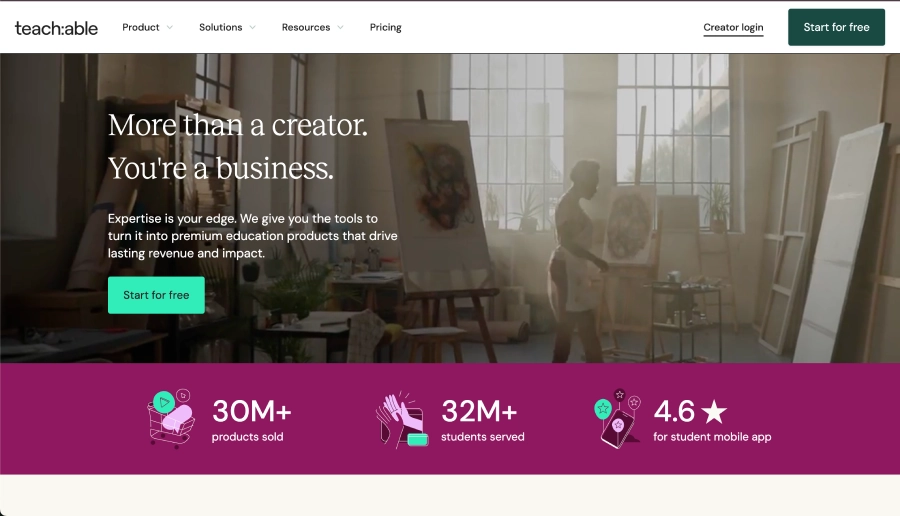
Teachable is one of the best known course platforms and among the most popular Kajabi alternatives for creators leaving the platform. It lets you build, market, and sell courses, coaching, and downloads without technical skills.
Its strength is how quickly a non-technical creator can produce a professional-looking course with quizzes, certificates, and a sales page.
Key Features of Teachable
- Drag-and-drop course builder
- Video hosting, quizzes, and certificates
- Payment gateways with VAT and tax handling
- Drip schedules and basic automation
- Coaching products and digital downloads
| ✓ Teachable Pros | ✗ Teachable Cons |
|---|---|
|
|
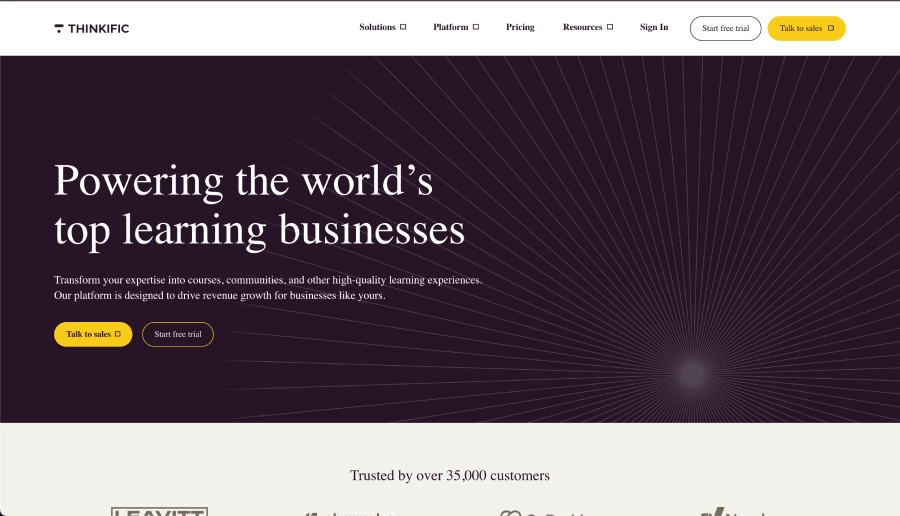
5. Thinkific
Thinkific is the course-first Kajabi alternative that stays straightforward while scaling well. Learners get progress tracking, assessments, and clean access to materials, which makes it a strong pick if teaching quality matters more than marketing features.
Key Features of Thinkific
- Drag-and-drop course and site builder
- Unlimited courses and students on paid tiers
- Quizzes, certificates, and learning paths
- Memberships and communities
- Advanced customization and templates
| ✓ Thinkific Pros | ✗ Thinkific Cons |
|---|---|
|
|
🔍 Thinkific also runs a lighter creator store called The Leap, which we cover in our Leap review.
6. LearnWorlds
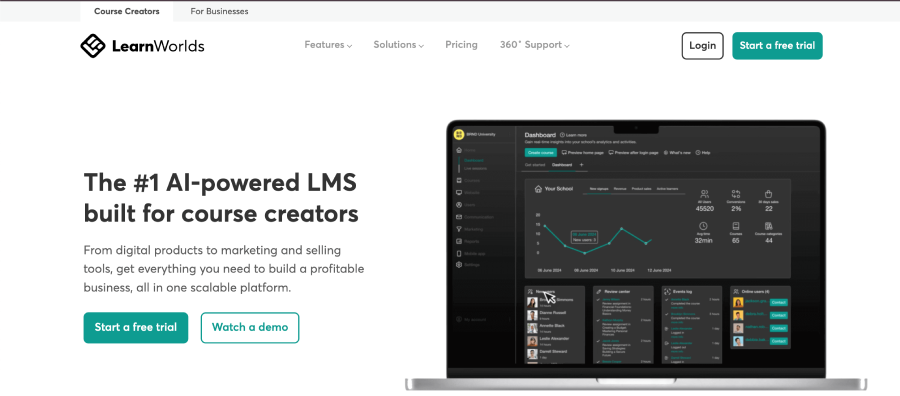
LearnWorlds is the most education-focused Kajabi alternative here, built for creators who care about how people actually learn. Its interactive video player, assessments, and certification tools go well beyond what Kajabi offers on the teaching side.
Key Features of LearnWorlds
- Interactive video player with in-video questions and transcripts
- Drag-and-drop course and website builder
- Quizzes, assessments, certificates, and learning paths
- Built-in funnels and email campaigns
- Detailed learner and revenue analytics
| ✓ LearnWorlds Pros | ✗ LearnWorlds Cons |
|---|---|
|
|
7. FreshLearn
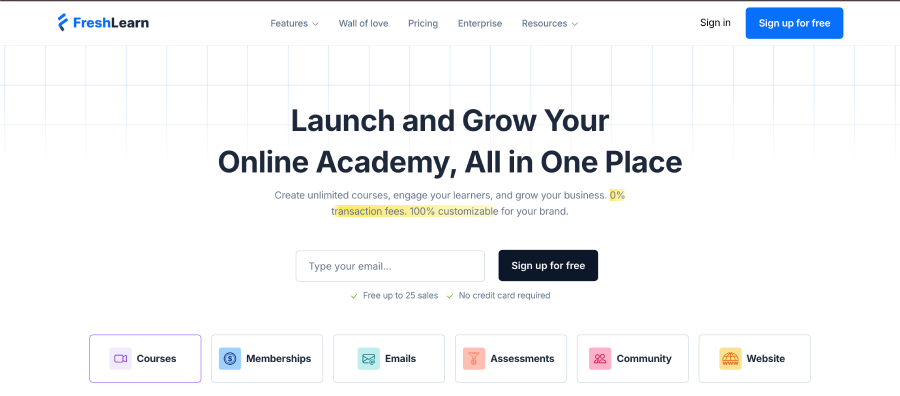
FreshLearn is an all-in-one Kajabi alternative with a strong AI angle, offering built-in agents that help produce content, quizzes, sales pages, and marketing automation. It suits educators who want flexibility in course formats without assembling a stack.
Key Features of FreshLearn
- Unlimited on-demand courses
- AI agents for content, quizzes, and sales pages
- Live classes, certifications, and gamification
- Email marketing, checkout, and payments
- Enterprise security features including single sign-on
| ✓ FreshLearn Pros | ✗ FreshLearn Cons |
|---|---|
|
|
8. Kartra
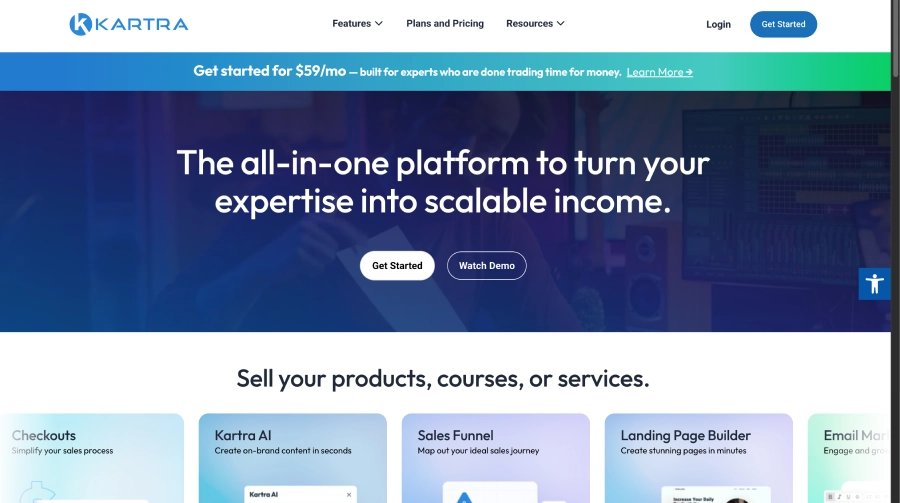
Kartra is the Kajabi alternative to pick when conversions matter more than course structure. It bundles funnels, email automation, checkouts, affiliates, and memberships, so it replaces Kajabi's marketing side more directly than its LMS side.
Key Features of Kartra
- Drag-and-drop funnel and page builder
- Email automation and sequences
- Checkout with upsells and downsells
- Affiliate management
- Membership sites and video hosting
| ✓ Kartra Pros | ✗ Kartra Cons |
|---|---|
|
|
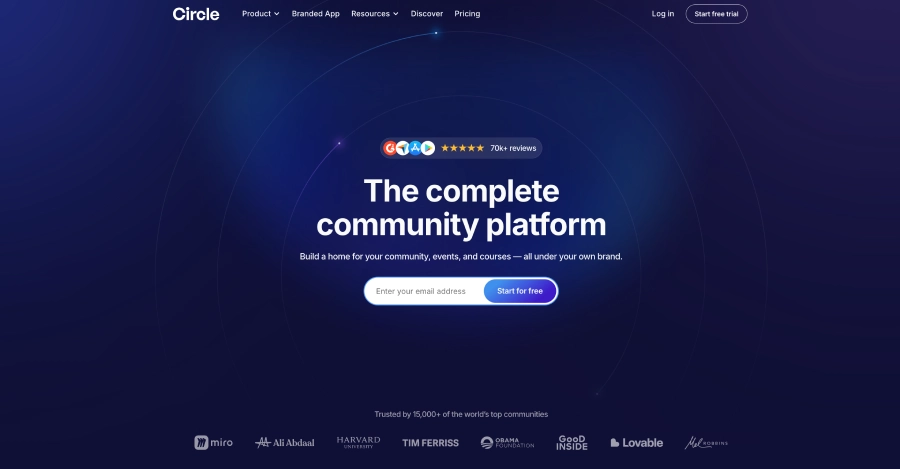
9. Circle
Circle is the strongest Kajabi alternative if community is your product. It is built around discussion spaces, events, and memberships, and it integrates with course platforms so you can pair it with a dedicated LMS.
Key Features of Circle
- Community spaces for discussions and events
- Single sign-on integrations with Thinkific, Teachable, and WordPress
- Public API for custom development
- Embeddable widgets for external sites
- Mobile app for members
| ✓ Circle Pros | ✗ Circle Cons |
|---|---|
|
|
How to Choose the Right Kajabi Alternative
Work backwards from what you sell, not from the feature list. These matches cover most creators:
- Selling products, subscriptions, and tips to an audience: brandID gives you a store and link in bio with no platform commission.
- Wanting Kajabi's all-in-one scope for less: Systeme.io covers funnels, email, and courses on a free or cheap plan.
- Launching a first course quickly: Teachable or Podia get you live with the least friction.
- Teaching seriously, with assessments and certificates: Thinkific or LearnWorlds are built for it.
- Running funnels and conversion campaigns: Kartra replaces the marketing half of Kajabi.
- Building a paid community: Circle, ideally paired with a course tool.
Whatever you pick, do the maths on your real revenue. Work out what each option costs at your current volume and at double it, including transaction fees, and revisit how you price your own products while you are at it, since a small price change often matters more than the platform fee.
Conclusion
Kajabi is powerful, and for a business using every module it can still be worth the money. But after the 2026 price rise, no free plan, layered fees, and features locked behind higher tiers, plenty of creators are paying premium prices for a fraction of the platform.
The good news is that the best Kajabi alternatives are genuinely strong. Course-first tools teach better, funnel tools convert better, community tools engage better, and creator stores let you sell directly with far less overhead.
If most of your revenue comes from selling products, memberships, and support from an audience you already have, you may not need an online school at all. A creator store that starts free, takes no commission, and gives you plenty of digital products to sell is often the simpler and far cheaper answer.
Frequently Asked Questions
Why Is Everyone Looking for Kajabi Alternatives?
Mainly cost. Kajabi restructured pricing in January 2026, removed its entry-level Kickstarter plan, and moved legacy customers onto higher rates, with some reporting increases of more than $1,000 a year. Add layered transaction fees and features locked behind the Growth plan, and many creators found they were overpaying for modules they never used.
What Is the Cheapest Kajabi Alternative?
Several options start free, including brandID, Systeme.io, Podia, Thinkific, and FreshLearn. For an all-in-one platform closest to Kajabi's scope, Systeme.io is the cheapest realistic replacement, while brandID is free to start if you mainly sell products, subscriptions, and downloads rather than run a full online school.
How Much Does Kajabi Cost in 2026?
After the January 2026 restructure, Kajabi runs roughly $143 to $399 a month billed annually across its Basic, Growth, and Pro plans, and more if you pay monthly. The entry-level Kickstarter plan was discontinued, and there is no free tier or low-cost trial.
Is There a Free Alternative to Kajabi?
Yes. brandID is free to start with no platform commission, and Systeme.io, Podia, Thinkific, and FreshLearn all offer free plans. Free tiers usually limit products, students, or features, but they let you validate an offer before paying anything.
What Is the Best Kajabi Alternative for Course Creators?
Thinkific and LearnWorlds are the strongest course-first options. Thinkific scales well with a clean learner experience, while LearnWorlds leads on interactive video, assessments, and certificates. Teachable is the easiest starting point if you are launching your first course.
Can I Move My Courses From Kajabi to Another Platform?
Yes, though it takes work. Export your content, videos, and student list, then rebuild your courses on the new platform. The bigger issue is payments: if you use Kajabi Payments, your recurring subscriptions are tied to the platform, so plan how to migrate paying members before you cancel.
Does Kajabi Charge Transaction Fees?
Yes. Kajabi Payments charges roughly 2.9% plus 30 cents per transaction, with an added surcharge on recurring subscription payments, an extra fee for international cards, and a further surcharge if you use your own Stripe account. Those layers add up as revenue grows.
Do I Need an All-in-One Platform Like Kajabi?
Only if you genuinely use most of the modules. If your email, website, or funnels already live elsewhere, a focused tool will cost far less and do that one job better. List what you actually used last month before paying all-in-one prices.
 Summarize this article with: