From ebooks to online courses and design templates, exploring the best digital products to sell can open the door to scalable income with low overhead. These products meet real needs in education, business, and creativity, and in 2026 the opportunity is bigger than ever. But what you sell is only half the equation: how to sell digital products plays a major role in your success.
This guide reveals 25+ trending, profitable digital product ideas, grouped into clear categories so you can launch fast and stand out in competitive markets. Along the way we share real-world examples, what to include in each product, and pros and cons. We will also reference brandID, a beginner-friendly platform for selling digital products straight from your link in bio, with no website or coding required.
All market figures below come from current 2026 industry research and are cited inline. Earnings vary by niche and effort, so treat the ranges as realistic benchmarks, not guarantees. Now, let us dig into the most profitable digital products to sell this year.
Key Takeaways
- Digital products are booming: the digital goods market is worth about $157 billion in 2026 and growing roughly 26.6% a year.
- Margins are high: courses and memberships reach 85 to 95 percent margins, with near-zero cost to reproduce.
- Best categories: educational products, templates and planners, design assets, audio and video, AI and software tools, and Web3 assets.
- Trending in 2026: AI prompt packs, custom GPTs, Notion templates, and Web3 collectibles.
- Build a portfolio: creators who sell several related products earn far more than single-product sellers.
- Sell from your own store: a link-in-bio storefront keeps more revenue and protects your branding.
Why Sell Digital Products in 2026?
Before the list, here is why digital products are one of the smartest online businesses you can start. They carry almost no marginal cost, scale infinitely, and can earn while you sleep, which is the textbook definition of passive income.
The numbers back it up. According to Mordor Intelligence, the global digital goods market is set to grow from roughly $124 billion in 2025 to about $157 billion in 2026 and beyond $500 billion by 2031. Digital products make up around $32 billion of the fast-growing creator economy, and average transaction values rose about 15% in the past year as buyers pay more for products that deliver clear outcomes.
The core benefits are hard to beat:
- High profit margins: you create once and sell endlessly, so courses and memberships can return 85 to 95 percent.
- Scalability: selling one copy or ten thousand costs essentially the same.
- Passive income: evergreen products keep earning long after launch.
- Low overhead and risk: no inventory, shipping, or storage.
- Global reach and ownership: sell worldwide and own the customer relationship instead of renting an algorithm. Capture buyers’ emails so you can build an email list, and pair it with affiliate marketing or services to diversify income.
One more data point worth remembering: most creators never launch a second product, yet those who build a family of related products earn several times more. So as you read the categories below, think in terms of a product stack, not a single file. For help setting prices, see our guide on how to price a product.
Best Digital Products to Sell in 2026 (By Category)
We grouped 26 of the best digital products to sell into six categories so you can quickly find ideas that match your skills. Here is the big picture before we dive into each one.
| Category | Example Products | Typical Price | Best For |
|---|---|---|---|
| Educational & Knowledge | Ebooks, courses, memberships, audiobooks | $5 to $500+ | Experts, coaches, educators |
| Templates & Planners | Notion, social, planners, resumes | $8 to $79 | Designers, productivity creators |
| Design & Creative Assets | Graphics, fonts, presets, art prints | $5 to $130 | Designers, photographers, artists |
| Audio & Video | Music, stock footage, sample packs | $10 to $200 | Musicians, videographers |
| AI, Software & Tools | AI prompts, GPTs, apps, toolkits | $5 to $99+ | Marketers, developers, AI creators |
| Web3 & Emerging | NFTs, digital collectibles | Varies | Artists, communities, brands |
Category 1: Educational & Knowledge Products
Knowledge sells. Educational digital products turn your expertise into a scalable asset, and they consistently rank among the most profitable digital products because buyers pay for outcomes, not just files.
1. Ebooks
One reason ebooks remain among the top-selling digital products is their unmatched versatility and affordability. They cover profitable niches like personal finance, health, self-improvement, and professional skills, attracting readers who want accessible, informative content. In 2026 the smart play is to price ebooks as premium guides or use them as a lead magnet that funnels buyers toward higher-ticket products.
| Pros | Cons |
|---|---|
|
|
2. Online Courses & Workshops
Creating online learning content like video courses, workshops, and tutorials is one of the top digital products to sell because it bundles your knowledge into a scalable, high-value asset. You invest time up front, then earn recurring revenue as new learners enroll, making it a smart path to passive income. Courses are the highest-ticket digital product and command premium prices when the outcome matters.
| Pros | Cons |
|---|---|
|
|
3. DIY Guides & Tutorials
If you want popular digital products with excellent profit potential, DIY instructions are a great option. People love DIY guides because they save money, create a sense of accomplishment, and allow customization. As digital downloads they are low-cost, easy to distribute, and highly scalable, which keeps them among the most profitable and popular digital products to sell.
| Pros | Cons |
|---|---|
|
|
4. Audiobooks & Audio Guides
Audio is one of the fastest-growing ways to package knowledge. Turning an ebook, course, or self-help guide into an audiobook lets you reach commuters, multitaskers, and people who prefer listening over reading. With AI voice tools maturing, producing a polished audiobook is faster and cheaper than ever, making it a strong addition to any digital product lineup.
| Pros | Cons |
|---|---|
|
|
5. Memberships & Exclusive Content
Selling memberships and exclusive content means offering gated access to valuable content, tools, or communities for a recurring fee. Instead of relying on one-time sales, this model generates recurring revenue through behind-the-scenes videos, live Q&As, or private communities, which is why memberships and online courses carry the highest profit margins (often 85 to 95 percent). Whether you are a coach, artist, educator, or podcaster, subscriptions and memberships let you nurture long-term relationships while delivering consistent value.
| Pros | Cons |
|---|---|
|
|
Category 2: Templates & Planners
Templates and printables are the highest-margin, lowest-effort digital products on marketplaces like Etsy and the Notion ecosystem, with strong year-on-year growth into 2026. Buyers happily pay for ready-made systems that save them hours.
6. Notion Templates
Notion templates are one of the breakout trending digital products of 2026. Creators package project-management systems, habit trackers, CRMs, and “second brain” setups that buyers can duplicate in one click. The Notion ecosystem is still growing fast, and the Notion Marketplace lets you reach buyers directly, making this a low-overhead, high-margin product.
| Pros | Cons |
|---|---|
|
|
7. Social Media Templates
In a digital-first world, social media templates shine as one of the smartest digital products you can offer. With brands, influencers, and small businesses all chasing a polished presence, professionally designed templates are in high demand. What makes selling social media templates so appealing is how easily they can be personalized, how often they can be reused, and how well they integrate with tools like Canva.
| Pros | Cons |
|---|---|
|
|
8. Digital Planners & Printables
Digital planners and printables are evergreen best-selling digital goods. From daily planners and budget sheets to wall art and habit trackers, these products meet real needs while costing nothing to reproduce. They pair perfectly with tablets and apps like GoodNotes, and seasonal versions (New Year, back-to-school) drive predictable spikes.
| Pros | Cons |
|---|---|
|
|
9. Website Themes & Templates
Among the top digital product ideas worth exploring, website themes and templates stand out for usefulness and profit potential. Businesses, bloggers, and e-commerce owners constantly seek clean, user-friendly designs to launch quickly. A well-designed, responsive template saves buyers the cost and time of hiring a developer, so a single template can serve thousands of users.
| Pros | Cons |
|---|---|
|
|
10. Resume & CV Templates
Resume and CV templates are a quietly profitable, evergreen digital product. Job seekers want a polished, ATS-friendly document without paying a designer, and demand never really slows. Because the file is simple to deliver and endlessly reusable, margins are excellent.
| Pros | Cons |
|---|---|
|
|
11. Spreadsheet & Budget Templates
Spreadsheet templates turn a dull task into a done-for-you system, which is why budgeting, financial-model, and tracker spreadsheets sell so well. Built in Excel or Google Sheets, they help buyers manage money, plan projects, or run a small business without building formulas from scratch.
| Pros | Cons |
|---|---|
|
|
Category 3: Design & Creative Assets
Designers, photographers, and artists love digital assets that instantly elevate their work. These creative products enjoy evergreen demand because every brand, creator, and business needs visuals.
12. Design Assets & Graphics
Digital graphics are an incredible way to tap into best-selling digital products. Businesses, designers, and content creators love assets like icons, illustrations, templates, mockups, and UI kits because they instantly elevate visual appeal. This evergreen demand, plus the versatility of graphics across social media and websites, keeps them firmly among top-selling digital goods.
| Pros | Cons |
|---|---|
|
|
13. Fonts & Typography Kits
Fonts and typography kits stand out for artistic value and long-term profitability. Designers craft typefaces for branding, packaging, websites, and social visuals, and kits often include font families, ligatures, stylistic alternates, and matching elements. What makes typography kits one of the digital products that sell well is their reusability and steady demand in the branding space.
| Pros | Cons |
|---|---|
|
|
14. Stock Photography
Stock photography remains one of the most compelling ways to build trending digital products that sell. These photos are used in blogs, ads, and social feeds, and with minimal startup costs, photographers earn royalties on every download. Niching down (like lifestyle or pet photos) boosts visibility, and as AI art rises, authentic stock images still win on genuineness.
| Pros | Cons |
|---|---|
|
|
15. Digital Art & Wall Prints
Digital art prints turn your illustration, painting, or design work into a global product. These high-quality, ready-to-print artworks suit customers who want instant, stylish decor. The reason digital art is one of the best digital products to sell is its flexibility: one creation sells repeatedly with no shipping or inventory, from wall art and greeting cards to planner covers.
| Pros | Cons |
|---|---|
|
|
16. Lightroom Presets & Filters
Presets are a creator favorite because they sell a look in one click. Photographers and influencers package Lightroom presets, mobile filters, and video LUTs that buyers apply to instantly match a signature aesthetic. They are quick to produce, easy to deliver, and ride directly on a creator’s personal brand.
| Pros | Cons |
|---|---|
|
|
17. Custom Illustrations & Commissions
Custom illustrations blend digital products with services. Artists sell portraits, character designs, and art commissions delivered as files, often with manual fulfillment. It is a flexible model: you can offer fixed-scope packages (logos, avatars, couple portraits) or open commissions, and price by complexity.
| Pros | Cons |
|---|---|
|
|
Category 4: Audio & Video Products
Audio and video assets power e-learning, marketing, and social media. Once produced, they generate ongoing revenue with no restocking or shipping.
18. Music & Audio Tracks
Music and audio files have become one of the most valuable assets for digital entrepreneurs. Once created and uploaded, your files generate ongoing revenue with no restocking or shipping. These products suit people with musical skills and decent recording gear, and they align with the content boom, where creators need fast, affordable, high-quality audio. With low upfront costs and high demand, music and sound are among the best digital products to create and sell songs and audio.
| Pros | Cons |
|---|---|
|
|
19. Video Content & Stock Footage
Video content stands out as a powerful asset for digital entrepreneurs. From educational tutorials to stock footage and animated assets, videos serve e-learning, marketing, and social media, making them one of the most lucrative products to sell online. You can sell videos online as one-off downloads, bundles, or membership perks for recurring income.
| Pros | Cons |
|---|---|
|
|
20. Sound Effects & Sample Packs
Sound effects and sample packs are a focused, high-demand niche within audio. Producers and editors constantly need drum kits, loops, foley, and transitions, and they buy packs that save them hours. Because samples are small files with broad appeal, they are easy to deliver and bundle.
| Pros | Cons |
|---|---|
|
|
Category 5: AI, Software & Digital Tools
Software and AI products are the fastest-growing slice of the digital economy, with creator-built tools expanding roughly 40 percent year over year. These trending digital products command attention because they solve problems at scale.
21. AI Prompt Packs
AI prompt packs are one of the hottest trending digital products of 2026. As millions adopt tools like ChatGPT, Midjourney, and Claude, buyers want tested, ready-to-use prompts that deliver results without trial and error. Packs are cheap to create, instantly deliverable, and ride the AI wave, making them a perfect low-overhead first product.
| Pros | Cons |
|---|---|
|
|
22. Custom GPTs & AI Tools
Custom GPTs take prompt packs a step further by packaging your expertise into a working AI assistant. Creators build niche GPTs (a brand-voice writer, a meal planner, a coding helper) and sell access or the build itself. With the GPT ecosystem maturing, this is a genuinely trending product for those who can design useful AI workflows.
| Pros | Cons |
|---|---|
|
|
23. SaaS & Mobile Apps
SaaS platforms and mobile apps are scalable, in demand, and built for recurring revenue. Whether it is a fitness tracker, budgeting tool, or productivity app, software solves real problems and users pay for that value. Once built and deployed, maintenance is minimal and updates ship in real time, letting you reach global markets through subscriptions, freemium, or premium add-ons.
| Pros | Cons |
|---|---|
|
|
24. Browser Extensions & Micro-SaaS Tools
Creator-built software like browser extensions, no-code apps, and plugins is the youngest and fastest-growing digital product category, expanding around 40 percent a year. These small, focused tools solve one problem well, and because they target specific workflows, they can charge real money with little competition.
| Pros | Cons |
|---|---|
|
|
25. Digital Marketing Toolkits
One of the most practical and profitable digital product options is the digital marketing toolkit. These bundles typically include social media calendars, email templates, content planners, hashtag banks, and ad-copy guides, letting non-marketers act like pros without an expensive agency. Selling a toolkit taps a large market of business owners hungry for structured, strategic tools, and pairing it with high-converting product descriptions makes each kit more valuable.
| Pros | Cons |
|---|---|
|
|
Category 6: Web3 & Emerging Digital Assets
Blockchain-enabled ownership is reshaping how digital assets are sold and resold. While volatile, Web3 products open new, trend-forward revenue for artists and communities.
26. Web3 Assets & Digital Collectibles
Web3 assets like NFTs, digital collectibles, and tokenized art are an emerging, trend-forward digital product. Blockchain ownership lets creators sell limited digital items and even earn royalties on secondary sales, something traditional downloads cannot do. The space is volatile and niche, so treat it as a high-risk, high-creativity addition rather than a core product.
| Pros | Cons |
|---|---|
|
|
Key Challenges in the Journey to Sell Digital Products
Selling digital products is rewarding, but it comes with hurdles. Here are the most common ones and practical ways to tackle each.
- Piracy and illegal distribution: use expiring download links, watermarks, encrypted files, or license keys to protect your work.
- Trust and social proof: add detailed descriptions, previews or demos, and real reviews to boost buyer confidence.
- Uneven revenue: add subscriptions, bundles, or regular updates to invite repeat purchases.
- A competitive market: stand out with higher quality, exclusive bonuses, and value free options lack.
- Distribution and setup: use an easy storefront so tech is never the bottleneck.
- Perceived value: partner with creators, show real use cases, and offer responsive support.
How to Sell Digital Products: brandID as One Easy Option
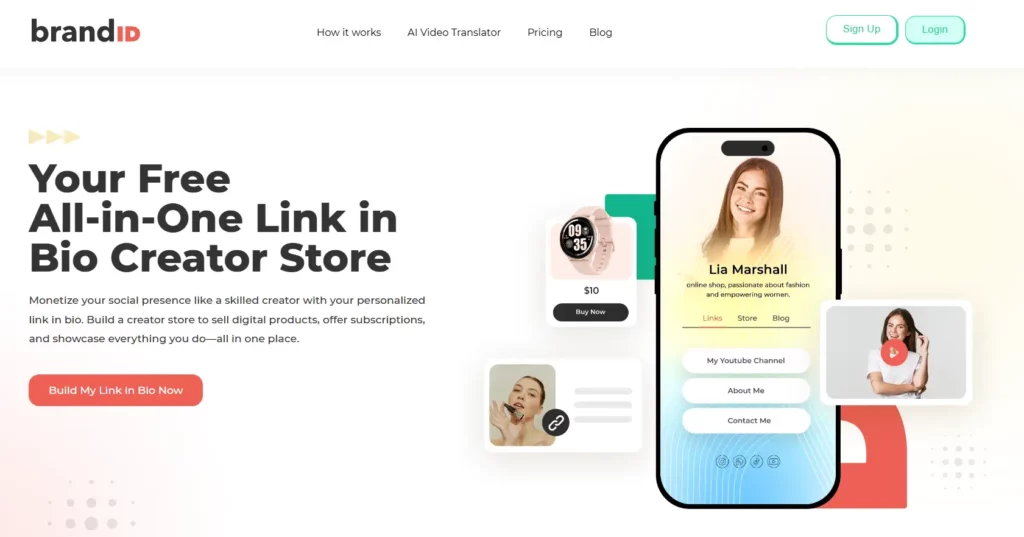
Once you have picked a product, you need somewhere to sell it. You can use marketplaces like Etsy, Gumroad, or Creative Market, or run your own storefront for more revenue and control. brandID is one beginner-friendly option in the second camp: an all-in-one creator store and link-in-bio platform, trusted by 10,000+ creators and businesses, that turns a single bio link into a branded storefront in minutes, with no website or coding.
What stands out is its range. With brandID you can sell almost any digital product from one place: downloads like ebooks, PDFs, templates, and presets; videos and online courses; music and audio; images, graphics, and custom illustrations; plus memberships, subscriptions, paid 1:1 sessions, coupon codes, and gift cards. Whatever the format, you can sell it as a digital download and keep 100% of your revenue, because brandID takes no commission on your sales.
Key brandID features
- Sell any digital product or service from one link, with instant delivery for files or manual delivery for custom work like logos and illustrations.
- Preview pages and 10-second video previews let buyers sample your work and convert with confidence.
- Automated buyer emails plus a custom post-purchase thank-you on every sale.
- Fully customizable, mobile-friendly product cards with hundreds of niche templates, no design skills needed.
- Flexible payments via PayPal, Stripe, or the native brandID Gateway, so you keep 100% of your revenue with no platform commission.
- Built-in analytics, email marketing, and a shoppable bio to turn followers into buyers.
Because everything lives in your bio link page, brandID suits creators who already have an audience and want to turn social traffic, for example when you make money on TikTok, into sales. It is free to start, with a free-forever plan, no credit card required, and setup in about 10 minutes. As always, compare a few options and pick the store that fits your products and budget.
Launch a free, branded store and sell ebooks, templates, courses, videos, and downloads straight from your link in bio. No website, no coding, and you keep 100% of your revenue.
Start Free with brandIDConclusion
As the digital economy keeps growing, with carrier-billed digital goods spending alone reaching an estimated $74 billion by 2026, choosing the best digital products to sell can set the stage for long-term success and creative freedom. From ebooks and online courses to Notion templates, presets, AI prompt packs, and membership content, the most profitable digital offerings solve real problems and serve niche audiences. They are scalable, low-risk, and easy to distribute.
Start with one product you can create from skills you already have, validate it with a small launch, then expand into a family of related products in the same niche. Pick a store that keeps your branding front and center, focus on outcomes over file size, and you can build a thriving digital business this year.
Best Digital Products to Sell FAQs
What are digital products?
Digital products are downloadable or streamable items such as ebooks, templates, online courses, presets, software, and memberships. They are easy to distribute, need no inventory or shipping, and can generate passive income through instant delivery. Because they cost almost nothing to reproduce, they offer some of the highest profit margins in online business, which is why more creators and businesses sell them every year.
What are the most profitable digital products to sell?
The most profitable digital products combine high margins with real demand: online courses and memberships lead with 85 to 95 percent margins, followed by templates and printables (Notion, planners, resumes), design assets, presets, and software tools. Ebooks and AI prompt packs are the easiest to start with, while courses and SaaS command the highest prices. The best digital products to sell are the ones that solve a specific problem for a niche audience.
What are the trending digital products to sell in 2026?
Trending digital products in 2026 include AI prompt packs, custom GPTs and AI tools, Notion templates, digital planners, Lightroom presets, audiobooks, browser extensions and micro-SaaS, and Web3 collectibles. Educational products and templates remain the steadiest sellers, while AI-related and creator-built software are the fastest-growing categories. These products offer low overhead, instant delivery, and global reach.
How much money can you make selling digital products?
Earnings vary widely by product and audience. Many beginners make a few hundred dollars a month from templates or ebooks, while established course and membership creators report $1,000 to $50,000+ per month. The biggest lever is building a portfolio: creators who sell several related products in one niche earn several times more than single-product sellers. Pricing for outcomes, not file size, is what unlocks higher revenue.
What is the easiest digital product to make?
The easiest digital products to make include Canva templates, ebooks, AI prompt packs, printables, stock photos, and audio files. These require minimal investment and can generate passive income quickly. Start with something you can create from skills you already have, validate demand with a small launch, then expand into a product family around the same niche.
Where is the best place to sell digital products?
You can sell digital products on marketplaces like Etsy, Gumroad, and Creative Market, or from your own storefront. Marketplaces bring built-in traffic but take fees and limit branding, while your own store keeps more revenue and control. A link-in-bio store such as brandID lets you sell digital products and sell digital downloads straight from your bio with no website, no coding, and your own branding, which is ideal for creators who already have an audience on social media.
 Summarize this article with: