
Linkpop Review 2026: What Happened to Shopify's Link-in-Bio Platform?
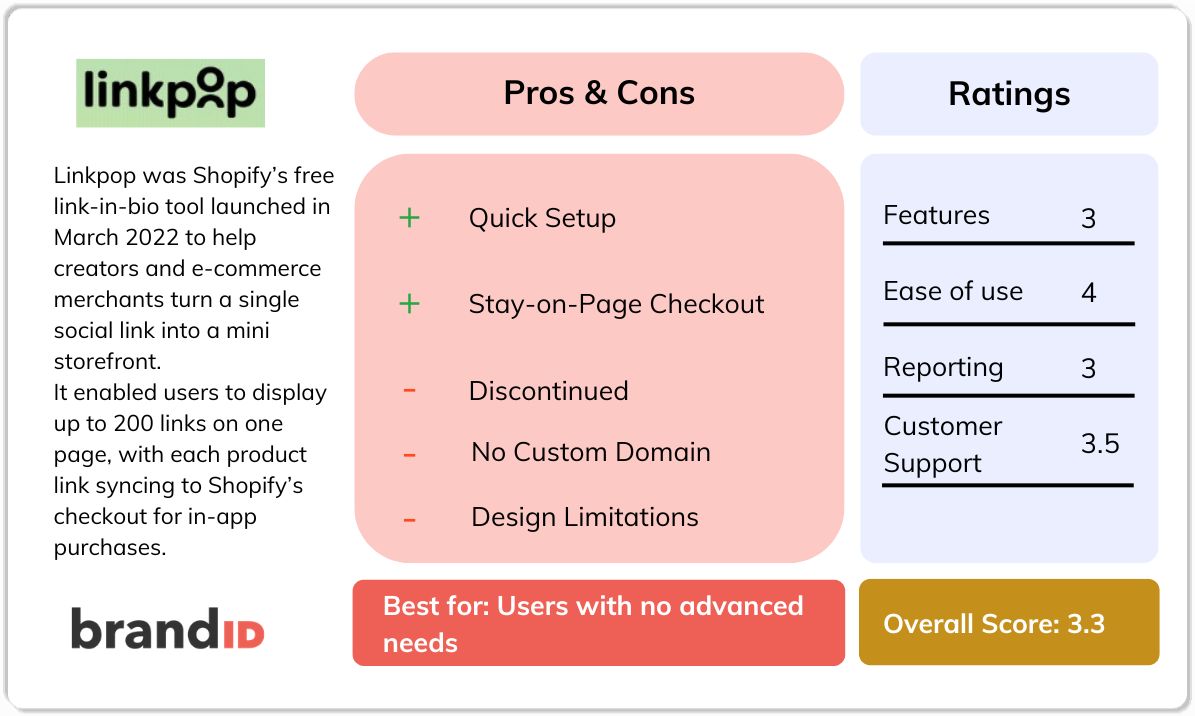
Linkpop was Shopify's free link-in-bio tool launched in March 2022 to help creators and e-commerce merchants turn a single social link into a mini storefront. It enabled users to display up to 200 links on one page, with each product link syncing to Shopify's checkout for in-app purchases. In theory, this mobile-first tool streamlined conversions.
However, as we show below, Linkpop's simple promise came with major limitations. We analyze this link-in-bio tool features and pricing, summarize user feedback, and explain why many users have abandoned Linkpop in favor of more robust alternatives like brandID.
What Is Linkpop?
Linkpop was Shopify's free link-in-bio tool designed for Instagram and TikTok users, allowing them to create a customizable landing page that gathered all their important links in one place. It enabled merchants to add shoppable product links connected directly to Shopify checkout, making it easy for followers to purchase products with just a few taps.
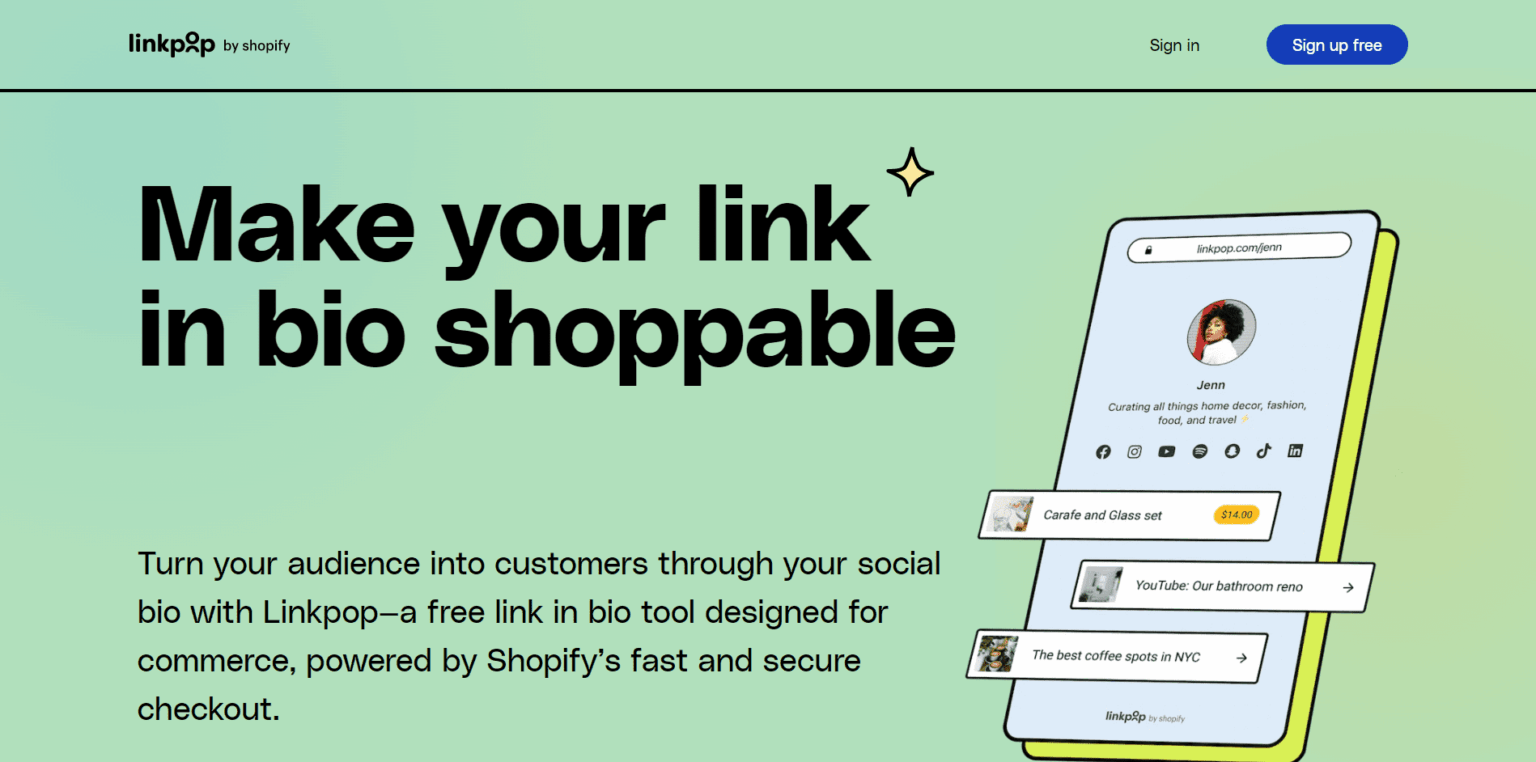
Users could include up to 200 links, such as products, videos, playlists, blogs, and other content, turning a single profile link into a central content hub. The platform was mobile-friendly and offered customization options like brand logos, colors, backgrounds, bio text, and QR code generation.
Linkpop Overview
Let's have a look at the overall information about Linkpop:
At a Glance
- Launch: Introduced by Shopify in March 2022.
- Developer: Built and supported directly by Shopify – meaning deep Shopify Store integration.
- Free to Use: 100% free for anyone with a Shopify account. Shopify funded the app without requiring payments from users.
- Maximum Links: Could place as many as 200 links on the page.
- Target Platforms: Specifically designed for social platforms that limit bio links.
- Integration: Seamlessly tied into Shopify stores.
- Discontinuation: Shopify quietly killed Linkpop in mid-2025. In fact, Linkpop was officially shut down on July 7, 2025, and the app was later removed from the Shopify App Store (June 2026). After that date, Linkpop pages could no longer be edited, and links became inoperative.
Linkpop Features
Here are some of the core features that Linkpop could offer in its peak days:
Built-in Shopify Checkout
Linkpop used Shopify's secure checkout by default. When a customer clicked a product on your Linkpop page, they could add it to their cart and pay through Shopify's familiar system without leaving the page. It allowed small sellers to quickly convert followers into buyers.
One Shareable Bio Link
You got a single URL to put in any social bio. That link could contain links to products, websites, playlists, videos, or anything. This meant followers on Instagram, TikTok, YouTube, etc. could access all your content from one place.
Page Styling
Under the Style tab, you could change the look of your page. Options included setting a background color or image, uploading a logo, and choosing fonts. These branding options were fairly basic, but they allowed some personalization.
“Browse Products” Button
Each page had a “Browse Products” button that displayed products from the connected Shopify store. Merchants could add products to the page by browsing their catalog, and even drag-and-drop links in the desired order. Product links on Linkpop pages automatically showed image, price, and “Buy” options synced to the store.
QR Code Generation
While not heavily advertised, merchants could generate a QR code for their Linkpop URL. This let brands put the QR code on printed materials like flyers, business cards, packaging for selling digital downloads, and have customers reach the same link-in-bio page.
Built-in Analytics
You could see total page visits, total clicks, and individual link performance. Since it tied into Shopify, it also let merchants see how Linkpop traffic translated into store sales via Shopify Analytics.
Despite this feature set, Linkpop's capabilities were quite limited compared to rivals. For example, it lacked key content blocks, and there was no support for custom domains.
Linkpop Pricing
Linkpop itself cost $0. There were no subscription fees or premium tiers. Anyone could sign up for Linkpop with a free Shopify account and immediately create a bio page. The tool was entirely sponsored by Shopify.
However, there are a couple of important notes:
- Shopify Account Required: While you didn't need a paid store to create a Linkpop page, you did need a Shopify account to link products. If you planned to use “shoppable links” and take payments, then you needed at least the Shopify Starter Plan (around $5–$9/mo).
- Transaction Fees: Since Linkpop used Shopify's checkout, the usual Shopify payment fees applied on sales. Linkpop charged no extra fees on top of Shopify's rates. In other words, Linkpop was free, but merchants still paid normal payment processing fees on each sale.
- No Tiered Plans: Unlike some competitors, Linkpop had no paid plans or feature locks. All link types and analytics were unlocked for every user. This made it an excellent free option for tight budgets. However, as noted earlier, Shopify eventually shut down the service in 2025, so the long-term “cost” was potentially losing your page.
Linkpop Reviews: Customer Feedback
Although Linkpop had a slick pitch, user feedback was largely mixed to negative. Real merchants and creators frequently raised concerns on forums and review sites:
1. Reliability Issues
The only Shopify app store reviews and blog reviews mention occasional downtime or glitches. A recent blog noted that “some users report downtime and reliability issues” with Linkpop. Indeed, because Linkpop hosted your checkout funnel, any outage meant lost sales. Some found that simple tasks like editing the link list sometimes failed.

2. Shutdown Complaints
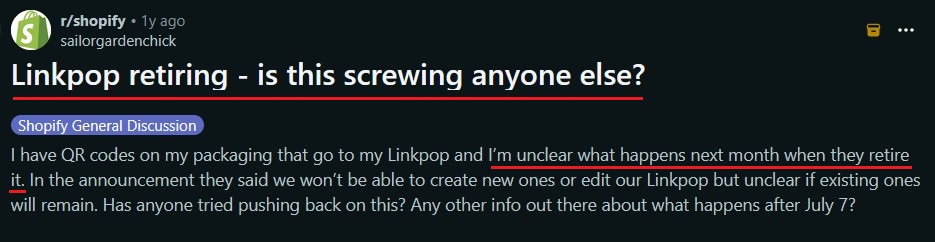
Many users on Reddit reported that Linkpop was suddenly sunsetted. One Shopify community member noted that support told them Linkpop was “in its sunset phase” and being wound down. The abrupt shutdown with little advance notice left users frustrated and scrambling for replacements.
3. Mixed-to-Bad Blog Reviews
Independent review sites gave Linkpop lukewarm scores. For example, one updated 2024 review summarized: “Linkpop has received mixed reviews. Users appreciate its ease of use and Shopify integration, but some report reliability issues and limited customization. Their rating is currently just under 3.0 stars.” In other words, even bloggers noted Linkpop's shortcomings.

Overall, customer feedback painted a picture of a decent idea hampered by execution problems. Users liked that Linkpop was easy and free, but the lack of features and the eventual shutdown left them disappointed.
Linkpop Pros and Cons
Based on the above research, here are the key pros and cons of Linkpop:
Pros
- Free & Unlimited: Linkpop was 100% free to use, with no caps on features.
- Shoppable Links: Its standout strength was enabling direct purchases. Customers could browse products on your Linkpop page and check out in place, using Shopify's secure system.
- Quick Setup: The app integrated smoothly with your Shopify store. Setting up a page and adding your store info took only a few clicks.
- Stay-on-Page Checkout: Because checkout happened on Linkpop, visitors didn't need to leave the page.
- Analytics Integration: Linkpop reported click and sales analytics via Shopify, a plus for tracking performance.
Cons
- Very Limited Flexibility: Linkpop's customization was extremely basic. You could only change the background/image, logo, and text.
- Content Restrictions: Besides Shopify products, Linkpop only supported a few link types (e.g., YouTube, Spotify). You couldn't add things like image galleries, FAQs, or custom code blocks.
- Design Limitations: Every Linkpop page followed a single-column layout. There were no slide-in banners, no header images, and minimal color choices. Essentially, every page looked similar.
- No Custom Domain: You were stuck on linkpop.com/yourname. This means your page URL carries Shopify's branding.
- Discontinued: Perhaps the biggest con is that Linkpop is gone. As of mid-2025, Shopify shut it down. After that, merchants could no longer edit pages or add new links. Eventually, all Linkpop pages became inactive.
brandID: Best Linkpop Alternative
Now that Linkpop is disabled and no longer on the market, other alternatives have a higher chance to show their abilities. brandID is an example of a far more powerful modern alternative.
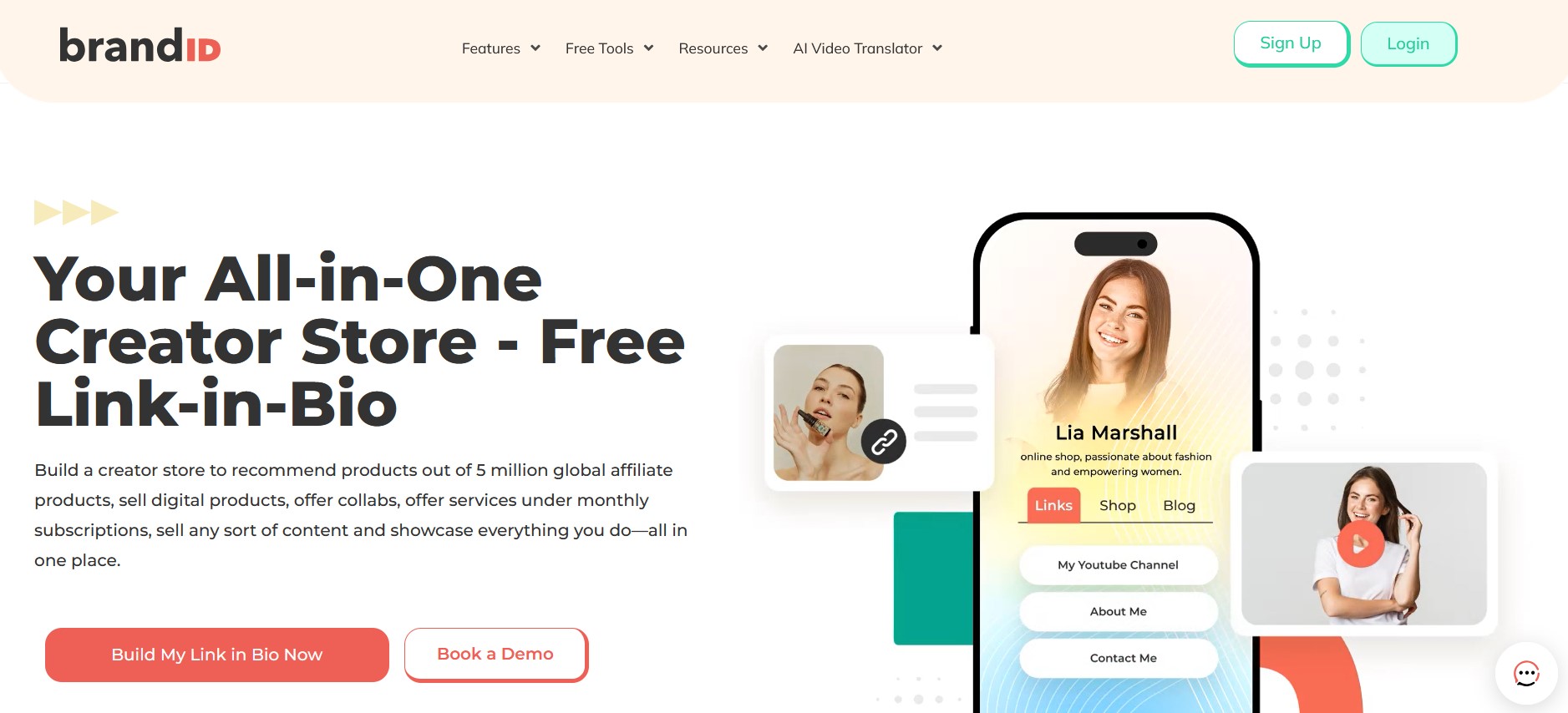
brandID is also a link-in-bio platform, but it also focuses on monetization for creators rather than just organizing links. Here's why brandID is often considered superior to Linkpop:
- Rich Monetization Features: Unlike Linkpop's purely linking approach, brandID lets you sell digital products, subscriptions, tip jars, etc., directly from your profile. For example, you can upload videos, music, eBooks, or templates to sell; set up paid membership tiers; or allow fans to tip you. This means every link can be a revenue stream – something Linkpop never offered.
- Ad Space & Affiliate Program: brandID even allows you to rent out “billboard” ad slots on your page, or sell others' products via an integrated affiliate marketplace. Linkpop had no concept of ads or affiliates – it only pushed your own store's products. brandID's model is to let creators earn in multiple ways.
- Customization & Branding: brandID comes with hundreds of design templates and full layout customization (and you can use a custom domain). In contrast to Linkpop's one-size page, brandID lets you tweak everything: colors, fonts, button styles, and even animations. For creators who want a unique look, this is a major advantage.
- Free with Low Fees: Like Linkpop, brandID's core platform is free to start. However, brandID's revenue comes from optional commissions: it charges 10% on sales made through its payments gateway (or as low as 5% if you connect your own PayPal/Stripe). Many Linkpop alternatives (Linktree, Beacons) had higher fees on paid plans, so 5–10% is relatively low. Even with these fees, you keep more earnings than you would have on a paid tier of Linktree or other apps.
brandID fills all the gaps that Linkpop left open. Where Linkpop could only list products, brandID lets you actually convert a fan into a subscriber or paid member. Where Linkpop offered a single link layout, brandID offers flexible multi-section pages. And where Linkpop had no built-in payment except Shopify's, brandID has its own payment processing for virtually any content.
brandID not only replicates Linkpop's link-aggregation function, but it also expands it into a full creator storefront. For anyone looking for what Linkpop should have been, brandID is the far more robust choice.
Linkpop vs brandID
| Feature | Linkpop | brandID |
|---|---|---|
| Starting Price | Free | Free |
| Affiliate Program | No | Yes (all plans) |
| Link Management | Yes | Yes |
| Booking & Scheduling | No | Yes |
| AI Video Translator | No | Yes |
| Link in Bio Page | Yes | Yes |
| Secure Inbox | No | Yes |
| Collect Tips | No | Yes |
| Giveaways | No | Yes |
| Promo Codes and QR codes | Yes | Yes |
| Digital Billboard Rentals | No | Yes |
| CRM & Email marketing | No | Yes |
Other Linkpop Alternatives
Apart from brandID, there are many other link-in-bio tools on the market. Here are three notable ones:
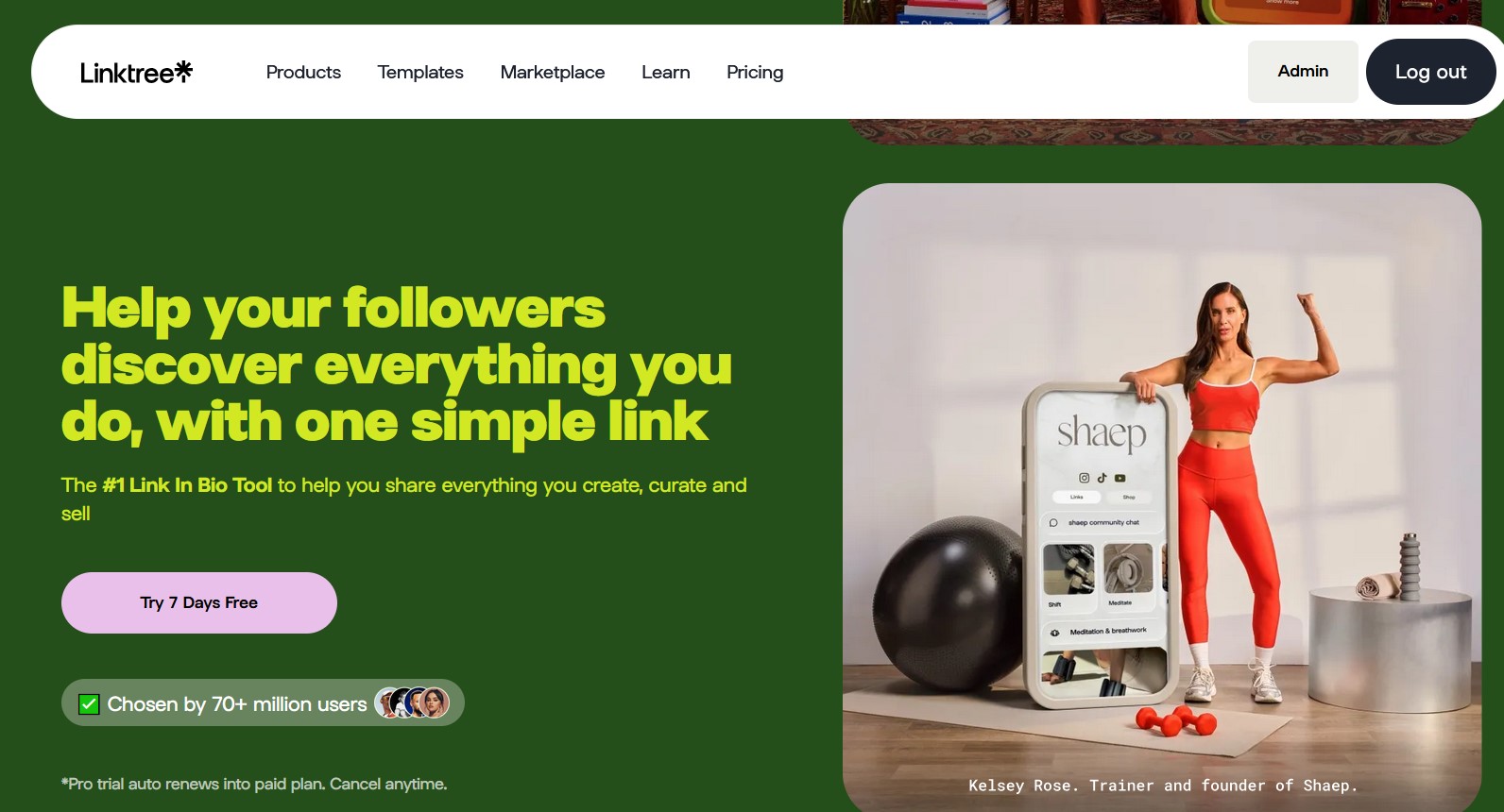
1. Linktree
Linktree is the original bio link tool. Linktree does offer a free version, but its free plan is extremely limited, with only basic themes and no advanced features. To get useful features like custom buttons, analytics, or no ads, you must pay for a Pro plan.
Users often complain that Linktree forces you into paid subscriptions for any power. In addition, Linktree's design is generic and not built specifically for e-commerce – it doesn't integrate with Shopify's checkout, so you have to link manually to store products. If you are interested and want more information about Linktree, you can go through our complete Linktree review.
2. Beacons.ai
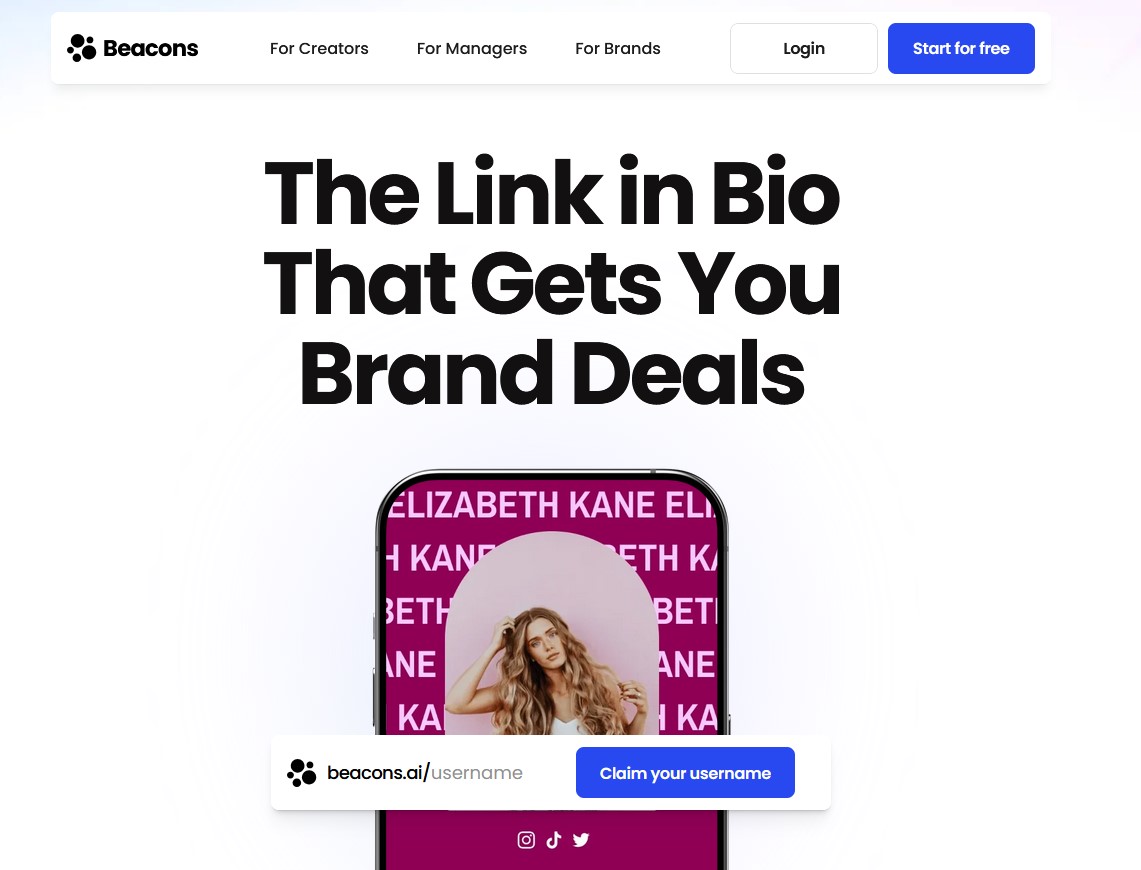
Beacons is a newer competitor popular with creators. It lets you build a polished bio page with lots of blocks, but it charges a high transaction fee on all sales made through the free account. Creators say this eats into earnings.
The free tier also adds Beacons' own branding, and advanced analytics are locked behind paid tiers. In other words, Beacons is flexible but can be costly for small sellers. Don't forget to read our Beacons review for more insight.
3. Taplink
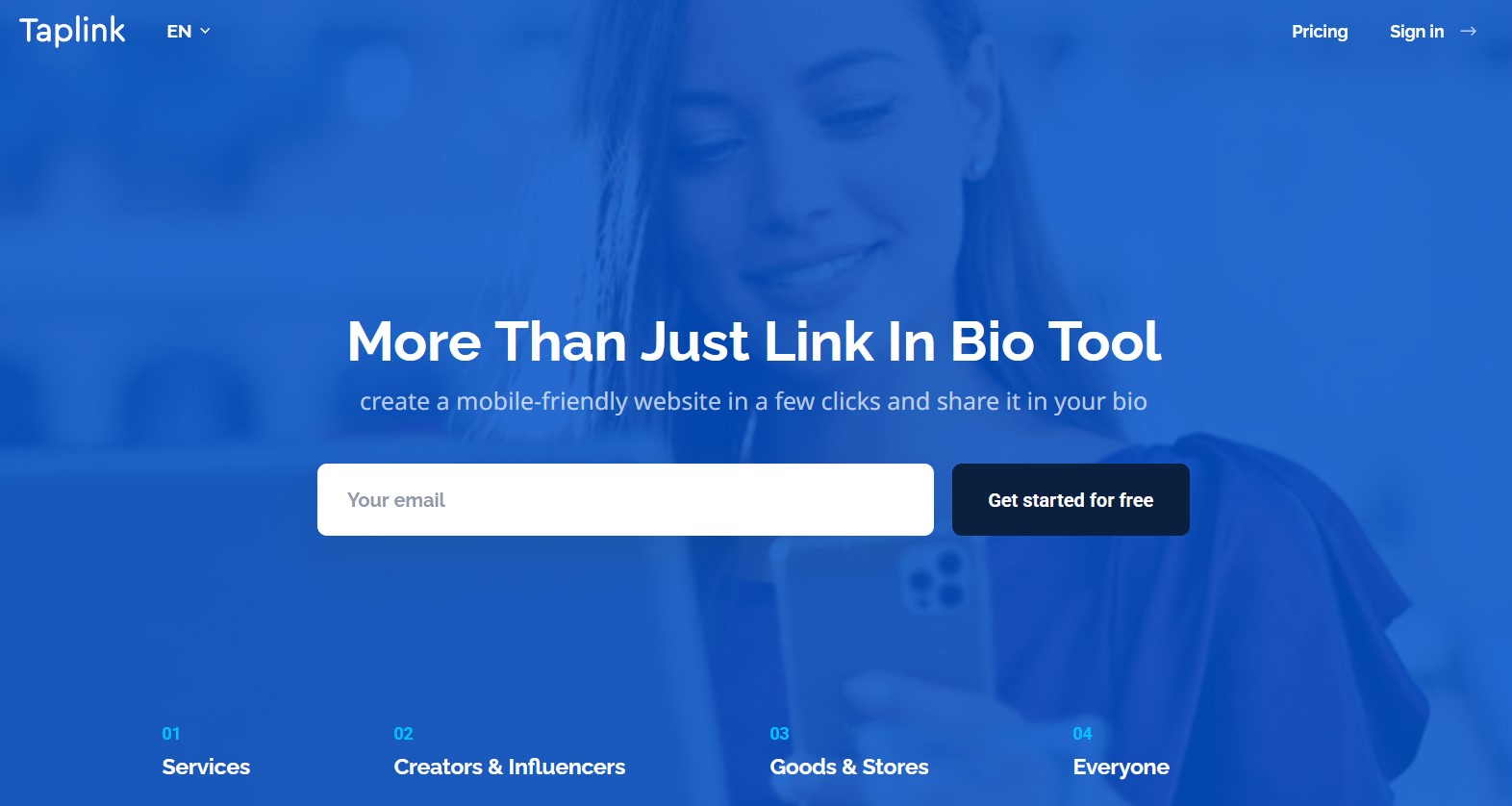
A feature-rich Russian-based alternative. Taplink offers extensive customization (100+ templates, contact forms, and even AI page-building). It also advertises 0% commission on digital product sales. However, it's a completely separate platform – you have to handle payments with external services rather than Shopify's system.
This can complicate the setup for a Shopify merchant. And despite its power, Taplink's interface can be overwhelming, and some features, like automatic checkout, still aren't as seamless as a native Shopify solution.
Check out our Taplink review for more information.
Conclusion
Linkpop was an innovative experiment by Shopify: a free, shoppable link-in-bio page built on top of Shopify's checkout. For a time it offered a clever way to drive sales from social media with minimal cost to merchants. However, the platform lacked many modern features that users had come to expect. Even worse, Shopify ultimately abandoned Linkpop entirely in July 2025, leaving thousands of merchants without a solution.
Today, there are far better-supported alternatives like brandID for anyone serious about converting a social audience into paying customers. Any decision to use a link-in-bio service should consider not only its features and cost, but also its track record of support and longevity.
FAQs
Ready to try the all-in-one Linkpop alternative?
Start with brandID — Free