Affiliate marketing is changing how creators make money online. By 2026, the industry is expected to be $16–20 billion worldwide as brands increasingly rely on influencers and digital content creators to promote affiliate products and reach new audiences.
That is where the brandID affiliate program comes in. brandID helps you tap into this growth fast, with free signup and a quick mini website builder. Using brandID, you can share your unique affiliate links, track clicks and earnings, and start turning everyday content into passive income. This step-by-step affiliate marketing guide will show you how to turn your creativity into consistent passive income—and reveal why brandID could be the missing piece in your affiliate marketing success story.
What Is Affiliate Marketing?
It is a performance-based marketing model that allows you to make money online by promoting products or services you like. When you join an affiliate program, you receive a special, trackable link known as an affiliate link. You can share the link on your website, social media, or in emails. If someone uses your link to buy something, you earn a small part of the money as a commission. Some affiliate programs even pay you when people sign up for a free trial, download an app, or fill out a form.
You don’t have to make or ship the products yourself—the business owner does all that. Your job is to share and promote affiliate products or services that fit your audience and explain why they’re helpful. The tracking link keeps count of clicks and sales, so you get paid for what you bring in. For beginners, affiliate marketing is an easy and low-cost way to start a business with no money.
How Does Affiliate Marketing Work?
Affiliate marketing operates through a partnership among four main players:
- The merchant (the business selling the product),
- The affiliate (the person promoting it),
- The customer (the buyer),
- and occasionally an affiliate platform that assists in managing tracking and payments.
Here’s how online affiliate marketing works:
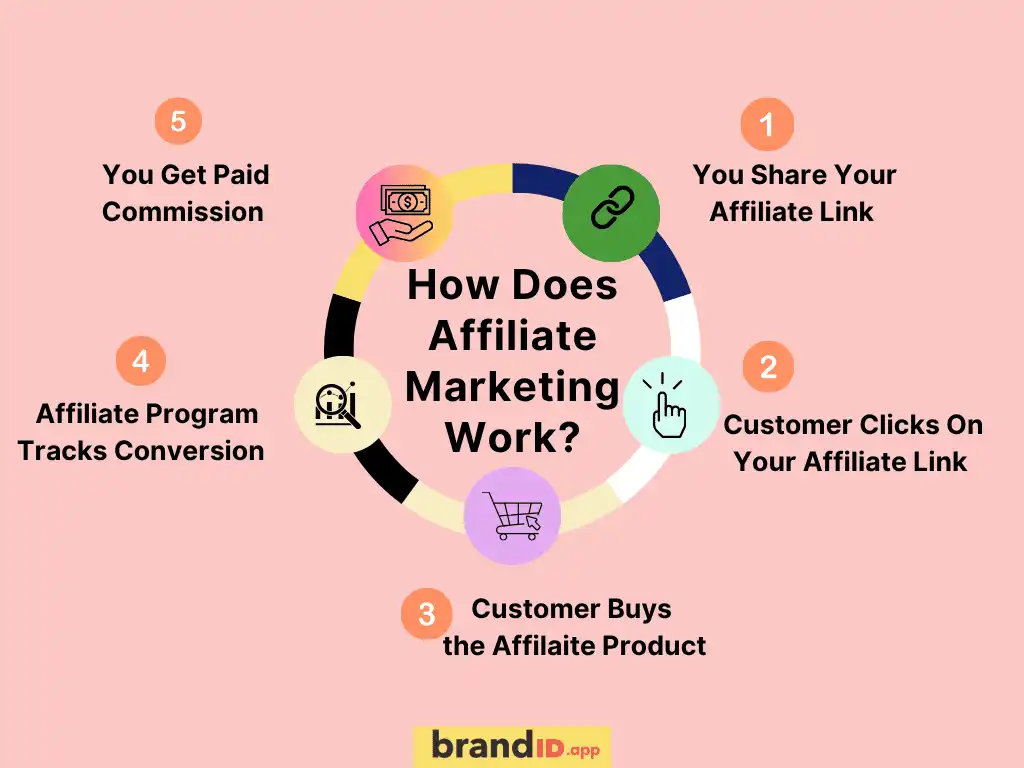
A merchant sets up a program and gives affiliates special tracking links. The affiliate shares those links on their website, blog, email, or social media. When someone clicks the link and makes a purchase, the affiliate earns a commission. Cookies or tracking tools ensure the affiliate receives credit for the sale. For example, if you sell fitness programs online, you could partner with fitness influencers. When their followers use their affiliate links to buy your program, the influencer earns a percentage of the sale. It’s a win-win for both sides.
How to Start Affiliate Marketing? Beginner’s Guide
After learning what affiliate marketing is and how it works, it is time to know how to start affiliate marketing strategically. This section will guide you step-by-step through setting up your affiliate journey—from identifying your niche to choosing the best affiliate programs and promoting products for maximum success. So, let’s get started.
Step 1. Pick Your Primary Online Channel
Choosing the right online channel is the foundation of every successful affiliate marketing journey. Generally, the best results come from starting small, focusing on one platform, and mastering that platform’s algorithm before expanding. Additionally, choosing your primary online channel depends on where your target audience spends time and what kind of content you enjoy creating. Here is the list of key online affiliate marketing channels if you’re serious about turning influence into income and launching your affiliate marketing journey on solid ground.
- Blog: Perfect for long-term SEO growth. Blogs help rank for specific search terms, making them ideal for writing product descriptions and reviews, tutorials, and comparison guides. Once organic traffic builds, it can bring in passive income through consistent clicks and conversions.
- YouTube: Great for tutorials, visual storytelling, and building online credibility and trust. You might wonder how many subscribers you need to make money on YouTube. While even small channels can earn money, YouTube monetization typically begins at 1,000 subscribers and 4,000 watch hours. With strong affiliate links embedded in descriptions, YouTube can be a long-term revenue stream.
- Instagram: Known for high engagement, it’s perfect for fashion, beauty, and lifestyle niches. Many ask how many followers on Instagram are needed to get paid—brands typically start partnering with IG accounts that have around 5,000 to 10,000 followers and a good engagement rate.
- TikTok: It is among the fastest-growing platforms for affiliates. Learning how to go viral on TikTok can skyrocket traffic and sales overnight. Short, authentic videos with trending sounds work best for going viral and gaining quick exposure.
- Email Newsletter: Email marketing remains a powerful tool for building trust and driving conversions. It’s perfect for nurturing long-term relationships and recommending affiliate products directly.
Step 2. Choose Your Niche
Finding your niche is one of the most essential steps in building a successful affiliate marketing strategy. A clear niche helps you focus your content, connect with the right audience, and build authority faster. Instead of trying to appeal to everyone, narrowing your focus allows you to create meaningful content that converts. For beginners, this is where affiliate marketing basics truly start.
To find your niche, ask yourself a few simple questions:
- What topics do I really enjoy or care about?
- What things do I know a lot about or have experience in?
- Are there affiliate programs that pay well in this area?
- Are people searching online for information on this topic?
- Can I keep creating content about it for a long time?
When you answer these, you’ll see which niche fits your interests and goals best. The best affiliates pick something they care about, know about, and can earn from.
Step 3. Join the Best Affiliate Programs
The right program helps you collaborate with the right affiliated businesses and share products your audience likes while building trust and a steady income. There are several factors in choosing the best affiliate program, including:
- Commission rate: Check how much money you earn for each affiliate sale or click.
- Cookie length: Longer cookie times (30–90 days) give you more chances to earn a sale.
- Payment Rules: Learn about when and how you’ll be paid, as well as the minimum amount required.
- Brand trust: Work with affiliate brands your audience knows and likes.
- Program Help: Select programs that provide tools, guides, or resources, along with knowledgeable staff who can answer your questions.
You can find affiliate programs directly from brands or through affiliate networks, such as brandID’s affiliate program. We will discuss the platform in more detail in the upcoming sections.
Step 4. Find & Promote Your Affiliate Products
Finding and promoting the right affiliate products is one of the most crucial aspects of starting your journey as an affiliate marketer. Choosing the wrong products can damage your audience’s trust, while selecting the right ones can build credibility and steady income. Initially, beginners should focus on promoting products they use and believe in, i.e., those tools, courses, or gadgets that solve real problems for their followers. When your recommendations are genuine, your content becomes more persuasive and naturally leads to conversions.
A good affiliate marketing strategy involves promoting products that align with your interests and your audience. For example, a fitness influencer might share workout gear or fitness apps, while a tech creator could recommend the gadgets or software they use daily. When you focus on what you actually know and like, your promotions sound real and believable—and that’s what makes people buy.
To sell affiliate products successfully, focus on helpful content instead of just ads. You can create tutorials, product reviews, or comparison videos on YouTube or post Instagram Reels that show how a product works. For example, a YouTuber might review a camera and include a link to it in the description, or an influencer might share a discount code for a product in their stories. Using blogs or emails can also be helpful. The secret is to stay consistent, honest, and clear—so your audience knows they can trust what you share and recommend.
3 Types of Affiliate Marketing
Pat Flynn, the founder of Smart Passive Income, outlined that there are three main types of affiliate marketing: unattached, related, and involved. He categorized these affiliate marketing types to illustrate the extent to which an affiliate marketer should connect with the products they promote. Each type shows a different level of effort and trust in affiliate selling. Now, let’s explore each type together.
- Unattached Affiliate Marketing: It is when someone promotes products they don’t know or use. They often run digital campaigns or ads to get people to click on their affiliate links. This type of marketing is easy to do, but it rarely inspires lasting trust. For example, a website sharing random tech gadgets with links is an unattached affiliate.
- Related Affiliate Marketing: These types of affiliates talk about products in their niche but haven’t used them. For instance, someone in fashion affiliate programs might recommend clothes they haven’t tried but think their audience will like.
- Involved Affiliate Marketing: These affiliate marketers actually use the products they promote. A fitness blogger who uses a workout app and shares real results is an involved affiliate. This type of affiliate marketing fosters the most trust and typically generates the most affiliate marketing sales.
4 Payment Models in Affiliate Marketing
Affiliate programs pay in various ways, depending on their business goals and target audience. Understanding how each payment model works helps you choose the most effective approach to grow your income and utilize successful affiliate marketing strategies. Whether you’re selling digital products or promoting services, knowing these models will help you earn more in the competitive online market.
- Pay-Per-Sale (PPS)
This is the most common affiliate payment model. Affiliates earn a commission when someone buys a product using their link. For example, if you promote a $100 online course and earn a 10% commission, you make $10 per sale. It’s popular among e-commerce and digital product sellers because affiliates are only paid when sales occur.
- Pay-Per-Click (PPC)
In this model, affiliate marketers earn every time someone clicks their link, even if they don’t buy anything. Top-tier bloggers and YouTubers often utilize the PPC model to direct people to affiliate programs and expand their reach.
- Pay-Per-Lead (PPL)
Here, affiliates are paid when someone completes a desired action, such as signing up for a free trial or subscribing to a newsletter. For example, a software company might pay for each person who signs up for a demo. This payment model is ideal for affiliate programs that aim to build an email list while earning money simultaneously.
- Recurring Commissions
This one works best for selling digital products or software with subscriptions. Affiliates earn money every month as long as customers continue to make payments, making it a steady way to earn from affiliate marketing over time.
Note: Affiliate marketers can combine these models to boost income. For example, they might promote a free software trial to earn a PPL, then receive recurring commissions when users renew their subscription. This hybrid approach lets affiliates earn both short-term and long-term income.
How Much Can Affiliate Marketers Make in 2026?
Affiliate marketers can earn very different amounts in 2026, depending on experience, niche, and strategy. Beginners often start small, making anywhere from a few dollars to a few hundred each month. This early stage typically involves testing the best affiliate products to sell and learning how to build traffic through platforms such as blogs or the YouTube affiliate program.
As affiliates gain experience, they begin earning more consistent income. Intermediate affiliate marketers, who have built an engaged audience or email list, can make $1,000 to $10,000 per month. Many at this level focus on promoting higher-paying niches or digital offers, such as software and online courses, to grow faster.
Full-time affiliates often turn their efforts into real businesses. Professional marketers earning $10,000 to $100,000 monthly typically master SEO, content creation tools, and conversion strategies.
Top performers, sometimes called “super affiliates,” can make six or even seven figures per year. They dominate high-paying industries such as finance, SaaS, or travel, often utilizing multiple key online channels to reach larger audiences. So, affiliate marketing can create powerful opportunities for building passive income online. While not everyone earns a fortune, consistent effort, a niche focus, and the right affiliate marketing strategy can turn a side hustle into a thriving, long-term business.
How to Join brandID’s Affiliate Program?
The brandID affiliate program is designed for influencers and content creators who want to monetize quickly—without needing a website. With brandID, you can turn your social bio link into a customized affiliate store in minutes. It lets you add affiliate products from millions of global brands, organize them into collections, and share them across all your key online platforms. The brandID setup is simple and user-friendly, and its built-in analytics help track your clicks, conversions, and affiliate earnings in real time.
What makes brandID truly powerful is its focus on powerful personal branding and easy monetization. The platform offers high-commission affiliate opportunities, secure checkout, and seamless integration with top programs like Amazon Associates and Shopify Collabs. You can search and connect with brands directly through your brand ID’s dashboard, utilize its advanced email and SMS marketing features, and create a visually stunning, fully branded affiliate page that reflects your personal style and artistic taste.
Whether you’re a beginner or a pro affiliate marketer, brandID gives you everything to grow your online income and reputation—all from one simple, free link.
How to Join the brandID Affiliate Program?
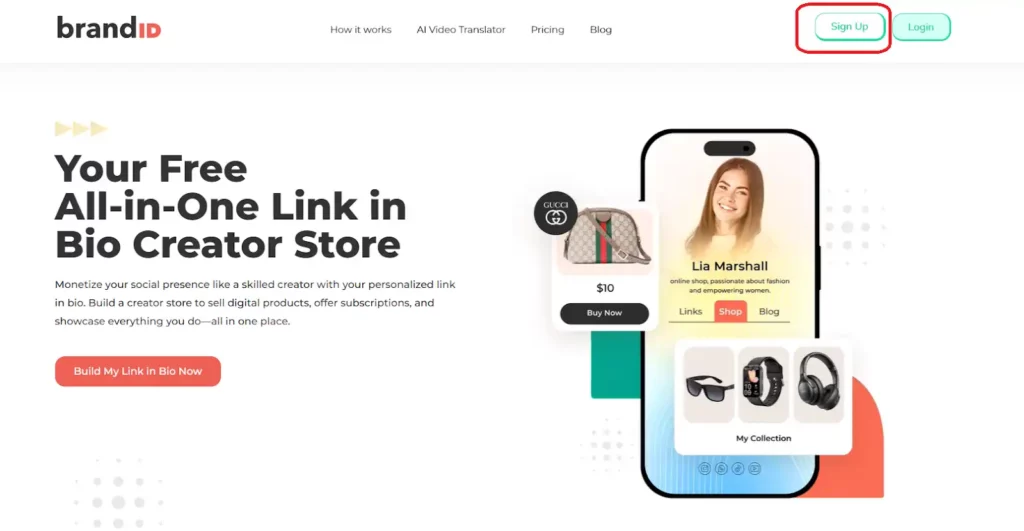
- First, visit brandID and click the “Sign Up” button to set up your personal brandID dashboard.
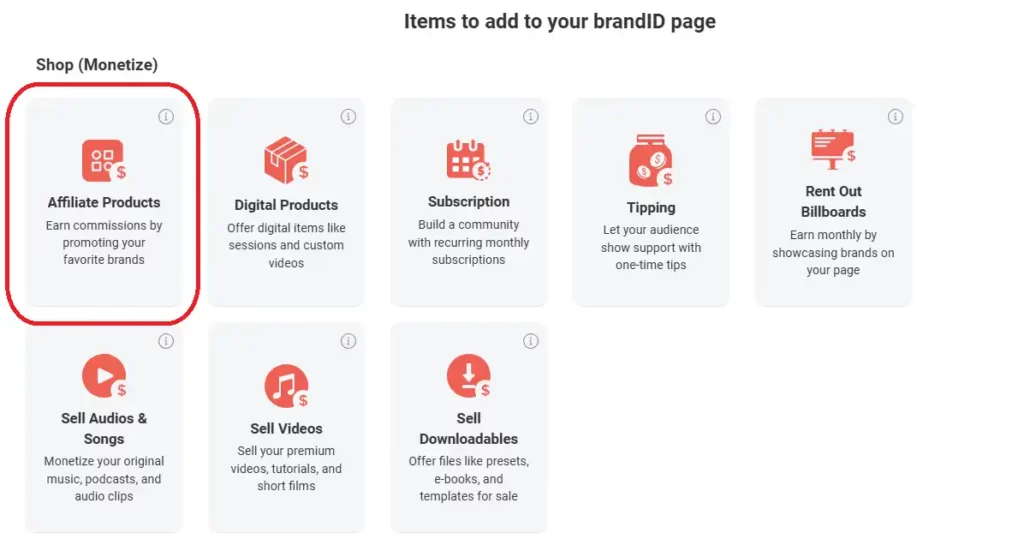
- Next, select +Add products/links → Affiliate Products to start adding your affiliate items.
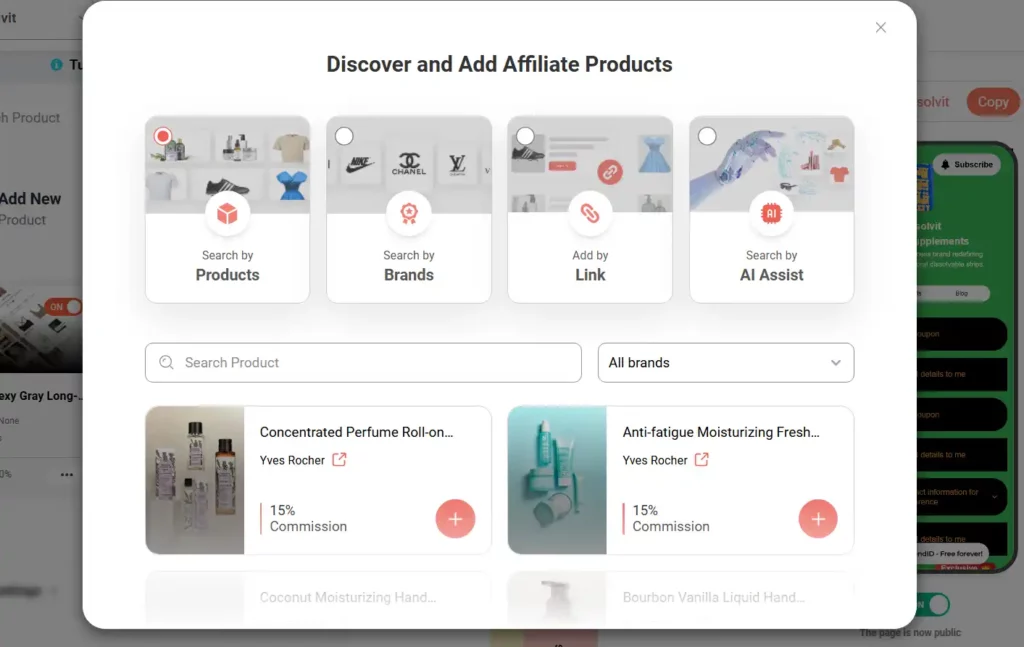
- Then, paste your affiliate links from networks like Shopify Collabs, Amazon Associates, eBay Partner Network, Walmart, Etsy, Target, or AliExpress. You can also explore millions of affiliate products and brands already listed on brandID, featuring high-paying commission rates, and start promoting them for pre-set commission rates.
- After that, fill in the key product details, such as the name, image, CTA, and set the price of your product, to complete your listing.
- Finally, click Save, and your trackable affiliate product link will be ready to share instantly.
Ready to Start Earning? Join brandID’s affiliate program and turn your social bio link into a powerful income stream in just a few clicks!
10 Tips to Succeed in the brandID Affiliate Program
The brandID affiliate program provides influencers and content creators with all the affiliate-specific benefits they need to monetize their content. Follow these 10 proven strategies on the brandID platform to maximize your results and boost your passive income.
1. Solve Your Single Social Bio Link Limitation:
Add the link to your TikTok bio or Instagram profile to overcome the single bio link limit. brandID’s advanced link-in-bio tool enables you to showcase multiple affiliate products, blogs, and offers in a centralized, mobile-friendly hub. Therefore, leveraging brandID’s centralized hub keeps your top affiliate products visible even when social platforms change their rules or algorithms.
Try to prioritize top offers in your brandID landing page. Place high-commission or top-converting products at the top of your brandID page—most users only click the first few links.
2. Use AI Search Assist
brandID’s AI search assist helps you easily search and find affiliate products or brands that match your audience and niche, saving time while ensuring your promotions resonate.
3. Make Data-Driven Decisions
Access brandID’s affiliate programs to track click-through rates, location data, device usage, and engagement patterns. Use this data to prioritize offers and improve conversion funnels. You can also integrate brandID analytics with GA4 and Facebook Pixels to monitor performance, retarget audiences, and optimize campaigns across multiple platforms.
4. Monetize Instantly
Utilize brandID’s built-in monetization features, including secure payment processing and preset commission rates, to earn effortlessly. With brandID, you can track earnings in real time, manage payouts seamlessly, and turn every click, view, or referral into steady affiliate income—without juggling multiple tools or complex integrations.
5. Strengthen Personal Branding
Create mobile-optimized, customizable pages that align with your brand colors, fonts, and tone for visual brand consistency across different online channels. With brandID, influencers and content creators can build a powerful personal brand while enhancing their affiliate marketing strategies. You can showcase these affiliate offers in your personalized storefront, track engagement, and drive higher conversions—all while maintaining a cohesive, professional online identity.
6. Build Your Email List
Collect leads and nurture subscribers through brandID’s email marketing tools. With easy-to-use contact forms and the “Email Me” feature, you can seamlessly build your email list and keep track of sign-ups directly through your personalized landing page. Nurture long-term relationships by sending relevant content and offers to your subscribers, helping you build trust, drive engagement, and increase conversions over time.
7. Integrated Affiliate Product Showcase Capabilities
brandID enables influencers and content creators to showcase multiple affiliate products from various brands on their personalized landing page. With its seamless integration across major affiliate networks, creators can easily search, select, and showcase products that fit their niche—helping boost engagement, drive affiliate sales, and grow audience trust in one centralized, branded hub.
Conclusion
Affiliate marketing offers influencers and content creators a straightforward and cost-effective way to earn money online by promoting products they trust and enjoy. In this guide, you learned what affiliate marketing is, how it works, and how to start—from finding your niche and choosing a platform to joining the best affiliate programs and promoting products that match your audience. With time and effort, affiliate marketing can become a steady means of earning and growing your personal brand.
If you’re ready to take the next step, the brandID affiliate program is a great place to start. It helps creators find affiliate products that fit their niche, connect with trusted brands, and manage everything from a single, intuitive dashboard. With built-in marketing tools, performance analytics, and e-commerce features, brandID makes it easy to get more traffic and boost your affiliate sales. Join the brandID affiliate program today and turn your content into real income.
FAQs
You should be an affiliate marketer if you already have an audience that trusts your opinions, whether on a blog, YouTube, TikTok, or Instagram. It’s also a great fit if you enjoy creating content and can keep people engaged with useful or entertaining posts. Those who are experts in their field, such as fitness trainers or photographers, tend to do well because people trust their advice. If you run a podcast or newsletter, affiliate marketing can also help you earn while sharing honest recommendations.
Some of the best affiliate programs to join are brandID, Amazon Associates, Shopify, and Semrush. The brandID affiliate program is one of the best choices for content creators and influencers. brandID is free to join, easy to use, and gives you access to millions of affiliate products from trusted brands. With helpful tools like built-in analytics, an AI search assistant, and 90-day cookie tracking, brandID makes it simple to earn money and manage your links without needing a website or complicated setup.
Affiliate marketing is a performance-based business model where influencers and content creators or publishers promote a company’s products or services and earn a commission for every sale, signup, or action made through their unique tracking link. A good affiliate marketing strategy focuses on connecting the right audience with valuable products using content, SEO, email, or social media. It’s a win-win system—brands gain exposure and sales, while affiliates earn income for driving traffic and results.
Yes, affiliate marketing can be profitable if you are willing to put in steady effort. It’s a budget-friendly way to earn money online by promoting products you believe in. Although it won’t make you rich overnight, consistent work can help you build a steady extra income.
To succeed in affiliate marketing, you need to be skilled at content creation, understand your target audience, and select affiliate programs that align with your niche.
Yes. You can start affiliate marketing with no money by using free tools and apps. Choose a niche you know well, join free affiliate programs like brandID, and get your special affiliate links. Make simple videos, reviews, or tips on TikTok, Instagram, YouTube, or Pinterest. Add your links to a free link-in-bio page and clearly tell people what to click. Build your email list and share your best posts. Watch your clicks, see what works, and continue to improve each week.
Yes, affiliate marketing is entirely legal. It’s a legitimate business model used by major brands like Amazon, Shopify, and major social media channels like YouTube, Instagram, or TikTok. But not every affiliate program is trustworthy. Before joining, check reviews, read the rules, and make sure there are no upfront or hidden fees or false promises of quick money. Legal affiliate programs, such as Amazon Associates or brandID, always pay based on real sales or actions—not on recruiting new members.
Focus on creating helpful and engaging content to enhance your online presence and establish credibility. Share your affiliate links on your key online channels, such as YouTube, TikTok, Instagram, and your blog. Offer discount codes and use clear calls to action so people know what to click. Keep track of what works, follow new trends, and expand your targeted email list. Try different affiliate programs and post ads during busy shopping seasons.