Most guides on how micro influencers get brand deals still describe a 2019 playbook: build a media kit, send some cold emails, wait for replies. That playbook still works, but it now sits inside a much bigger economy, and influencers who only use it are leaving money on the table.
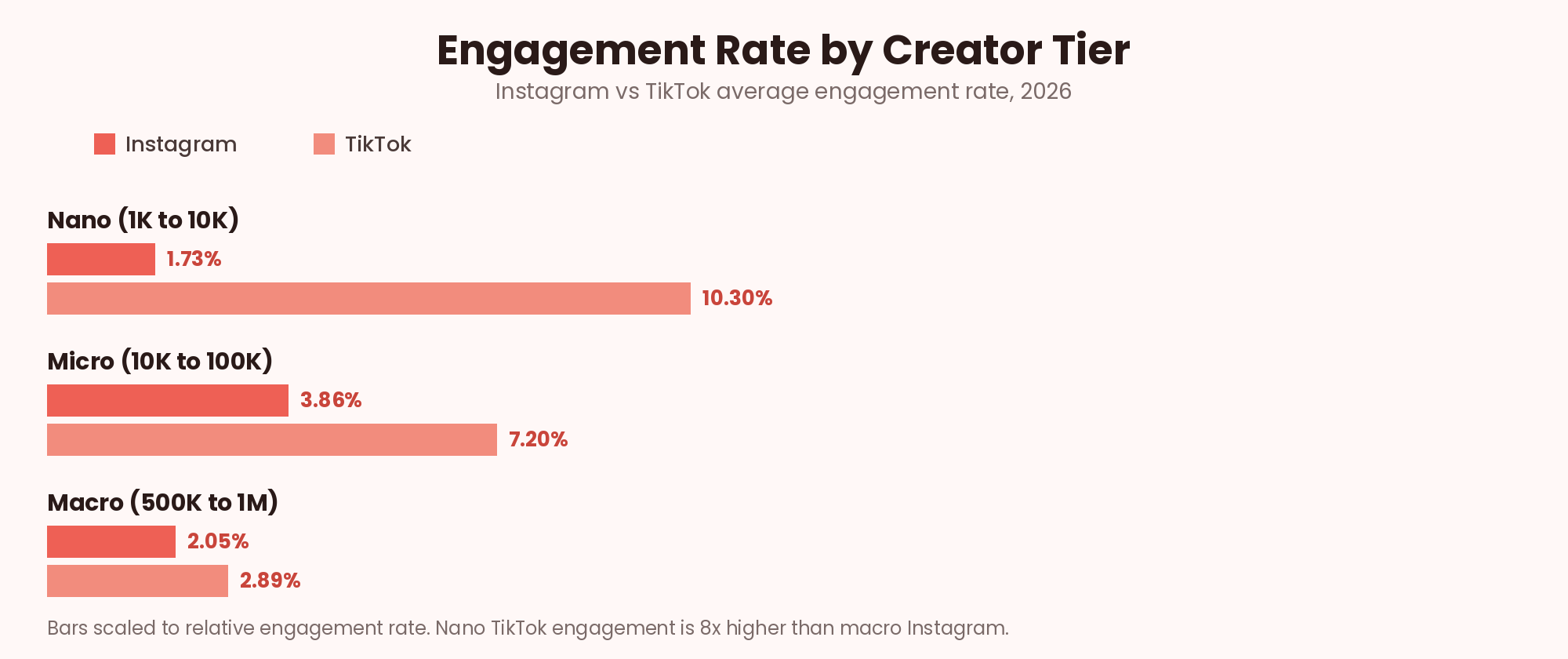
The influencer marketing industry is now worth $40.51 billion, up from $31 billion the year before. 73% of brands actively prefer micro and mid-tier influencers over celebrities, and the list of brands that work with micro influencers now includes household names like Glossier, HelloFresh, Coca-Cola, and Sephora. On TikTok, nano-influencers with fewer than 10,000 followers deliver a 10.3% engagement rate, higher than any other tier on any other platform. And 51.43% of brands say they plan to expand their partnerships with even smaller influencers next year.
All of that means one thing for an influencer with 5,000 to 100,000 followers: brand deals are more available now than at any point in the last decade, and there are more paths to them than pitching. This guide covers six paths, with real data, real rate tables, real pitch templates that landed real deals, and the three quiet revenue streams that most influencers never hear about.
Key Takeaways
- 73% of brands now prefer micro and mid-tier influencers over celebrities, and the industry is projected to hit $40.51 billion in 2026 with 30% year-over-year growth
- Micro influencers deliver 3.86% Instagram engagement against 1.21% for mega-influencers, a 3x gap that translates directly into higher conversion for brand partners
- Rates range from $250 to $5,000+ per Instagram post depending on engagement, niche, and add-ons. Top-tier micro influencers clear $8,000 to $10,500 on premium packages
- Usage rights add 30 to 100% to the base fee, whitelisting adds 50 to 100%, and category exclusivity adds 25 to 100% per month. Bundling these correctly can double deal value
- Most deals start with the influencer reaching out. Personalized outreach with specific engagement data lands first paid deals within 60 to 90 days for most influencers
- Marketplaces cover the deals you cannot pitch yourself. Ainfluencer, Aspire, and Grin let brands find you, and the lightest-touch options are free to join
- Three passive brand-income paths are underused: affiliate marketplaces (no pitching needed), a public creator portfolio that brands discover, and rentable ad slots on your own bio page
The Micro-Influencer Economy in 2026 (The Numbers)
Before covering the six paths, look at the market you are entering. These are the numbers that explain why 73% of brands would rather work with you than a celebrity, and why the money keeps growing every year.
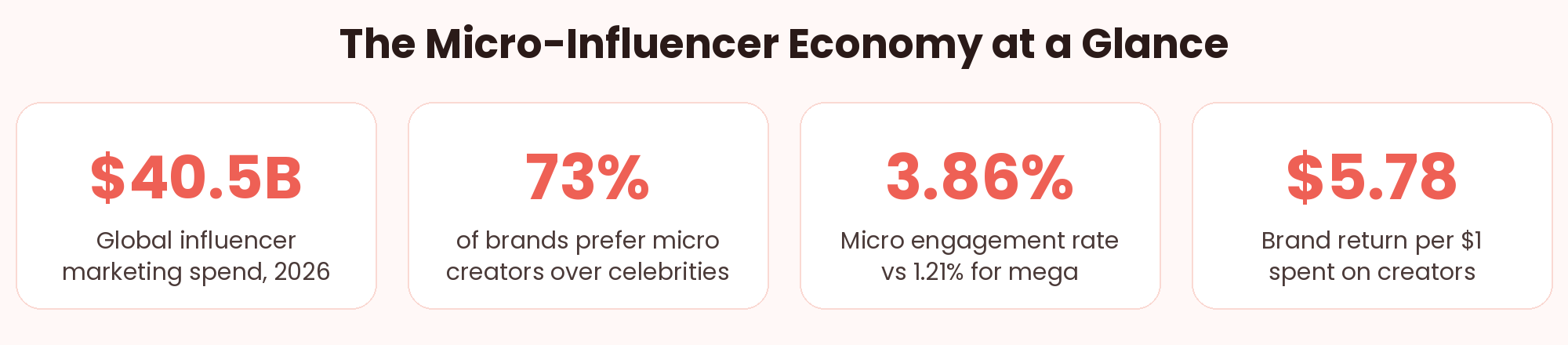
Two more figures make the picture even clearer. Brands are working with 33% more micro-influencers per year on average, and 75.6% of brands plan to keep a specific influencer-marketing budget line in 2026. The industry is not just growing, it is systematically shifting spend toward smaller influencers.
For deeper platform-specific rate benchmarks, Influencer Marketing Hub’s 2026 rate guide tracks per-post pricing across Instagram, TikTok, and YouTube in real time.
Why Brands Actually Prefer Micro Influencers Now
Ten years ago, brands paid for reach. Now they pay for conversion, and micro influencers outperform on every conversion metric that matters.
1. Higher engagement rates. On Instagram, micro influencers average 3.86% engagement against 1.21% for mega-influencers. On TikTok, nano influencers hit 10.3% against low single digits at the top of the pyramid. Engagement rate directly correlates with algorithmic reach and with brand-tracked conversions, so a smaller influencer with strong engagement often outperforms a large one on every metric the brand cares about.
2. Lower cost per engagement. Micro influencers cost roughly $0.20 per engagement against $0.33 for macro influencers, a 40% efficiency gap. That gap compounds across a full campaign, which is why brand budgets increasingly flow to distributed micro campaigns rather than single macro placements.
3. Niche audiences. A fitness influencer with 25,000 followers speaks to actual fitness enthusiasts. A generic celebrity with 5 million followers reaches a random slice of the general public. Brands increasingly pay per targeted follower rather than per total follower, which is why niche accounts consistently outperform on conversion.
4. Perceived authenticity. Followers trust smaller influencers more. When a micro influencer recommends a product, the audience treats it more like a friend’s suggestion than a paid ad. This is not soft data. Cyber Week 2025 saw influencer-driven order value grow 51% year over year, with micro influencers driving disproportionate lift.
How Much Micro Influencers Actually Earn Per Deal
Underpricing is the fastest way to look like an amateur. Overpricing scares off brands. The 2026 numbers below are what teams actually budget for micro influencers across the main platforms.
| Platform | Nano (1K to 10K) | Micro (10K to 100K) | Notes |
|---|---|---|---|
| Instagram post | $100 to $500 | $500 to $5,000 | Baseline for static feed post |
| Instagram Reel | $150 to $750 | $750 to $7,500 | 30 to 50% premium over static |
| TikTok post | $25 to $150 | $100 to $2,500 | Lower baseline, high engagement |
| YouTube video | $200 to $1,000 | $1,000 to $10,000 | Longest shelf life of any format |
| Instagram Story (set) | $50 to $250 | $250 to $1,500 | Priced per set of 3 to 5 frames |
| UGC content (no post) | $100 to $500 | $300 to $2,000 | You create, brand runs it |
A rule of thumb worth remembering: $10 per 1,000 followers is the crude Instagram baseline for a static post, so a 30,000-follower influencer charges around $300. But that formula ignores the two things that actually move rates: engagement rate and niche value. Beauty, finance, and B2B software influencers consistently earn 2 to 4x the follower-based baseline because their audiences convert at higher rates.
The Add-Ons That Actually Grow Deal Value
Base rates are just the starting point. The single biggest lever for growing brand deal income is negotiating add-ons correctly. Bundling them incorrectly is how influencers leave 30 to 100% of the fee on the table.
| Add-on | What it is | Typical uplift |
|---|---|---|
| Usage rights (organic) | Brand reposts your content on their own channels | 30 to 50% of base |
| Paid usage rights | Brand runs your content as a paid ad from their handle | 50 to 150% of base |
| Whitelisting | Brand runs paid ads from YOUR handle | 50 to 100% of base |
| Category exclusivity | You do not work with competitors for 30 to 90 days | 25 to 100% per month |
| Rush turnaround | Under 7-day delivery | 25 to 50% surcharge |
| Content blackout | No competing content 24 hours around post | 15 to 30% of base |
The critical rule: never bundle usage rights or exclusivity into your base rate. Many influencers quote “$1,500 per post” and let the brand run ads with that content for a year, giving away thousands in value. Quote the post at $1,500, then price paid usage at $750 more with a 90-day cap. That is how a $1,500 deal becomes a $2,250 deal on the same deliverable.
Path 1: Build a Media Kit That Brands Actually Read
A media kit is your one-page pitch document. Every outreach starts with one, and the ones that land deals share a specific structure. Brands spend about 30 seconds looking at each media kit, so the first fold has to do the work.
The template that works in 2026 fits on one screen and includes name plus handle plus profile photo, follower counts across every active platform, engagement rate calculated as average likes plus comments divided by follower count times 100, audience demographics covering age, gender, top 3 locations, and stated interests, content pillars stated in three to five words each, previous brand partnerships if any with logos, three to five sample content pieces embedded or linked, and contact email plus pricing range in bold.
The three mistakes that kill media kits: too many pages (brands stop reading after page 2), no engagement rate (the single most important number to a brand), and no pricing signal (brands assume the highest rate if you make them ask).
Free Canva templates work fine for the design. What matters more is making it a PDF with your brand colors and consistent typography, not a Google Doc that renders differently in every browser.
brandID includes a built-in media kit feature, so you can skip the Canva step entirely. Your stats, niche, past collabs, and rate range live in a shareable page that updates automatically as your metrics change. Send brands a link instead of a stale PDF, and every viewer arrives on a page that already shows your latest engagement rate and content samples.
Path 2: Pitch Brands Directly (With Real Templates)
Here is the reality of brand deals in 2026: most deals start with the influencer reaching out, not the brand. According to reports from influencers who have landed dozens of deals across TikTok and Instagram, roughly 70% of paid partnerships for influencers under 100,000 followers come from active outreach, not inbound inquiries.
The outreach process that actually works has four steps.
Step 1: Build a List of 30 to 50 Brands You Already Use
Not brands you want to use. Brands you actually recommend to friends. This authenticity comes through in your pitches, and it is what separates a generic outreach from one that gets replies. If you cannot name three specific products the brand makes, do not pitch them.
Step 2: Find the Right Contact Person
Look for “influencer marketing,” “creator partnerships,” “brand ambassador manager,” or “PR” on LinkedIn or on the brand’s site. Larger brands have dedicated teams. For smaller brands, the marketing manager or founder is often the right contact. Tools like Hunter.io and Apollo.io find email addresses when the public directory does not.
Step 3: Send a Personalized Pitch
Not a template. Not a mass email. A specific, short message referencing something the brand did recently and why your audience would care. Here is a pitch that has landed multiple deals for micro influencers in the beauty and fitness niches, adapted from templates shared publicly by working micro-influencers:
Subject: Partnership idea for [specific product] launch
Hi [name],
Saw the launch of [specific product] last week. I’ve been recommending your [related product] on my [platform] for about a year, and my audience of [specific niche] tends to convert well on beauty products in this range.
Would you be open to a paid partnership? Quick stats:
– 34,200 Instagram followers, 4.7% engagement rate
– Audience is 78% women, 22 to 34, mostly US and UK
– My last three sponsored posts drove between 180 and 260 link clicks
Happy to send a full media kit if there’s interest.
[Your name]
[Media kit link]
Notice what is missing: no vague “I’d love to partner,” no exclamation points, no over-promising. Just a specific offer with data. Brands can process a pitch like this in under 60 seconds, which is the entire game.
Step 4: Follow Up Twice
Most successful outreach comes from the second or third follow-up, not the first email. Space follow-ups 5 to 7 days apart. Keep them shorter than the original, and always add value: reference a new post from the brand, mention a piece of your own content that performed well, or share a specific campaign idea. Silence after the third follow-up means move on. Do not send a fourth.
DM Pitches: The Instagram-Specific Path
For smaller brands and founder-led companies, an Instagram DM often outperforms email. Working micro-influencers with 5,000 to 30,000 followers have publicly shared DM templates that landed their first paid deals, and the pattern is consistent: warm intro, one line of relevant context, one specific question, one offer to share more.
A DM template that has landed first deals for influencers under 25,000 followers looks like this:
“Hey [brand name] team, I’ve been a customer since [specific timeframe] and just finished making a Reel about [specific product]. It got [engagement metric] in the first day. Wondering if you have a creator program or a right person I could send my media kit to?”
Short, specific, and easy to say yes to. It works because it opens the door without asking for money in the first message, which reduces the friction to reply.
Path 3: Join Creator Marketplaces
Creator marketplaces are platforms where brands post campaigns and influencers apply, or where brands search a database and reach out. In 2026, these are the second most reliable path to consistent brand deals after direct outreach, and they cover the campaigns you would not have found by pitching.
1- AinfluencerFree DIY marketplace
Ainfluencer is a fully self-service influencer marketplace that connects brands and influencers without agency fees or platform charges. You create a free profile, browse open campaigns filtered by niche and budget, and send offers directly to the brand. Brands can also find you through the searchable directory using filters like category, language, location, follower count, and engagement rate.
For micro influencers specifically, Ainfluencer covers the range that many other platforms neglect. Brands using it are actively looking for accounts with 5,000 to 100,000 followers because the platform is free to post campaigns, which attracts smaller brands with realistic budgets rather than agencies chasing celebrity partnerships. An in-app escrow system handles payment so neither side gets burned on delivery.
The DIY model means less hand-holding than a managed agency, but the tradeoff is zero platform fees on either side, which is unusual in the category. If you want to see who sits on the managed side, the best influencer marketing agencies are ranked by region with their pricing minimums listed, and most start at $10,000 per campaign.
- 100% free to join for influencers, no subscription or platform cut
- Direct chat with brands through a built-in messaging system
- Escrow-based payment protection on every deal
- Discovery works both ways: pitch campaigns or wait for brands to find you
- Instagram, TikTok, YouTube, and X supported
Best For: Micro and nano influencers wanting a free, self-directed marketplace where smaller brands actively post real paid campaigns.
2- Aspire (formerly AspireIQ)Beauty, fashion, lifestyle
Aspire is a large creator marketplace with a heavy concentration of beauty, fashion, and lifestyle brands. Creators build a profile once, and Aspire matches them to campaigns from participating brands. Application-based, so response times vary, but the campaign volume is high enough that active applicants land 2 to 5 deals per quarter on average.
The platform’s strength is enterprise brand density: household names run campaigns here regularly. The tradeoff is more competition per campaign, so a strong profile and quick application matter more than on smaller platforms.
3- GrinEnterprise brands
Grin skews toward enterprise brands running structured, long-term partnership programs. Deals tend to be larger and less frequent than on other platforms, and the vetting is stricter. For micro influencers with strong niche positioning, Grin can produce a single retainer relationship worth more than 10 one-off deals from smaller platforms.
4- Later InfluenceInstagram-first
Later Influence connects Instagram influencers to brands running short-form video campaigns, integrated tightly with Later’s scheduling and analytics tools. If you already use Later to plan posts, adding an Influence profile takes about 15 minutes. Campaign volume is lower than Aspire but the fit for influencers posting native Instagram content is strong.
5- CollabstrGig-order model
Collabstr uses a gig-order model where you list your services with fixed prices, and brands purchase directly like Fiverr for influencer marketing. Good for influencers who want zero back-and-forth negotiation and clear predictable pricing. Small tradeoff: less flexibility on custom deals, and the platform takes a cut of transactions.
6- Impact CreatorAffiliate plus brand deals
Impact Creator combines affiliate partnerships with brand deals in one platform, which suits influencers who want commission income alongside flat-fee sponsorships. Deep integration with major retailers means affiliate offers are strong, and brand-deal campaigns tend to include performance components.
Path 4: Build a Portfolio That Brings Deals to You
Direct outreach and marketplaces are active. The third path is passive: build a public creator portfolio that brands can find, browse, and contact directly. This is where the industry has genuinely changed in the last two years.
Traditional media kits are private files sent to specific brands. A creator portfolio is a public URL that lives at the top of your bio and works like a website. It lists your niches, your engagement metrics, your past sponsored work, sample content, and how to reach you. Brands that discover you organically use this to decide whether you are worth pitching.
The portfolio approach works because roughly 30% of brand deals for influencers between 20,000 and 100,000 followers now start with the brand finding the influencer, not the other way around, and brands increasingly search by niche and engagement rate rather than by celebrity status.
What a Strong Creator Portfolio Includes
A strong creator portfolio includes:
- Your niches, stated cleanly. Not “lifestyle” but “budget travel in Southeast Asia” or “keto meal prep for busy parents.” Specificity attracts brands with matching product fit.
- Live engagement metrics. Follower count, engagement rate, top-performing post views, and audience demographics visible on the page.
- Past collabs as social proof. Brand logos or names, plus results if you have them (link clicks, product sales, story views).
- Sample content in-page. Not linked out. Brands want to see the work in the same window.
- Contact and rate range. Both. Hiding rates increases friction and cuts inbound inquiries.
brandID is built for exactly this. Your bio link becomes a full public creator profile with your niches, sample content, contact form, and monetization options in one page. Brands visiting your Instagram bio can tap through and see a complete portfolio without needing a separate website, which is exactly the format that drives inbound partnership requests in 2026.
Path 5: Earn From Brands Without Pitching (Affiliate Marketplaces)
The most underused path to earning from brands as a micro influencer is not a brand deal at all. It is an affiliate partnership, which pays commissions on every sale you drive without any pitch, contract, or minimum follower count.
For influencers without an established audience, affiliate income often exceeds brand deal income in the first year. Two reasons: it starts producing revenue immediately with no minimum threshold, and it scales with audience size instead of stopping between deals.
Traditional affiliate signup means applying to each brand individually: Amazon Associates, LTK, ShareASale, Impact, Rakuten, CJ, Awin, and dozens of standalone programs. That process is slow, and rejections are common for influencers under 10,000 followers.
brandID’s affiliate marketplace collapses that. It gives influencers instant access to 5 million+ products from 2,000+ brands with no per-brand application process. Commissions range up to 65% depending on the product category, and everything is tracked, attributed, and paid on schedule from one dashboard.
For an influencer with 5,000 followers who cannot yet land a $500 brand deal, that is the difference between earning nothing while building an audience and earning $50 to $500 monthly on affiliate commissions right away. And the affiliate work often opens the door to formal brand partnerships later, because brands notice which influencers consistently drive sales and reach out about paid deals from there.
The workflow: browse the marketplace by niche, pick 5 to 10 products you genuinely use or recommend, add them to your brandID storefront as tiles with your commentary, and share the storefront link in your bio. Every product you feature becomes a passive income stream that runs in the background while you focus on content and direct outreach.
Path 6: Rent Out Ad Space on Your Own Page (Digital Billboards)
The sixth path is even more passive than affiliate marketing and almost nobody talks about it: renting ad slots on your own creator page. It inverts the normal brand deal flow entirely.
Instead of pitching brands or being discovered on a marketplace, you set aside slots on your bio page as rentable ad space. Brands pay to display their logo, offer, and link in those slots for a fixed monthly fee. You do no content creation, no campaign work, and no negotiation on deliverables. Brands pay upfront for exposure to your audience, and the money arrives every month while your traffic keeps flowing through.
This is the model brandID calls Digital Billboards. For a micro influencer with steady traffic, digital billboards can add $50 to $500 per month per slot without any of the effort a traditional brand deal requires. It is the closest thing to passive brand income in the creator economy, and because most micro influencers do not offer it, brands looking for cheaper alternatives to sponsored posts are actively seeking it.
Combined with affiliate marketplace commissions and traditional pitched brand deals, digital billboards close the loop on brand-related revenue. An influencer with 20,000 engaged followers can realistically layer three streams: $500 to $2,000 monthly from sponsored posts, $100 to $500 monthly from affiliate commissions, and $100 to $600 monthly from billboard rentals. That is a real income from brands at a follower count where many influencers still think they are too small to earn.
Turning One Deal Into Ongoing Partnerships
The most valuable brand relationships are recurring, not one-off. A brand that pays $1,000 for one post is a transaction. A brand that pays $500 per month for ongoing content is worth 10x more over a year, plus it counts as social proof that raises your ceiling with every other brand you pitch.
Four moves consistently turn first deals into long-term partnerships:
1. Over-deliver on the first campaign. Post ahead of schedule, add extra Stories, share the content in your email list. Make the brand look at you as more valuable than they paid for. This is the single strongest predictor of a second deal.
2. Report results proactively. Send a wrap-up report within a week of the campaign. Include impressions, engagement, saved posts, link clicks, and any tracked conversions. Include screenshots. Most influencers do not do this, so doing it makes you memorable. Working micro-influencers who send wrap-up reports have publicly credited them with converting one-off deals into 3 to 6 month retainers.
3. Pitch the next campaign. Two weeks after a successful post, follow up with “I’d love to keep working with you. Here are 3 ideas for our next partnership.” Attach the ideas. Make it easy for them to say yes.
4. Offer an ambassador retainer. Suggest a monthly package: “3 posts per month for 3 months at $X, with content usage rights and content blackout included.” Brands like predictable influencer relationships and are often willing to lock in longer terms with a small discount that still nets you more revenue than one-off deals.
Common Mistakes That Kill Brand Deals
- Reaching out with a generic pitch. Brands can spot templates instantly. Personalize every outreach.
- Overpromising results. If you promise “this post will sell out your product,” you’ll disappoint. Under-promise, over-deliver.
- Pricing per follower alone. Engagement matters more than reach. Price on the deliverable and the outcome, not the audience size.
- Bundling usage rights into the base fee. This gives away 30 to 100% of the deal value. Always itemize.
- Skipping the invoice. Send a professional invoice within 24 hours of finishing a campaign. Some brands stall payments for influencers who do not.
- Not tracking your work. Save every piece of sponsored content with the brand’s name in the filename. Two years from now, that is your portfolio.
- Accepting deals below your rate to “get exposure.” Exposure does not pay rent. Either the deal is worth your time or it is not.
- Not disclosing paid partnerships. FTC violations get influencers AND brands fined. Use Instagram’s built-in paid partnership label and #ad in captions.
Getting Your First Brand Deal Checklist
If you have not landed a brand deal yet, work through this list in order. Most micro influencers land their first paid deal within 60 to 90 days of consistent execution.
- Calculate your engagement rate honestly and write it down
- Build a one-page media kit with your stats, niche, and rates
- Set up a public creator portfolio at the top of your bio
- Add 5 to 10 affiliate products to your storefront for immediate passive income
- List 20 to 30 brands you already use and recommend
- Find the right contact person at each brand
- Send 10 personalized pitches per week
- Follow up twice on each pitch, 5 to 7 days apart
- Join Ainfluencer plus 1 to 2 other marketplaces
- Enable digital billboard slots on your portfolio for passive brand rental income
- Post consistently while doing all of the above
Conclusion
Landing brand deals as a micro influencer in 2026 is no longer about waiting to be noticed. It is about running six paths in parallel: a media kit for outreach, direct pitching, marketplace applications, a public portfolio, affiliate income, and rentable ad slots. The influencers earning the most from brands today are the ones treating this like a portfolio of income streams, not a single revenue channel.
Three of those paths are traditional and require ongoing pitching and negotiation. The other three (portfolio, affiliate marketplace, and digital billboards) produce brand-related income passively while you build. For an influencer between 5,000 and 100,000 followers, the passive paths often start earning within days of setup, while pitched deals take 60 to 90 days to close.
For context on how much influencers earn at different follower tiers, see the guide on how many followers you need on Instagram to get paid. For a content playbook that pulls in brand attention, see Instagram post ideas organized by growth, engagement, and sales goals. And if you want to layer a digital product income stream alongside brand deals, the guide on how to sell information products covers the full setup.
brandID gives you the portfolio, the affiliate marketplace, and the digital billboards on one page, from a free plan, so all three passive brand-income paths start working the same day you set up.
Frequently Asked Questions
How Many Followers Do You Need Before Brands Will Pay You?
Some brands pay influencers with as few as 5,000 followers if the niche fits. The threshold in 2026 is about engagement rate and audience quality, not raw follower count. Nano influencers (1,000 to 10,000 followers) with 5% or higher engagement often land paid deals, and affiliate marketplace income has no follower minimum at all.
How Much Do Micro Influencers Actually Charge in 2026?
Micro influencer rates range from $250 to $5,000+ per Instagram post depending on engagement and niche. Reels command 30 to 50% more than static posts. TikTok baseline is lower at $25 to $2,500 per post but engagement is significantly higher. Top-tier micro influencers clear $8,000 to $10,500 on premium packages that include video, usage rights, and niche expertise.
What Is the Fastest Way to Get a First Brand Deal?
Joining a free marketplace like Ainfluencer where brands actively post campaigns for micro influencers is the fastest route. Direct pitching works but takes 60 to 90 days to close first deals on average. Affiliate marketplaces produce revenue immediately with no application, and digital billboards on your own page can start earning within a week of setup.
Do Micro Influencers Need to Disclose Paid Partnerships?
Yes. FTC guidelines require clear disclosure like #ad or #sponsored. Instagram and TikTok both have built-in paid partnership tools you should use. Non-disclosure can result in FTC fines against the influencer and the brand, so both parties usually require it in the contract, and skipping it puts future deals at risk.
How Do I Know if a Brand Deal Is a Scam?
Red flags include: they want you to pay upfront, they refuse to sign a contract, they only pay in products instead of cash, or they promise vague future opportunities. Legitimate brands pay in cash with clear contracts and clear deliverables. Product-only gifting arrangements are not brand deals, they are free products. Marketplaces with built-in escrow like Ainfluencer sidestep the risk entirely.
What Is the Difference Between a Brand Deal and an Affiliate Partnership?
A brand deal is a fixed payment for specific content, contracted upfront. An affiliate partnership pays you commissions on sales generated through your unique link. Many micro influencers do both simultaneously: a paid post plus an affiliate link for tracked commissions on any sales the post drives. Combining them often produces the strongest total income per campaign.
Should I Include Usage Rights in My Base Rate?
No. Usage rights, whitelisting, and exclusivity should always be itemized separately from the base content fee. Usage rights typically add 30 to 100% of the base, whitelisting adds 50 to 100%, and category exclusivity adds 25 to 100% per month. Bundling these into the base rate is how micro influencers lose thousands per year.
Can You Make a Full Income From Brand Deals as a Micro Influencer?
Yes, but usually not from pitched deals alone. Successful micro influencers combine brand deals ($2K to $10K per month), affiliate income ($500 to $3K per month), digital products ($500 to $5K per month), and rental income from digital billboards or subscriptions for full-time earnings. Diversification protects against algorithm changes on any single platform.
Which Brands Actually Work With Micro Influencers?
Lululemon, Glossier, Daniel Wellington, HelloFresh, Fashion Nova, Coca-Cola, and Sephora all run consistent micro-influencer campaigns. Smaller DTC brands in beauty, fitness, food, and tech are often more accessible than household names. For a full list of brands actively partnering with micro influencers, see the guide on brands that work with micro-influencers.
 Summarize this article with: