Pinterest affiliate marketing turns saved ideas into paid commissions. People do not open Pinterest to kill time. They open it to plan purchases, which is why a single pin can keep sending buyers to your affiliate links for months, sometimes years, after you post it.
That buying intent is the whole opportunity. If you already know the basics of how the model works, Pinterest hands you a discovery engine that keeps working long after the publish date. A quick refresher on the fundamentals of affiliate marketing helps, but this article focuses on the Pinterest side: the rules, the setup, the best niches, and the income you can actually expect in 2026.
Key Takeaways
- Affiliate links are allowed. Pinterest permits direct affiliate links in organic pins as of 2026, but every pin needs a clear disclosure such as #affiliate or #ad.
- The audience buys. 85% of weekly Pinners have bought something they found on the platform, and 96% of top searches are unbranded, so newer creators can still rank.
- Start with a business account. A free Pinterest business account gives you Analytics, Rich Pins, and keyword tools that grow Pinterest affiliate income over time.
- Pins compound. They are evergreen, so most creators see first commissions in 30 to 90 days and meaningful income in 6 to 12 months.
- Keep the 80/20 mix. Roughly 80% helpful content and 20% affiliate pins, posted daily with full (never shortened) links, keeps accounts safe.
- Pick the right niche. Home, beauty, fashion, and DIY remain the strongest niches for making money on Pinterest.
What Is Pinterest Affiliate Marketing and Why It Works in 2026
Pinterest affiliate marketing is the practice of promoting products through trackable affiliate links on pins, then earning a commission when someone clicks and buys. You can link directly from a pin or route traffic through a blog post or landing page, whichever converts better for your niche.
The reason it works comes down to intent. Pinterest behaves like a visual search engine, not a feed you scroll to pass the time. Users arrive with a query in mind, which is exactly the moment a helpful product recommendation lands.
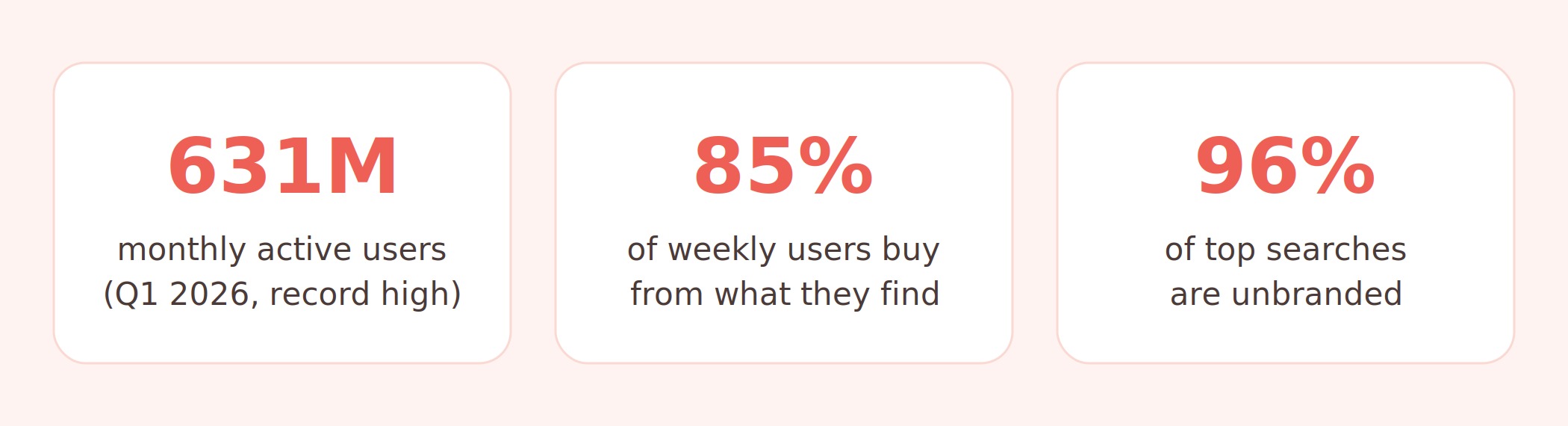
Pinterest reached 631 million monthly active users in Q1 2026, an all-time high, and 85% of weekly users buy from what they find.
Those numbers are worth pausing on. The 631 million monthly active users figure, reported in Pinterest’s Q1 2026 quarterly filing, means your pins reach a huge, growing audience. The fact that 85% of weekly users have purchased from pins tells you this traffic converts, and 96% of top searches being unbranded means shoppers look for what you sell before they know a brand, giving small creators a real shot at visibility. These figures sit alongside broader affiliate marketing statistics that show why the channel keeps growing.
There is one more advantage that separates Pinterest from Instagram or TikTok. A pin built around a keyword keeps resurfacing in search, so it compounds. An average pin stays discoverable for months, while a feed post is usually spent the day you publish it. That longevity is why Pinterest affiliate income tends to build steadily rather than spike and vanish.
Does Pinterest Allow Affiliate Links? The Rules for 2026
Yes. Pinterest allows direct affiliate links in organic pins as of 2026, so you do not strictly need a blog. The catch is compliance. Get the rules wrong and your reach drops, links get blocked, or your account gets restricted.
Here are the rules that actually matter, drawn from Pinterest’s Commercial and Branded Content Guidelines and current FTC requirements.
Disclose Every Affiliate Pin
Disclosure is not optional. Add #affiliate or #ad to the pin description so the commercial nature is clear. This satisfies both Pinterest policy and the FTC Endorsement Guides, which require a plain, visible disclosure. Studies show honest labeling does not hurt click-through rates.
Use Full Links, Never Shorteners
Cloaked or shortened Pinterest affiliate links (Bitly, TinyURL, redirects) get flagged as spam and can trigger a block or ban. Always paste the full affiliate URL. If you want your own analytics, add UTM parameters to the end of the link instead of hiding it.
Keep It Original and Moderate
Pins must be original and add value, not reposts of someone else’s image. Posting the same affiliate link repeatedly, or in high volume, raises red flags. Space pins out, and never use fake accounts to save your own affiliate content.
Know the Paid Ad Limits
The rules above cover organic pins. Promoted (paid) pins are stricter: they must link to content you own or control, so you generally cannot run ads that point straight to a raw affiliate link. A bridge blog post or landing page solves this cleanly.
How to Do Affiliate Marketing on Pinterest Step by Step
Here is the practical sequence for how to do affiliate marketing on Pinterest, from a blank profile to your first tracked commission. Each step builds on the last, so work through them in order.
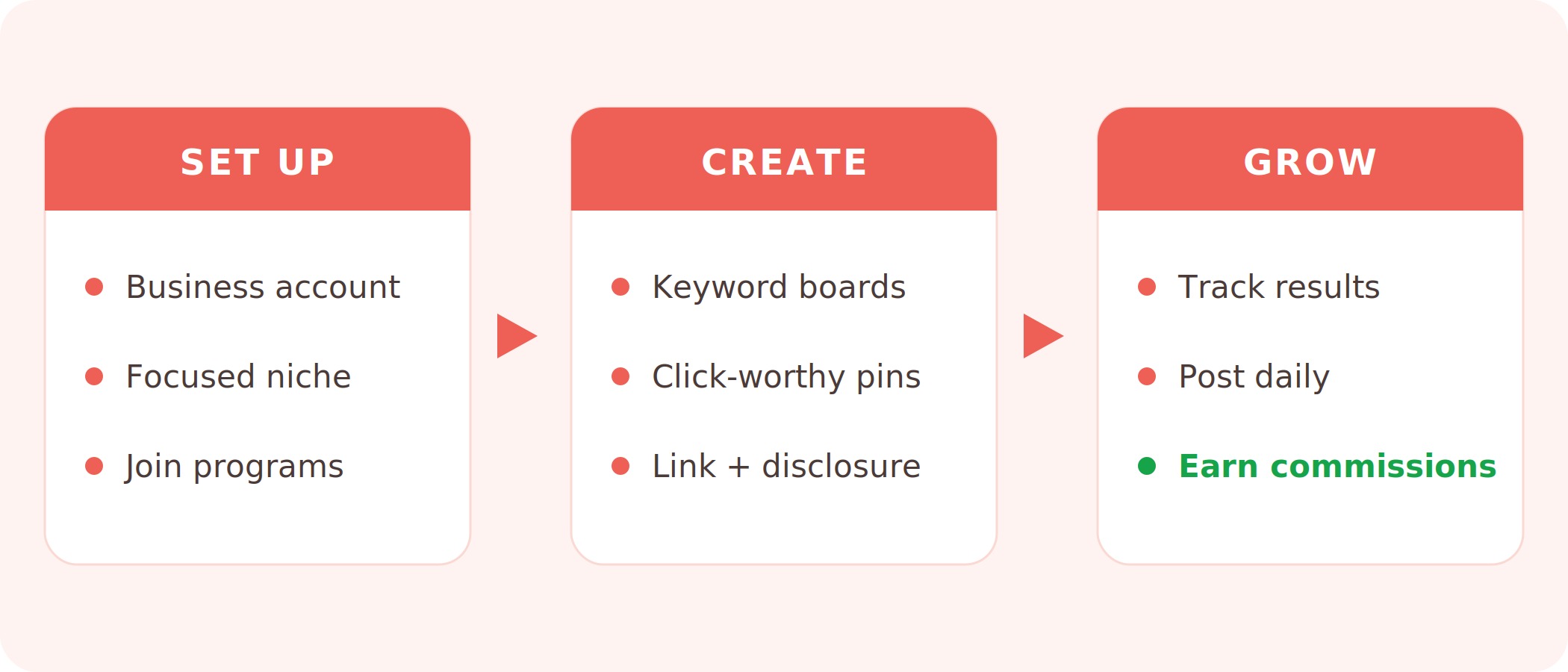
The seven steps group into three phases: set up your account, create optimized pins, then grow traffic into Pinterest affiliate income.
A Pinterest business account is free and gives you Analytics, Rich Pins, and the Ads Manager. If you already have a personal profile, convert it in settings. Add a keyword-rich bio and a link to your blog or storefront so your affiliate presence looks credible from day one.
Pinterest rewards visual, solution-oriented topics. Choose one lane you can post about daily rather than promoting everything. A tight niche trains the algorithm and builds trust, which lifts your Pinterest affiliate income faster than a scattered feed.
Apply to programs that match your niche and pay fairly. Networks like ShareASale, Impact, and CJ Affiliate cover thousands of brands, while a creator marketplace can bundle many merchants in one dashboard. Learning how to promote affiliate links effectively pays off here.
Pinterest is keyword-driven. Name your boards and profile after the phrases buyers search, like “small kitchen ideas” or “budget skincare routine.” Rich Pins pull metadata from your linked pages, which improves how your affiliate pins look in search.
Use a 2:3 ratio (1000 by 1500 pixels), bright original imagery, and a clear text hook. Product-in-context photos beat stock. Video pins are worth adding, since organic video grew 240% year over year and Pinners are more likely to act on them.
Paste the full affiliate link into the pin’s destination field, write a keyword-first description with a call to action, and include your #affiliate disclosure. For Idea Pins, which limit clickable links, point people to your bio or blog instead.
Watch outbound clicks, save rate, and conversions. Aim for 3 to 6 pins a day, with only 1 or 2 carrying affiliate links. Replicate whatever converts. Consistency, not volume bursts, is what compounds into reliable Pinterest affiliate income.
Best Niches for Pinterest Affiliate Income
Not every topic performs the same. Pinterest skews toward aspirational, visual, and planning-driven content, so these niches consistently drive the strongest affiliate income. For a wider view, compare them with the broader list of most profitable affiliate marketing niches.
Home Decor and Interior Design
The single largest category on Pinterest, where users plan rooms, renovations, and seasonal refreshes. Buying intent is high because people pin now and purchase as projects go live, making it a reliable source of Pinterest affiliate income.
Best for: furniture, lighting, storage, and decor programs with visual, gift-friendly products.
Beauty and Skincare
Tutorials, routines, and product roundups thrive here, and repeat-purchase products mean recurring commissions. Beauty pins pair naturally with before-and-after visuals, which lift saves and clicks on your Pinterest affiliate links.
Best for: skincare, makeup, and haircare brands, many featured in top beauty affiliate programs.
Fashion and Style
Outfit boards, capsule wardrobes, and seasonal lookbooks give shoppers a direct path from inspiration to checkout. Because fashion refreshes constantly, you get endless reasons to publish fresh pins and keep affiliate income flowing.
Best for: clothing, accessories, and shoe retailers with strong catalog imagery.
Health, Fitness, and Wellness
Workout plans, meal prep, and self-care content pull in motivated buyers who invest in gear, supplements, and programs. Wellness performs well on Pinterest because the audience is planning a change, not just browsing.
Best for: equipment, activewear, and digital fitness products with clear results.
Personal Finance and Side Hustles
Budgeting tips, saving challenges, and money-making ideas attract a high-value audience. This niche often promotes software and courses with generous payouts, so it is a smart pick if you want higher Pinterest affiliate income per sale.
Best for: budgeting apps, tools, and courses, including high-ticket affiliate programs.
Best Affiliate Programs to Promote on Pinterest
The right program decides how much each click is worth. These options work well for Pinterest marketing for affiliates because they cover visual, purchase-ready products. For a deeper list across every category, see the roundup of the best affiliate programs to join.
brandID Affiliate Marketplace
brandID is a creator monetization platform with a built-in affiliate marketplace. In plain terms, it lets you promote products from thousands of brands, build a simple storefront, and earn a commission whenever someone buys through your link, all from one dashboard.
Once you are set up, you get access to over 5 million products from more than 2,000 brands, with average commissions up to 65% and some brands paying even higher. You pick products in your niche, organize them into collections by season or campaign, then link your Pinterest pins to those shoppable products so every pin can earn.
- Affiliate marketplace with 5M+ products from 2,000+ brands
- Commissions up to 65%, with some brands paying more
- Link-in-bio storefront you can build in minutes
- Collections to group products by niche, season, or campaign
- Shoppable social links so every pin or post can convert
- Also sell digital products, subscriptions, memberships, and tips
- Free plan: $0, no card required, add unlimited affiliate products to earn commissions
- Creator: $9/month for more monetization and customization
- Turbo Creator: $15/month for unlimited features and the lowest transaction fees
- Transaction fees apply when you use brandID’s built-in payment gateway (they vary by plan)
Best for: creators who want to make money on Pinterest without juggling dozens of separate networks.
Amazon Associates
Amazon Associates is Amazon’s official affiliate program. It lets you earn a commission by linking to almost any product on Amazon, and those links are allowed on Pinterest. Because the catalog is so large, it is easy to match pins to what people are already searching for, which is why it is the most beginner-friendly option here.
Best for: beginners testing the model. Our guide on becoming an Amazon affiliate covers setup.
ShareASale
ShareASale is an affiliate network that connects you with thousands of individual brands from one account. It covers home, fashion, and lifestyle merchants, the exact categories Pinterest shoppers love, so you can promote several on-topic brands and keep your Pinterest affiliate links varied.
Best for: creators who want multiple mid-tier brands in home and lifestyle niches.
Impact and CJ Affiliate
Impact and CJ Affiliate are two enterprise affiliate networks that host major retail and software brands. In short, they are where recognizable companies run their programs, and both offer longer cookie windows than Amazon plus deeper tracking, which suits creators ready to scale their Pinterest affiliate income.
Best for: intermediate creators promoting established retail and subscription brands.
| Program | Commission | Best For |
|---|---|---|
| brandID Marketplace | Up to 65% | All-in-one storefront and shoppable pins |
| Amazon Associates | 1% to 10% | Beginners and any niche |
| ShareASale | Varies by brand | Home and lifestyle brands |
| Impact and CJ | Varies, longer cookies | Established retail and software |
Build a free storefront, pick from millions of products with commissions up to 65%, and link your Pinterest pins straight to items your audience already wants to buy.
Join the brandID Affiliate ProgramHow Much Pinterest Affiliate Income Can You Realistically Make
Most creators earn their first commissions within 30 to 90 days, and meaningful income of a few hundred dollars a month typically takes 6 to 12 months of consistent posting. Anyone promising overnight riches is selling something. Pinterest is a compounding game.
That timeline matters because it changes how you measure progress. Instead of watching daily payouts, track leading signals: impressions usually climb within 30 to 60 days, outbound clicks follow, and conversions arrive once your best pins mature. Older pins keep earning while new ones stack on top.
Your ceiling depends on niche and program. A finance creator promoting software with high payouts can out-earn a decor creator on low Amazon rates even with fewer clicks. If you are starting lean, the playbook for how to start affiliate marketing with no money pairs well with Pinterest’s free reach.
Common Mistakes That Get Pinterest Affiliate Accounts Flagged
Plenty of accounts rack up impressions yet earn nothing, usually because of a rule they did not know they broke. The table below pairs each common mistake with the fix that keeps your Pinterest affiliate links healthy.
| Mistake | Why It Hurts | The Fix |
|---|---|---|
| Using link shorteners | Flagged as spam, links get blocked | Use the full URL, add UTM tags |
| Skipping disclosure | Breaks FTC and Pinterest rules | Add #affiliate to every pin |
| Posting only affiliate pins | Algorithm suppresses reach | Keep an 80/20 value-to-affiliate mix |
| Spamming the same link | Triggers volume red flags | Space pins out, vary the creative |
| Running duplicate accounts | Seen as artificial inflation | Operate one account per brand |
One more habit separates steady earners from stalled accounts: ignoring keywords. Pinterest ranks pins on search relevance, so a pin with no target phrase in its title or description rarely surfaces. Treating pins like search content, the way you would with SEO affiliate marketing, is what keeps clicks arriving month after month.
Frequently Asked Questions
Is Pinterest good for affiliate marketing in 2026?
Yes. With 631 million monthly active users and 85% of weekly users buying from pins, Pinterest is one of the strongest platforms for affiliate income. Its search-driven feed keeps pins working for months, so a well-optimized pin can earn long after you publish it, unlike short-lived Instagram or TikTok posts.
Do you need a blog to do affiliate marketing on Pinterest?
No. Pinterest allows direct affiliate links in organic pins as of 2026, so a blog is optional. That said, routing traffic through a blog or landing page often lifts conversions, lets you build an email list, and is required if you plan to run promoted pins, since paid ads must point to content you own.
Is Amazon Associates worth it for Pinterest?
For beginners, yes. Approval is easy, the catalog fits any niche, and links are allowed on Pinterest. The trade-off is low commission rates and a 24-hour cookie window, so impulse-buy products convert best. Once you grow, higher-paying programs or a marketplace usually earn more per click. See how much Amazon affiliates make for realistic figures.
How long does it take to make money on Pinterest?
Most creators see first commissions within 30 to 90 days and meaningful income in 6 to 12 months. Impressions usually rise within the first 60 days, with clicks and sales following as pins mature. Because pins are evergreen, consistent daily posting compounds, so results build steadily rather than spiking and fading.
 Summarize this article with: