If you’ve spent even one week farming for buyers and sellers, you already know the hardest part of real estate isn’t closing deals, it’s keeping enough deals in motion to make closing feel inevitable.
The right real estate lead generation software changes that equation by turning your website, your ads, and your social presence into a 24/7 prospecting engine that fills the pipeline while you focus on clients.
The challenge is that the market is flooded with options, each promising the most qualified leads at the lowest cost per acquisition. As of 2026, contact form automation tools have become table-stakes for any serious agent or team, but choosing the wrong platform can lock you into a long contract with leads that never convert.
This guide cuts through the noise. We reviewed the top platforms on the market, analyzed the data that actually separates high-converting systems from expensive experiments, and built a framework to help you pick the right tool for your business size, budget, and lead type.
Key Takeaways
- Match the tool to the job. Lead capture, CRM, ad management, seller-intent platforms, and investor data tools are five different categories of real estate lead generation software, and most agents need two or three of them working together.
- Top picks by use case: ContactID for automated contact form outreach, Real Geeks for solo agents, CINC for teams, Ylopo for seller intent, Follow Up Boss for CRM-only, PropStream for investors.
- Speed wins deals. 78% of buyers work with the first agent who responds, yet the average agent takes over 15 hours to reply, and the average online lead-to-close rate in real estate sits at just 0.4%–1.2% in 2026.
- All-in-one beats fragmented. The best real estate lead generation software combines IDX/lead capture, a CRM, and automated follow-up in a single workflow, disconnected tools create gaps where leads go cold.
- Seller tools generate higher intent. Automated home valuation landing pages and predictive analytics for home sellers consistently outperform generic ad campaigns for listing-side pipelines.
- Investors need a different stack. Lead generation for real estate investors centers on off-market data, tools like PropStream and DealMachine serve a distinct purpose from agent-focused platforms.
- AI is no longer optional. Conversational AI for real estate has become standard, 67% of homebuyers now use an AI tool as a primary research method, and the agents capturing that traffic are building durable pipelines at lower cost.
Why Most Agents Lose Leads Before the First Conversation
The statistics here are hard to ignore. According to NAR’s 2025 Profile of Home Buyers and Sellers, 96% of homebuyers used online tools during their home search, meaning your digital presence as a real estate agent is no longer optional, it is the front door to your business. Yet the same data shows the average agent takes over 15 hours to respond to a new inquiry.
That’s not a lead problem. That’s an operations problem.
Research published in 2026 by Jamil Academy and Conversion Realtor puts the industry’s average lead-to-close rate between 0.4% and 1.2% across online sources. Top-producing agents using CRM-driven follow-up systems hit 3% to 5%, three to five times the average rate from the same lead pool. The difference is almost never the source of the lead.
It’s what happens in the 48 hours after the lead comes in.
This is exactly the problem that real estate lead generation software is built to solve: capturing the lead fast, routing it correctly, and triggering follow-up automatically so no one falls through the cracks.
What Real Estate Lead Generation Software Actually Does
Before comparing platforms, it helps to understand what this category of software actually does, because the term gets applied to everything from standalone landing page builders to full real estate automation software platforms with AI-powered follow-up.
At its core, real estate lead generation software performs three functions:
1. Lead Capture. The platform creates touchpoints, IDX property search websites, home valuation landing pages, local lead generation ad integrations on Facebook or Google, chatbots, where potential buyers and sellers exchange their contact information for something of value. This is the top of the funnel.
2. Lead Nurturing. Once a contact enters the system, the software routes them into automated email and SMS sequences, assigns follow-up tasks, and scores the lead based on behavior like property searches, page views, or email opens. This is what keeps warm leads from going cold.
3. Pipeline Management. The CRM component tracks every conversation, surfaces high-intent leads, and gives teams visibility into who is doing what, so no lead gets ignored because a follow-up task got buried.
The table below shows how the main categories of real estate software differ in scope, so you can immediately spot which type matches your situation.
| Tool Type | What It Does | Best For |
|---|---|---|
| All-in-one platform | Lead capture + CRM + automation in one | Teams & growing agents |
| Lead generation service | Delivers pre-captured leads to your CRM | Agents who want volume fast |
| Real estate CRM only | Manages contacts & follow-up workflow | Agents with existing lead sources |
| Seller lead platform | Home valuation pages + seller nurture | Listing agents |
| Investor data platform | Off-market property & owner data | Wholesalers & investors |
Table 1: Real estate software categories by function and ideal user
The Best Real Estate Lead Generation Software Platforms in 2026
Each platform below was evaluated on lead capture capability, CRM depth, automation features, AI integrations, pricing transparency, and the type of agent or team it serves best. We’ve included honest assessments, pros, cons, pricing, and a clear recommendation, so you can match a tool to your situation rather than guessing.
ContactID
Our Top Pick, Best Automated Outreach for AgentsContactID is a contact form automation tool built for real estate agents and investors who need to reach hundreds of prospects, sellers, landlords, FSBOs, and local businesses, without filling out one contact form at a time by hand.
It works as the outbound engine of your real estate lead generation software stack: you load a list of target websites, ContactID finds each site’s contact form, fills it with your personalized message and details, and submits at scale from your browser, so your outreach lands in inboxes that cold email and ads never reach.
It isn’t an IDX site or a full CRM; it’s the missing piece of your real estate automation software stack that turns a list of prospects into a real estate lead generation channel before your competitors reach them first. Install the Chrome extension, no MLS configuration required, and it’s free to start.
- Free to start, no long-term contract, no setup fee
- Automates outreach by filling and submitting contact forms in bulk
- Works for solo agents, teams, and investors sourcing off-market deals
- Reaches prospects through their own contact forms, bypassing crowded email inboxes
- Pairs cleanly with any CRM, replies flow into your existing follow-up system
- Not a standalone IDX platform, pair with an MLS-connected site for property search
- Best results come from agents who have a clear target list to reach out to
- Does not replace a dedicated CRM for long-term pipeline management
ContactID Pricing: Free to start; paid plans unlock higher outreach volume and advanced features. No setup fee and no annual commitment required.
Recommendation: Start here before spending money anywhere else. ContactID reaches the prospects your competitors are ignoring because manual outreach doesn’t scale. It’s the fastest, lowest-cost fix for a stalled pipeline, and it works immediately, not in 6 months after SEO kicks in or after an expensive ad campaign goes live.
CINC
Best All-in-One Platform for TeamsCINC (Commissions Inc.) is a true all-in-one real estate platform for teams, combining Google and Meta ad management, an IDX website, a fully featured CRM, and AI-powered follow-up under one roof.
Its standout capability is AI-driven lead nurturing: when a new buyer or seller registers, CINC’s conversational AI engages them within seconds via text and email, asks qualifying questions, and routes hot responses to the assigned agent in real time, directly addressing the 15-hour average response gap that costs most agents deals.
Team routing is class-leading too, with configurable distribution rules (round-robin, geography, price range), full visibility on who responded, and a priority dashboard surfacing the highest-intent leads.
- AI follow-up engages leads within 60 seconds of registration
- Deeply integrated ad management removes the need for a separate agency
- Team routing and accountability tools are class-leading
- Predictive analytics surface which leads are most likely to transact soon
- Pricing is enterprise-level and not publicly listed, expect $1,000+ per month
- Overkill for solo agents who need simple lead capture
- Onboarding takes several weeks to configure properly
CINC Pricing: Custom (contact for quote); generally $1,000–$2,500/month for teams depending on market size and ad spend.
Recommendation: CINC is the right choice if you run a team of 3 or more agents and want a single vendor managing your ads, lead capture, CRM, and AI follow-up. It’s too expensive and complex for solo agents starting out.
Real Geeks
Best Value for Solo AgentsReal Geeks is the go-to real estate lead generation software for independent agents and small teams who want a real system without a five-figure annual commitment, bundling an IDX-powered property search website, a CRM with automated drip campaigns, and home valuation landing pages for a monthly fee well below competing all-in-one platforms.
The valuation pages are especially effective for capturing seller leads: a homeowner enters their address, the system runs an AVM calculation, and the agent is notified instantly with full contact details, and these pages consistently outperform generic contact forms because they target people already thinking about their home’s worth.
Real Geeks added AI-powered follow-up via Geek AI in 2024, which sends text and email on the agent’s behalf; it’s less sophisticated than CINC’s AI, but covers the critical first-touch window when speed matters most.
- Starts around $299–$399/month, far more accessible than enterprise options
- Automated home valuation landing pages included out of the box
- Clean IDX website that integrates with major MLS feeds
- Active user community and regular product updates
- AI follow-up features are basic compared to CINC or Ylopo
- Ad management is self-serve, you still need to run your own Facebook/Google ads
- CRM reporting is functional but not deeply analytical
Real Geeks Pricing: Starts around $299/month for a solo agent; team plans scale from there.
Recommendation: Real Geeks is one of the best entry points for agents who want a complete IDX website, seller lead capture, and basic automation without committing to an enterprise contract. Pair it with your own ad strategy and it punches well above its price point.
Ylopo
Best for AI-Powered Seller Lead GenerationYlopo is a paid-ad and AI-driven seller-lead platform, the real estate lead generation software that teams with serious listing pipelines keep returning to.
It combines Facebook and Google ad automation with seller-specific landing pages powered by predictive analytics for home sellers that identify homeowners statistically likely to list based on behavioral signals like property search activity and valuation page visits, so the system serves them targeted ads before they ever raise their hand.
Its conversational AI for real estate follow-up (Raiya) sends human-like text messages, asks qualifying questions, and passes engaged contacts to the agent with a warm handoff summary; 2025 updates extended Raiya to longer conversation threads, so more leads are fully qualified before the agent steps in.
Ylopo is designed to work alongside major CRMs rather than replace them, feeding tools like Follow Up Boss or Sierra Interactive.
- Predictive analytics identify likely sellers before they start actively searching
- Raiya AI handles first-touch follow-up with human-like text conversations
- Works alongside existing CRMs instead of replacing them
- Strong analytics on ad performance and lead source ROI
- Requires a monthly ad budget on top of the platform fee
- Not a standalone CRM, you’ll need a separate tool for pipeline management
- Pricing starts around $500–$600/month before ad spend
Ylopo Pricing: Approximately $500–$600/month platform fee, plus a minimum monthly ad budget (typically $500+).
Recommendation: Ylopo is the strongest choice for listing agents and team leaders who want a dedicated lead generation engine layered on top of their existing CRM. Its predictive analytics for home sellers set it apart from tools that only react to intent signals after the fact.
Follow Up Boss
Best Real Estate CRM for TeamsFollow Up Boss is a dedicated real estate CRM for teams that does one thing exceptionally well: it manages your contacts, follow-up pipeline, and team communication history in a clean, fast, reliable interface.
As of 2026 it integrates natively with over 200 lead sources, so every major portal, lead gen platform, and IDX provider can push leads directly into FUB without a Zapier workaround.
Where it earns its reputation is accountability, team leaders can see exactly which leads were contacted, when, by whom, and what was said, Smart Lists automatically surface contacts most overdue for follow-up, and all texting, calling, and email happens inside the platform.
In 2024 Follow Up Boss was acquired by Zillow Group, which raised industry questions about data privacy; that hasn’t materialized into a major product change as of mid-2026, but it’s worth noting if you use multiple portals.
- 200+ native lead source integrations mean zero manual importing
- Team accountability features are the best in class for a pure CRM
- Clean, fast UI that agents actually use (important for adoption)
- Excellent mobile app for agents working in the field
- No built-in lead generation or IDX website, you supply the leads
- Zillow ownership is a concern for some independent agents
- Pricing scales per user, which adds up for larger teams
Follow Up Boss Pricing: Starts around $69/month for solo; team plans run $500–$1,000/month depending on seat count.
Recommendation: If you already have lead sources and just need a world-class system for managing follow-up and team accountability, Follow Up Boss is the safest choice. Pair it with Ylopo or a portal for lead generation and you have a complete stack.
PropStream
Best for Lead Generation for Real Estate InvestorsPropStream is the dominant data platform for lead generation for real estate investors focused on off-market acquisition, wholesalers, house flippers, BRRRR investors, and note buyers, pulling from a database of over 155 million U.S.
properties that investors filter by equity level, loan type, absentee owner status, pre-foreclosure, tax delinquency, and dozens of other criteria identifying motivated sellers.
This is fundamentally different from agent-focused platforms: you’re not waiting for a seller to raise their hand, you’re using data to find owners who have a statistical reason to sell, then reaching out proactively via direct mail, cold calling, or text campaigns built into the platform.
At $99/month entry, it’s also one of the most accessible tools in its category.
- 155M+ property records with deep filter options for investor targeting
- Direct mail campaigns can be launched from within the platform
- At $99/month, it’s one of the most affordable tools in its category
- Nationwide coverage with county-level data accuracy
- Skip tracing credits are limited at base plan level
- Not designed for agent-style buyer/seller pipeline management
- Data is as accurate as county records, some fields lag behind market reality
PropStream Pricing: Starts at $99/month; skip tracing charged per contact pulled.
Recommendation: PropStream is the first tool any serious real estate investor should add to their stack. If you’re focused on off-market deals and want to build a motivated seller list without waiting for inbound traffic, nothing at this price point comes close.
Sierra Interactive
Best SEO-Driven Lead Generation for AgentsSierra Interactive is an IDX website builder and real estate CRM for teams that takes a different path than most platforms on this list.
Instead of relying on paid ads, it focuses on building an organically ranking IDX website that captures buyer and seller leads from Google without recurring ad spend, an unusual but powerful choice for agents in markets where paid lead costs are high or portal lead quality is inconsistent.
It pairs that organic strategy with a strong CRM that includes automated drip email campaigns, behavioral lead scoring, and team management features like lead routing, assignment rules, and accountability tracking.
The CMS is designed to publish neighborhood pages and listing content at scale, which feeds the organic ranking engine over time; the tradeoff is that SEO takes months to build, so Sierra is a long-game investment rather than an immediate lead source.
- Organic lead generation reduces long-term dependency on ad spend
- Strong CRM with behavioral scoring and drip automation
- Excellent for content-heavy, neighborhood-focused strategies
- Well-regarded customer support and onboarding team
- SEO results take 6–18 months to build meaningful traffic
- No built-in paid ad management, requires a separate media buy
- Higher learning curve to use the CMS effectively
Sierra Interactive Pricing: Starting around $499/month for individual agents; team plans are higher.
Recommendation: Sierra Interactive is a strong pick for agents who are building for the long term and want to reduce dependence on paid leads. If you’re willing to invest in content and SEO, the platform can eventually produce lower-cost-per-lead than any ad-based competitor.
How to Choose the Right Real Estate Lead Generation Software
The right platform depends on three variables: your current pipeline situation, your team size, and your lead type preference. Use this decision framework to narrow your options before starting any trial.
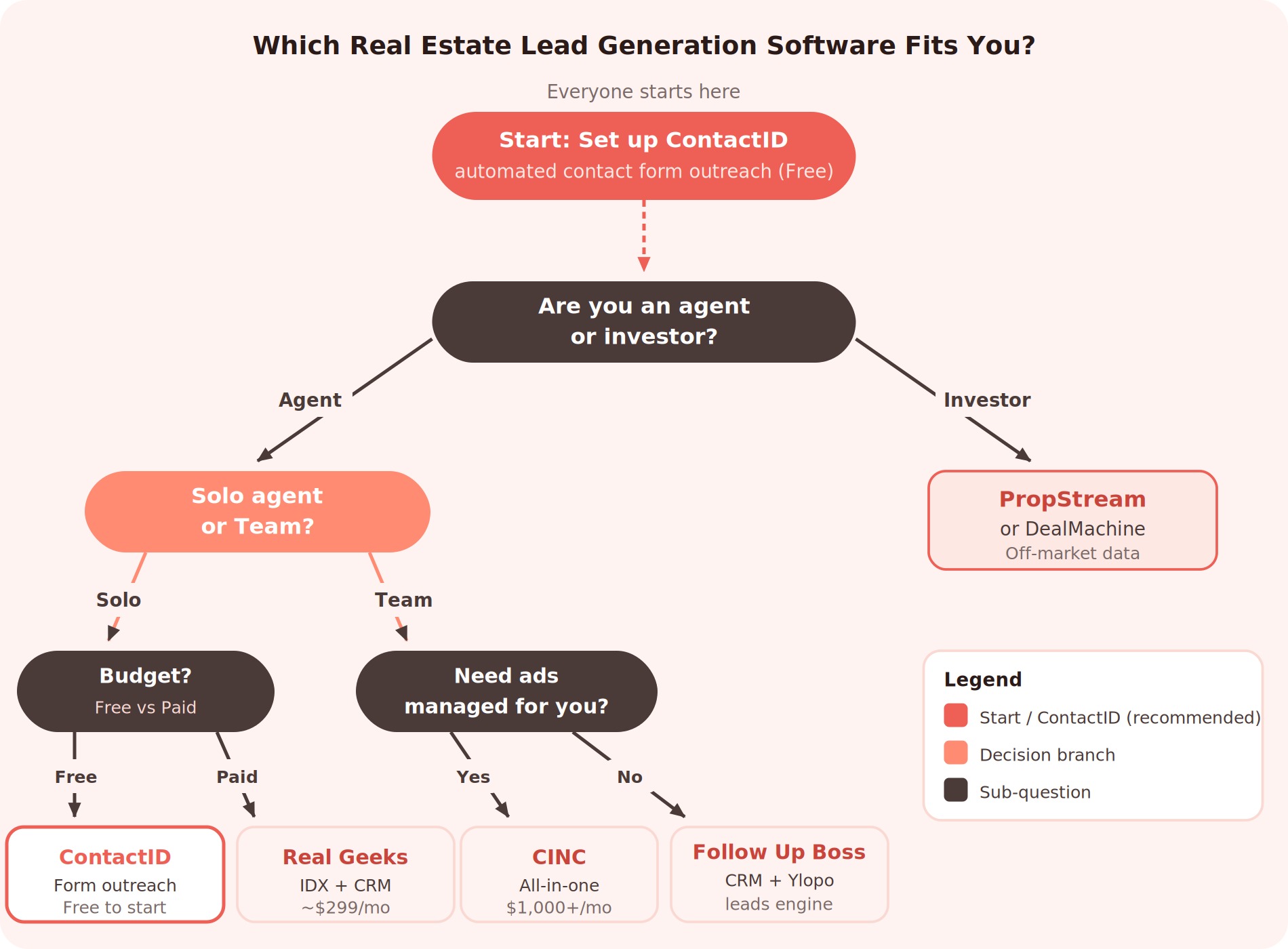
Figure 1: Decision flowchart: start with ContactID for automated contact form outreach, then layer in the right paid platform for your role and team size
Automated Home Valuation Landing Pages: The Best Seller Lead Strategy
Automated home valuation landing pages are the highest-intent seller lead tool available to agents who aren’t running a full seller-predictive platform like Ylopo. The concept is straightforward: a homeowner visits a page, enters their address, and receives an instant estimate of their property’s value using an automated valuation model (AVM).
In exchange, they provide their contact details.
What makes these pages so effective is the intent signal. A homeowner who asks “what is my home worth?” is not casually browsing, they’re at least beginning to think about selling.
According to NAR’s 2025 research, 72% of sellers only interviewed one agent before listing, meaning the agent who reaches out first after a valuation request has a significant advantage, which directly affects how much an agent earns per sale.
What Makes a High-Converting Home Valuation Page
Not all valuation pages convert equally. The ones that generate the most leads share these characteristics:
- Address-first flow. The first screen asks for the property address only, no name, no email. Reducing friction at step one dramatically increases the number of people who begin the process.
- Multi-step form. Contact details are collected at step three or four, after the homeowner is already invested in the process. Asking for email up front kills completion rates.
- Local branding. Pages that feature the agent’s photo, brokerage, and specific neighborhood expertise convert higher than generic white-label pages that look identical to every other agent’s.
- Instant notification to the agent. Speed of follow-up after a valuation submission is the single most important factor in conversion. Platforms that don’t send an immediate mobile notification are wasting the intent signal.
Real Estate Automation Software: What Should Actually Be Automated
The term “real estate automation software” gets used to describe everything from a basic email drip to a fully autonomous AI agent. It’s worth being specific about what’s worth automating and what should remain human-driven.
High-Value Automation (Automate These First)
- First-touch follow-up. The 60-second window after a lead registers is too short for a human to respond consistently. AI-powered live chat and messaging tools handle this without making the interaction feel robotic.
- Long-term lead nurture drips. Buyers who aren’t ready for 6–18 months need consistent touchpoints without the agent manually tracking every contact. Automated drip campaigns do this at scale.
- New listing alerts. When a property that matches a registered buyer’s criteria hits the MLS, the system should notify them automatically, before the buyer finds it on Zillow and calls another agent.
- Task creation and reminders. After an AI follow-up sequence warms a lead, the CRM should automatically surface it and assign a task to the agent for a personal call.
What Should Stay Human
- Pricing strategy conversations, sellers want a real market expert, not an algorithm.
- Negotiation and offer review, these decisions carry legal and financial weight that AI cannot handle responsibly.
- Client relationship management after the first appointment, the relationship is the product.
Sellers, landlords, and local businesses all have contact forms on their websites, but reaching them one by one doesn’t scale. ContactID is the contact form automation tool that fixes that problem at zero cost to start.
Install the Chrome extension in minutes. Load your target list, write your message once, and let ContactID find and fill every contact form for you. Each submission lands directly in a prospect’s inbox instead of getting lost in a crowded email queue. It’s the first tool in the stack for good reason: it reaches the leads your competitors never get to.
Real Estate CRM for Teams: What Separates Good from Great
A real estate CRM for teams is not just a larger version of a solo agent CRM. The needs are fundamentally different. When more than one person is working leads from the same source, you need routing logic, accountability visibility, and reporting that shows you where the pipeline is breaking, not just that it is.
The best team CRMs share these traits:
- Rule-based lead routing. Leads are assigned automatically based on geography, price range, language, or round-robin rotation. Manual assignment doesn’t scale past two agents.
- Response time tracking. The system records how long each agent takes to respond to a new lead. This alone changes behavior, agents who know they’re being tracked respond faster.
- Source attribution reporting. The CRM tells you which lead sources are producing closings, not just leads. Cost-per-closing by source is the metric that drives better budget decisions.
- Shared contact history. When a lead calls the team number or responds to a different team member’s email, that interaction is visible to everyone, no more leads falling through because an agent left the team.
- Integration with real estate automation software. The CRM should accept leads from every source automatically, including browser-based lead generation tools, and trigger the right automation sequence based on lead type, buyer vs. seller, cold vs. warm, portal vs. organic.
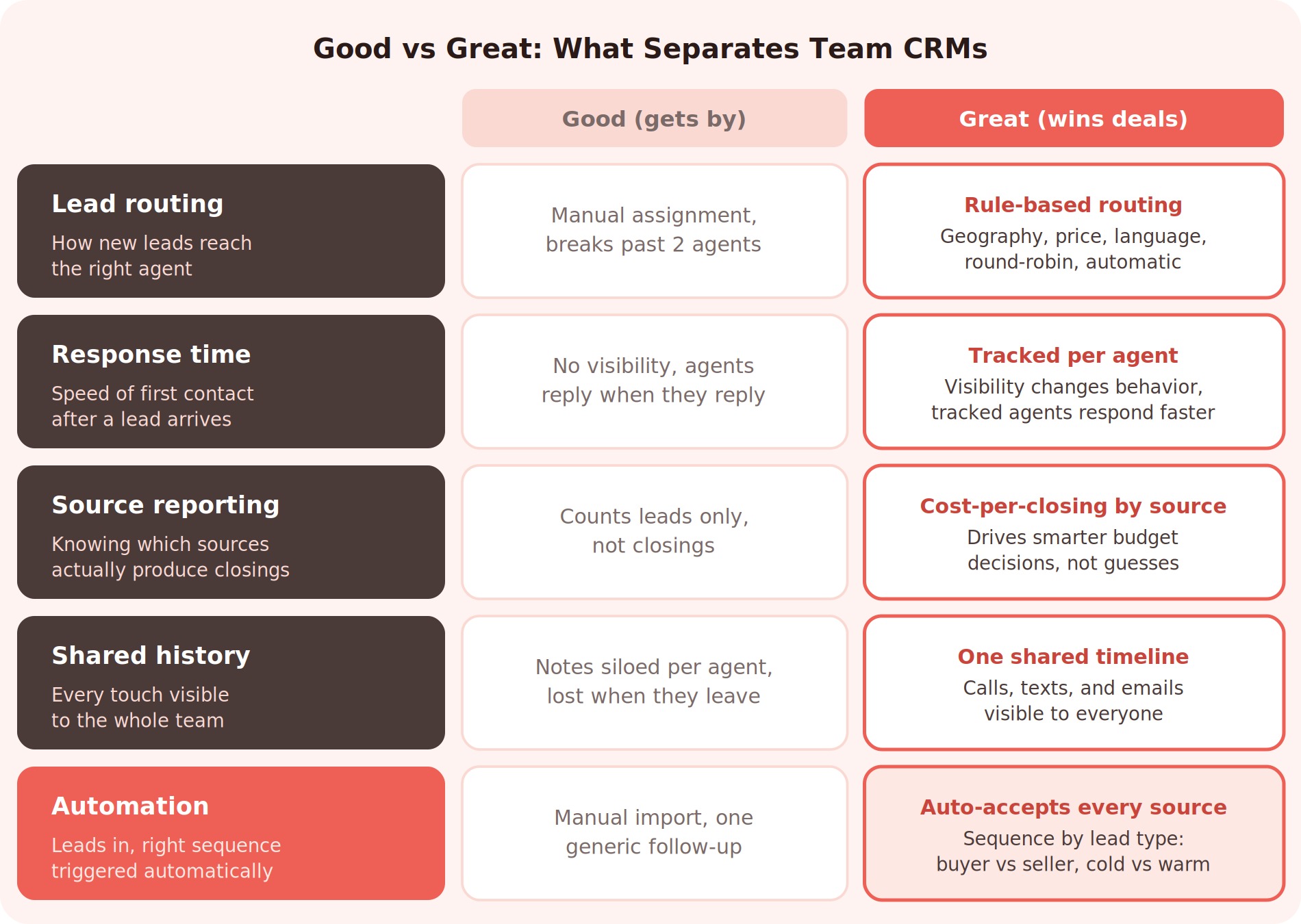
Figure 2: The five capabilities that separate a good team CRM from a great one
As of 2026, Follow Up Boss, CINC, and Sierra Interactive are the three platforms team leaders most consistently recommend for this combination of routing, reporting, and automation depth.
Conclusion: The Right Software Doesn’t Generate Leads, Your System Does
The best real estate lead generation software doesn’t close deals for you. It removes the operational gaps that cause deals to fall apart before they start, the 15-hour response delay, the leads buried in a spreadsheet, the follow-up email that never got sent, the social traffic lost without a proper link-in-bio landing page.
When you eliminate those gaps with automation, your conversion rate goes up not because the leads got better but because your system got consistent.
Start by matching the tool to your situation. Solo agent with a limited budget? Real Geeks gives you an IDX site, home valuation pages, and basic AI follow-up without a long-term enterprise contract. Team leader with an ad budget? CINC or Ylopo combined with Follow Up Boss gives you a complete acquisition and management pipeline.
Frequently Asked Questions
Answers to the most common questions about real estate lead generation software.
 Summarize this article with: