Almost every creator guide answers the same question: how do you get attention. This one answers the opposite question, which turns out to be harder.
In early 2023, Alexandra Saint Mleux had a private Instagram account with roughly a thousand followers. She was an art history student at the Ecole du Louvre, working toward museums and auction houses, and she was not trying to be famous.
Then someone spotted her in the background of a TikTok clip at Paris Fashion Week, standing near the Ferrari driver Charles Leclerc, and the internet did the rest.
Within about a year she had millions of followers. A substantial share of the attention arriving was hostile, and none of it was attention she had asked for or built.
What she did next is the reason this is worth studying rather than just reading. This guide covers her real background, her actual profession, how the attention arrived, the four decisions she made in response, her charity work, the engagement, and what any creator can take from someone who had to convert an audience that did not choose her.
Key Takeaways
- She did not build an audience, she inherited one, going from about 1,000 followers on a private account to millions in roughly a year
- Art history is the real career. She studied at the Ecole du Louvre, specialized in 20th-century art, and worked in the Monaco auction world
- She refused to become an F1 account, which is the single most counterintuitive decision in her story
- She kept her profession in a separate space, running a dedicated art account rather than folding it into a lifestyle feed
- The early attention was substantially hostile, and her response was to give it nothing to react to
- Charles Leclerc announced their engagement on 2 November 2025
- Sources disagree on her basic details, including her birth year and birthplace, which is itself part of the story
Who Is Alexandra Saint Mleux?
Alexandra Saint Mleux is an art historian, digital creator, and the fiancee of Formula 1 driver Charles Leclerc. Publicly she is best known through Formula 1, where her paddock appearances made her one of the most recognizable figures in the sport outside the drivers themselves.
The description used least often is the accurate one. She trained as an art historian, worked in the field before any of the attention arrived, and still runs a separate account dedicated to art rather than to herself. The order of those facts matters, because almost every profile written about her reverses it.
Alexandra Saint Mleux Bio Stats
| Category | Details |
|---|---|
| Full name | Alexandra Saint Mleux |
| Born | June 2001 or June 2002, depending on the source |
| Birthplace | Reported variously as Calais, Paris, and Italy |
| Heritage | Reported as some combination of French, Italian, Argentine, and Mexican |
| Raised in | Monaco, according to several reports |
| Languages | French, Italian, and English |
| Education | Art History, Ecole du Louvre, Paris |
| Field of study | 20th-century art |
| Studied | Artists including Picasso, O’Keeffe, Warhol, and Matisse |
| Career | Art assistant, Hotel des Ventes de Monte-Carlo; PR, Monaco Art Week |
| Art account | @alexandramalenart, a curated space for existing artwork |
| Relationship | Engaged to Charles Leclerc, announced 2 November 2025 |
| Charity | Corazones Unidos Fund |
| Brand work | Includes Rhode, the beauty brand founded by Hailey Bieber |
| Following | Millions across Instagram and TikTok |
| Net worth | No credible published figure exists |
Reputable outlets give different birth years, birthplaces, and heritages for her. Formula1.com says Calais, others say Paris or Italy. Some report French and Mexican roots, others Argentine and Mexican. She has never published these details herself, which is exactly the point: when a public profile is assembled by strangers rather than by the subject, it does not converge on the truth. It converges on whatever got repeated most.
The Career That Came First
Everything interesting about her story depends on this section, and it is the part most coverage compresses into a single clause.
The Ecole du Louvre
She studied Art History at the Ecole du Louvre in Paris, the school attached to the museum and one of the most competitive art history programs in Europe.
Her focus was 20th-century art, covering modernism, surrealism, abstract expressionism, and pop, and she studied artists including Pablo Picasso, Georgia O’Keeffe, Andy Warhol, and Henri Matisse.
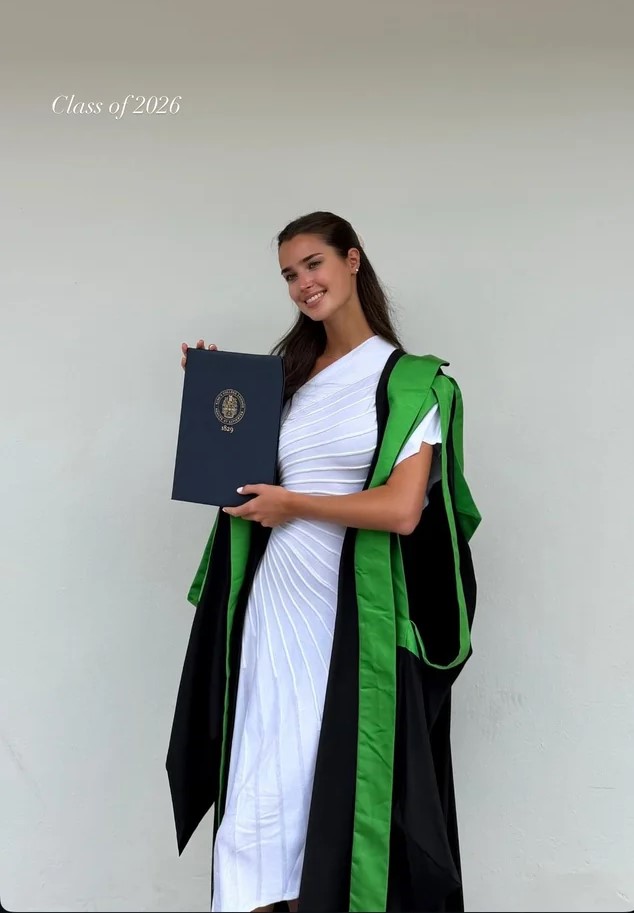
That is not a decorative qualification. It is a demanding degree pursued by someone who intended to work in the field, at an institution that does not admit people looking for a soft credential.
The Auction World
She worked as an art assistant at the Hotel des Ventes de Monte-Carlo, the Monaco auction house, and in public relations for Monaco Art Week. Both are real jobs in a small, credential-conscious industry where nobody is hired for their follower count.
The significance is timing. She had a profession, a defined field, and real experience before she had an audience. Almost every creator arrives in the opposite order, building an audience and then looking for something to do with it.
Why This Changes Everything That Follows
A creator whose identity is their audience has nothing to fall back on when the audience turns. A creator with a profession has somewhere else to stand.
That is the structural reason she could decline to serve the crowd that found her. She was not choosing between an F1 audience and nothing. She was choosing between an F1 audience and the career she had already built, and that is a far easier choice to make well.
How the Internet Found Her
The mechanism is worth describing precisely, because it is now a fairly common way for private people to become public ones.
In early 2023, fans watching a TikTok video of Charles Leclerc at Paris Fashion Week identified a woman in the background. Her Instagram account was private and had roughly a thousand followers. The identification spread anyway.
This is the modern equivalent of being doorstepped, except that no editor decided it and no publication can be asked to stop. A crowd decided she was interesting, and there was no process to appeal to.
In July 2023 the couple made their first public appearance together at Wimbledon, seated with the Alpine driver Pierre Gasly and his partner. From that point she was a public figure whether she had chosen to be one or not.
The Part That Made It Harder
Formula 1 fandom has a documented problem with the partners of drivers. Women connected to drivers routinely receive volumes of abuse that have nothing to do with anything they have done, and she received a substantial amount of it when she first became visible.
That is not a footnote to her story. It is the condition she was building under, and it is why her choices further down are worth studying rather than simply admiring.
How Alexandra Saint Mleux Makes Money
Her income is not publicly detailed and no credible net worth figure exists, so this covers structure rather than numbers.
- Brand partnerships, including work with Rhode, the beauty brand founded by Hailey Bieber. Fashion and beauty are the natural categories given what her audience actually follows her for.
- Creator income across Instagram and TikTok, where her combined following runs into the millions.
- Her professional background in the art world, which is a career rather than a monetization channel but underpins her credibility in that space.
Why the Rhode Partnership Is the Interesting One
A brand deal is a useful test of whether an audience is borrowed or owned. If her following were purely Formula 1 attention, the natural partnerships would be motorsport-adjacent: energy drinks, watches, automotive.
Beauty and fashion work signals that brands regard her audience as hers, following her taste rather than her proximity to a driver. That is a considerably more valuable audience and it is priced accordingly.
Alexandra Saint Mleux Net Worth
Any net worth figure you find for her online is invented. Nothing has been published, she has not discussed it, and the estimates that circulate are extrapolations from follower counts by sites that produce them at volume.
Creators who want to understand real rates are far better served by how sponsorship pricing actually works than by any celebrity net worth page.
The Four Decisions
Everything above is what happened to her. This is what she decided, and the four choices below are the whole reason her story is worth a creator’s time.
1She Did Not Become an F1 Account
This is the counterintuitive one, and it is the most important. The obvious move for someone handed a motorsport audience is to make motorsport content. Millions of people were suddenly following her because of Formula 1, and Formula 1 content would have retained the largest number of them.
She did not do it. Her feed stayed art, fashion, and travel. The audience had to follow her interests rather than the other way round.
The cost was real: some of those millions left. The benefit is that the ones who stayed are following her rather than following a proximity to a driver, and that is the difference between an audience and a crowd.
2She Kept the Profession in a Separate Space
She runs @alexandramalenart, an account she describes as a curated space for existing artwork. It is not a personal brand vehicle. It shares work by other people.
Anyone with a profession and a growing audience faces this decision eventually. Fold everything into one feed and the profession becomes content, which changes what the profession is for. Two accounts keeps the work intact and gives the audience a clear choice about which part of you they are interested in.
3She Gave the Hostility Nothing
There is very little public record of her engaging with the abuse. The absence is the strategy rather than an accident.
Hostile attention needs a reaction to sustain itself. A response becomes a story, the story brings more people, and the creator has now spent a week being the subject of something they wanted to end. Not responding is slower and more uncomfortable, and it works.
It is worth being clear that this is a strategy for public hostility, not a moral instruction. Nobody is obliged to absorb abuse quietly, and creators who do speak up are not making a mistake. The observation is narrower: silence denied it the fuel it required.
4She Pointed the Attention at Something Older Than the Attention
She founded the Corazones Unidos Fund, a charitable organization aimed at giving Mexican children access to education, music, and the arts. It connects to both her heritage and her academic field.
Charity work invented to fit an audience is transparent and usually read as such. Charity work that connects to something already in your life is not, and this is the clearest example of the pattern running through her whole story: attention arrived, and she pointed it at something she already cared about rather than at whatever would grow fastest.
Borrowed Audiences and Owned Audiences
Her situation is unusual in scale and completely ordinary in shape. Most creators experience a smaller version of it: a video takes off, a mention from a bigger account sends a wave, a post reaches a community that was never the target.
The distinction that matters is whether the audience is borrowed or owned.
| Borrowed audience | Owned audience | |
|---|---|---|
| Why they followed | Something outside you | You |
| What holds them | Continuing to serve that thing | Continuing to be yourself |
| What happens if you change | They leave | They stay |
| Who controls it | Whoever generated the attention | You |
| What it is worth to a brand | Reach, priced as reach | Influence, priced considerably higher |
| How to convert it | Publish what you actually care about and let it filter | Already done |
Converting borrowed attention into an owned audience always involves shrinkage. You publish what you care about, the people who came for something else leave, and the number goes down before it means anything.
Most creators cannot tolerate that phase, which is why so many end up permanently serving an audience they did not want. The story of Kai Cenat is the mirror image of this, where five years of building meant every single follower was owned from the start.
What Most People Do vs What She Did
| Situation | What most people do | What she did |
|---|---|---|
| Sudden attention | Pivot content to serve the new audience | Kept posting her own interests and let the audience self-select |
| A profession | Abandon it once the following grows | Kept it, and gave it a separate account |
| Online abuse | Respond, or address it publicly | Gave it nothing to react to |
| Being known through a partner | Lean into the association | Built a separate identity around art and fashion |
| Growing reach | Monetize as fast as possible | Launched a charity connected to her own field and heritage |
| Brand deals | Take whatever fits the follower count | Took work in categories her audience actually came for |
| A contradictory public record | Correct it constantly | Did not participate in it at all |
What Any Creator Can Take From This
Almost nobody reading this will be identified in the background of a Formula 1 driver’s TikTok. The mechanics still transfer, because attention now arrives unpredictably for everyone: a Reel catches, a bigger account mentions you, a post reaches a community that was never the target.
What follows is the same set of decisions she made, stripped of the circumstance and written as things you can act on this week.
1Decide What the Attention Is For Before You Serve It
A wave of new followers feels like an instruction. It is not. It is a question, and the question is whether these are people you want.
The reflex is to make more of whatever caused the spike, because the numbers reward it immediately. The cost arrives later, when you are locked into producing something you did not choose and cannot stop without losing the audience it attracted.
Do this instead: when a post overperforms, wait a week before changing anything. Look at what the new followers engaged with next. If they only touched the one post, they came for the moment rather than for you, and building around them is building on sand.
2Keep One Thing That Is Not Content
Her art history training existed before the audience and continued after it. That is the reason she could decline to serve the crowd that found her: she was not choosing between an F1 audience and nothing, she was choosing between an F1 audience and a career she already had.
A creator whose entire identity is their audience has no room to move in that decision. Every choice becomes a referendum on the numbers, because the numbers are all there is.
Do this instead: protect one skill, craft, job, or body of work that does not depend on the platform. It does not have to be a career. It has to be something that would still be true if the account disappeared tomorrow.
3Give the Profession Its Own Space
The separate art account matters more than it looks. Folding a profession into a personal feed turns the profession into content, and content has to perform. The work starts getting chosen for how it will do rather than for whether it is good.
Two accounts keep them apart. The audience also gets a clear choice about which part of you they are interested in, which filters better than any caption.
Do this instead: if you have a craft and a personality and both are drawing people, split them. The smaller, more specific account almost always attracts the more valuable audience.
4Do Not Feed Hostility
There is very little public record of her responding to the abuse she received, and the absence is the strategy rather than an oversight. Hostile attention needs a reaction to sustain itself. A reply becomes a story, the story brings more people, and a week later the creator is the subject of the thing they wanted to end.
This is a tactical observation and not a moral instruction. Nobody is obliged to absorb abuse quietly, and creators who speak up are not making a mistake. The narrow point is that silence denied it the fuel it needed.
Do this instead: decide your response policy before you need it, while you are calm. Mute liberally, block without explaining, and never draft a reply at the moment you most want to send one.
5Point New Attention at Something That Predates It
The Corazones Unidos Fund connects to her heritage and to the field she trained in. That is why it reads as continuous with her life rather than attached to it.
Causes adopted to fit a new audience are transparent, and audiences are unusually good at spotting the difference. The test is whether the thing existed in your life before the followers did.
Do this instead: make a short list of what you cared about before anyone was watching. When attention arrives, point it at something already on that list rather than at whatever the audience seems to want you to care about.
6Take the Deals Your Audience Makes Sense For
Her brand work sits in fashion and beauty, which is what her audience actually follows her for, rather than in motorsport, which is how most of them found her. Brands paying for the first are buying influence; brands paying for the second are buying proximity.
Taking a deal because your follower count qualifies you for it spends trust you will need later. Taking one that fits what people come to you for builds it.
Do this instead: before accepting a partnership, ask whether you would have mentioned the product without being paid. If the honest answer is no, the audience will reach the same conclusion faster than you expect.
7Expect the Number to Fall
This is the part nobody prepares for. Converting a borrowed audience into an owned one costs followers by definition, because the people who came for something else leave when you stop providing it.
Most creators cannot tolerate that phase. The graph goes the wrong way for months, every instinct says to revert, and reverting is how people end up permanently serving an audience they never wanted.
Do this instead: decide in advance how far you will let the number fall and for how long, then stop looking at it daily. A smaller audience that chose you is worth more to every brand, every launch, and every subsequent post than a large one that did not.
The younger creator Salish Matter faced a version of this too, inheriting an audience from a parent’s channel before building anything of her own, and the same filtering problem applied at a completely different scale.
At the other end of the spectrum, CaseOh built his audience from nothing in two years, which is the version of this story where every follower arrived for the person rather than the circumstance.
Alexandra Saint Mleux Personal Life
Age, Birthday, and Where She Is From
Her birth date is reported inconsistently. Several outlets give June 2002, others give June 2001, and the specific day varies too.
Birthplace appears as Calais, Paris, and Italy across different reputable publications, and her heritage as some combination of French, Italian, Argentine, and Mexican. Most accounts agree she was raised in Monaco.
She has not published any of this herself. Where sources conflict this sharply and the subject has confirmed nothing, the honest answer is that the public record is unreliable rather than that one version is correct.
Charles Leclerc Engagement
Charles Leclerc announced their engagement on 2 November 2025 in an Instagram post that drew millions of likes. They had been together since early 2023, made their first public appearance at Wimbledon that July, appeared together on the red carpet at the 2024 Monaco Grand Prix, and by 2025 were living together and traveling between races.
She became a familiar presence in the Ferrari garage during that period, which is where most of the footage that made her recognizable comes from.
The Corazones Unidos Fund
The fund is aimed at providing Mexican children with access to education, music, and the arts. In announcing it she described it as founded on the belief that kindness in even its smallest form can change lives.
The connection to her own background is what makes it credible. Education and the arts are the field she trained in, and Mexico connects to her reported heritage, so the initiative reads as continuous with her life rather than as reputation management attached to it.
Where to Follow Alexandra Saint Mleux
- Instagram @alexandrasaintmleux · her main account, covering fashion, travel, and life
- Instagram @alexandramalenart · the separate art account, a curated space for existing artwork
- TikTok · where a large share of the audience originally found her, largely through clips she did not post
The second account is the one worth looking at. It shares work by other artists rather than promoting her, which is the clearest evidence that the separation described earlier is deliberate rather than accidental.
Building Your Own Version of This
Her situation is unusual, but the underlying problem is not. Attention arrives from somewhere you did not plan, and you have one link to convert it into something you keep.
brandID turns that single link into a page holding everything: your work, anything you sell, your other profiles, and an email list that belongs to you rather than to a platform.
- One page for every link, so a visitor arriving from anywhere sees the whole picture rather than one profile
- Sell your own work through digital products, from prints and guides to courses
- Take support directly by collecting tips or selling subscriptions and memberships
- Capture emails, which is the only audience nobody can take away from you
- Free plan with a custom domain, and 0% platform fee on your own payment gateway from $9 a month
The alternatives are compared in the best link in bio tools if you want to weigh them on price and capacity.
Conclusion
Alexandra Saint Mleux went from a private account with about a thousand followers to millions in roughly a year, and almost none of it was her doing. She was identified in the background of someone else’s video and a crowd made the decision for her.
What she controlled was everything afterward. She did not turn into a Formula 1 account. She kept her profession and gave it its own space. She refused to feed the hostility.
She pointed the attention at a charity connected to her own heritage, and took brand work in the categories her audience actually cared about rather than the ones her follower count qualified her for.
That is a more useful lesson than most creator stories offer, because attention is not the hard part any more. Algorithms hand it out constantly and unpredictably. Keeping the right portion of it, and owning it once you have, is the part almost nobody gets right.
Who Is Alexandra Saint Mleux?
Alexandra Saint Mleux is an art historian, digital creator, and the fiancee of Formula 1 driver Charles Leclerc. She studied Art History at the Ecole du Louvre in Paris, specializing in 20th-century art, and worked as an art assistant at the Hotel des Ventes de Monte-Carlo auction house before she became publicly known.
How Old Is Alexandra Saint Mleux?
Her age is reported inconsistently. Several outlets give a June 2002 birth date, which would make her 24 in 2026, while others give June 2001. She has not published the detail herself, so any specific figure should be treated as unconfirmed rather than settled.
Where Is Alexandra Saint Mleux From?
Reports conflict. Different reputable outlets give Calais, Paris, and Italy as her birthplace, and describe her heritage as some combination of French, Italian, Argentine, and Mexican. Most accounts agree she was raised in Monaco and that she speaks French, Italian, and English.
What Does Alexandra Saint Mleux Do for a Living?
She trained as an art historian at the Ecole du Louvre and worked in the art world, including as an art assistant at the Hotel des Ventes de Monte-Carlo and in public relations for Monaco Art Week. She now also works as a creator with brand partnerships, and runs a separate Instagram account dedicated to art.
What Did Alexandra Saint Mleux Study?
Art History at the Ecole du Louvre in Paris, the school attached to the museum, specializing in 20th-century art. Her studies covered modernism, surrealism, abstract expressionism, and pop art, including artists such as Pablo Picasso, Georgia O’Keeffe, Andy Warhol, and Henri Matisse.
When Did Alexandra Saint Mleux and Charles Leclerc Get Engaged?
Charles Leclerc announced their engagement on 2 November 2025 in an Instagram post that received millions of likes. The couple had been together since early 2023 and made their first public appearance at Wimbledon in July of that year, seated with Pierre Gasly and his partner.
How Did Alexandra Saint Mleux Become Famous?
Fans identified her in the background of a TikTok video of Charles Leclerc at Paris Fashion Week in early 2023. At the time her Instagram account was private with roughly a thousand followers. She did not seek the attention, which is what makes her subsequent handling of it worth studying.
What Is Corazones Unidos?
The Corazones Unidos Fund is a charitable organization she founded to give Mexican children access to education, music, and the arts. It connects to both her heritage and her academic background in art history, which is why it reads as continuous with her life rather than as an audience-driven initiative.
What Is Alexandra Saint Mleux’s Net Worth?
There is no credible figure. She has not published her income, no reliable reporting exists, and any number circulating online is extrapolated from follower counts. Her known income sources are brand partnerships, including work with Rhode, and creator income across Instagram and TikTok.
What Brands Has Alexandra Saint Mleux Worked With?
Her partnerships include Rhode, the beauty brand founded by Hailey Bieber. Her brand work sits mainly in fashion and beauty, which aligns with the interests her audience follows her for rather than with the Formula 1 route through which most of them originally found her.
What Is @alexandramalenart?
It is her separate Instagram account, which she describes as a curated space for existing artwork. It shares work by other artists rather than functioning as a personal brand vehicle, and keeping it separate from her main account is one of the clearest decisions in how she has handled sudden visibility.
Why Do Sources Disagree About Her Basic Details?
Because she has never published them. When a public profile is assembled by strangers rather than by the subject, the record converges on whatever got repeated most rather than on what is true. Her birth year, birthplace, and heritage all appear differently across reputable outlets for that reason.
What Can Creators Learn From Alexandra Saint Mleux?
Mainly what to do when attention arrives before you asked for it. She did not convert her feed to serve the audience that found her, she kept her professional identity in a separate space, and she did not engage with online abuse. The result is an audience that self-selected for her rather than for the story that brought them.
Is Alexandra Saint Mleux an Influencer or an Art Historian?
Both, and the order matters. She trained and worked as an art historian before any of the attention arrived, and the creator work followed. Having a profession that predated the audience is what allowed her to make choices the audience would not necessarily have preferred.
 Summarize this article with: