Online shoppers expect instant answers, smart recommendations, and zero friction at checkout. Meeting that bar across thousands of conversations is impossible with a human team alone, which is why ecommerce chatbots have moved from a nice-to-have widget into a core part of the modern online store. The right setup answers product questions, recovers abandoned carts, qualifies leads, and even closes sales inside the chat window.
This guide explains what ecommerce chatbots do in 2026, how AI has shifted what they handle, the trade-offs to plan for, the eight best ecommerce chatbots platforms on the market, and a simple framework for picking one. Whether you run a Shopify store, sell straight from your social profiles using the best link-in-bio tools, or manage a B2B catalog, you will leave with a concrete plan.
Key Takeaways
- Conversation is the new storefront. Ecommerce chatbots handle product discovery, support, and checkout in one thread, cutting friction across the funnel.
- AI changed the game in 2026. Modern AI chatbots for ecommerce use large language models grounded in product catalogs, so answers feel human instead of scripted.
- Cart recovery and recommendations win. These two use cases give most stores their fastest payback from any chatbots for ecommerce setup.
- Platform fit matters more than feature lists. The best ecommerce chatbots platform depends on your channels, ticket volume, and tech stack.
- Small brands should start lean. A shoppable bio page paired with a focused bot often beats an enterprise suite for early-stage stores.
What Are Ecommerce Chatbots?
Ecommerce chatbots are software agents that hold conversations with shoppers on a website, mobile app, or messaging channel to help them find products, answer questions, recover abandoned carts, and complete purchases. The current generation of AI chatbots for ecommerce uses large language models trained on a store’s catalog, policies, and order data to respond in natural language instead of rigid menus.
There are two broad families worth knowing. Rule-based bots follow scripted decision trees and are best for narrow tasks like order tracking or hours of operation. AI chatbots for selling ecommerce use natural language understanding plus retrieval, so they answer open-ended questions, compare products, and adapt their tone to the brand voice.
In 2026 the line between the two has blurred. Most leading vendors now ship hybrid bots that follow predictable flows for high-stakes steps like checkout, then hand off to an AI model for everything else. That mix keeps cost and risk down while giving shoppers a conversation that feels modern.
How Ecommerce Chatbots Work
A modern ecommerce chatbot is a pipeline, not one piece of software. The shopper sends a message, the bot detects intent, retrieves the relevant product or policy data, generates a response with a language model, and writes the result back to the chat. When the action involves a real transaction the bot calls store APIs to update the cart, apply a discount, or fetch an order.
Intent Detection And Knowledge Retrieval
Every message gets classified by intent: browse, compare, ask for help, complain, or buy. The bot then pulls the right context from the catalog, the order system, the help center, or the brand’s policy docs. Strong retrieval is the single biggest reason one ecommerce chatbots platform feels smart and another feels off topic.
Generation, Actions, And Human Handoff
Once it has context the bot generates a reply, calls APIs to take an action (apply a coupon, start a return), and decides whether to keep talking or hand off to a human. Good handoff rules are non-negotiable. Without them, AI chatbots for ecommerce frustrate high-value buyers who needed a person two messages ago.
The 8 Best Ecommerce Chatbots Platforms In 2026
The list below covers the strongest ecommerce chatbots platform options across creator outreach, small business, mid-market, and enterprise. Each tool is rated on the dimensions that actually move revenue: conversion, support deflection, ease of setup, and integration depth.
Chatgram
Chatgram is an AI-powered live chat and helpdesk platform built for ecommerce stores that want faster, smarter customer support. Add a chat widget to your storefront and reply to every visitor from either Telegram or the web dashboard, whichever your team already lives in.
The platform handles pre-sale questions, order help, and post-purchase support with instant Telegram notifications, an AI assistant trained on your store’s knowledge base, and automatic translation across 180+ languages. Multi-agent collaboration and structured ticketing keep every conversation organized, tracked, and answered on time.
Chatgram Key Features:
- Shared Telegram inbox with team routing and agent assignment
- Automated welcome, FAQ, and order-status replies
- Product and order context surfaced inside the chat thread
- Embeddable Telegram chat button for the storefront
- Meets buyers on a channel they already check daily
- Faster reply times than email or ticket queues
- Works alongside an existing web chat or helpdesk
- Newly launched app, with the wider integration ecosystem still growing
Tidio (Lyro AI)
Tidio is an all-in-one live chat and chatbot tool aimed at small and mid-sized online stores, with a built-in AI agent called Lyro that handles support and sales conversations across web, email, and social. It is one of the most popular chatbots for ecommerce on Shopify and WooCommerce because setup takes minutes and the AI learns from your store data on day one.
Tidio Key Features:
- Lyro AI agent trained on store catalog and FAQs
- Visual flow builder for cart and discount campaigns
- Live chat plus email, Messenger, and Instagram in one inbox
- Native Shopify, BigCommerce, and WooCommerce apps
- Generous free tier
- Fast onboarding
- Strong reporting
- Lyro conversations metered
- Limited custom logic on lower tiers
Manychat
Manychat is a chat automation platform built for Instagram, Messenger, WhatsApp, and TikTok, and it has become the default tool for creators and brands that sell through social DMs. It is one of the best ecommerce chatbots for converting comments and story replies into real sales without forcing followers to leave the app.
Manychat Key Features:
- Comment-to-DM automations for Instagram and TikTok
- Drag-and-drop flow builder with conditions and tags
- Native WhatsApp and Messenger broadcast tools
- AI replies powered by major language models
- Best Instagram automation on the market
- Strong creator templates
- Affordable entry tier
- Limited website chat
- Heavy social focus may not fit B2B
Gorgias
Gorgias is a helpdesk and AI agent platform built specifically for ecommerce, with the deepest Shopify integration in the category. It is one of the most loved chatbots for ecommerce on the support side because it can read order data, edit orders, and issue refunds directly from the chat window.
Gorgias Key Features:
- AI Agent that resolves full tickets, not just suggestions
- Native Shopify, BigCommerce, and Magento connectors
- Macro library and intent-based routing
- Revenue reporting per support conversation
- Built for ecommerce, not generic CX
- Strong reporting
- Excellent Shopify actions
- Pricing climbs with ticket volume
- Steeper setup than SMB bots
Intercom (Fin AI Agent)
Intercom is a customer messaging platform whose Fin AI Agent has become a category leader for high-volume support deflection. It is one of the best ecommerce chatbots platform choices for larger brands that want a single tool covering live chat, ticketing, product tours, and AI resolution.
Intercom Key Features:
- Fin AI Agent with documented resolution rates above 50 percent on common ticket types
- Workflow builder with conditional logic and AI steps
- Outbound product tours and onboarding chats
- Deep CRM and helpdesk integrations
- Industry-leading AI resolution quality
- Polished agent experience
- Strong analytics
- Expensive for small stores
- Per-resolution pricing can spike
Octane AI
Octane AI is a Shopify-native platform focused on quizzes, AI product recommendations, and zero-party data collection. It is one of the most effective AI chatbots for selling ecommerce because conversational quizzes capture intent at the start of the session and use it to personalize the rest of the shopping experience.
Octane AI Key Features:
- Conversational product quizzes with AI logic
- Personalized recommendations tied to catalog data
- Zero-party data passed to Klaviyo, Attentive, and Shopify
- Pre-built templates by vertical
- Conversion lift on guided sales
- Strong email and SMS sync
- Made for Shopify
- Narrow focus, not a full helpdesk
- Needs strong product data
Ada
Ada is an enterprise AI agent platform that focuses on automated resolution at scale across chat, voice, and email. It is one of the strongest AI chatbots for ecommerce for global retailers that need consistent automation across multiple regions, languages, and brands.
Ada Key Features:
- AI Agent across voice, chat, email, and SMS
- Native integrations with major OMS, CRM, and CDP tools
- Granular reasoning controls and guardrails
- Strong multilingual coverage
- Scales across channels
- Strong enterprise controls
- Multilingual at native quality
- Heavy implementation
- Custom enterprise quotes only
Zowie
Zowie is an AI customer service platform purpose-built for ecommerce and DTC brands, with strong automation around returns, exchanges, and product discovery. It is one of the best ecommerce chatbots for stores that want a single AI agent across Shopify, Magento, and custom backends without giving up brand control of the conversation.
Zowie Key Features:
- Decision-tree plus AI hybrid flows
- Return and exchange automations tied to OMS
- Pre-trained intents for retail use cases
- Brand voice tuning per channel
- Retail intent library
- Strong returns automation
- Fast time to value
- Smaller ecosystem than Intercom
- Some flows still require dev support
Quick Comparison Of The Best Ecommerce Chatbots In 2026
The table below puts the eight platforms side by side on the dimensions buyers ask about first: target user, AI capability, pricing model, and standout strength. Use it as a starting filter, then go deep on the two or three that match your business shape.
| Platform | Best For | AI Strength | Starting Price |
|---|---|---|---|
| Chatgram | Telegram-first ecommerce stores | Telegram-native live chat and support | Free + paid tiers |
| Tidio | SMB stores | Support and cart recovery | Free / from 29 USD |
| Manychat | Creators and social brands | Instagram and DM automation | Free / from 15 USD |
| Gorgias | Growing Shopify brands | Ecommerce support actions | From 10 USD |
| Intercom (Fin) | Mid-market and enterprise | High-volume AI resolution | From 29 USD seat plus AI |
| Octane AI | Guided selling on Shopify | Quiz-based recommendations | From 50 USD |
| Ada | Global enterprise retail | Multilingual omnichannel | Custom enterprise |
| Zowie | DTC and fashion | Returns and exchanges | From ~700 USD |
Why Ecommerce Chatbots Matter In 2026
The case for chatbots for ecommerce is built on three numbers. Global online cart abandonment still hovers near 70 percent according to Statista data through 2025, which means most of the work in ecommerce happens after the add-to-cart click. A well-timed chatbot message can pull a meaningful share of those carts back, which is why even small brands see fast payback.
As of 2026 most stores report 50 to 70 percent of inbound tickets are repeatable questions about shipping, returns, sizing, and product specs. AI chatbots for ecommerce resolve those at a fraction of the cost of a human agent, freeing the team for conversations that actually need a person.
Third, shoppers prefer messaging. Recent surveys show buyers under 35 would rather message a brand than call or email, and the gap widens yearly. Stores that only offer email forms quietly lose those customers to competitors that meet them on chat, Instagram DM, or WhatsApp.
Core Benefits Of AI Chatbots For Ecommerce
Beyond the headline numbers, the benefits of AI chatbots for selling ecommerce show up in operational detail. The five gains below are the ones stores capture in the first 90 days.
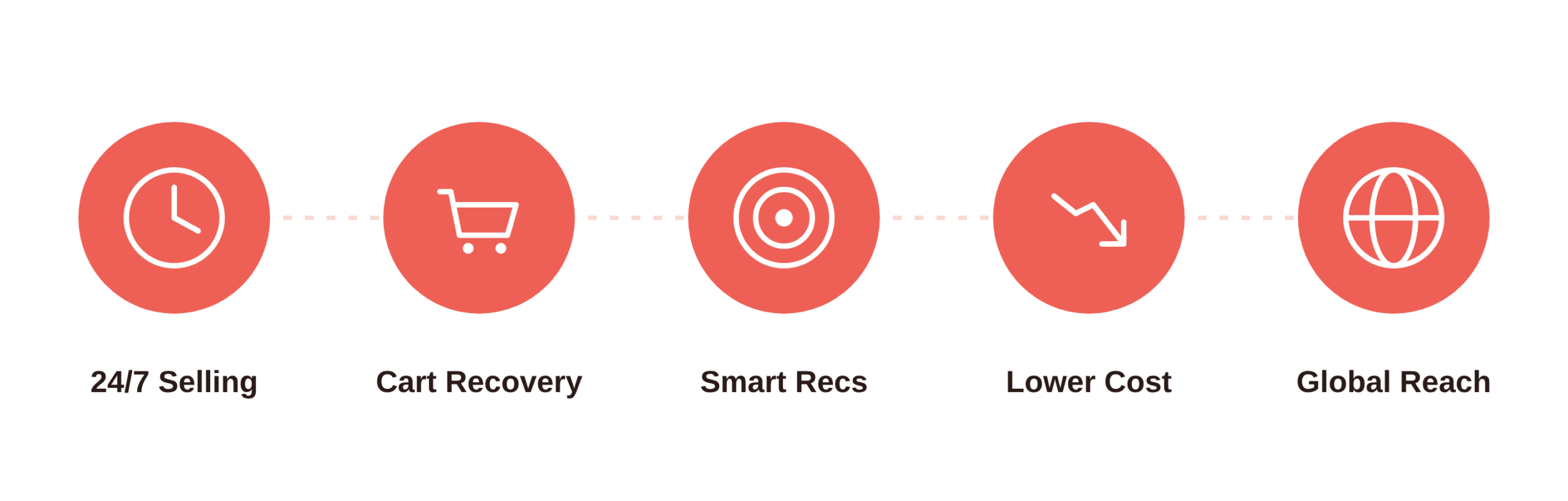
- Always-on selling. A bot covers nights, weekends, and time zones, the difference between a captured sale and a returned tab for international buyers.
- Cart recovery in the moment. Triggered messages offer help, a small incentive, or a faster checkout path while the shopper still has intent.
- Personalized recommendations. Bots tied to the catalog and order history surface the next best product instead of generic best-sellers.
- Lower support cost per ticket. Common questions resolve instantly, and the cost curve flattens even as order volume scales.
- Multilingual reach. A modern AI agent answers in dozens of languages without a localized team, which opens up markets that used to be off limits.
For creators selling through social channels, the same logic applies to comments, DMs, and link clicks. Pair that with a clean storefront, and you can sell digital products without leaving the conversation.
How To Choose The Right Ecommerce Chatbots Platform
The shortest path to a good decision is to answer five questions before looking at vendor pages. Skip this and you risk buying features you will never use, or a tool that does not match how your customers shop.
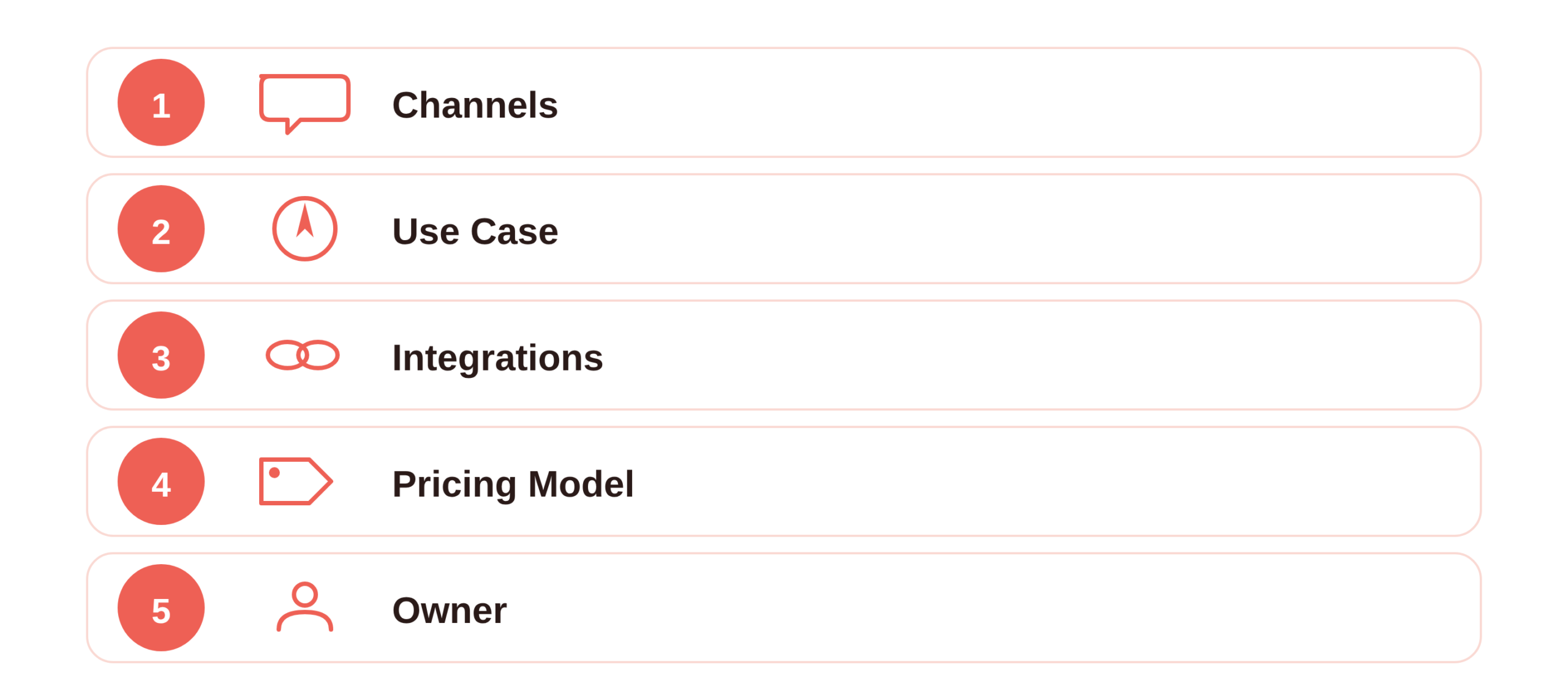
- Where do customers message you today? Web chat, Instagram auto reply, WhatsApp, or email change which ecommerce chatbots platform makes sense.
- What is the highest-value use case? Cart recovery, sizing help, returns, or B2B quoting will each favor a different tool.
- What systems must it talk to? Shopify, BigCommerce, Magento, Klaviyo, Gorgias, or a custom OMS will narrow the shortlist quickly.
- How is the AI billed? Per resolved conversation, per seat, or per active user changes total cost at scale.
- Who will own it? Support, marketing, or growth ownership shapes which interface you should pick.
A practical shortcut: write the three conversations you want to automate, then ask each vendor to demo those flows. That move tells you more than any feature checklist about whether a tool fits your store.
Common Mistakes To Avoid With Chatbots For Ecommerce
Even the best ecommerce chatbots can hurt conversion if deployed without care. The patterns below show up in stores that later rip out their bot and start over.
- Over-automating high-stakes moments. Refunds, complaints, and large orders should escalate to a human fast, not get stuck in a loop.
- No fallback path. If the AI cannot answer, the customer should reach a person in one click, with the full chat history attached.
- Generic tone. A bot that sounds like every other bot makes your brand feel smaller. Tune the voice the same way you would tune product copy.
- Skipping QA. Test the top 20 questions weekly. Catalog changes, policy updates, and seasonal offers break old answers.
- Treating it as a project, not a product. Chatbots for ecommerce need an owner who reviews logs and tunes flows the way SEO teams review search queries.
Where AI Chatbots For Ecommerce Are Heading Next
Three shifts are reshaping the category in 2026. First, AI agents now take actions, not just answer questions. Newer ecommerce chatbots can complete a return, switch a subscription tier, or apply a discount inside the chat, with no human help.
Second, voice and video are blending in. Live shopping streams now ship with real-time AI captions, translation, and product tagging, so one creator broadcast can sell in five languages. Tools like brandID’s AI Video Translator already power that workflow for creators.
Third, social and search are converging. AI assistants now act as discovery surfaces for shoppers, which means your product feed and FAQ content need to be readable by agents, not just by Google. Stores that treat their knowledge base as an AI API will win in 2026.
Conclusion: Picking An Ecommerce Chatbots Setup That Actually Sells
Ecommerce chatbots are no longer a side bet. In 2026 they sit at the center of how stores recover carts, answer support, and personalize the buying experience. The right setup, matched to your channels and ticket profile, can pay for itself in weeks.
The smartest play for most growing brands is to start on one channel, prove revenue, then expand. If you rely on social traffic and a shoppable bio page, your chatbot is only half of the conversion engine. The other half is a clean storefront that turns those clicks into sales.
That is exactly what brandID is built for. Creators and small brands get a shoppable link-in-bio storefront, access to over 5 million products from more than 2,000 affiliate brands with commissions up to 65 percent, and the option to sell digital products, subscriptions, and services in one place. It is the storefront layer that pairs naturally with any of the chatbots for ecommerce listed above.
FAQs: Ecommerce Chatbots
What are ecommerce chatbots and how do they help online stores?
Ecommerce chatbots are software agents that talk to shoppers on a website, app, or messaging channel to answer product questions, recommend items, recover carts, and complete sales. They handle repetitive conversations at scale so human agents can focus on complex cases, and they keep stores open to customer questions around the clock.
Are ecommerce chatbots worth it for small businesses in 2026?
Yes, when the use case is focused. Small stores see the fastest payback from cart recovery flows, order status replies, and FAQ deflection. Free tiers from tools like Tidio or Manychat let a shop test conversion lift with no upfront spend, while heavier enterprise platforms only become worth it once monthly chat volume runs into the thousands.
How much do ecommerce chatbots platforms cost?
Pricing in 2026 ranges from free plans for small shops to over 1,000 USD per month for enterprise AI agents. SMB tools typically sit between 25 and 100 USD per month for the first usage tier. Most platforms now meter AI conversations or resolved tickets, so expected monthly volume matters more than seat count when comparing quotes.
Can AI chatbots for ecommerce replace human customer service?
Not entirely, and they should not try to. The strongest setups in 2026 use AI to fully resolve common tickets like shipping status, returns, sizing, and stock, while routing edge cases, complaints, and high-value buyers to a human agent. That blend keeps resolution time fast and protects customer trust on the conversations that matter most.
 Summarize this article with: