Sellfy Review 2026: Pricing, Sales Limits, and Is It Worth It?
If you've been searching for a platform to sell digital products, subscriptions, or merch online, Sellfy is probably already on your radar. It keeps things simple, and for a lot of creators, that's enough. But simplicity comes with trade-offs: frequent server response time spikes, sales caps that force costly upgrades, and a feature ceiling that shows up faster than most sellers expect.
In this Sellfy review, we cover its main features, pricing, pros and cons, and real user feedback so you can judge for yourself whether those trade-offs are acceptable. We also introduce the best Sellfy alternatives in case they're not.
Our Verdict
- Our score: 4.0/5. Easy to set up for digital products, subscriptions and print-on-demand merch, but sales caps push you into pricier plans as you grow.
- Prices: Starter $29/mo ($22 billed yearly, up to $10k in sales a year) · Business $79/mo ($59, up to $50k) · Premium $159/mo ($119, up to $200k) · 0% transaction fees · 14-day free trial.
- The catch: go over your plan's yearly sales limit without upgrading and Sellfy charges 2% on every extra order.
- Best for: creators selling digital downloads or print-on-demand merch who want a simple standalone store.
- Look elsewhere if: you want a free plan, deep design control, or more ways to earn than selling your own products.
What Is Sellfy?
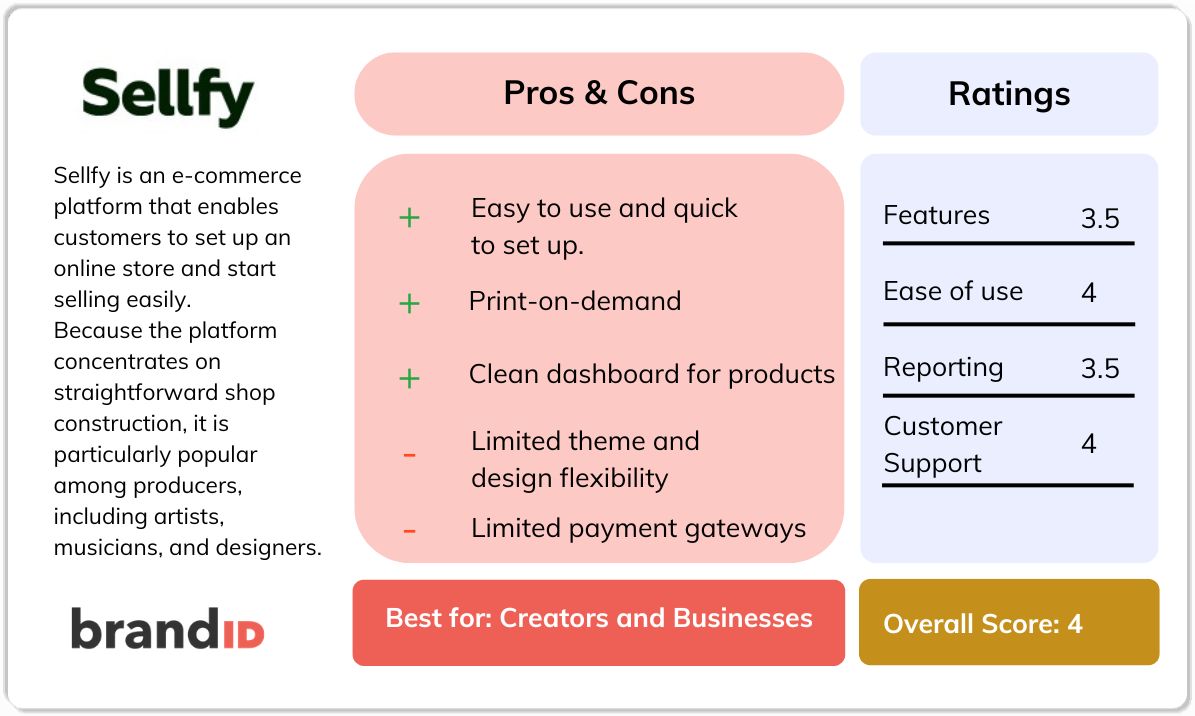
Sellfy is an e-commerce platform that enables creators and small businesses to set up an online store and start selling quickly. Because the platform concentrates on straightforward store construction and digital delivery, it is particularly popular among artists, musicians, designers, photographers, YouTubers, and course developers who want to sell without needing a developer or a complex technical setup.
Convenience is the main concept of Sellfy. You don't need a developer or a complex theme system to set up a store, add products, connect payment methods, and start selling. Sellfy also offers a custom domain or a branded Sellfy shop domain, which makes small businesses appear more polished right away.
Sellfy Overview
At a Glance
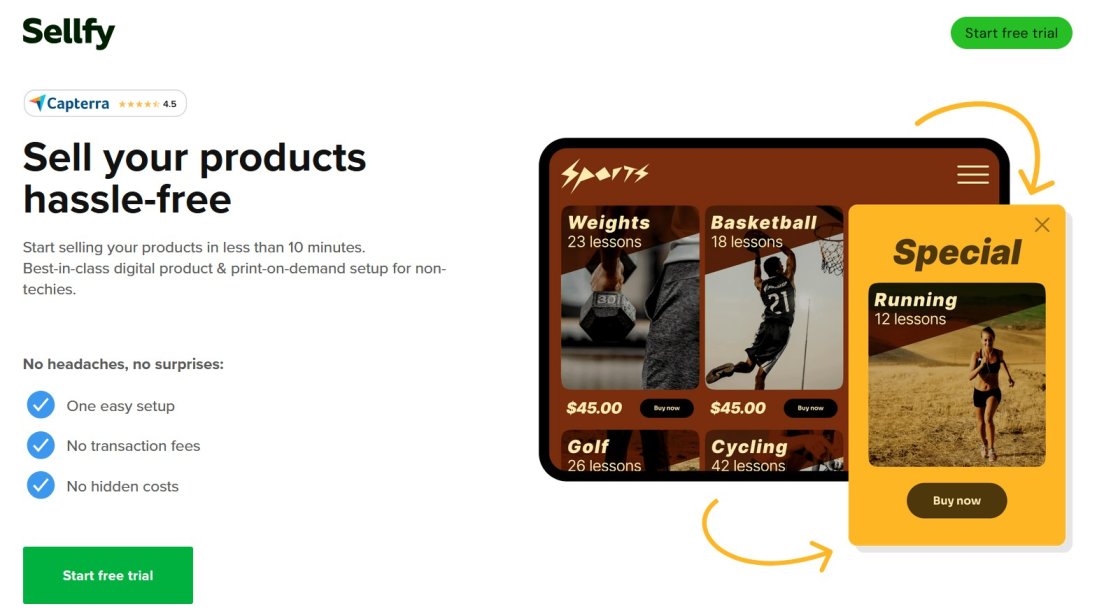
- Founded in 2011
- The main goal is to ease the process of online selling
- Main features are an e-commerce store, print-on-demand, subscription selling, custom coding, and analytics
Apart from all the useful features this platform offers, it isn't without downsides. In this review, we'll explore both sides to help you decide whether it's the right choice for you, and introduce you to a stronger Sellfy alternative.
Sellfy Features
Sellfy's e-commerce platform includes all the fundamentals needed for online sales, along with extras like affiliate marketing and upselling. Here's a detailed look at each one.
E-commerce Features
Sellfy's ability to support a variety of product categories is one of its key e-commerce advantages. Sellfy presents opportunities for small shops that are typically only available for additional payments with other providers. This is thanks to its fundamental digital download safeguards and support for subscription services.
How to Set up a Sellfy Store
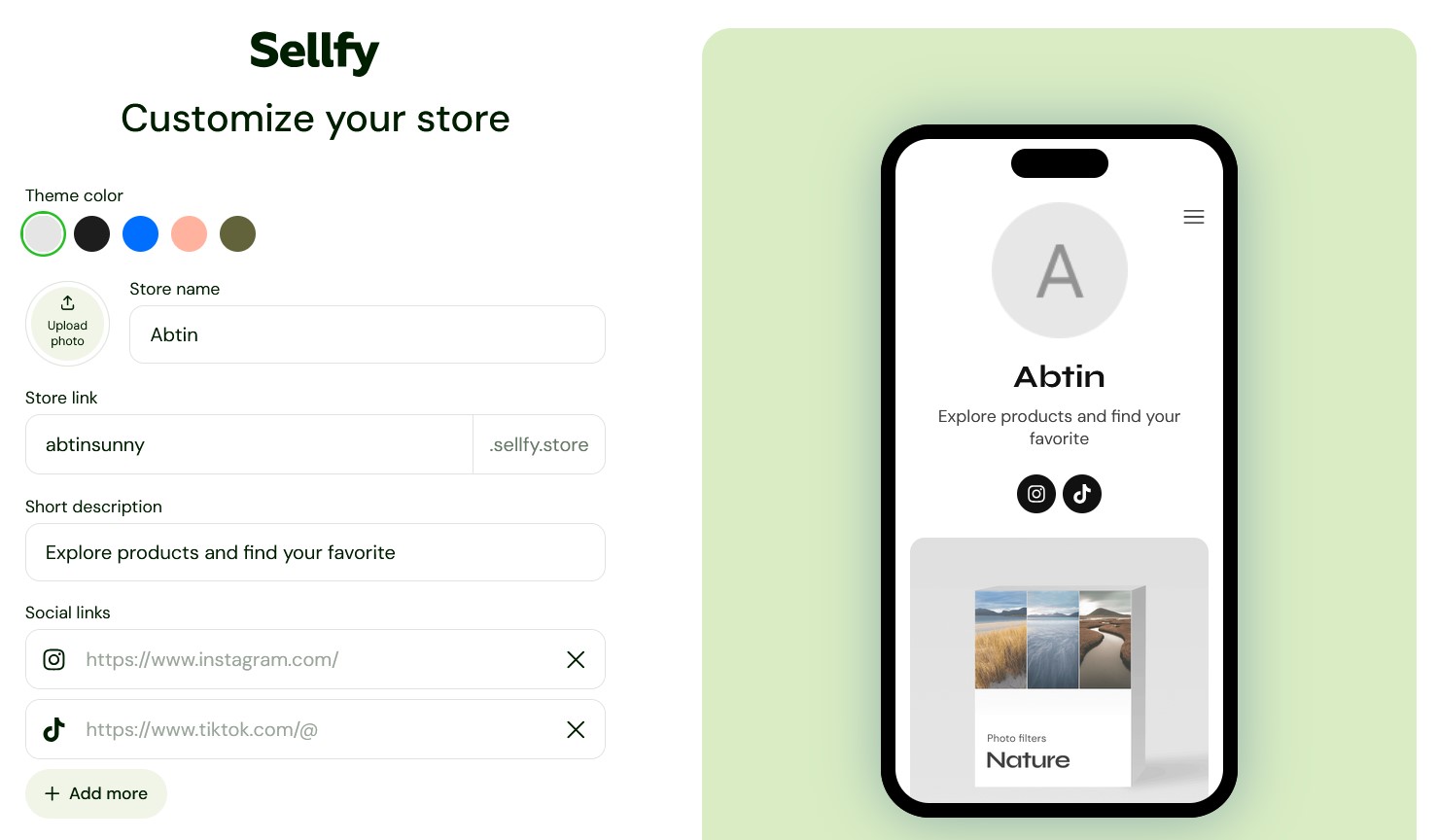
Sellfy provides a 14-day free trial with full feature access and no credit card requirements for store creation. After entering your store name and answering a few setup questions, you are guided through three main steps:
- Adding products
- Personalizing your storefront
- And connecting payment methods
The procedure is simple, and the majority of customers can launch a basic store in 15 to 60 minutes.
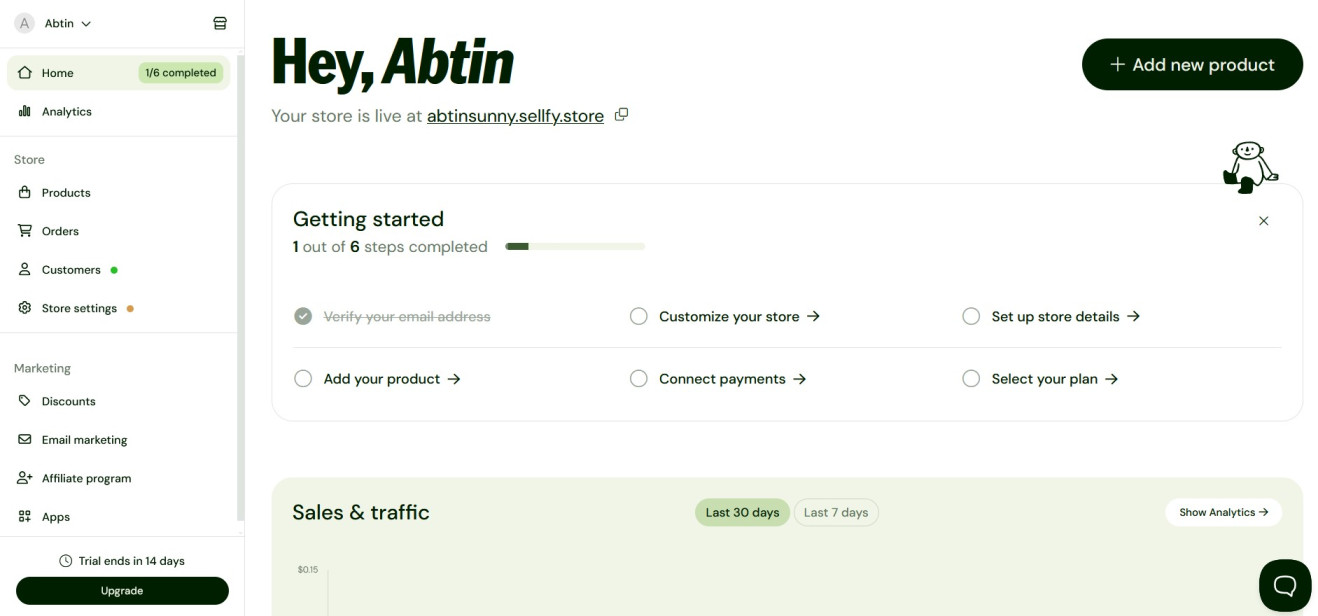
That said, there are structural drawbacks to Sellfy's simplicity. There is limited tax rule configuration, no advanced checkout customization, and no multi-store management under a single account.
Physical Products and Print on Demand
Sellfy is not limited to digital items. You can also sell physical products directly from your Sellfy store, and the platform supports built-in print-on-demand for items like t-shirts, hoodies, mugs, and hats.
That makes it useful for creators who want to sell merch without holding inventory. The print-on-demand flow is especially convenient because production and shipping are handled automatically.
Subscription Selling
Sellfy uses subscription plans to generate recurring income. For subscription material, premium communities, or continuous digital access, you can charge clients on a weekly, monthly, or annual basis.
With the help of this functionality, producers can get steady revenue in addition to one-time sales, which is the main outcome of these types of link-in-bio tools.
Checkout and Payments
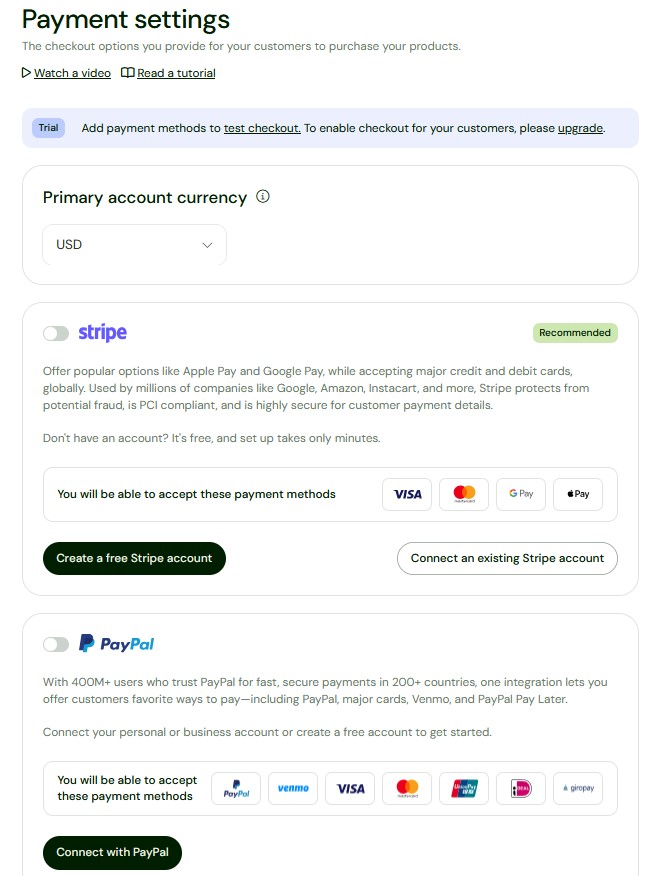
Sellfy supports checkout through PayPal and Stripe, so buyers can pay using trusted payment methods. The platform also offers secure payments and is PCI-DSS-ready, which adds trust to the buying experience.
A practical benefit here is that the setup stays simple. Once you complete your Sellfy login and connect a payment processor, you can start accepting orders quickly.
Themes and Customization
Currently, Sellfy has about 11 pre-made themes that are mobile-responsive and are optimized toward various creator niches, such as writers, photographers, musicians, and course designers.
Colors, logos, text blocks, fonts, hero sections, grids, and custom pages can all be changed by users through the customization interface. Additionally, you can preview your storefront right within the editor in both desktop and mobile views.
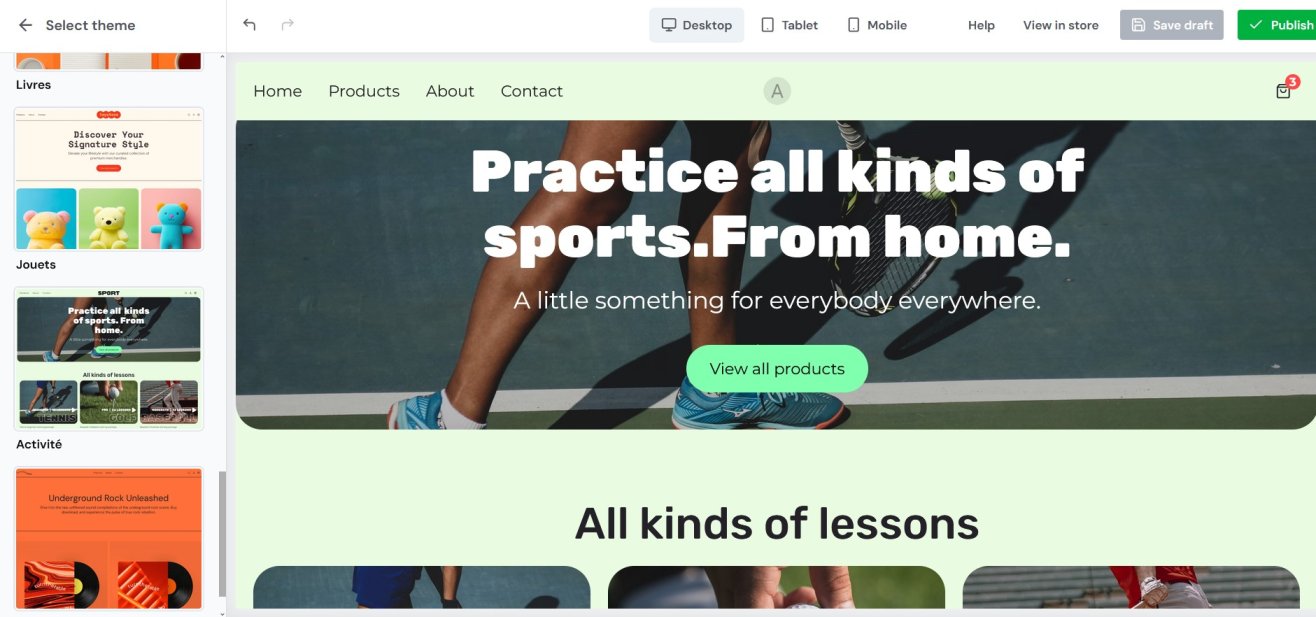
However, bear in mind that the editor is not entirely drag-and-drop because layout changes are managed via sidebar module placement rather than free-form placement. Even worse, there is little support for CSS or JavaScript customization, no third-party template ecosystem, and no theme marketplace.
Integration
Google Analytics, Facebook Pixel, Patreon, Twitter/X Pixel, Google Merchant Center, and Facebook Live Chat are just a few of the direct, built-in integrations that Sellfy now offers. However, there is no dedicated app store or plugin marketplace, so users can't explore and install hundreds of third-party extensions directly within the platform.
Custom Coding
Sellfy offers custom code injection as a workaround for its limited app integrations, letting you add things like user reviews or a third-party chat feature if you're good at coding or have a solid tutorial to follow.
Custom coding is locked behind a paid plan: you cannot test it during the free trial. It can get complicated quickly for beginners, and since Sellfy does not validate any code you add, you and whoever wrote the code are entirely responsible if something breaks. There is no safety net.
Affiliate Management
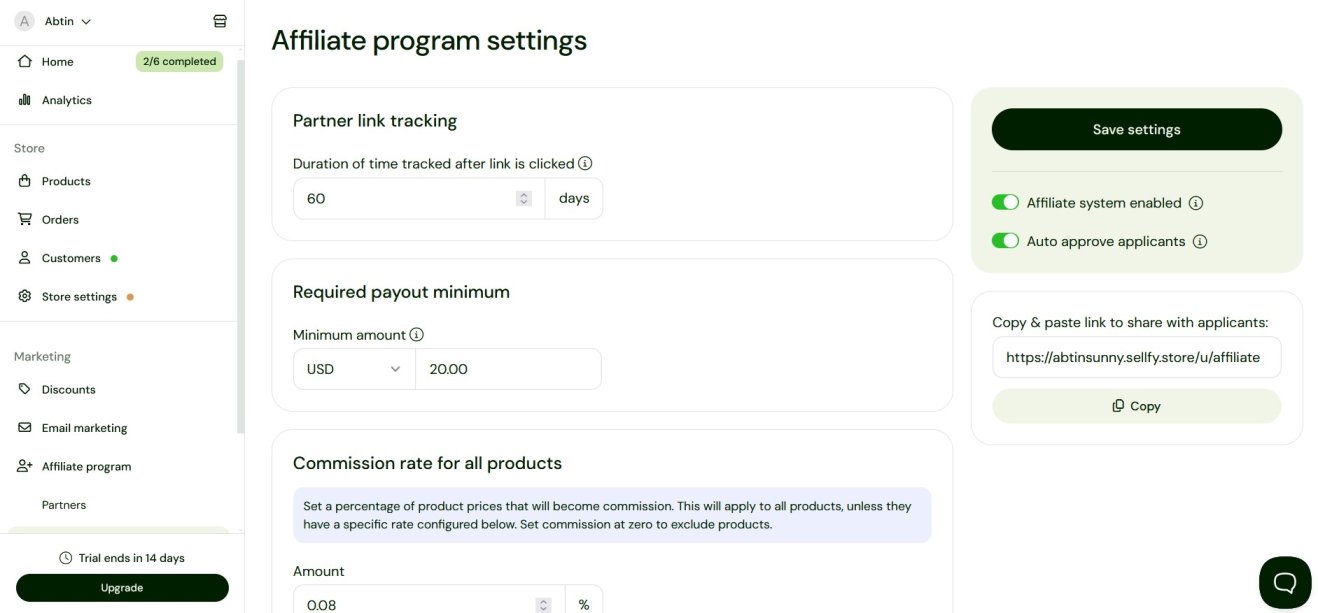
With the Business plan and above, Sellfy includes a built-in affiliate marketing feature that lets you create your own affiliate program and recruit fans, creators, or partners to promote your products for a commission. However, it operates as a relatively “closed-loop” system: you must recruit and manage affiliates yourself, and your partner data and tracking remain tied to the Sellfy platform.
Sellfy calculates commissions and generates monthly payout reports, but payouts themselves are not automated. Sellers are responsible for manually sending affiliate payments through PayPal, either individually or via PayPal Mass Payouts.
Sellfy Pricing
Sellfy pricing is simple and transparent. The platform currently offers three main plans:
- Starter at $29 per month, or $22 per month billed yearly,
- Business at $79 per month, or $59 per month billed yearly,
- Premium at $159 per month, or $119 per month billed yearly.
Sellfy does not charge platform transaction fees, so you only pay the subscription cost plus standard payment processor fees from Stripe or PayPal. That makes Sellfy fees easier to predict than platforms that add extra per-sale charges.
Here is the pricing structure in plain terms:
| Feature | Starter | Most popularBusiness | Premium | High Volume |
|---|---|---|---|---|
| Monthly Pricing | $29 | $79 | $159 | Custom quote |
| Annual Pricing | $264 | $708 | $1,428 | Custom quote |
| Sales Cap | Up to $10,000 annually | Up to $50,000 annually | Up to $200,000 annually | Over $200,000 annually |
| Customizable Storefront | Yes | Yes | Yes | Yes |
| Unlimited Products | Yes | Yes | Yes | Yes |
| Digital Products | Yes | Yes | Yes | Yes |
| Subscription Products | Yes | Yes | Yes | Yes |
| Email Marketing | Yes | Yes | Yes | Yes |
| Affiliate Program | No | Yes | Yes | Yes |
| Product Upselling | No | Yes | Yes | Yes |
| Cart Abandonment | No | Yes | Yes | Yes |
| Product Migration | No | No | Yes | Yes |
| Priority Support | No | No | Yes | Yes |
Despite being relatively cheap to start, most businesses will quickly outgrow the Starter plan. And to cover their needs, they will need the next plan. The following plan has a significant price increase, going from $29 per month for the Starter plan to more than twice as much at $79 per month for the Business plan.
This can be a stopping point for most of the start-ups and low-budget businesses.
Sellfy Sales Limits and Overage Fees
Every Sellfy plan has a yearly sales limit: $10,000 on Starter, $50,000 on Business and $200,000 on Premium. Sellfy counts your sales over a rolling 12 months, so the total doesn't reset when you renew.
Going over the limit doesn't stop your store from selling. But until you upgrade to the next plan, Sellfy charges a 2% fee on every order placed after you pass it, and it notifies you before any fee is charged. Above $200,000 a year, you move to a custom plan.
In practice, a Starter store that passes $10,000 in yearly sales either pays 2% on every extra order or moves to Business at $79 a month ($59 billed yearly). That's the real cost of Sellfy's “0% transaction fees” as you grow.
Sellfy Reviews: What Do Customers Say?
Checking and reading Sellfy reviews is the greatest approach to learn how it is really doing. This is an overview of what users genuinely think of this platform:
With 4 stars on G2 and 4.5 stars on Trustpilot, Sellfy has a high overall reputation on review websites. However, it appears that Sellfy users have encountered some issues in spite of this ranking.
Sellfy Reviews on Reddit
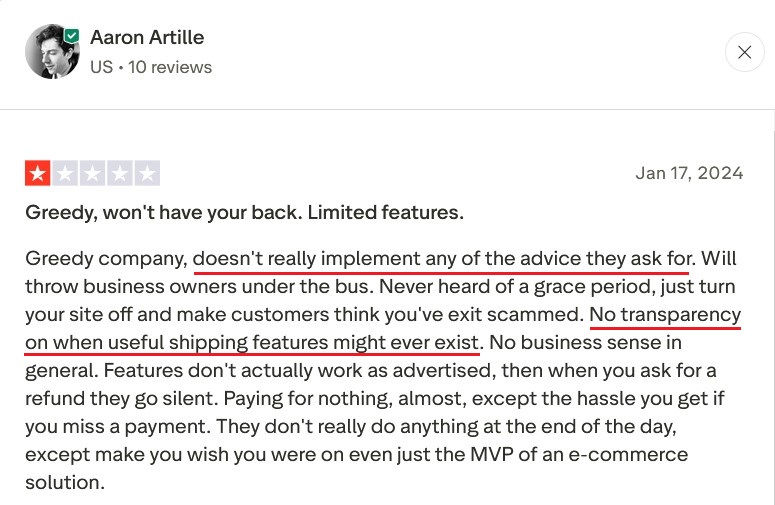
In our first Sellfy review, Aaron flags two issues that hit new businesses hardest: a frustrating refund process and a complete lack of transparency around shipping. When customers can't get clear answers on returns or delivery, trust erodes fast. And for a business just starting, that's damage it can't afford.
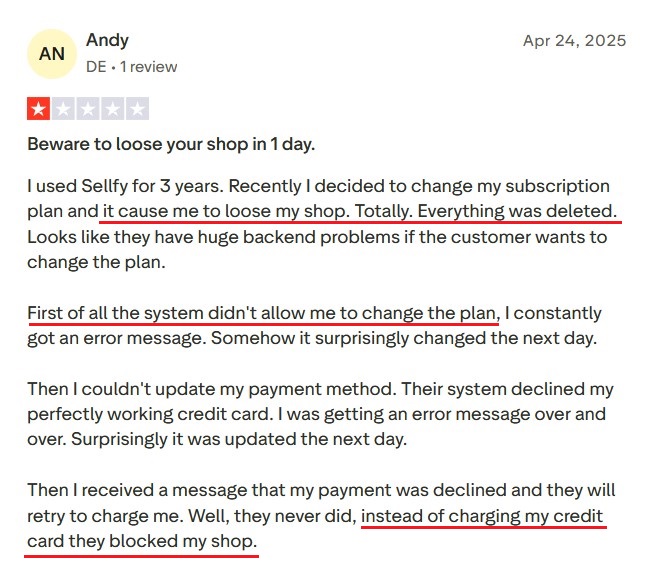
Our next Sellfy review reveals that Andy has experienced serious troubles when he wanted to change his subscription plan after 3 years. It has made him lose lots of items in his shop. This is a serious issue for an affiliate program that claims to be among the top contenders in the market.
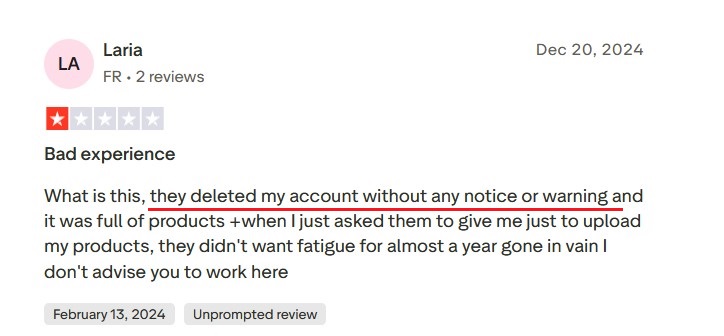
There are also many cases of shops being deleted without any pre notification by Sellfy. This drastically damages their reliability in the market.
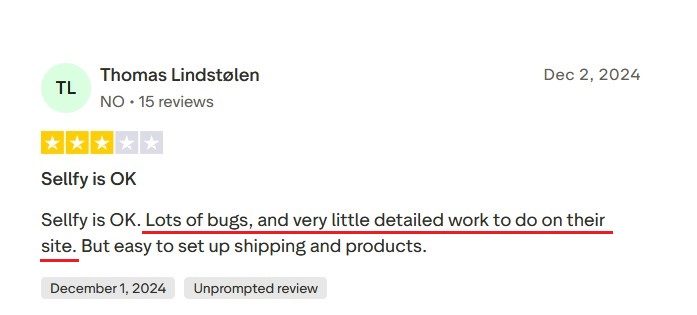
And finally, we have Thomas, who is happy with how easy the platform works, but also angry with lots of bugs and the lack of detailed and more complex features on their website.
These Sellfy reviews show us that despite the high score, some major issues with Sellfy can hurt a business at its core or cause unnecessary headaches for the customers.
Sellfy Pros and Cons
Sellfy's pros and cons are easier to see once you match them against each other. It is a platform built for speed, ease, and creator-friendly selling, not for businesses that need lots of customization.
Pros
- Very easy to use and quick to set up.
- Good for digital products and subscriptions.
- Print-on-demand.
- No Sellfy transaction fees on sales.
- Built-in marketing features reduce the need for extra tools (although limited).
- Clean dashboard for products, orders, customers, and analytics.
Cons
- Limited theme and design flexibility compared with bigger platforms.
- Fewer integrations than app-heavy competitors.
- Not ideal for complex inventory or shipping needs.
- Payment gateway options are relatively limited.
- Advanced SEO and automation features are basic.
- For massive enterprises with complex needs, the platform may feel too restrictive.
When comparing a Sellfy alternative, the best option depends on your specific goals. Shopify is better for scaling and app depth, while brandID or Gumroad suit digital sellers looking for different pricing or marketplace features.
brandID: Best Sellfy Alternative
brandID is an all-in-one creator store and link-in-bio platform built for creators, influencers, musicians, coaches, and independent sellers who want to do more than run a basic storefront. While Sellfy focuses on selling digital products from a standalone store, brandID combines a monetizable link-in-bio page, a creator storefront, affiliate marketing, subscription tools, booking and scheduling, and more, all under one link, without needing a separate website.
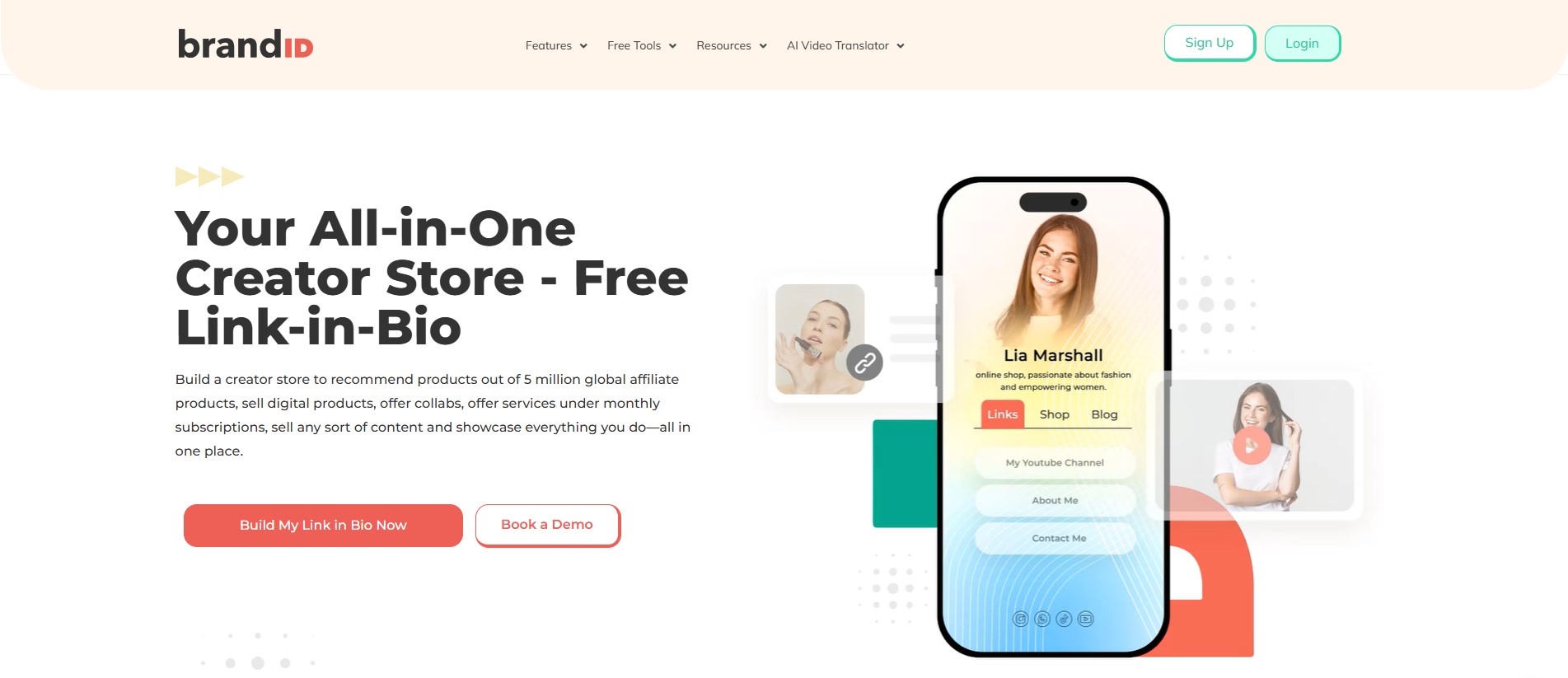
In comparison to Sellfy, we can see that brandID has a larger number of features for different users in different areas. So let's look at the main features that you can expect from brandID.
What brandID Offers
1. Creator Store and Link-in-Bio in One Page
brandID gives you a customizable mini-site that works as both your link-in-bio and your storefront. You can sell products, collect subscriptions, promote affiliate products, and publish product-related blog content, all from a single branded page you share across social media.
2. Sell Digital Products, Videos, Audio, and Downloadables
You can sell any type of digital content directly from your brandID page: video courses, exclusive video content, songs, sound packs, podcasts, audiobooks, e-books, templates, PDFs, and custom services like design or coaching. Sellfy supports digital downloads and basic video/audio sales, but doesn't offer the same breadth of content types or the preview-before-purchase feature brandID provides.
3. Subscription and Membership Selling
brandID supports monthly and annual subscription plans with multiple tiers (e.g., Bronze, Silver, Gold). You can gate premium content, exclusive services, or community access behind each tier. This is available on all plans, including the free tier ( not locked behind a higher-priced plan as it is with some competitors like Selly).
4. Affiliate Marketplace with Over 5 Million Products
This is a feature Sellfy does not offer at all. brandID gives you instant access to over 5 million ready-to-promote affiliate products across 2,000+ brands in categories like beauty, health, fashion, tech, fitness, lifestyle, etc. You add affiliate products directly to your page, earn commissions of up to 40%, and receive weekly payouts with no minimum threshold. You don't need to apply to separate affiliate networks: it's all built in.
5. Digital Billboard Rentals
You can monetize your brandID page by renting out ad slots (top, middle, and bottom sections) to brands or collaborators at a rate you set. This creates passive monthly income from your existing page traffic, a revenue stream that Sellfy has no equivalent of.
6. Booking and Scheduling
Through brandID's bookme feature, you can create a calendar, offer appointments or services, set your own pricing, and collect payments, either one-time or regularly. This is useful for coaches, consultants, fitness trainers, and anyone selling time-based services. Sellfy does not offer booking or scheduling at any plan level.
7. Built-in Marketing Tools
brandID includes email marketing, a CRM, promo codes, giveaways, and blog publishing, all within the platform. The Turbo Creator plan supports unlimited email subscribers and a full CRM with unlimited users. Sellfy's email marketing is functional but limited in scope, and its CRM capabilities are minimal.
8. Link Management
Your brandID page handles everything a dedicated link-in-bio tool like Linktree would: social links, website links, custom links, video and audio embeds, carousels, blog posts, QR codes, and promo codes, without paying for a separate subscription.
Pros and Cons
Pros
- All-in-one platform combining link-in-bio and storefront on a single branded page.
- Ability to sell a wide range of digital products (videos, audio, e-books, templates, services, etc.)
- Supports subscriptions and memberships with multiple tiers, even on the free plan.
- Access to a built-in affiliate marketplace with 5M+ products across 2,000+ brands.
- Earn affiliate commissions up to 40% with no minimum payout threshold.
- Option to monetize page traffic through digital billboard ad placements.
- Built-in booking and scheduling system for selling services and appointments
- Integrated marketing tools, including email marketing, CRM, promo codes, and blogging
- No need for third-party tools (e.g., Linktree) thanks to advanced link management features
Cons
- No option for selling physical products
And now let's look at an overall comparison between Sellfy and brandID:
Sellfy vs brandID
| Features | Sellfy | brandID |
|---|---|---|
| Starting Price | $29/month | $9/month |
| Sales Cap | Yes (plan dependent) | None |
| Affiliate Program | Business plan only ($79) | All plans |
| Link Management | No | Yes |
| Booking & Scheduling | No | Yes |
| Digital Billboard Rentals | No | Yes |
| CRM & promo codes | No | Yes |
| Physical Products | Yes | No |
Other Sellfy Alternatives
1. Sellfy vs Shopify
Simplicity is the main distinction between Shopify and Sellfy. Shopify has a ton of features, and there are many more ways to personalize your store than Sellfy. Additionally, you can sell hundreds of different kinds of goods.
However, a lot of what Shopify offers is irrelevant for beginners and small enterprises. It is also more difficult to understand the process due to the extensive feature list.
Sellfy reduces everything to the essentials of what you require and emphasizes usability.
In addition, Sellfy is less expensive; there are no transaction fees, and the starting price is $29 per month.
2. Sellfy vs Payhip
Payhip and Sellfy are two e-commerce sites that specialize in selling digital goods.
Sellfy has several features that Payhip doesn't. It has integrated marketing tools. Email templates for product promos and upsell pop-ups are among the marketing tools.
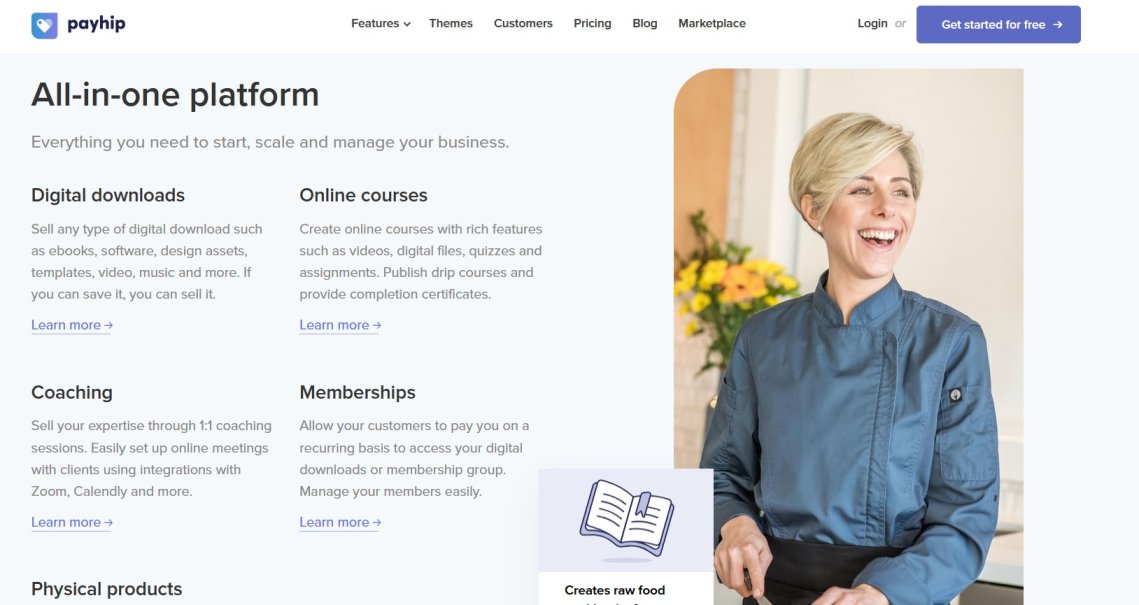
Additionally, Sellfy provides shipping and print-on-demand services for branded goods. You may also manage your store while on the go using its mobile app.
None of these is available on Payhip.
It does, however, provide a free plan. The point is that there is a 5% fee associated with every transaction. No portion of your sales is taken by Sellfy.
3. Sellfy vs WooCommerce
The current leader in shop portability is WooCommerce. While Sellfy users might soon exceed the platform's limited functionality, WooCommerce grows with shops because it is compatible with WordPress and a wide range of third-party plugins.
However, Sellfy outperforms WooCommerce in terms of ease of setup, and sellers who are new to e-commerce will probably save numerous hours in the first setup.
Conclusion
Sellfy might seem like an easy choice at first glance, but the cracks show quickly: sales caps that force expensive plan jumps, poor customization, unreliable support, and reports of shops being deleted without warning. For a platform positioning itself as a serious creator tool, these aren't minor quirks; they're risks that can directly damage your business and revenue at any stage of growth.
brandID is the smarter move. For a lower starting price, you get a platform built without the artificial limits: no sales caps, a built-in affiliate marketplace with over 5 million products, booking and scheduling, digital billboard monetization, a full CRM, and a storefront that doubles as your link-in-bio. Everything Sellfy promises, and everything it fails to deliver, brandID handles in one place. If you're serious about building a creator business, the choice is clear.
FAQs
Ready to try the all-in-one Sellfy alternative?
Start with brandID for free