Shop my closet means two things. For some people it is a styling habit, building outfits from clothes they already own instead of buying new. For creators, it is something that earns: a storefront where followers can buy the exact pieces you show, and you get a cut of every sale.
This is about the second kind, though the two connect. The outfits you style and post are precisely what your audience wants to buy, and a closet page captures that demand instead of giving it away. It used to take a big following and a pile of brand deals, but the tools got easy enough that a creator with a few thousand followers can set one up in an afternoon, which is why many are moving to a free ShopMy alternative to do it.
Below is what a shop my closet page is, which platform to build it on, the exact steps to set one up, and what a real one looks like in the wild.
Key Takeaways
- What it is: a shop my closet page is one link in bio that holds every product you recommend as a shoppable affiliate link.
- It earns on autopilot: followers buy through your links long after you post, at commissions that commonly run 5% to 20% and reach up to 65%.
- Platform matters: ShopMy, LTK, Amazon, and Walmart all gate you behind an application, while brandID is free with no approval.
- No follower minimum: commission depends on sales, not audience size, so you can start small.
- Organize it like a closet: group items into collections like tops, denim, and shoes, then tag your outfit posts so fans buy the exact item.
- Fastest build: a free brandID page gives you one-click affiliate links, collections, and shoppable posts in one place.
What a Shop My Closet Page Really Is
A shop my closet page is a storefront link in bio where you list the products you recommend, each as a shoppable affiliate link. When a follower clicks through and buys, you earn a cut of the sale. The name started with fashion creators sharing their wardrobe, but it now covers beauty, home, fitness gear, and anything else a creator links.
The magic is that it keeps earning. A caption link dies the moment your post scrolls out of the feed. A closet page sits behind your bio forever, so a reel you made six months ago can still send someone to buy today. That is the difference between recommending for free and getting paid for the same recommendation.
Why Turn Your Closet Into a Storefront
If you recommend products at all, you are already doing the hard part. A closet page just captures income you are currently giving away. Here is what it does that a scattered pile of links cannot.
- One link does everything. Instagram, TikTok, and YouTube all allow one bio link. A closet page holds hundreds of products behind that single slot.
- It pays while you sleep. Affiliate commissions land on old posts and new ones alike, so your back catalog keeps working.
- You keep every brand in one spot. Mix Amazon finds, a favorite denim label, and a skincare pick on the same page instead of sending people to five different stores.
- It builds trust. A tidy, on-brand storefront looks far more credible than a raw affiliate link dumped in a caption.
5 Ways to Build a Shop My Closet
You have real choices here, and they are not equal. The biggest split is whether a platform makes you apply and wait for approval, or lets you start today. Here is how the main options compare.
| Platform | Cost | Approval to Join | Catalog | Best For |
|---|---|---|---|---|
| brandID | Free | None | 5M+ products, 2,000+ brands | Creators who want one free page with everything |
| ShopMy | Free | Application | Broad retailer links | Established fashion and beauty creators |
| LTK | Free | Selective approval | Major retail brands | Creators accepted into LTK |
| Amazon Storefront | Free | Approval required | Amazon only | Creators who mainly share Amazon finds |
| Walmart Creator | Free | Application | Walmart only | US creators who recommend Walmart |
The pattern is clear. The big-name platforms gate you behind an application or lock you to one store, which is fine once you are established but slow when you want to start now. A free tool with no approval and a catalog spanning thousands of brands is the fastest way onto the board, and it is where most new creators should begin.
How to Build Your Shop My Closet in 6 Steps
Whichever platform you pick, the build comes down to six moves. You can do all of them on a free page, and the first version takes about an afternoon.
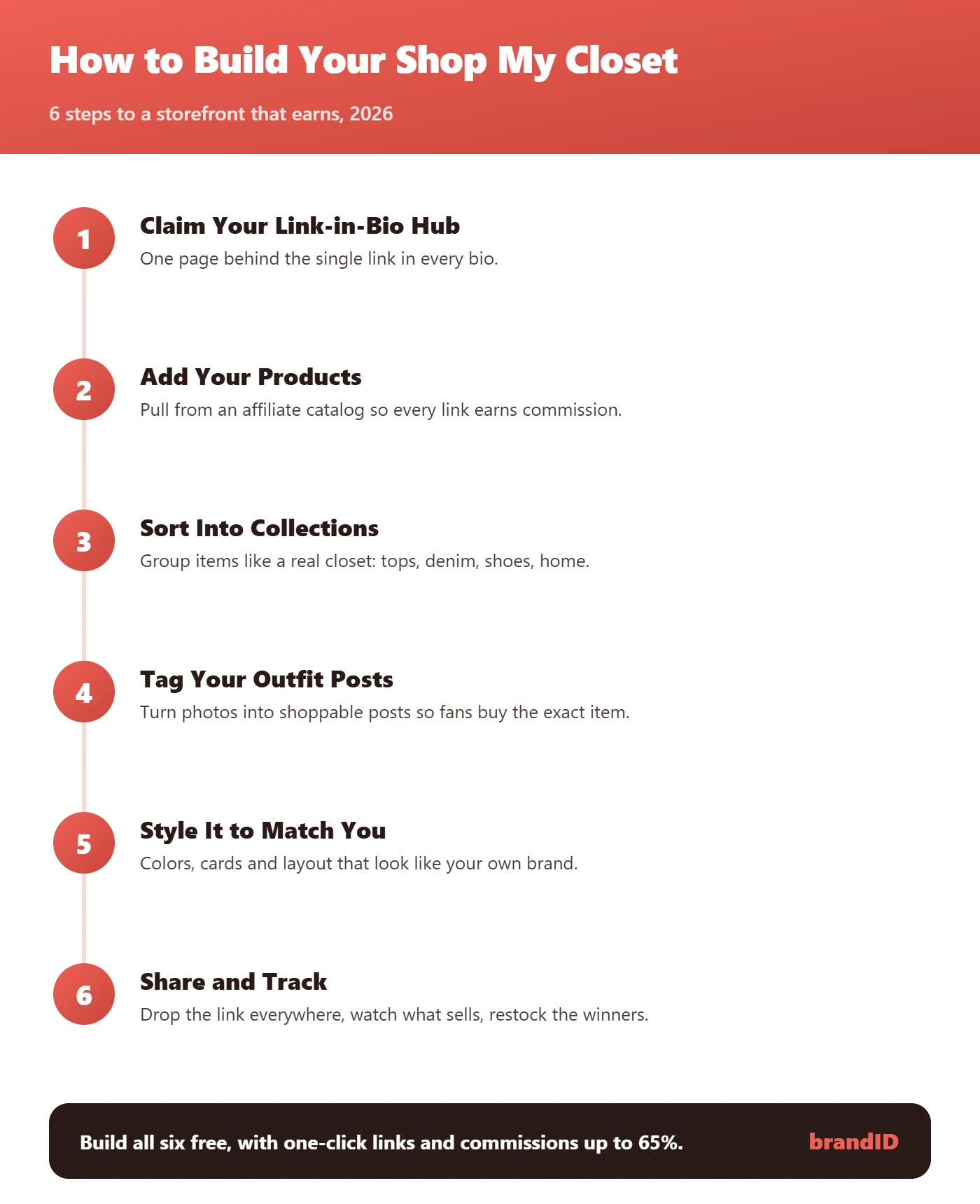
1. Claim Your Link-in-Bio Hub
Your closet needs a home that lives behind the one link in your bio. Pick a platform that supports a product gallery, not just a list of buttons. Free options exist, so there is no reason to pay before you are earning.
2. Add Your Products the Smart Way
This is the step that decides whether your closet earns. Add products from an affiliate catalog so each one comes with a tracked link that pays you. The old way meant applying to each brand and waiting for approval. The new way is a single catalog where you grab the link in one click, no application needed.
Lean on brands your audience already trusts. If you share budget finds, Amazon products are easy wins, so it is worth knowing how to become an Amazon affiliate to unlock that catalog.
3. Sort Into Collections
A wall of 80 products is a dead end. Group them the way a real closet works: Tops, Denim, Shoes, Bags, Beauty. Shoppers who land on a themed section buy far more than shoppers who scroll an endless grid. Add a Top Picks collection up top for your current favorites.
4. Tag Your Outfit Posts
This is the part most creators miss. Turn your actual outfit photos into shoppable posts, so a fan can tap the picture and buy the exact top you are wearing. It connects the content people fell for to the product they can own, which is where the real sales come from.
5. Style It to Match You
Your closet should look like your feed, not a generic template. Match the card style, colors, and fonts to your brand so the page feels like an extension of your content. A storefront that looks intentional converts better because it reads as trustworthy.
6. Share and Track
Put the link in every bio, pin it in your stories, and mention it in captions. Then watch which products sell. When one takes off, make more content around it and add similar items. Your closet should change with what your audience actually buys.
Skip the setup grind
Build Your Whole Closet in Minutes
Describe your style and brandID’s AI builder assembles your storefront, collections, and shoppable posts for you, so you are not dragging blocks around all afternoon.
What a Real Shop My Closet Looks Like
Here is a live closet built free on brandID so you can see the pieces in place. Sofia is a fashion and beauty creator, and her page follows the same pattern any good closet should.
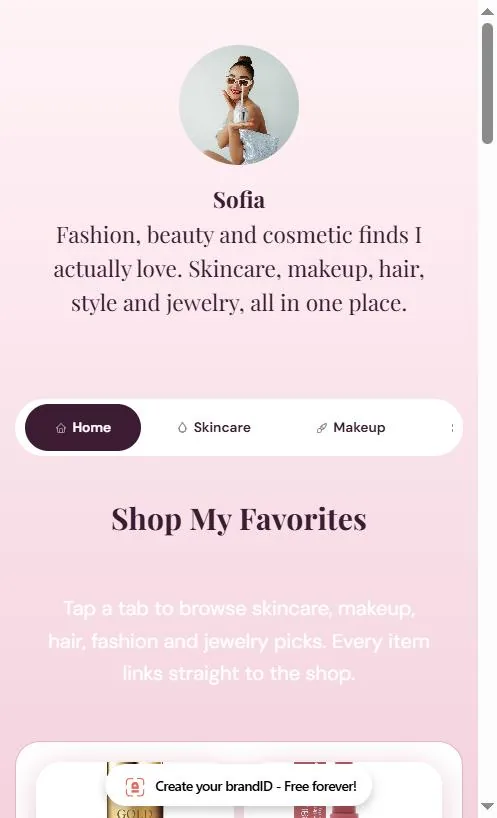
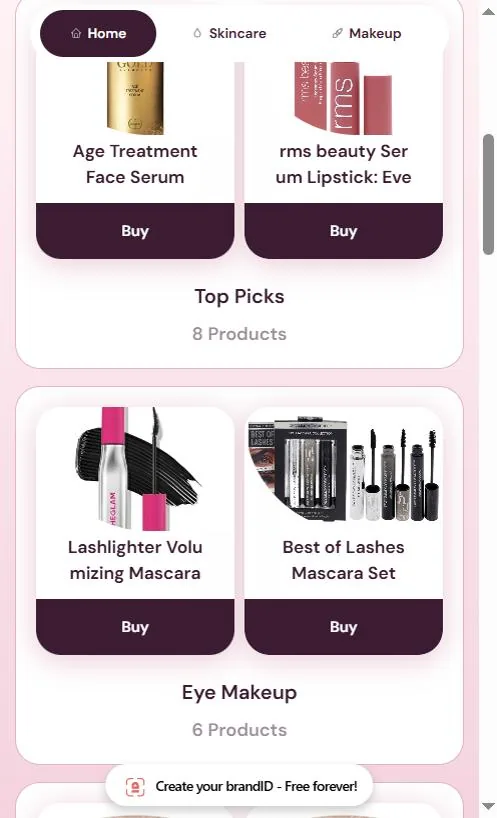
The top is your profile. A photo, your name, and a one-line bio that says what you curate. Sofia’s reads “Fashion, beauty and cosmetic finds I actually love.” Under it sits a row of category tabs, Skincare, Makeup, and more, so visitors jump straight to what they came for.
Each tab opens collections of product cards. Every card has a photo, a name, and a Buy button that fires a tracked affiliate link. The products sit in named collections like Top Picks with 8 products and Eye Makeup with 6, so people browse by category instead of scrolling forever. That structure is the whole reason a closet page outsells a plain link list, and every Buy button on it earns a commission.
What a Shop My Closet Earns You
The income comes from commission, a percentage of every sale made through your links. Unlike ad revenue, which swings with things like what a million YouTube views is worth, commission is tied directly to what you sell. Rates vary by brand and product, but here is the range creators actually see on real storefronts in 2026.
| Product Type | Typical Commission | On a $100 Sale |
|---|---|---|
| Fashion and apparel | 10% to 20% | $10 to $20 |
| Beauty and skincare | 10% to 25% | $10 to $25 |
| Home and decor | 5% to 15% | $5 to $15 |
| Amazon everyday items | 3% to 10% | $3 to $10 |
| Select niche brands | up to 65% | up to $65 |
The numbers look small until they repeat. A creator who sends 200 sales a month at an average $12 commission clears about $2,400, from products they were recommending anyway. Choosing the right programs matters as much as the content, which is why it pays to know the highest-paying affiliate programs across every category before you fill your closet.
5 Mistakes That Keep a Shop My Closet From Selling
Most closets that flop fail for the same few reasons. Avoid these and you are ahead of most creators.
- Dumping everything in one grid. No collections means no browsing. Sort your closet into clear sections.
- Linking products you never show. People buy what they saw you use. Keep your closet to items that appear in your content.
- Forgetting to update it. A closet full of sold-out links loses trust fast. Prune dead products every few weeks.
- Hiding the link. If you never mention your closet, no one visits. Point to it in captions and stories often.
- Using links that do not earn. A raw store URL pays you nothing. Every product should carry a tracked affiliate link.
Fill your closet in one click
brandID’s affiliate marketplace holds 5 million+ products from 2,000+ brands. Grab a tracked link in one click with no applications and no approval wait, sort everything into collections, and earn commissions up to 65% with no follower minimum.
Bottom Line on Building a Shop My Closet
A shop my closet page is the simplest way to earn from the recommendations you already make. Give it a home behind your bio link, pick a platform that lets you start without an application, fill it with tracked affiliate products, sort it into collections, and tag your outfit posts.
The creators who win treat it like a living store, not a set-and-forget link list. Start small, watch what sells, and let your closet grow around what your audience actually buys. Build it free, link what you love, and let a page do the selling for you.
FAQs
1- What is a shop my closet page?
A shop my closet page is a storefront link in bio where a creator lists the clothes, products, and gear they recommend, each as a shoppable affiliate link. When a follower buys through it, the creator earns a commission.
2- Is a shop my closet free to make?
Yes. Several platforms let you build one for free, including brandID, which has no application and no approval wait. The page itself is free, and the platform simply takes a share of the commission on some tools.
3- Do you need a lot of followers to start a shop my closet?
No. Most affiliate storefronts have no follower minimum. You can open one with a small audience and earn from day one, since commission depends on sales, not follower count.
4- How much can a shop my closet earn?
It depends on your traffic and commission rates, which commonly run 5% to 20% per sale and reach up to 65% on some products. A mid-size creator who links consistently can turn everyday outfit posts into steady monthly income.
5- What is the difference between shop my closet and LTK?
LTK is one platform for building a creator storefront, and it is application-based and selective. Shop my closet describes the page itself, which you can build on several tools, including free ones like brandID that have no application.
6- How do I add my shop my closet to my Instagram bio?
Copy your storefront link from your builder and paste it into the website field of your Instagram profile. Since Instagram allows one bio link, a shop my closet page is ideal because it holds all your products behind that single link.
7- Do I have to apply to each brand to add products?
Not on every platform. Some require you to join each brand’s affiliate program and wait for approval. Others, like brandID, give you a shared catalog where you grab a tracked link in one click with no applications.
 Summarize this article with: