After years of rapid growth, influencer marketing platforms have become increasingly similar. Most promise better discovery, faster outreach, and higher ROI, yet many fail at the same points: fragmented communication, unclear accountability, and unreliable payments.
Ainfluencer enters this crowded space with a different emphasis. Instead of positioning itself as a fully managed service or an enterprise-only solution, it presents itself as a controlled marketplace — one designed to reduce friction rather than redefine strategy.
This review examines Ainfluencer from a practical, execution-focused perspective, based on real campaign usage rather than demos or promotional materials.
The Details
Influencer marketing challenges are rarely caused by a lack of tools. More often, they stem from operational inefficiencies.
Common issues brands and affiliates face include:
- Outreach conversations scattered across emails and social DMs
- Creator profiles that appear promising but lack depth or verification
- Campaigns that rely on informal trust rather than enforceable safeguards
Individually, these problems are manageable. Collectively, they slow down execution and increase risk — especially for eCommerce and performance-driven campaigns where timing and accountability matter.
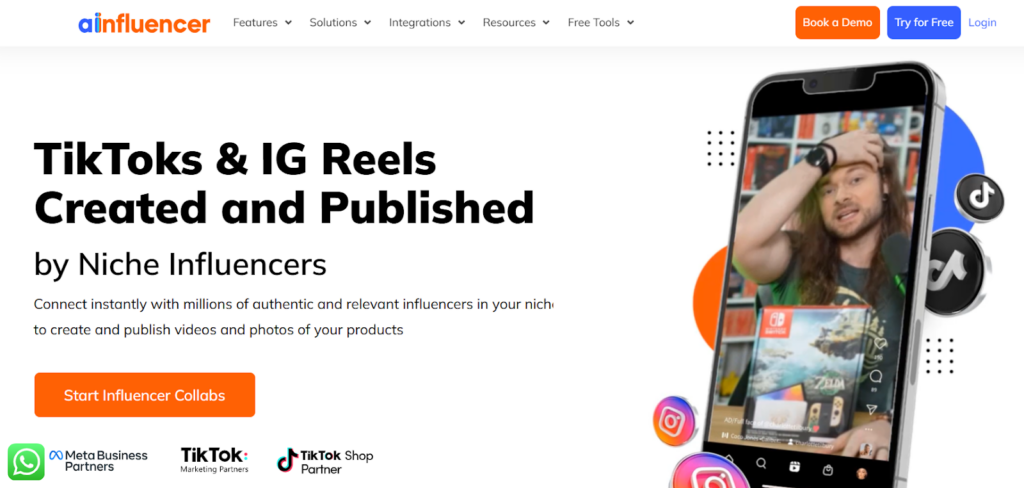
Ainfluencer stood out by addressing these friction points directly, rather than attempting to solve high-level strategy.
A Brief Overview of Ainfluencer Platform
At its core, Ainfluencer is a two-sided marketplace.
On one side:
- Brands, Amazon sellers, and eCommerce businesses running influencer or affiliate campaigns
On the other:
- Influencers and affiliates seeking paid collaborations or commission-based opportunities
The platform acts as an intermediary and focuses on three core functions:
- Creator discovery
- Campaign communication
- Payment handling
By limiting its scope to these areas, Ainfluencer avoids feature overload and keeps the workflow relatively focused.
How Ainfluencer Works
Ainfluencer does not operate on a “launch and wait” model. Campaigns require active setup and involvement from both sides.
The typical workflow looks like this:
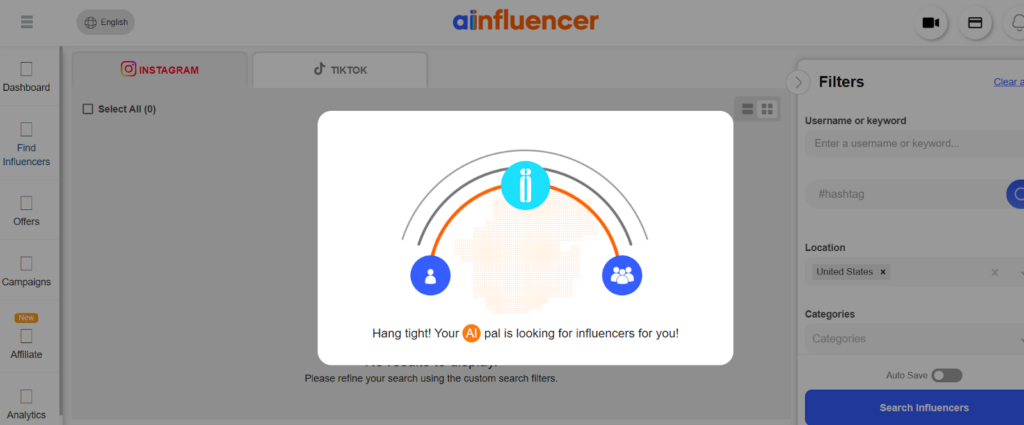
- Brands search and filter creators based on relevant criteria
- Influencer profiles are reviewed using more than surface-level metrics
- Outreach and negotiation happen inside the platform
- Campaign terms and deliverables are locked before payment
- Funds are placed into escrow until work is delivered and approved
This structure provides flexibility without sacrificing accountability. Campaigns feel guided rather than automated, which is often preferable for small to mid-sized teams.
Key Features of Ainfluencer
This is important because misuse leads to disappointment.
Ainfluencer is not:
- A replacement for influencer strategy
- A done-for-you growth engine
- A tool for celebrity or mass-reach campaigns
It is built for:
- Brands that want control and transparency
- Affiliates who need tracking and fair payouts
- Influencers who prefer clear terms over vague DMs
If you’ve ever felt that influencer marketing lives too much in chaos, Ainfluencer is clearly trying to solve that problem.
The Affiliate and Amazon Campaign Angle
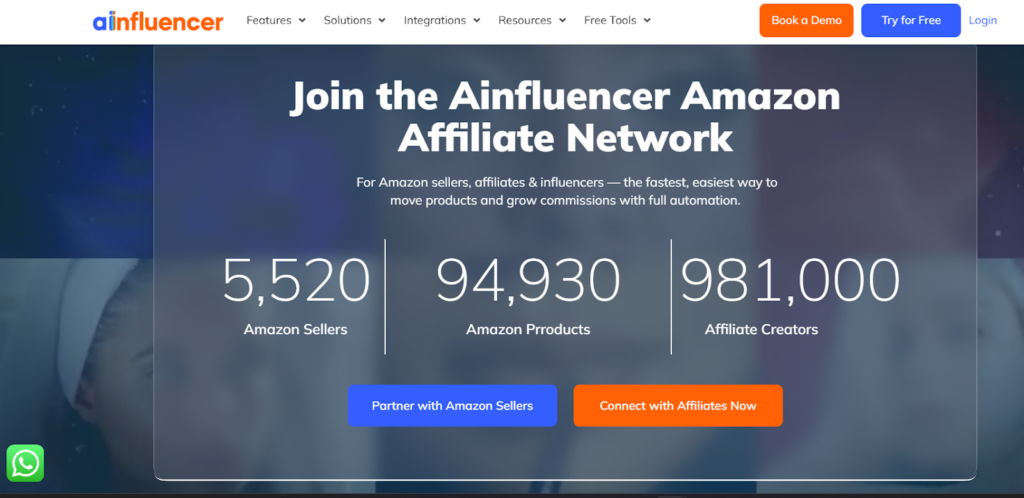
While many influencer platforms claim to support affiliate programs and affiliate marketing, few are built around it.
Ainfluencer’s structure is particularly well-suited for:
- Amazon sellers running commission-based promotions
- Shopify brands combining flat fees with affiliate links
- creators focused on performance-driven income
Affiliate tracking, escrow payments, and structured deliverables make it easier to manage campaigns where outcomes matter as much as exposure.
A Notable Design Choice: Fewer Steps, More Focus
Ainfluencer does not attempt to overwhelm users with dashboards, predictive AI insights, or excessive automation.
This restraint results in:
- A cleaner interface
- Fewer unnecessary steps
- Greater emphasis on execution
The platform still requires thoughtful campaign management. However, it removes many of the administrative risks that typically slow influencer programs down.
Dashboard and Onboarding Experience
The dashboard is functional and purpose-driven. Instead of guiding users through aggressive onboarding flows or upgrade prompts, it presents the core actions clearly:
- Campaign creation and exploration
- Influencer discovery
- Messaging
- Payment status
Navigation is intuitive, and most users can begin exploring creators or setting up a campaign without external documentation. This low-friction entry point is particularly valuable for teams that do not have time to invest in lengthy onboarding processes.
Finding and Evaluating Influencers
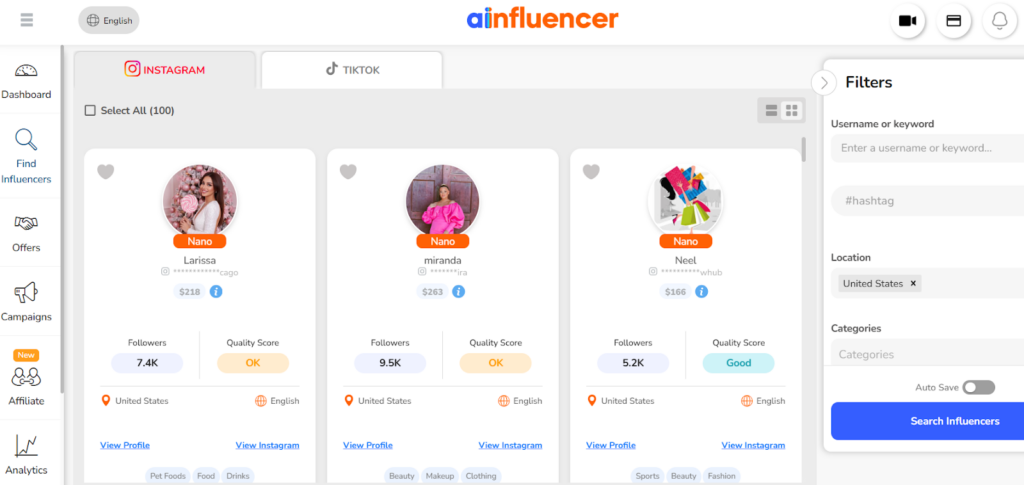
Discovery is where many influencer platforms overpromise. Ainfluencer’s approach is more grounded.
Filtering options behave as expected, but the differentiator lies in profile depth. Influencer profiles provide more than follower counts and surface-level engagement metrics. Brands can review:
- Content quality and consistency
- Campaign history
- Reviews from other brands
- Responsiveness and reliability indicators
This additional context reduces the need for manual vetting across multiple platforms and allows faster decision-making during campaign setup.
Outreach and Messaging Workflow
All communication takes place inside Ainfluencer, which significantly reduces friction.
Because campaign scope, deliverables, and budgets are visible upfront, conversations tend to be:
- More focused
- More professional
- Less speculative
The messaging experience feels closer to a work management tool than a social platform. This structure helps avoid common issues such as unclear expectations, delayed responses, or off-platform miscommunication.
Campaign Setup and Execution
Once both parties agree on terms, Ainfluencer enforces alignment through a structured campaign flow.
Key elements include:
- Clearly defined deliverables
- Visible timelines
- Locked campaign terms
- Escrow-backed payments
This structure prevents scope creep and reduces the need for follow-ups or reminders. Campaigns progress predictably, which is especially valuable for brands managing multiple collaborations simultaneously.
Payment Process and Deliverables
Payment handling is one of Ainfluencer’s strongest operational features.
The workflow is straightforward:
- Funds are deposited into escrow
- Influencers deliver agreed-upon work
- Brands review and approve deliverables
- Payments are released after a short buffer period
This system protects both parties. Brands avoid paying upfront without guarantees, while influencers gain confidence that approved work will be compensated. Compared to traditional influencer arrangements, this model significantly reduces disputes.
Use of Automation and AI
Ainfluencer incorporates AI-assisted recommendations, primarily during creator discovery.
While suggested matches are often relevant, they are best treated as starting points rather than final selections. Human judgment remains essential, particularly when evaluating niche fit or engagement quality.
Importantly, automation does not override user control. The platform supports decision-making without enforcing rigid workflows, which helps it adapt to different campaign styles.
Ainfluencer Pricing, Fees, and Practical Advantages
Understanding Ainfluencer’s pricing model is essential, as it directly affects campaign ROI and platform suitability—especially for brands running performance-driven or recurring collaborations.
- Ainfluencer Pricing Model Explained
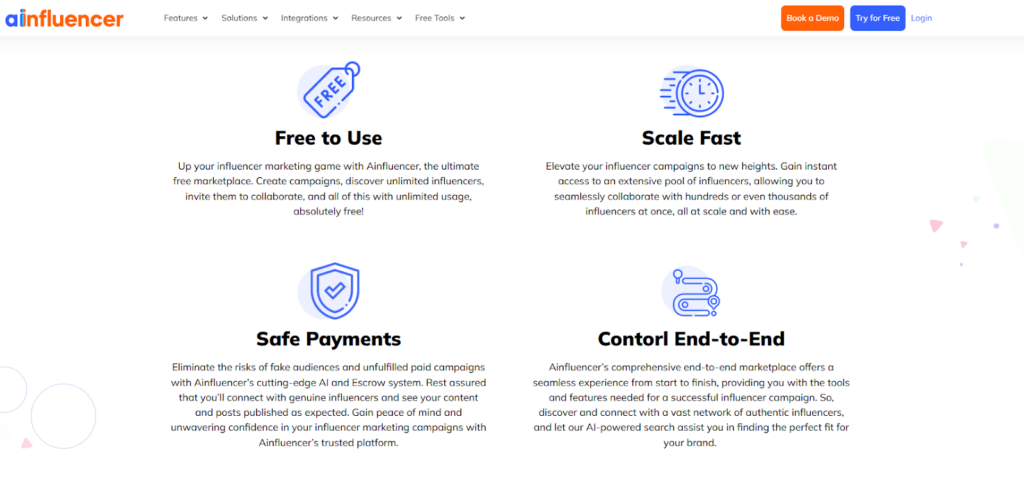
Ainfluencer operates on a no-subscription model.
There are:
- No monthly or annual platform fees
- No paywalls for discovery or outreach
- No required commitment before launching campaigns
Brands and affiliates can explore the platform, review creator profiles, and initiate conversations without upfront cost.
Revenue is generated through a platform fee applied to paid campaigns, rather than access.
Platform Fees and Cost Considerations
Ainfluencer charges a 20% fee on influencer payments.
This fee covers:
- Escrow-based payment protection
- Platform infrastructure
- Campaign management and communication tools
For small and mid-sized campaigns, this cost is generally reasonable given the safeguards provided. For larger budgets or high-volume campaigns, the fee becomes more noticeable and should be factored into ROI planning early.
Importantly, pricing is transparent. There are no hidden usage tiers or feature restrictions tied to spend.
No Upfront Subscription Costs
Many influencer platforms require payment before users can meaningfully evaluate creator quality or campaign fit. Ainfluencer removes this barrier.
Brands can:
- Test campaign ideas
- Evaluate influencers
- Assess platform usability
before committing to a budget.
This makes Ainfluencer especially accessible to smaller teams, new Amazon sellers, and brands experimenting with influencer marketing for the first time.
Escrow-Based Payments and Risk Reduction
Escrow is not a cosmetic feature—it fundamentally changes how campaigns are managed.
Funds are secured before work begins, but released only after:
- Agreed deliverables are submitted
- Review periods are completed
- Both sides meet campaign terms
This structure:
- Reduces payment disputes
- Protects creators from delayed compensation
- Protects brands from non-delivery
In practice, it removes one of the most common sources of friction in influencer marketing.
Transparent Influencer Profiles
Ainfluencer places emphasis on reliability and history, not just reach.
Profiles highlight:
- Previous campaign participation
- Brand feedback and reviews
- Responsiveness metrics
- Content quality indicators
This allows brands to make informed decisions faster and reduces reliance on assumptions based on follower count alone.
Affiliate and Performance-Friendly Campaigns
Ainfluencer supports both flat-fee and performance-based collaborations within the same platform.
Key strengths include:
- Amazon affiliate campaign support
- Shopify integration for conversion tracking
- Commission-based structures alongside sponsorships
This flexibility is particularly useful for eCommerce brands that prioritize measurable outcomes over exposure alone.
Professional Campaign Environment
Unlike platforms that resemble social networks, Ainfluencer operates more like a business workspace.
This results in:
- Less spam
- Clearer expectations
- More focused communication
Campaign discussions remain tied to deliverables, timelines, and budgets, reducing the noise commonly associated with influencer outreach.
Limitations from a Brand Perspective
Platform Fee Impact on Larger Budgets
Ainfluencer’s 20% platform fee is clear and predictable, but it can become significant as campaign budgets increase. For brands running frequent or high-spend collaborations, this cost may affect overall ROI and should be factored into pricing models from the outset.
While the fee is justified by escrow protection and platform oversight, it may feel less competitive compared to self-managed outreach once campaigns scale.
AI Matching Requires Manual Oversight
Creator recommendations are often relevant, but they are not consistently precise.
Brands may encounter:
- Creators outside the intended niche
- Engagement metrics that require deeper inspection
- Profiles that look suitable on paper but lack audience alignment
As a result, discovery should be treated as assisted rather than automated. Human review remains essential to maintain campaign quality.
Not Optimized for Enterprise-Scale Campaigns
Ainfluencer is not designed for brands that need to activate:
- Hundreds of creators simultaneously
- Celebrity or macro-influencer campaigns
- Multi-market, agency-driven programs
In these cases, the platform’s structured but hands-on workflow can feel limiting. Its strengths are most evident in controlled, mid-sized campaigns rather than large-scale influencer activations.
Limitations from an Influencer and Affiliate Perspective
Performance Accountability and Deadline Sensitivity
Because payments are tied to escrow and deliverable approval, influencers must adhere strictly to agreed timelines.
While this creates fairness and transparency, it also places greater responsibility on creators—particularly newer influencers who are still adapting to professional workflows.
Manual Campaign Management for Creators
Ainfluencer does not offer full automation for influencers.
Creators are expected to:
- Review campaign terms
- Negotiate deliverables
- Manage affiliate links
- Monitor performance
For influencers seeking passive or fully automated income streams, this level of involvement may feel demanding.
Escrow Release Timing
Payments are released after a seven-day approval buffer once deliverables are accepted.
Although this delay is relatively short and helps prevent disputes, it may affect cash flow for smaller creators who rely on faster payouts.
Interpreting These Limitations in Context
Most of Ainfluencer’s drawbacks are predictable trade-offs rather than structural flaws.
- Brands gain control and security at the expense of speed and scale
- Influencers gain payment reliability at the cost of stricter accountability
When these constraints are understood upfront, they rarely become deal-breakers. Instead, they set realistic expectations for how campaigns should be planned and executed.
Who Ainfluencer Is Designed For
Not every tool fits every marketer or creator. Here’s who benefits most — and who might want something else.
Best Use Cases for Brands
1. Amazon sellers launching a new product
- Scenario: You’ve just listed a new beauty or gadget item and want fast reviews and conversions.
- Why Ainfluencer works: You can run affiliate campaigns, track conversions, and reach micro-influencers who genuinely drive sales.
- Takeaway: Performance-based campaigns work better than flat-fee promotions here.
2. Shopify/DTC brands with small marketing teams
- Scenario: A small fashion or wellness brand with one or two people handling marketing.
- Why Ainfluencer works: Discovery, messaging, and payments are all in one platform — you don’t need multiple tools or staff.
- Takeaway: Saves time and keeps campaigns organized without an agency.
3. Affiliate-first campaigns
- Scenario: A brand wants influencers to earn commissions rather than pay flat fees.
- Why Ainfluencer works: It’s built for affiliate-style payouts, so tracking, reporting, and payments are automated.
- Takeaway: Incentivizes creators while reducing your administrative load.
Best Use Cases for Influencers and Affiliates
1. Lifestyle micro-influencers (5k–50k followers)
- Scenario: Someone building a consistent side income through social media content.
- Why Ainfluencer works: You get clear campaign terms, predictable payment, and performance-based opportunities.
- Takeaway: Low-risk way to monetize without negotiating every deal manually.
2. Affiliates or creators in eCommerce niches
- Scenario: You focus on products like tech gadgets, skincare, or home goods.
- Why Ainfluencer works: Amazon and Shopify integration allows tracking commissions and makes payouts reliable.
- Takeaway: Makes affiliate marketing feel professional instead of chaotic.
3. Professional creators who value reliability
- Scenario: Anyone tired of chasing payments or waiting weeks for brands to respond.
- Why Ainfluencer works: Escrow system + structured communication ensures creators know what’s expected and when they’ll get paid.
Who Should Consider Alternatives?
- Large enterprises or agencies running hundreds of creators or celebrity campaigns
- Brands wanting fully hands-off, done-for-you campaigns
- Influencers looking for completely passive, auto-generated income streams
Ainfluencer works best for creators and brands who want control, transparency, and manageable campaigns — not for those chasing fully automated shortcuts.
Final Verdict: Is Ainfluencer Worth It?
Ainfluencer is not positioned as a breakthrough platform, and that is largely its strength. Rather than introducing new concepts or aggressive automation, it focuses on improving the reliability and structure of influencer and affiliate campaigns.
From an execution standpoint, the platform delivers on its core promise: reducing operational friction.
Where Ainfluencer Performs Best
Ainfluencer proves most effective in scenarios where:
- Campaigns require clear deliverables and timelines
- Payment security is a priority
- Performance-based collaborations matter more than reach
Its escrow system, transparent creator profiles, and centralized communication create a controlled environment that supports consistent execution.
For small to mid-sized eCommerce brands, Amazon sellers, and affiliates, these strengths often outweigh the absence of advanced analytics or enterprise-scale automation.
 Summarize this article with: